uPVC Window Machinery Cost in Bangalore: Setup Guide for High-Rise Fabricators
Bangalore's construction pipeline tells a clear story for fabricators already working in the city: a LEED-certified tech park in Whitefield, a GRIHA 4-star gated community near Sarjapur Road, a 40-floor residential tower in Hebbal — all specifying uPVC or thermally broken aluminium window systems because green building certifications require it. For fabricators currently running a manual 10–15 window-per-day operation, the demand is real but the machinery question is immediate: what does a proper uPVC fabrication line cost, how fast does it pay back, and how quickly can equipment reach your workshop from a Gujarat-based supplier?
Why Bangalore's uPVC Demand Is Growing Faster Than Most Tier-1 Cities
Bangalore's IT-sector expansion drives a specific kind of construction: large-footprint campus buildings and premium residential towers where LEED (Leadership in Energy and Environmental Design) or GRIHA (Green Rating for Integrated Habitat Assessment) certifications are either mandated by the developer or required for tenancy by global tech companies. Both rating systems impose U-value and air-infiltration targets on fenestration that standard aluminium systems using non-thermally-broken profiles struggle to meet. uPVC multi-chamber profiles — particularly those from Domal, Jindalinium, and Hindalco — consistently meet LEED's thermal performance criteria without the cost premium of thermally broken aluminium.
Unlike Delhi or Chandigarh, where extreme winters push homeowners to seek insulation independently, Bangalore's moderate humid subtropical climate means uPVC adoption is largely specification-driven — builders choose it because certification documents require it, not because residents demand it for comfort. This makes demand structurally durable: it is tied to green building mandates rather than seasonal temperature patterns. The volume of LEED-registered projects in Electronic City and Hebbal has grown steadily, and RERA-registered residential projects increasingly carry green certification clauses in their project documents. Fabricators who can consistently supply uPVC windows with documented weld quality are positioned to capture supply contracts for these projects long-term.
5-Machine uPVC Line: Full Cost Breakdown for Bangalore Fabricators
A production-ready uPVC fabrication line typically requires five machine types. Below is a realistic cost structure based on Mechnovate's current pricing, sized for a fabricator targeting 30–50 windows per day:
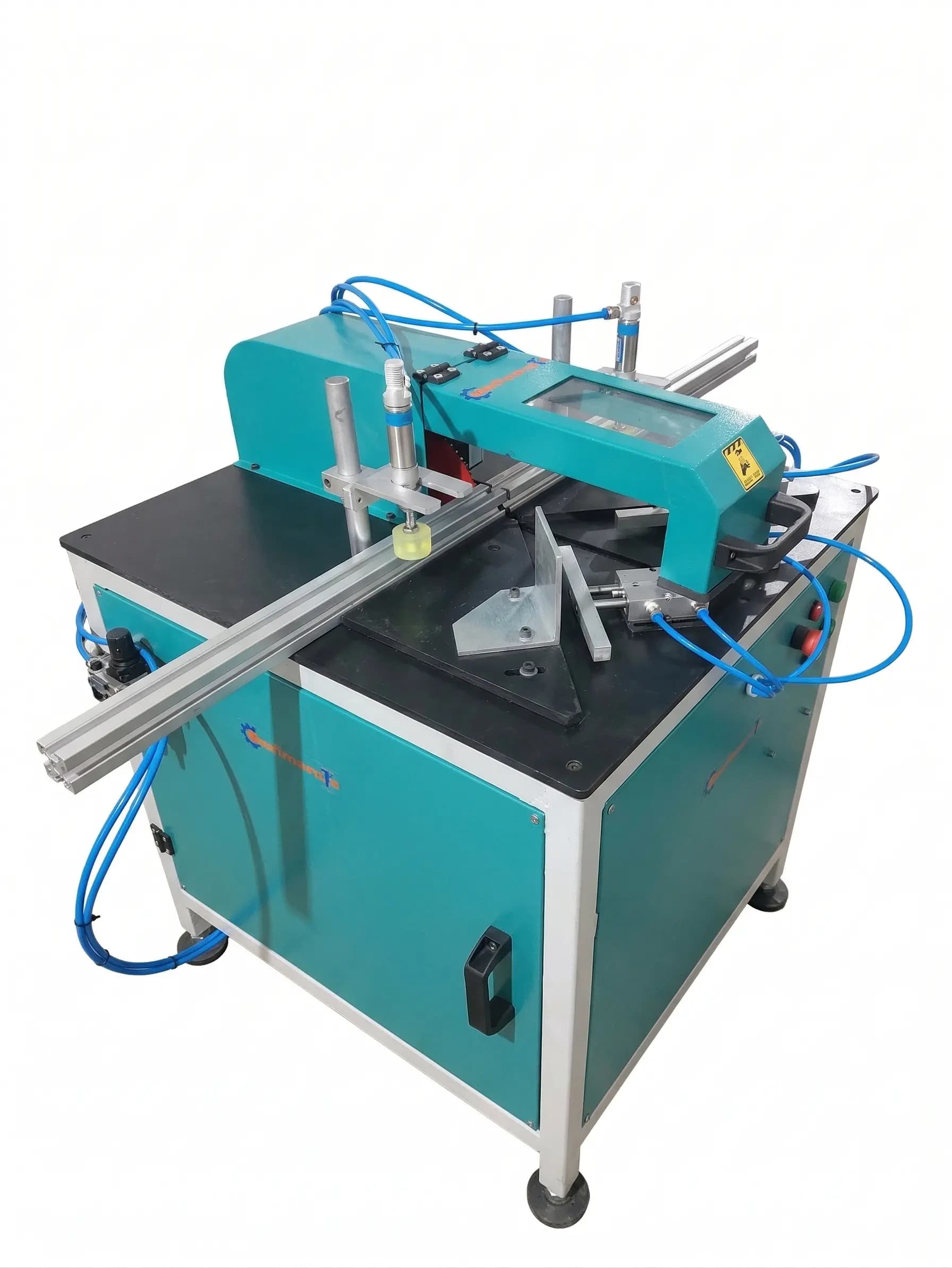
- 45/90 Degree Cutting Machine — Starts at ₹55,000. The entry point of any uPVC line; precision miter and square cuts at both 45° and 90° are required for all frame and sash fabrication. Full specs: 45/90 Degree Cutting Machine
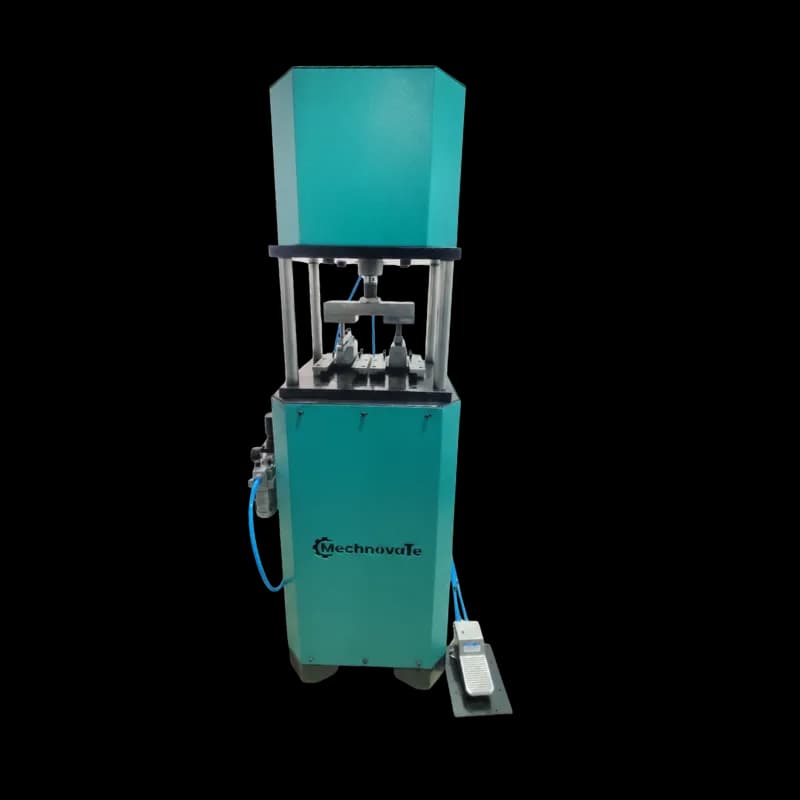
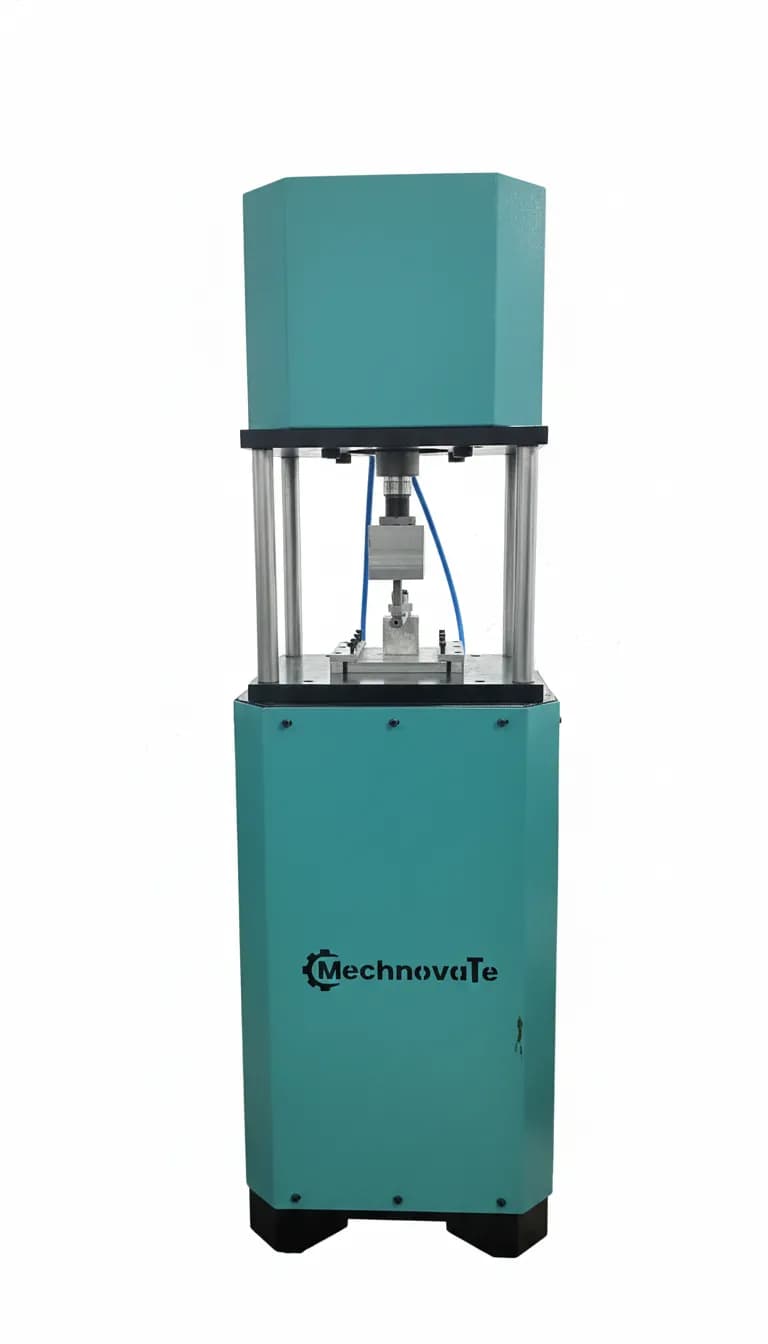
- 2-Station Pneumatic Punching Machine — Starts at ₹65,000. Two simultaneous punch stations reduce cycle time per profile significantly compared to single-station or manual punching. Essential for hardware-mounting holes at consistent spacing. 2-Station Pneumatic Punching Machine
- 1-Station Pneumatic Punching Machine — Starts at ₹40,000. A parallel punching station for narrower profiles or when the two-station unit is occupied on a different profile size. 1-Station Pneumatic Punching Machine
- Pneumatic Copy Router Machine — Starts at ₹55,000. Routes drainage channels, lock striker pockets, and hinge recesses with repeatability that manual routing cannot match at volume. Pneumatic Copy Router Machine
- Manual Copy Router Machine — Starts at ₹35,000. A cost-effective secondary router for smaller batches or shaped profiles. Manual Copy Router Machine
Total line investment: approximately ₹2,50,000–₹2,75,000 depending on final configuration. At 30 windows per day and a fabricator margin of ₹800–₹1,200 per window for uPVC (typical in Bangalore's mid-premium segment), payback on the machinery line is achievable within 10–12 months even accounting for operator training time. The Workshop setup guide covers spatial layout and workflow sequencing for a 5-machine line.
RERA Compliance and Why Consistent Weld Quality Matters for Bangalore Builders
RERA-registered builders in Karnataka carry legal liability for construction quality for up to five years post-handover. Windows that leak air or water structurally fail within that window expose developers to complaints and financial penalties. This has changed procurement decisions: many Bangalore builders now require fabricators to demonstrate weld bead consistency and profile cut tolerances before awarding supply contracts for large residential projects.
Pneumatic punching and routing machines deliver the repeatability that RERA-sensitive builders need. A Manual Punching Machine at ₹20,000 is a practical choice for low-volume work or as a backup unit, but for projects with 200+ windows where hole placement must be consistent across all frames, pneumatic machines measurably reduce the rejection rate. Similarly, the Pneumatic Copy Router Machine cuts drainage channels to a fixed template on every profile — something manual routing cannot replicate at the same speed and consistency. Before purchasing, the Manual vs pneumatic punching machine comparison and Manual vs pneumatic copy router comparison pages detail the volume thresholds where pneumatic machines justify the cost difference.
Scaling from 15 to 30+ Windows Per Day: A Practical Upgrade Path
Most Bangalore fabricators start with one or two machines and scale incrementally as order volumes justify investment. Here is a structured upgrade sequence:
- Start with cutting. Install the 45/90 Degree Cutting Machine (₹55,000) first. Accurate cuts eliminate downstream rework in punching and routing.
- Add pneumatic punching. Upgrade from manual to the 1-Station Pneumatic Punching Machine (₹40,000) once daily output consistently exceeds 15 windows. Cycle time per window drops by 35–50%.
- Add copy routing. The Manual Copy Router Machine (₹35,000) is an effective entry. When order density justifies it, move to the pneumatic version.
- Add a second punch station. The 2-Station Pneumatic Punching Machine (₹65,000) becomes worthwhile when daily output targets exceed 25 windows.
- Audit your layout. Review the Workshop setup guide to ensure machine placement matches material flow — poor sequencing is the most common bottleneck after machinery is in place.
For pre-purchase specification detail, the Cutting machine buying guide, Punching machine buying guide, and Copy router buying guide cover capacity and compatibility for each machine category.
FAQ
How long does Mechnovate take to deliver machinery to Bangalore?
Mechnovate delivers to Bangalore in 3–5 business days from dispatch at our Ahmedabad facility. Karnataka falls in our South India delivery zone. All machines are packed with transit bracing and dispatched via established logistics partners. If your project timeline is fixed, confirm dispatch dates with our team at the time of order — we maintain ready-to-ship stock on all standard models.
Which uPVC profiles are compatible with Mechnovate machines?
Mechnovate machines are compatible with Domal, Jindalinium, Dumal, Hindalco, and Alumil uPVC profiles — the most widely used systems in Bangalore's premium residential and commercial fabrication market. If you work with a profile brand not on this list, share the profile dimensions with our technical team and we can confirm compatibility before you order.
What warranty does Mechnovate provide on punching and routing machines?
Punching machines (both manual and pneumatic) and copy router machines (both manual and pneumatic) carry a 1-year warranty covering manufacturing defects. The 45/90 Degree Cutting Machine carries a 6-month warranty. Mechnovate is ISO 9001:2015 and CE certified and MSME registered, which ensures standardised quality documentation for any compliance requirements your CA or project auditor may need.
Is a 5-machine line sufficient for a 200-window project on a 30-day timeline?
A properly sequenced 5-machine line running two shifts can produce 50–70 window frames per day at full capacity. A 200-window project over 30 days requires approximately 7–8 windows per day net output, which a single-shift 5-machine operation can comfortably handle. The key variables are operator skill and material preparation batching. The Workshop setup guide covers shift planning and batching strategies specifically for project-based fabrication runs.
Ready to Upgrade?
Mechnovate has supplied machinery to 500+ fabricators across 20+ Indian cities, including fabricators working on LEED-certified campus projects and large RERA-registered residential developments in Bangalore. Our machines are backed by ISO 9001:2015 and CE certification, and our engineering team can advise on the right configuration for your current order volume and six-month growth target.
Call us at +91-9265699061 or contact us to discuss your requirement, confirm profile compatibility, or get an accurate delivery estimate for your Bangalore workshop.
Get more articles like this
Follow Mechnovate on Google to see our guides in Google Discover & News