Back to Blog Follow on Google
Invalid Date
Aluminum vs. uPVC Machinery: Key Differences Explained
Get more articles like this
Follow Mechnovate on Google to see our guides in Google Discover & News
Get more articles like this
Follow Mechnovate on Google to see our guides in Google Discover & News
Aluminium and uPVC are the two dominant materials for window frame fabrication in India, and while some machinery can process both, the two materials have fundamentally different properties that affect machine design, tooling selection, and operating parameters. Understanding these differences helps fabricators make the right machinery investment and avoid the quality problems that come from using the wrong tool for the material.
Aluminium is a metal — hard, dimensionally stable, and thermally conductive. It cuts cleanly with TCT saw blades and carbide router cutters at moderate speeds, but it generates metal chips that are sharp, sticky, and abrasive. Aluminium machines need robust chip management systems, hardened cutting edges, and clamping jaws designed to grip the relatively smooth extruded surface without marking it.
uPVC is a thermoplastic — softer than aluminium, dimensionally less stable with temperature, and prone to melting rather than cutting if the tool speed or feed rate is wrong. uPVC window machinery must manage heat — cutting blades and router cutters run faster (higher RPM) but take smaller cuts to prevent the PVC from melting at the tool edge. Welding machines are exclusive to uPVC — aluminium windows use mechanical corner joints instead of fusion welding.
The practical impact for Indian fabricators: cutting machines and punching machines can often be used for both materials with the same tooling, though optimum parameters differ. Copy router machines are compatible with both materials when fitted with appropriate cutters and speed settings.
End milling machines and welding machines are exclusively for uPVC — aluminium does not need end preparation or fusion welding. A mixed-material workshop needs machines that handle both materials, plus dedicated uPVC end milling and welding machines for the uPVC production line.
From a workshop investment perspective, it is typically more cost-effective to buy machinery that is explicitly rated for both materials rather than trying to adapt single-material machines. Mechnovate's cutting machines, punching machines, and copy routers are designed and tested for both aluminium and uPVC profiles, using clamping systems and tooling specifications that work correctly with the different surface hardness, wall thickness ranges, and profile geometries of both material types.
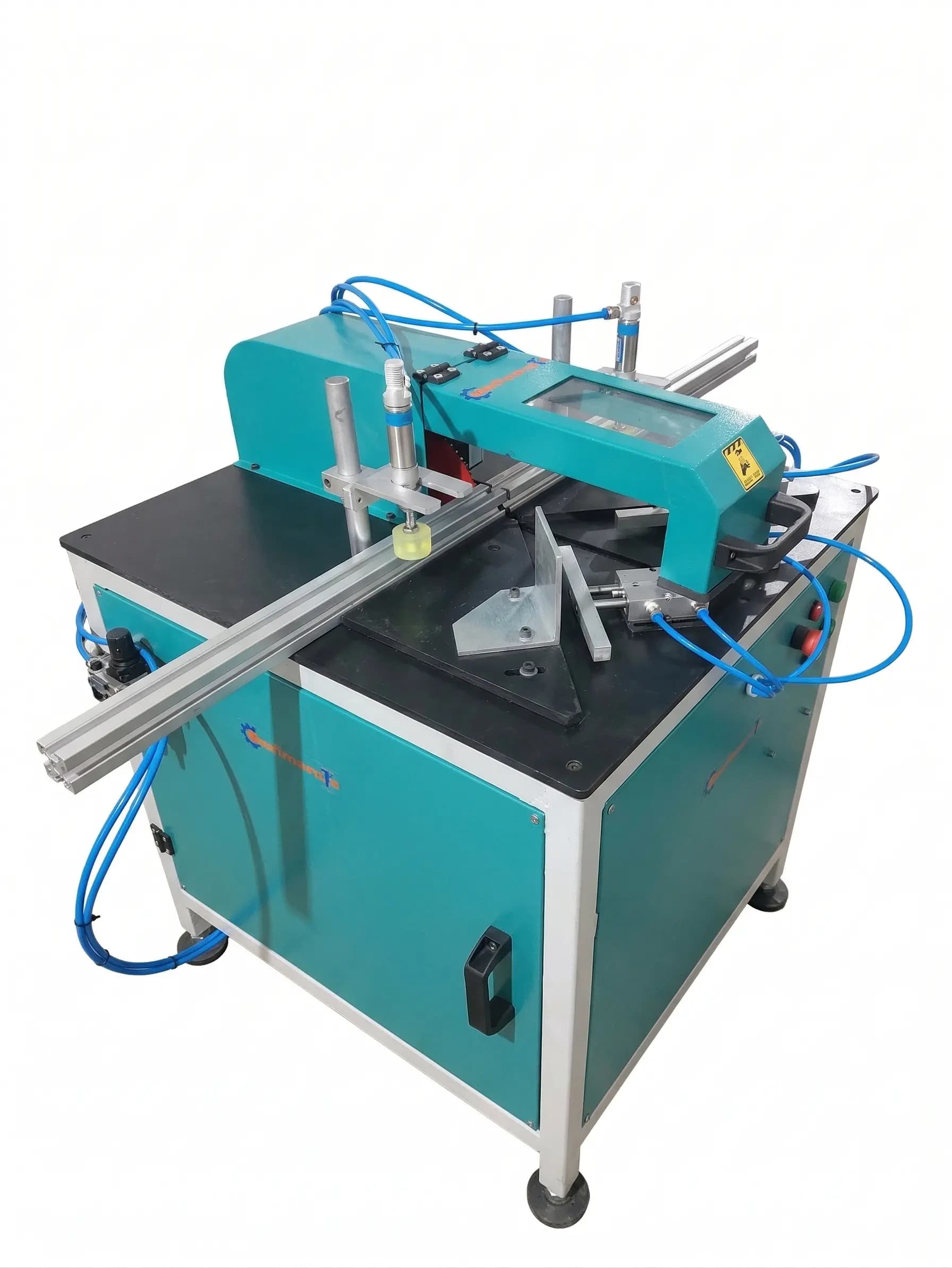
Model: MEPCCSH1 | Cutting
Single head 45°/90° aluminium & uPVC cutting machine with pneumatic clamping and cast-iron body. Handles Domal, Jindal, European and all standard Indian profiles. 3 HP motor, burr-free cuts. Factory-direct price ₹1,40,000 + GST from Ahmedabad. Model MEPCCSH1.
Model: MEPPPST2 | Punching
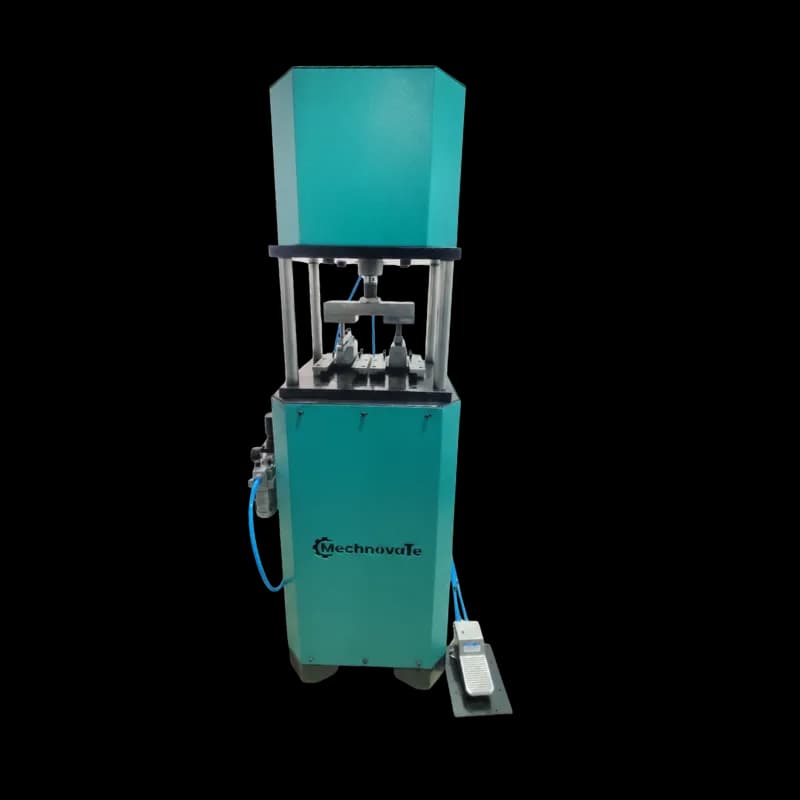
Two station pneumatic punching machine with dual independent dies — 1.8 ton force per station at 8–10 bar. Punch two different hole patterns without die changes, reducing punching time by up to 50%. Factory-direct price ₹1,20,000 + GST from Ahmedabad. Model MEPPPST2.
Model: MEPPPST1 | Punching
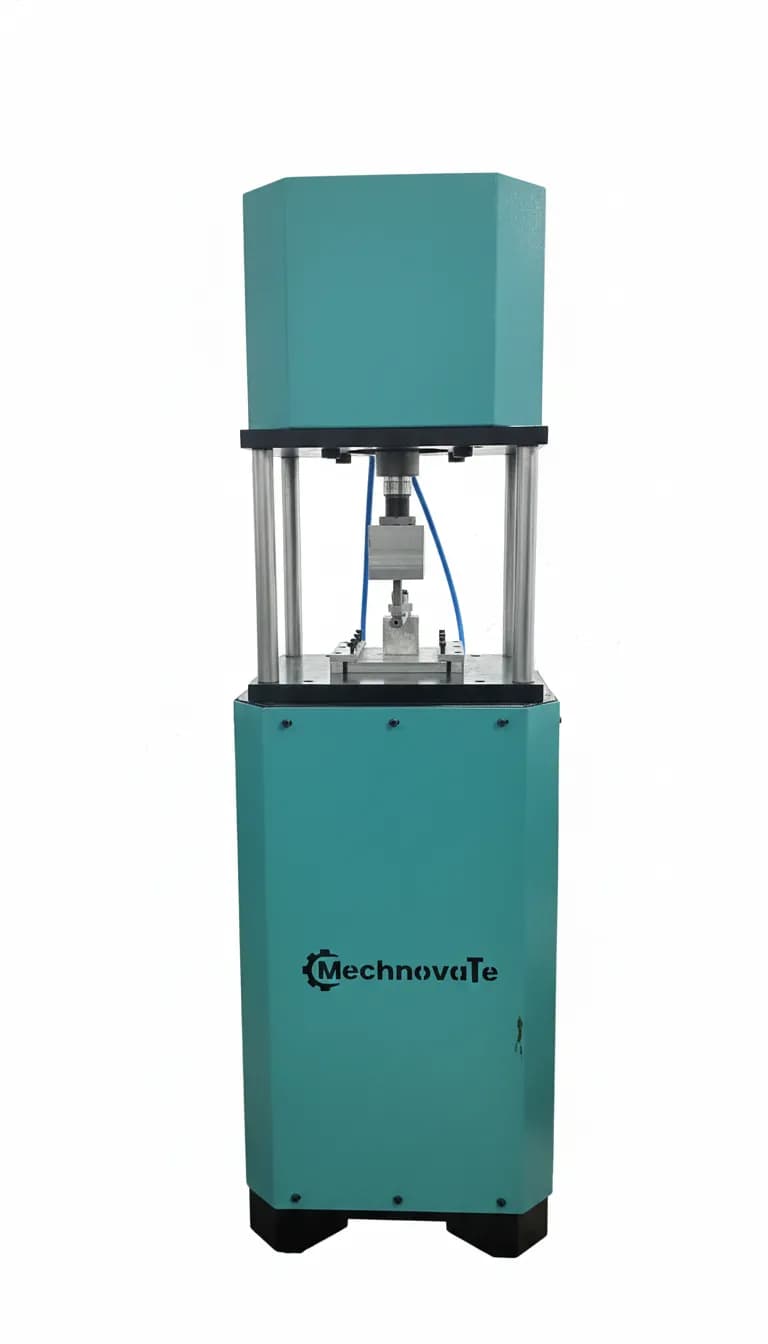
Single station pneumatic punching machine for aluminium window profiles — 1.85 ton punching force, Easy Guiding System, 6–8 bar compressed air. Punches clean holes in up to 2.5 mm wall thickness. Factory-direct price ₹1,10,000 + GST from Ahmedabad. Model MEPPPST1.
Model: MEPCR Series | Router
Pneumatic copy router machine with foot-pedal clamping for aluminium and uPVC window profiles. Optional air-oil spray system, 4 motor options (900 W–1860 W), 550×550 mm compact footprint. Factory-direct price from ₹70,000 + GST from Ahmedabad. MEPCR Series.
Explore Mechnovate Machinery
Browse our complete range of aluminium and uPVC window fabrication machinery. Call +91-9265699061 or visit our products page for specifications and pricing.