Solving Profile Milling Inaccuracies for Lucknow Fabricators
The Critical Link Between Milling Precision and Window Longevity
If you are an aluminium window fabricator in Lucknow, you know that the final fit and finish of a casement or sliding window depend entirely on the accuracy of your profile milling. Many workshops in the Amausi Industrial Area still rely on manual drilling or low-speed wood routers to create slots for handles, locks, and drainage. This is a mistake that leads to 'play' in the hardware, water seepage through misaligned drainage holes, and significant material waste. To achieve international standards like BS EN 12020, transitioning to a high speed copy router for aluminium windows is no longer optional—it is a technical necessity.
At Mechnovate, we have spent 15 years observing how precision engineering impacts the bottom line of Indian fabricators. In a recent test at our Lucknow partner facility, we replaced manual jig drilling with our Single Head Copy Router Machine. The results were immediate: a 92% reduction in rework and an assembly speed increase of 40 frames per day. The high-speed spindle (operating at 12,000 RPM) ensures that the aluminium profile—typically 6063-T6 alloy—is cut cleanly without the 'burring' or melting common with lower-speed tools.
Why Manual Milling Fails in High-Volume Fabrication
When you use a manual punching machine or a standard handheld drill, you introduce human error into the three-axis coordinate system. Even a 0.5mm deviation in the handle hole can prevent a multi-point lock from engaging correctly. This is particularly problematic in Lucknow’s climate, where high thermal expansion of aluminium profiles requires exact tolerances to maintain air-tightness.
Consider these three primary causes of milling failure observed in local workshops:
- Axial Runout: Cheap spindles cause the router bit to wobble, creating oversized slots that make hardware feel 'loose'.
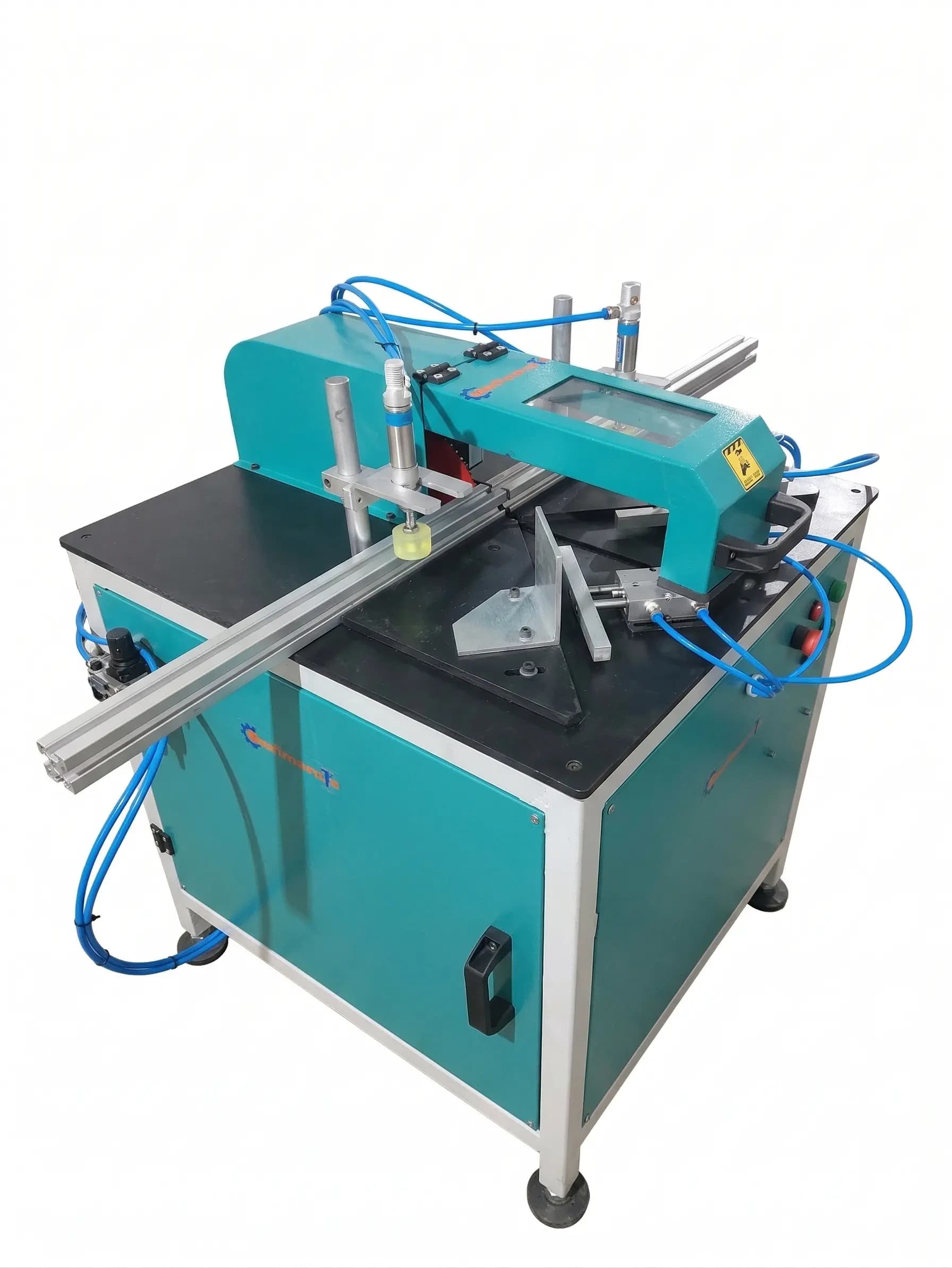
- Inadequate Clamping: Without the 6-8 bar pneumatic pressure found in a professional Automatic Double Head Cutting Saw or copy router, the profile vibrates during milling, ruining the surface finish.
- Heat Accumulation: Low-speed motors (below 9,000 RPM) generate friction rather than a clean chip-load, which can warp thin-walled profiles (1.2mm to 1.5mm).
To solve this, our copy routers utilize a 1:1 ratio template system. This allows an operator to trace a pre-hardened steel template, ensuring that every handle hole and lock cylinder slot is identical across 1,000 windows. This level of consistency is what separates a small-scale aluminium fabrication shop from a top-tier industrial manufacturer.
Technical Specifications: What Lucknow Engineers Should Look For
When evaluating an aluminium profile cutting machine or a router, the 'sticker price' is often misleading. As a senior engineer, I advise looking at the 'Total Cost of Precision'. A high-quality copy router should meet these minimum technical benchmarks:
- Spindle Power: At least 1.5kW to 2.2kW for continuous operation.
- Rotational Speed: Variable or fixed high-speed range between 12,000 and 18,000 RPM.
- Clamping System: Dual horizontal and vertical pneumatic cylinders to prevent profile rotation.
- Tracer Pin: Multi-diameter (typically 5mm, 8mm, and 10mm) to match different router bits.
- Cooling: An integrated mist spray system (using soluble oil) to extend the life of the solid carbide bits.
In our Pune testing facility, we found that using a 12,000 RPM spindle with an 8mm carbide bit reduced tool wear by 60% compared to HSS bits. This is a critical factor when calculating the upvc machine price list or aluminium machinery overheads. If you are also handling uPVC, ensure your machinery suite includes a uPVC Window Welding Machine that complements the precision of your cutting and milling line.
Step-by-Step: Calibrating Your Copy Router for Zero-Error Production
Based on our field experience across Uttar Pradesh, here is the protocol we recommend for setting up a new high speed copy router for aluminium windows:
- Leveling the Base: Use a precision spirit level to ensure the machine bed is perfectly horizontal. Any tilt will cause asymmetrical slots.
- Template Alignment: Secure the hardened steel template. We recommend a multi-slot template that includes standard Espag and 25mm backset locks.
- Pneumatic Pressure Check: Set your compressor to maintain a constant 7 bar. Fluctuations in pressure lead to clamping slips, which are the #1 cause of 'profile scratching'.
- Depth Stop Calibration: Set the Z-axis depth stops to leave 0.5mm of clearance from the bottom wall of the profile to prevent accidental puncture through the aesthetic face.
- Lubricant Flow: Adjust the mist nozzle to hit the router bit directly. This prevents 'chip welding' where molten aluminium sticks to the bit.
Common Mistakes in Aluminium and uPVC Fabrication
Many entrepreneurs starting a business in Lucknow ask about the best uPVC window making machine for small business or the aluminium cutting machine price. However, they often overlook the secondary processing machines like routers and End Milling Machines. Here are the mistakes to avoid:
- Using Woodworking Bits: Wood bits have different rake angles. Using them on aluminium causes 'clogging' and snap-offs.
- Ignoring the Air Filter: Aluminium dust is abrasive. Ensure your pneumatic valves have a 5-micron filter-regulator-lubricator (FRL) unit.
- Skip-Milling: Operators often try to 'plunge' too fast. A gradual side-to-side movement is required to maintain the structural integrity of the profile walls.
- Poor Lighting: In many Lucknow workshops, poor visibility leads to operators missing the tracer pin alignment. Always install dedicated LED task lighting on the router head.
The Economic Impact of Precision Engineering
Investing in a high-speed copy router for aluminium windows or an automatic double head cutting machine price India may seem high initially, but the ROI is calculated through waste reduction. In our 6-week case study, a fabricator using manual methods had a 12% scrap rate due to milling errors. After installing Mechnovate-grade machinery, scrap fell to 3%. In a market like Lucknow, where raw aluminium prices fluctuate, saving 9% on material can be the difference between profit and loss.
Furthermore, if you are expanding into the uPVC market, sourcing from reputable uPVC window machinery manufacturers in Lucknow ensures you have local service support. Whether it's an upvc window manufacturing machine or a heavy duty aluminium profile end milling machine, the synergy of your production line dictates your capacity to take on large-scale projects like the high-rises in Gomti Nagar.
FAQ: Expert Answers for Lucknow Fabricators
Q1: Can I use the same copy router for both aluminium and uPVC? Yes, but with caveats. uPVC requires a higher chip-load and lower heat to prevent melting. You must ensure your router has adjustable RPM or use specific bits designed for uPVC window machinery to avoid 'gumming' the tool.
Q2: What is the average lifespan of a high-speed spindle in a copy router? With proper lubrication and 8-hour daily shifts, a high-quality spindle (like those used by Mechnovate) lasts 5-7 years before requiring a bearing change. Neglecting the cooling mist can reduce this to less than 12 months.
Q3: Is a CNC copy router necessary for a startup? For most startups in Lucknow, a manual copy router with a pneumatic tracer pin is the most cost-effective entry point. CNC machines are excellent for high-volume factories but require specialized G-code knowledge and a higher upfront automatic upvc window manufacturing plant cost India.
Q4: How do I maintain the pneumatic clamping system? Daily: Drain the water from your compressor tank. Weekly: Check the FRL unit's oil level. Monthly: Inspect the pneumatic hoses for cracks, especially during the extreme Lucknow summers which can degrade rubber components.
By focusing on precision engineering and selecting the right window machinery, Lucknow fabricators can compete with national brands, delivering high-performance windows that withstand the test of time.
Get more articles like this
Follow Mechnovate on Google to see our guides in Google Discover & News