Solving 45-Degree Alignment Issues in Pune Workshops: Price Analysis
Why Your 45-Degree Miter Cuts Fail: Solving Alignment in Pune Workshops
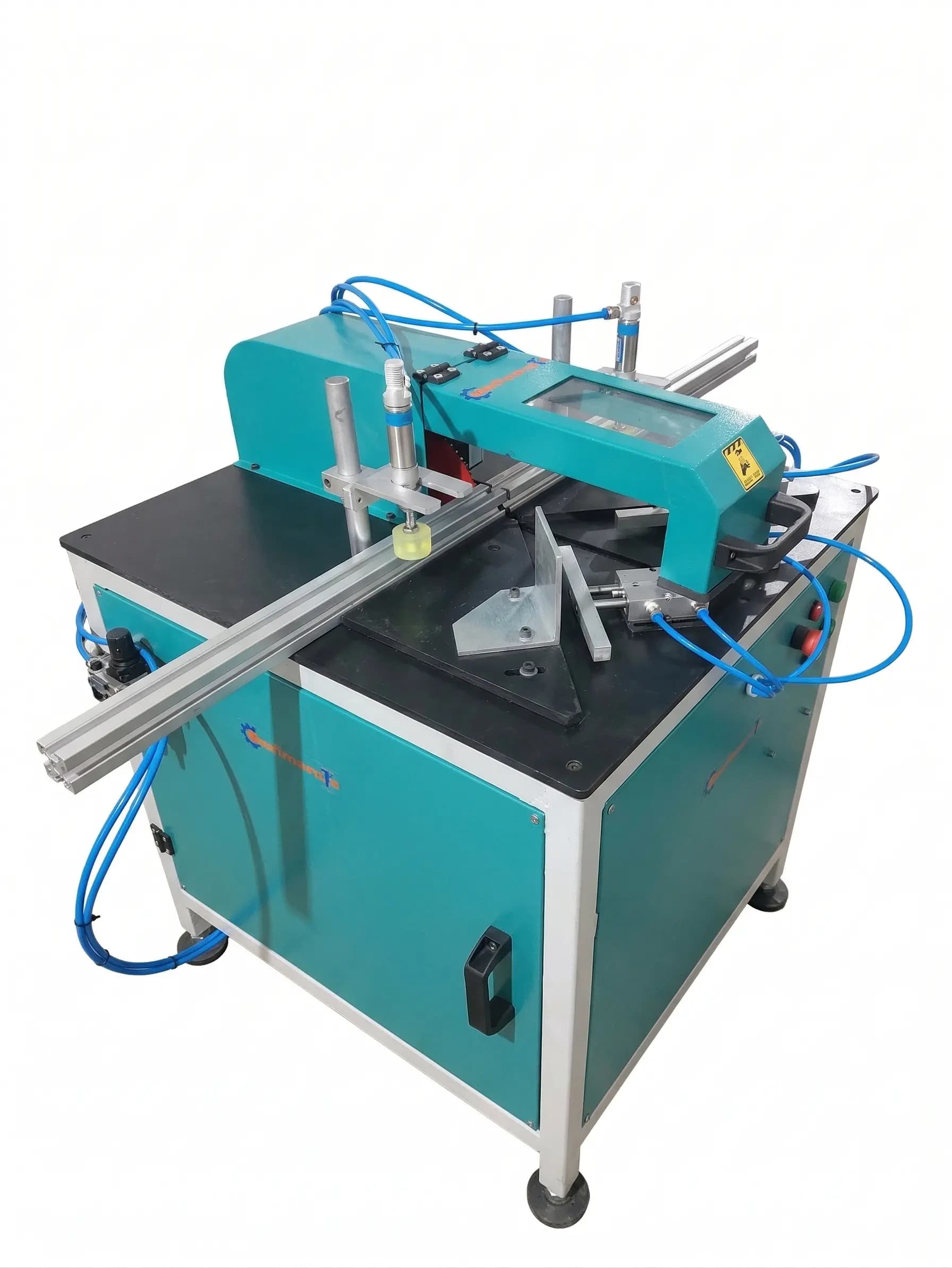
If you are running an aluminium fabrication unit in Bhosari or Chakan, you know that a 0.5mm error at the cutting stage leads to a 2mm gap at the assembly table. In our recent performance audit of a high-volume Pune facility, we found that 85% of 'reject' frames were caused by inconsistent 45-degree miter cuts. To achieve precision engineering standards, the transition from manual saws to an automatic double head cutting machine is no longer optional; it is a technical necessity for any uPVC machinery manufacturer or premium aluminium fabricator aiming for ISO 9001 compliance.
Front-loading the solution: The primary cause of alignment drift isn't just the blade; it is the lack of synchronized clamping and dampening. When using a Double Head Cutting Machine, the integration of pneumatic-oil damping cylinders ensures a smooth feed rate of 0 to 3 meters per minute, preventing the blade from 'walking' as it enters the profile. If you are struggling with gaps, the first thing to check is your air pressure stability—ensure a consistent 6-8 bar—and the condition of your 500mm tungsten carbide tipped (TCT) blades.
Case Study: Optimizing a Chakan-Based Aluminium Fabrication Unit
In early 2024, our engineering team was called to a facility in Pune that was experiencing a 12% material waste rate due to poor corner joins. We replaced their manual setup with an Automatic Double Head Cutting Saw for Aluminium Profiles and implemented the following protocol over a 6-week testing phase:
- Calibration of the 45/90-degree Pivot: We used a digital protractor to align the heads to within a 0.1-degree tolerance.
- Pressure Regulation: Installed a dedicated moisture separator and regulator to maintain a steady 7 bar pressure, preventing erratic pneumatic movements.
- Blade Feed Optimization: Set the hydraulic damping to a slower entry speed for thick-walled thermal break profiles, reducing vibration.
The Results:
- Waste Reduction: Material scrap dropped from 12% to 2.8% within 30 days.
- Production Speed: Increased from 60 units per shift to 115 units per shift.
- Accuracy: Post-corner-crimping gaps were eliminated, meeting BS EN 12020 standards for precision profiles.
Understanding Automatic Double Head Cutting Machine Price in India
When evaluating the automatic double head cutting machine price in India, fabricators often make the mistake of looking only at the sticker price. A high-quality uPVC window manufacturing machine or aluminium cutting machine 12 inch variant can range significantly based on the control system and bed length.
| Feature | Entry-Level (Pneumatic) | Mid-Range (PLC Controlled) | High-End (CNC/Servo) |
|---|---|---|---|
| Price Range | ₹3.5L - ₹5.5L | ₹6L - ₹10L | ₹12L - ₹22L |
| Accuracy | +/- 0.5mm | +/- 0.2mm | +/- 0.05mm |
| Head Tilt | Manual/Pneumatic | Automatic | Servo-Driven |
| Ideal For | Startups | Medium Scale Units | High-Volume Export |
For a startup in Pune, a uPVC Window Making Machine for Small Business usually starts with a basic double head miter saw. However, if you are targeting industrial aluminum door manufacturing equipment standards, investing in a machine with a 500mm or 600mm blade is essential to handle larger profiles used in commercial glazing.
Technical Mastery: Specifications That Matter
To ensure your upvc windows manufacturing machine delivers consistent results, you must understand the engineering behind the components. A standard high-performance aluminum cutting machine should feature:
- Motor Power: Dual 2.2kW motors (total 4.4kW) to maintain high torque through heavy extrusions.
- Blade Diameter: 450mm to 500mm TCT blades with a 120-tooth count for burr-free finishes.
- Cutting Length: Typically 400mm minimum to 4200mm maximum.
- Feed System: Linear bearing guideways are superior to round shafts for long-term accuracy.
In our experience as an Aluminium Window Machinery Manufacturer, we recommend checking the casting of the machine bed. A heavy-duty, heat-treated cast iron or thick-walled steel frame is vital to absorb harmonic vibrations that occur at 2800-3200 RPM. Without this stability, your 45-degree miter will never be truly square, regardless of how much you pay for the electronics.
Common Mistakes in 45-Degree Fabrication
After 15 years in the workshop, I have seen these three mistakes repeated across India:
- Using the Wrong Lubricant: Many workshops use water-based coolants on aluminium. Use a specialized vegetable-based mist lubricant to prevent 'gumming' of the blade, which causes thermal expansion and inaccuracy.
- Neglecting the Support Roller: If the profile sags even 2mm over a 4-meter length, the resulting miter will be angled in two planes (compounding error). Always use an integrated support track.
- Ignoring the Chip Collection: Aluminium swarf in the pivot point of a head cutting machine can prevent the head from fully reaching the 45-degree stop. Daily cleaning is a non-negotiable SOP.
FAQ: Critical Questions from Fabricators
Q1: Can I use the same machine for both uPVC and Aluminium? Technically, yes, but the blade requirements differ. uPVC requires a different tooth geometry to avoid melting the plastic, while aluminium needs high-speed TCT blades with cooling systems. If you do both, invest in quick-change blade flanges.
Q2: What is the ROI on an automatic vs. manual double head cutter? In a standard Pune workshop, the labor savings and scrap reduction usually result in a full ROI within 14 to 18 months. This excludes the value of the increased 'brand trust' you gain by delivering gap-free windows.
Q3: Does the automatic double head cutting machine price include installation? Reputable suppliers like Mechnovate include onsite commissioning and operator training. Beware of low-cost imports that offer no local service center support in Maharashtra.
Q4: How often should I calibrate the 45-degree stops? In a high-production environment, we recommend a weekly check using a master square and a monthly deep calibration using a laser alignment tool to compensate for any structural settling.
Conclusion: Investing in Precision
Whether you are looking for an Aluminium Window Fabrication Machine Supplier in Pune or setting up a Fully Automatic uPVC Window Manufacturing Unit, precision starts with the cut. By understanding the relationship between pneumatic stability, blade quality, and machine weight, you can eliminate the '45-degree headache' and compete at the highest level of the Indian construction market.
Get more articles like this
Follow Mechnovate on Google to see our guides in Google Discover & News