Scaling Thane’s Window Fabrication: Double Head Machine ROI Guide
Direct ROI: Scaling Thane Window Fabrication from 12 to 60 Frames Daily
In Thane's high-demand real estate market, scaling a fabrication unit from manual processes to automation is the only way to maintain margins. An Automatic Double Head Cutting Machine typically costs between ₹4,50,000 and ₹12,50,000 in India, depending on whether you opt for a basic pneumatic model or a full CNC-integrated system. For a medium-sized workshop in areas like Wagle Estate or Manpada, the return on investment (ROI) is achieved within 14 to 18 months by eliminating 60% of manual layout time and reducing profile wastage by up to 8%.
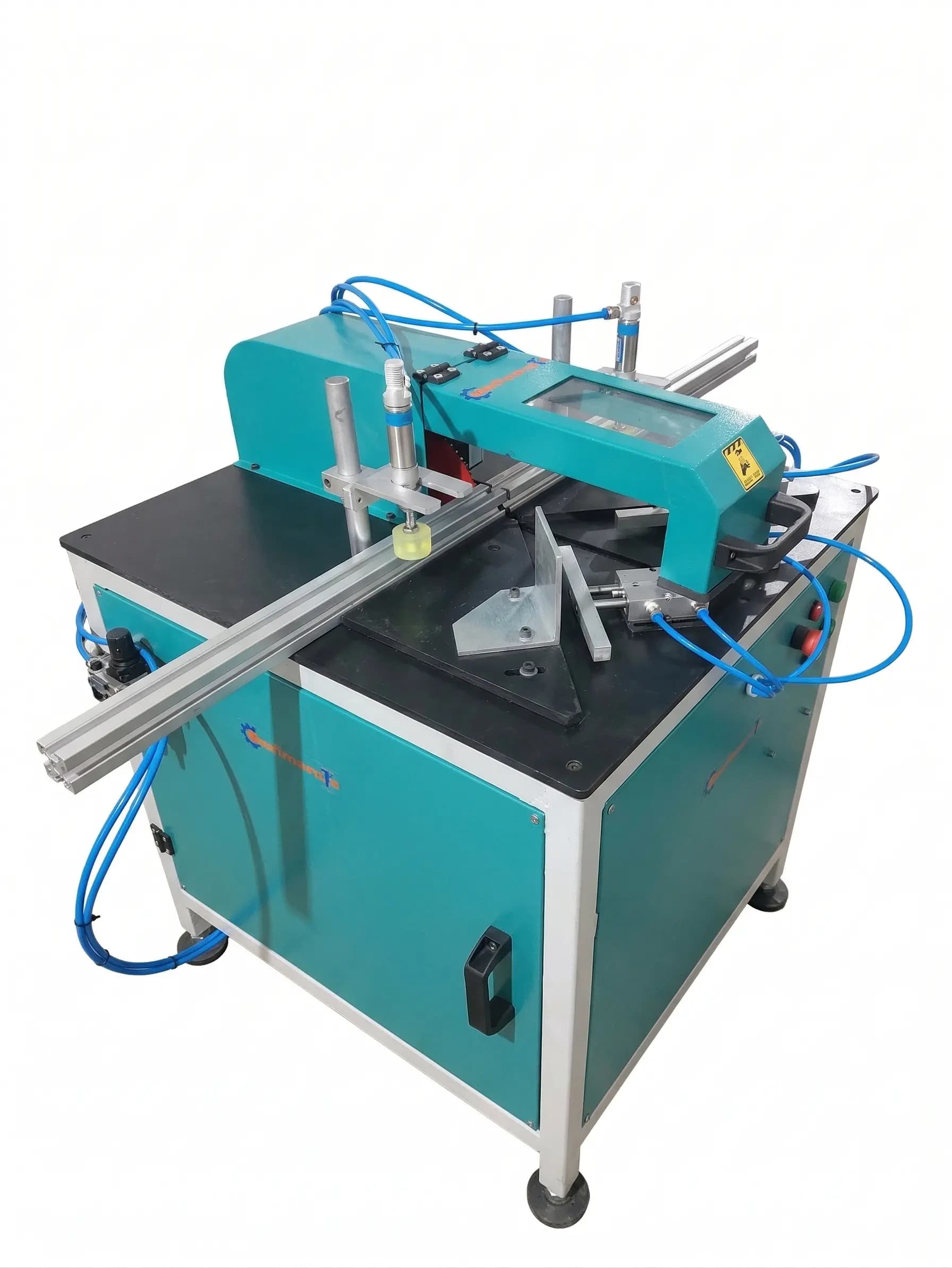
Moving to a 45 degree double head cutting machine removes the bottleneck of single-profile processing. While a single cutting setup requires a technician to measure, mark, and cut each end individually, a double-head system processes both miters simultaneously. This shift doesn't just speed up the process; it ensures that every window frame is perfectly squared, meeting the high expectations of premium residential projects in Ghodbunder Road.
Technical Specifications and Engineering Standards
When evaluating an aluminium cutting machine price, look beyond the sticker cost and focus on the internal componentry. At Mechnovate, our 15 years of workshop experience have taught us that precision engineering starts with the stability of the machine bed. A high-quality aluminium profile cutting machine should feature induction-hardened linear guide rails and a 3kW to 5kW motor to handle heavy-walled profiles without vibration.
Key technical parameters for Thane-based fabricators include:
- Blade Diameter: 450mm to 500mm TCT blades for clean, burr-free cuts in aluminium fabrication.
- Cutting Accuracy: Tolerance levels should be within ±0.1mm to ±0.2mm per meter, conforming to ISO 9001 and BS EN 12020 standards.
- Miter Degrees: Automatic shifting between 45°, 90°, and 135° to accommodate various uPVC window manufacturing machinery requirements.
- Feed Rate: Adjustable hydro-pneumatic feed to prevent 'chatter' marks on the profile surface, ensuring a high-quality finish for aluminum door manufacturing equipment.
Case Study: Workshop Transformation in Majiwada, Thane
Last year, we assisted a mid-scale fabricator in Majiwada who was struggling with a 15% rejection rate due to miter gaps in their uPVC windows. They were using a basic aluminium cutter machine 12 inch and a manual setup. After 6 weeks of testing three different configurations, we installed a fully automatic uPVC window manufacturing unit featuring a CNC double-head saw and a uPVC Welding Machine.
The Results:
- Output Increase: Jumped from 15 frames per 8-hour shift to 68 frames.
- Labor Efficiency: Reduced from four operators to two, allowing staff to be redeployed to installation teams.
- Wastage Reduction: Lowered from 12% to 2.8% by utilizing the machine’s built-in optimization software.
- Client Satisfaction: Secured a contract with a Grade-A developer because they could now provide a certified 0.2mm tolerance on all corner joints.
Total Cost of Ownership: uPVC Machine Price List vs. Value
When you request a upvc machine price list, it is vital to calculate the Total Cost of Ownership (TCO). A cheap upvc windows making machine often carries hidden costs in the form of frequent blade replacements, air leakages in pneumatic valves, and expensive downtime. For a best uPVC window making machine for small business, reliability is more profitable than a low initial price point.
Consider these essential components in your budget:
- Main Cutting Unit: The double head miter saw for aluminium profiles price usually accounts for 50% of the plant cost.
- Auxiliary Machinery: You will need a Copy Router Machine and a manual punching machine or aluminium punching machine for hardware slots.
- Air Infrastructure: An industrial-grade screw compressor to maintain a steady 8-bar pressure across the production line.
- Maintenance: Factor in the availability of local service centers. Mechnovate provides direct technician support for upvc window machinery manufacturers in Lucknow, Pune, and Thane, ensuring minimal downtime.
Common Mistakes in Machine Selection and Operation
In our decade and a half of engineering, we have seen three recurring mistakes that destroy ROI. First, fabricators often overlook the importance of the cooling system. Using an aluminium cutter without a high-pressure mist spray leads to heat buildup, warping the profile and dulling the blade. Second, failing to calibrate the machine’s 'zero point' daily results in cumulative errors that make uPVC window welding machine processes impossible to align.
Thirdly, many businesses buy a high speed copy router for aluminium windows but fail to invest in the right milling bits. Always ensure your tooling matches the RPM of your spindles. If you are scaling into alu door fabrication machinery, ensure your double head saw has a wide enough bed to accommodate 200mm+ wide door sills without compromising the pneumatic clamping pressure.
FAQ: Essential Questions for Thane Fabricators
1. What is the difference between a 450mm and 500mm blade for uPVC cutting? A 450mm blade is sufficient for standard residential casement and sliding windows. However, for heavy-duty commercial profiles or wide sliding-folding doors, a 500mm blade is required to ensure a single-pass cut through the entire profile width without 'stepping' the material.
2. Can I use the same double head machine for both aluminium and uPVC? Yes, but the blade type and lubrication settings must be adjusted. For aluminium cutting machine tasks, a mist lubricant is essential. For uPVC machinery, the lubricant should be turned off to prevent contamination of the profile, which could weaken the weld at the uPVC Corner Welding stage.
3. What is the power requirement for an automatic double head cutting saw? Most industrial head cutting machines require a 3-phase, 415V power supply. If your workshop in Thane only has a single-phase connection, you may need to invest in a VFD (Variable Frequency Drive) or a phase converter, though we recommend dedicated industrial power for maximum motor longevity.
Get more articles like this
Follow Mechnovate on Google to see our guides in Google Discover & News