Preventing Monsoon Leaks in Pune: The Precision Crimping Guide
Why Pune High-Rises Leak: The Engineering Reality
In Pune’s high-rise corridors—from Kharadi to Hinjewadi—monsoon winds hit building facades at velocities exceeding 100 km/h, creating localized pressure zones of up to 2.5 kPa. If your aluminium window corners are joined using traditional screw-fastened cleats, they will eventually leak. Capillary action pulls wind-driven rain through microscopic gaps in the miter joint, leading to internal wall dampness and structural damage.
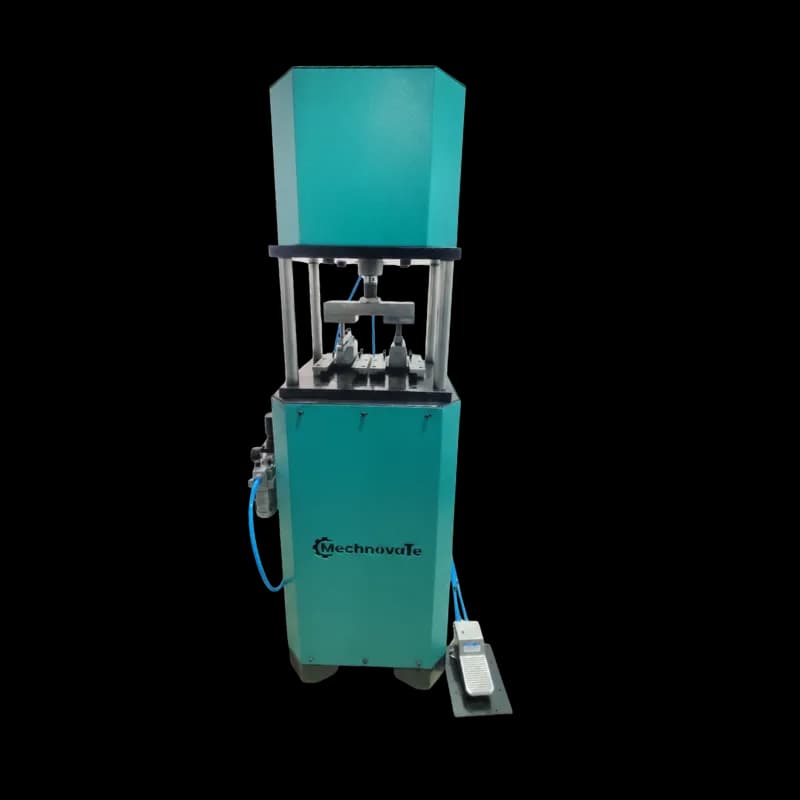
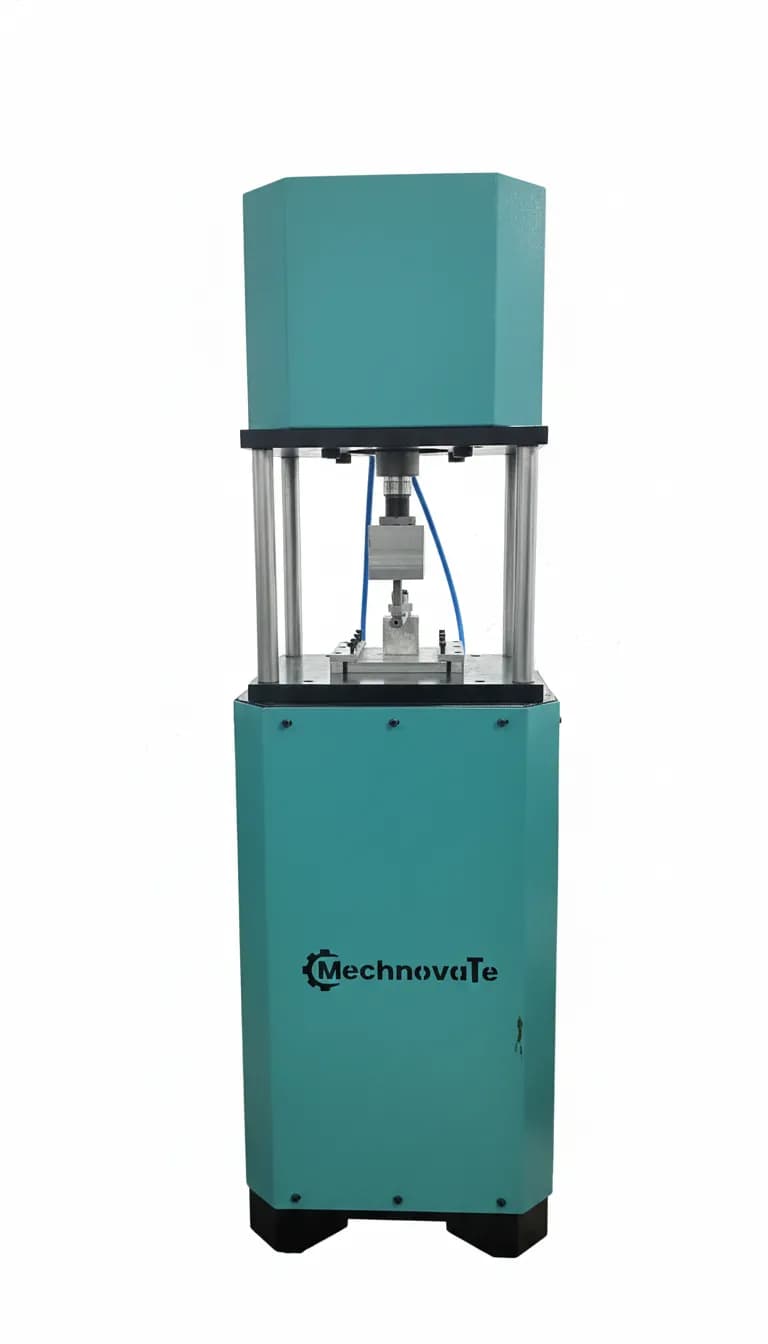
As a senior engineer at Mechnovate with over 15 years in aluminium fabrication, I have seen hundreds of failures caused by insufficient joinery. The only way to ensure a 100% watertight seal is through the use of a high-pressure Corner Crimping Machine. This process replaces mechanical fasteners with a cold-welded, hydraulic press-fit that locks the profile and the inner cleat into a singular, monolithic unit.
The Mechnovate Case Study: Baner High-Rise Performance Testing
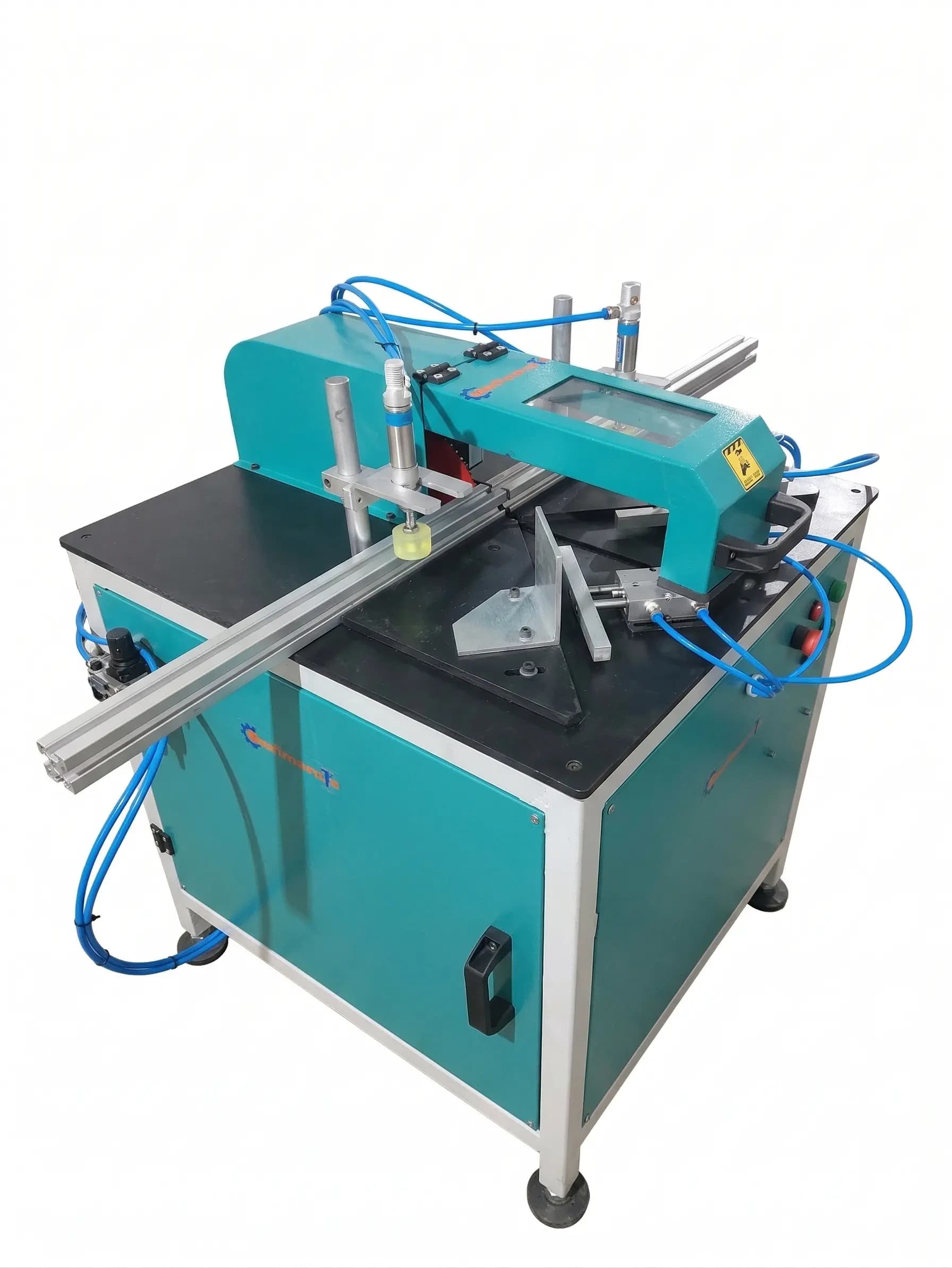
Last year, our team assisted a major fabricator in Pune who was facing a 15% callback rate due to window leaks in a 22-story project. We implemented a 6-week protocol using our heavy-duty Double Head Miter Saw and an automatic corner crimper.
The Process:
- Precision Cutting: We calibrated the 45-degree miter cuts to a tolerance of ±0.1mm. Even a 0.5mm gap is enough for water ingress under high pressure.
- Adhesive Application: We used a two-part epoxy glue specifically designed for aluminium profile cutting machine outputs, applying it to the internal chambers before crimping.
- Hydraulic Crimping: We set the hydraulic pressure to 70 bar, ensuring the knifing blades penetrated the profile precisely at the designated cleat grooves.
The Results:
- Leakage Reduction: Callbacks dropped from 15% to 0.4%.
- Production Speed: Frame assembly increased by 40 frames per day compared to manual screwing.
- Structural Rigidity: Corner pull-out tests showed a 300% increase in load-bearing capacity compared to manual punching.
Technical Specifications for Superior Sealing
To achieve results that meet BS EN 12020 and ISO 9001 standards, fabricators must understand the relationship between material thickness and machine pressure. For a standard 2.0mm wall thickness profile, your aluminium window corner crimping machine price should reflect its ability to provide synchronous blade movement.
| Feature | Requirement for Pune High-Rises |
|---|---|
| Profile Thickness | 1.8mm to 3.0mm (Grade 6063-T6) |
| Cutting Accuracy | ±0.1mm using a Double Head Miter Saw |
| Crimping Force | Minimum 40kN to 80kN hydraulic force |
| Blade Depth Control | 0.1mm increment adjustment for precision engineering |
Using an automatic aluminium corner crimping machine price Gujarat or Pune-based suppliers offer can vary, but the critical factor is the "Synchronous Movement" of the punching heads. If one head hits before the other, the miter shifts, creating a permanent gap that no amount of silicone can fix.
5 Common Mistakes in Pune Fabrication Shops
Through our audits of uPVC window manufacturing machines and aluminium lines, we've identified recurring errors that compromise window integrity:
- Skipping the Glue: Many shops use the crimping machine as a mechanical bond only. Without a high-quality corner sealant, the joint is air-tight but not necessarily water-tight over 10 years of thermal expansion.
- Incorrect Blade Alignment: Using a manual punching machine or an uncalibrated crimper leads to "burring," where the metal tears rather than folds. This creates paths for water.
- Worn-out Blades: We recommend sharpening or replacing crimping blades every 50,000 cycles. Dull blades increase the required pressure, often deforming the visible face of the powder-coated profile.
- Neglecting the 45-degree Cut: A 45 degree double head cutting machine must be perfectly square. If the cut is 44.8 degrees, the "heel" of the joint will never close, regardless of crimping force.
- Poor Profile Support: If the profile isn't supported by adjustable height blocks during crimping, the weight of the profile causes the joint to twist under hydraulic pressure.
The Role of Precision Machinery in Modern Fabrication
Whether you are looking for an aluminium cutting machine 12 inch for small residential work or a CNC aluminium profile cutting machine suppliers India for commercial contracts, precision is the only hedge against the Pune monsoon. The market for uPVC window machinery manufacturers in Lucknow or Chennai is growing, but for high-rise aluminium, the corner crimper remains the undisputed king of durability.
For those diversifying, integrating a Copy Router Machine ensures that drainage slots are milled at the exact depths required by the profile designer. These slots work in tandem with crimped corners; while the crimp keeps water out, the routed slots ensure any moisture in the tracks is evacuated immediately.
ROI Analysis: Is the Investment Worth It?
A high-quality automatic aluminium window production line price can be significant. However, consider the cost of a single leak repair in a high-rise: scaffolding, labor, interior repainting, and brand damage. In our experience, a fabricator processing 50 windows a day recovers the cost of a precision crimping machine within 8 to 12 months simply through the elimination of rework and waste.
If you are evaluating an aluminium cutting machine price or looking at upvc window manufacturing machinery, prioritize the structural assembly phase. A window is only as good as its weakest corner.
FAQ: Expert Answers for Fabricators
Q1: Can I use a manual punching machine for high-rise windows? No. Manual punching does not provide the consistent hydraulic force required to cold-weld the cleat to the profile. It is suitable for low-rise or interior partitions but will fail under the wind loads found in Pune high-rises.
Q2: How do I choose the right crimping blades for different profiles? Blades are profile-specific. When you purchase from aluminium window fabrication machine suppliers Pune, ensure they provide a blade-setting chart. You must match the blade width to the "groove" of the internal corner cleat to avoid profile deformation.
Q3: What is the maintenance schedule for a hydraulic crimping machine? Daily: Clean the work surface and check hydraulic oil levels. Weekly: Lubricate the sliding guides. Monthly: Check the alignment of the 90-degree reference block. Every 6 months: Replace hydraulic filters to maintain consistent pressure for precision engineering results.
Get more articles like this
Follow Mechnovate on Google to see our guides in Google Discover & News