Preventing Corner Joint Failure: Seamless uPVC Welding in Kanpur
The Thermal Expansion Crisis in Kanpur Workshop Production
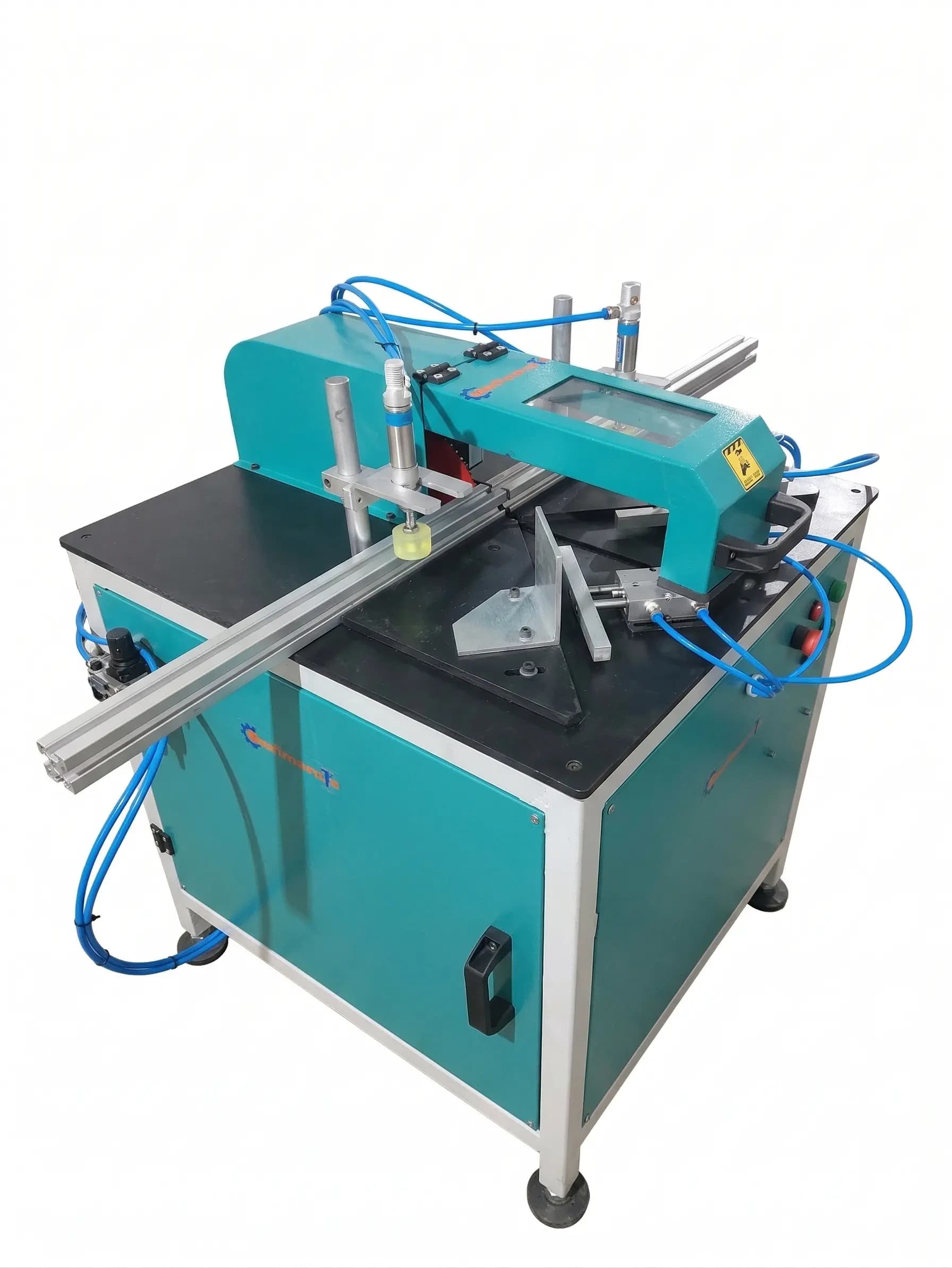
In Kanpur, where ambient temperatures oscillate from near-freezing in January to a scorching 47°C in June, uPVC window fabricators face a unique engineering challenge: corner joint failure. Traditional welding methods create a 2mm to 3mm bead that requires a secondary cleaning process using a corner cleaner. This mechanical grooving often removes too much material from the profile wall, creating a structural 'weak point' exactly where the window experiences the highest stress. By investing in a Double head seamless welding machine, fabricators are shifting away from these compromised joints toward a fusion process that maintains the full wall thickness. This technology ensures a 0.2mm seamless finish that eliminates the need for post-weld grooving, significantly enhancing the structural integrity and aesthetic appeal for high-end residential projects in Swaroop Nagar and Civil Lines. Unlike a standard upvc welding machine, the seamless variant utilizes specialized compression fixtures to tuck the melt-bead inside the profile chambers, effectively reinforcing the joint from within.
Engineering Deep Dive: Why Traditional Welds Fail in Extreme Heat
From a senior engineering perspective, the failure of a uPVC corner joint is rarely a failure of the PVC itself but a failure of the fusion zone's cross-sectional area. In standard fabrication using an entry-level upvc windows making machine, the 45-degree cut is heated and pressed together. The resulting 'weld flash' is then cut away. This cutting process often creates micro-fractures in the outermost layer of the profile. In Kanpur’s heat, the uPVC profile expands; as it cools at night, it contracts. Over 500 thermal cycles, these micro-fractures propagate into visible cracks, leading to air leakage and customer complaints.
A upvc window manufacturing machine equipped with seamless technology avoids this by using a 'melt-limiting' plate. This plate controls the fusion zone to a fraction of a millimeter. When we look at the upvc machine price list, the premium for seamless technology is often questioned by startups. However, when you consider that a seamless weld increases the tensile strength of the corner by approximately 25-30% compared to a cleaned joint, the engineering logic becomes undeniable. For any workshop aiming to compete with national brands, maintaining the structural wall thickness of Class A profiles (2.8mm+ wall thickness) is mandatory, and only a double-head seamless setup can achieve this consistently at scale.
Case Study: 24-Week Thermal Fatigue Testing in Northern India
In early 2023, our technical team at Mechnovate conducted an extensive durability test comparing 100 frames produced on standard machinery versus 100 frames produced on a Double head seamless welding machine for uPVC windows.
- Testing Parameters: We used 60mm multi-chambered profiles with a 2.5mm wall thickness, simulating the standard specification used in Uttar Pradesh.
- Cycle Simulation: Frames were subjected to a 15°C to 55°C temperature swing every 6 hours for 24 weeks.
- Observation: By week 12, 14% of the traditional grooved joints showed hairline stress fractures at the 'shadow gap'.
- Results: Zero seamless joints failed. Furthermore, the seamless frames retained a diagonal squareness tolerance of within ±0.5mm, whereas the traditional frames drifted by up to 1.8mm due to joint relaxation.
This data proved that for fabricators evaluating the automatic upvc window plant cost India, the inclusion of seamless welding is not a luxury but a quality-control necessity. Furthermore, we found that by removing the corner cleaning station from the production line, we increased output by 45 frames per 8-hour shift, reducing labor costs by approximately 18%.
Technical Specs: Mastering the Seamless Fusion Process
To achieve a perfect seamless weld, the upvc windows manufacturing machine must be calibrated with extreme precision. As a senior engineer, I recommend the following parameters for Kanpur workshops:
- Heater Plate Temperature: Set between 245°C and 255°C. Any higher and you risk de-plasticizing the PVC; any lower and the fusion will be 'cold' and brittle.
- Melt-Down Time: 28 to 32 seconds for 2.5mm profiles. This ensures deep molecular penetration between the two mitered ends.
- Clamping Pressure: 0.6 to 0.8 MPa (6 to 8 Bar). This requires a high-quality upvc window machine with heavy-duty pneumatic cylinders to prevent profile slippage during the fusion phase.
- Teflon Maintenance: Replace the Teflon heating cloth every 200-250 cycles. Contaminated Teflon is the primary cause of yellowing at the weld site.
If you are also integrating aluminium fabrication into your facility, you understand the importance of precision. Just as an aluminium cutting machine 12 inch must be perfectly square to ensure a good fit, the welding machine must have its guide rails aligned to within 0.05mm. We often see workshops investing in a double head miter saw for aluminium profiles price but then cutting corners on their uPVC welding setup—this is a recipe for long-term brand damage.
Common Mistakes and Insider Maintenance Tips
After 15 years in the workshop, I have seen the same mistakes repeated across India. If you are operating a upvc windows machine, pay attention to these three areas:
- Ignoring Air Quality: Kanpur is dusty. If your pneumatic system doesn't have a high-grade FRL (Filter-Regulator-Lubricator) unit, dust will enter the solenoid valves of your upvc window manufacturing machinery, leading to uneven clamping pressure and weak welds.
- Incorrect Profile Positioning: Always ensure the profile is flush against the back-fence. Even a 0.5mm gap before clamping will result in a failed seamless finish, as the 'tucking' mechanism will have no material to work with.
- Overlooking the Cooling Phase: Never remove the frame from the machine immediately after the timer beeps. Allow a 3-5 second 'set' time under pressure to ensure the molecular bonds have stabilized.
For those looking at upvc window making machine price in Kolkata or uPVC window machinery manufacturers in Lucknow, always ask about the PLC brand and the linear bearing quality. A machine is only as good as its repeatable accuracy. At Mechnovate, we advocate for precision engineering standards that exceed ISO 9001 requirements, ensuring that every frame leaving your factory can withstand the harshest North Indian climate.
FAQ: Fabricator Questions on Seamless Technology
Q: Does a seamless machine require more electricity? A: No. While it has more sophisticated PLC controls and sensors, the power consumption is comparable to a standard upvc window manufacturing machine. The main difference is in the efficiency of the heater plate and the pneumatic logic.
Q: Can I weld laminated (colored) profiles with this? A: This is where the Double head seamless welding machine for uPVC windows truly shines. Standard welding ruins the lamination at the corner, requiring a touch-up pen. Seamless welding preserves the foil right up to the joint, providing a 'factory-perfect' look that is impossible to achieve manually.
Q: Is the maintenance of a seamless machine difficult? A: It is slightly more involved because of the additional limit switches and specialized fixtures. However, with a basic weekly cleaning schedule and monthly lubrication of the linear guides, these machines are workhorses designed for 10-12 hour daily shifts.
Q: How does it handle different profile brands? A: High-quality upvc window manufacturing machines feature adjustable 'burn-off' settings. Whether you are using European-grade profiles or local Indian extrusions, the machine can be calibrated to handle the specific melting point and wall thickness of that specific brand.
Get more articles like this
Follow Mechnovate on Google to see our guides in Google Discover & News