Precision 45-Degree Aluminium Cutting: Kanpur Calibration Guide
Achieving Zero-Gap Joints in Kanpur Fabrication Units
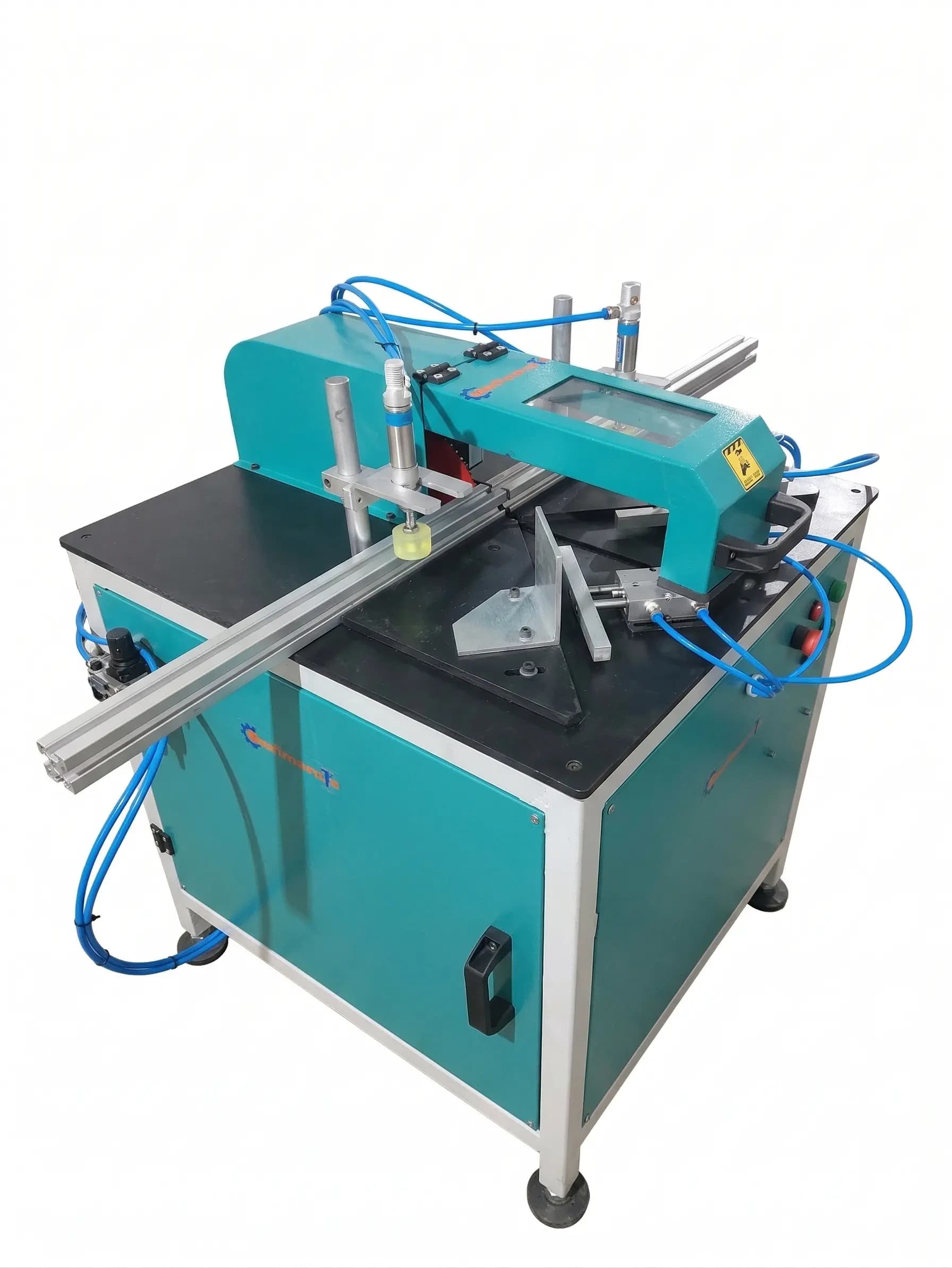
If you are operating an aluminium fabrication unit in Kanpur’s industrial clusters like Panki or Dada Nagar, you know that the difference between a premium window and a rejected one often comes down to less than 0.5 degrees. A 'light gap' in a 45-degree miter joint isn't just an aesthetic flaw; it compromises the structural integrity and weather-sealing of the entire unit. In my 15 years of hands-on experience as a senior engineer at Mechnovate, I have seen hundreds of workshops struggle with joint precision, often blaming the aluminium profile cutting machine when the real culprit is a lack of systematic calibration.
In a recent case study at a high-capacity facility in Kanpur, we identified that the fabricator was losing approximately 12% of their raw material to 'trial and error' cuts. By implementing the calibration protocols outlined below, we reduced cutting waste to under 2% and increased the daily output from 110 frames to 155 frames. This guide provides the technical blueprint required to achieve that level of precision using standard window machinery and advanced 45 degree double head cutting machine setups.
Step-by-Step: Calibrating Your Aluminium Profile Cutting Machine
Calibration is not a one-time setup; it is a recurring engineering necessity. Whether you are using a basic aluminium cutting machine 12 inch model or a sophisticated Automatic Double Head Cutting Machine, the following steps must be followed with high-precision measuring tools like a digital protractor and a dial indicator.
- Blade Run-out Verification: Before adjusting angles, check the lateral run-out of your saw blade. Mount a dial indicator against the blade body (not the teeth) and rotate it manually. If the run-out exceeds 0.05mm, your cuts will always be 'fuzzy' or slightly off-angle regardless of the machine's settings. This is a common issue in many aluminium cutter machine units where the flange has accumulated debris.
- The 90-Degree Base Alignment: You cannot find a perfect 45 if your 90 is off. Ensure the back fence is perfectly perpendicular to the saw travel. Use a precision square to align the fence relative to the blade's path. In precision engineering, even a 0.1mm deviation at the fence translates to a visible gap at the miter.
- Miter Stop Calibration: Most degree cutting machine models use mechanical stops for 45 and 90 degrees. Loosen the lock nuts and use a digital angle gauge to find the true 45.00 degrees. Lock the stop only when the gauge reads consistently over five consecutive test cycles. This is critical for an upvc windows making machine as well, where thermal expansion of the material differs from metal.
- Clamping Pressure Synchronization: One of the most overlooked factors in Kanpur workshops is pneumatic pressure. If your vertical clamps fire before your horizontal ones, the profile may shift slightly. Set your bar pressure to a consistent 6-8 bar. This ensures the aluminium profile cutting machine holds the workpiece rigidly against the fence during the entire stroke.
- Kerf Compensation: When programming a Double Head Cutting Machine, ensure the controller accounts for the exact kerf width (usually 3.2mm to 4.0mm). Failure to do this results in frames that are consistently short by the width of the blade.
The Technical Science of the Blade: RPMs and Feed Rates
To achieve a mirror-finish cut on a 6063-T6 alloy profile, you must understand the relationship between blade speed and feed rate. For a standard aluminium cutter, we recommend a spindle speed between 2800 and 3200 RPM. If the speed is too low, the blade 'tears' the metal; if it is too high, you risk galling where the aluminium melts onto the blade teeth.
The feed rate should be controlled via a hydro-pneumatic cylinder to ensure a smooth, constant motion. We have found that a feed rate of 0.5 to 1.2 meters per minute is ideal for most architectural sections. If you are using an upvc windows machine, the feed rate can be slightly higher, but the principle remains: consistency is the enemy of vibration. High-quality aluminum window machine manufacturers in Ahmedabad often emphasize that the stability of the saw head is more important than the raw horsepower of the motor.
Avoiding Common Fabrication Pitfalls in the Uttar Pradesh Hub
Throughout my years in the field, I have noticed three recurring mistakes that plague the upvc window manufacturing machine landscape in northern India. First is the use of blunt blades. A dull blade generates excessive heat, causing the profile to expand during the cut and shrink afterward, ruining the 45-degree precision. Second is the lack of a proper mist lubrication system. Without a high-quality vegetable-based lubricant, the aluminium chips weld themselves to the blade, leading to 'chipped' edges.
Thirdly, many fabricators ignore the 'end milling' sequence. If your Heavy Duty Copy Router is not aligned with your cutting machine, the hardware slots will be off-center, leading to further joint stress. It is vital to treat the entire production line as a single ecosystem. Whether you are looking at aluminium cutting machine price or the cost of setting up uPVC window manufacturing unit in India, always budget for high-precision measuring tools as part of your initial investment.
Standards and Safety: IS 1285 and ISO Compliance
When manufacturing for government contracts or premium high-rise projects in Kanpur, adherence to standards like IS 1285 (for wrought aluminium) and BS EN 12020 is mandatory. These standards dictate the tolerances for wall thickness and angularity. Your Aluminium Punching Machine and cutting units must be capable of maintaining tolerances within +/- 0.2mm to remain compliant.
Industrial profile cutting safety standards ISO standards also mandate the use of two-hand safety starts and protective shielding. At Mechnovate, we ensure every automatic aluminium corner crimping machine price Gujarat or Kanpur based includes these critical safety features. Never bypass a safety sensor to save a few seconds; the cost of an accident far outweighs any production gain.
FAQ for Professional Fabricators
Q1: Why does my 45-degree cut look perfect but the joint has a gap at the top? This is usually caused by 'clamping deflection.' If your profile is not supported correctly or the pneumatic pressure is too high, it may bow slightly during the cut. When the pressure is released, the profile springs back, and the angle changes. Check your support rollers and clamp positioning.
Q2: How often should I calibrate my manual punching machine or cutting saw? In a high-volume Kanpur workshop, we recommend a 'quick check' every morning using a master sample and a full mechanical calibration every 15 days. Vibrations from heavy-duty operation can slowly loosen the mechanical stops.
Q3: Is an automatic double head cutting saw for aluminium profiles worth the investment for a small business? If you are processing more than 30 windows a day, the reduction in labor and the elimination of manual measurement errors will typically pay for the machine within 12 to 18 months. The consistency of an automatic cycle is unmatched by even the most skilled manual operator.
Q4: What is the best uPVC window making machine for startup businesses in Kanpur? For startups, we suggest beginning with a single head cutter and a Manual Punching Machine. As your volume grows, you can transition to a CNC uPVC window fabrication machine price in India that fits your expanding budget while maintaining the same calibration principles learned on manual gear.**
Get more articles like this
Follow Mechnovate on Google to see our guides in Google Discover & News