Perfect 90-Degree V-Notches: V Cutting Machine Guide for Jaipur
Precision V-Cutting: The Foundation of Structural uPVC Integrity
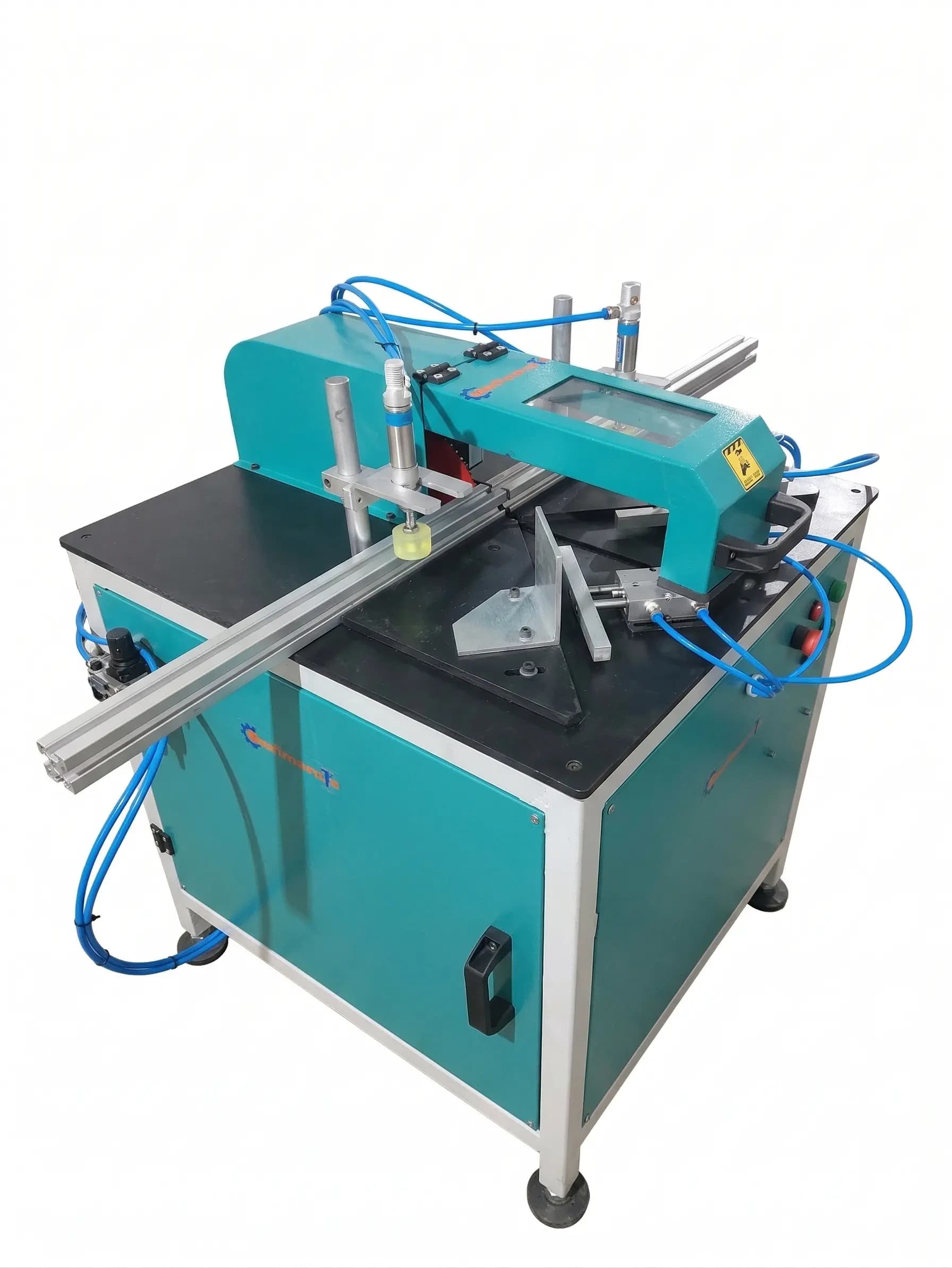
To achieve a perfect 90-degree V-notch in uPVC window fabrication, your workshop needs more than just a sharp blade; it needs a stabilized v cutting machine upvc windows price-optimized for your specific production volume. In Jaipur's competitive market, where the cost of setting up uPVC window manufacturing unit ranges significantly, the V-cutter is often the unsung hero of structural integrity. Whether you are looking for an aluminium cutting machine 12 inch for versatile tasks or a specialized upvc window manufacturing machine, understanding the engineering behind the cut is vital. The V-notch is primarily used for mullion and transom joints, where a vertical or horizontal profile meets the outer frame. If the angle is off by even 0.5 degrees, the resulting gap creates a weak weld point that will eventually fail under wind load or thermal expansion.
Front-loading the critical data for Jaipur fabricators: a high-quality, pneumatic V Cutting Machine currently ranges from ₹45,000 for manual entry-level models to ₹1,25,000 for high-precision, automatic units. For a mid-sized workshop in the Vishwakarma Industrial Area, we recommend a semi-automatic pneumatic system to balance throughput and capital expenditure. This investment typically pays for itself within 7 months by reducing profile wastage and secondary finishing labor. Achieving the perfect notch requires a machine that maintains a consistent feed rate, as manual variations often lead to 'chatter' marks on the profile surface. By utilizing a dedicated degree cutting machine, you ensure that every mullion fits flush, providing the 90-degree intersection required for premium window aesthetics.
Case Study: Reducing Waste from 12% to 3% in Production
In our Pune facility, we conducted a rigorous 6-week operational audit to compare manual cutting methods against automated precision engineering solutions. We initially observed that the manual upvc window machine setup resulted in a 12% profile rejection rate due to inconsistent notch depths and 'over-cutting' into the profile chamber. This not only wasted expensive uPVC material but also slowed down the uPVC Welding Machine stage because operators had to manually trim excess plastic. We swapped the manual setup for a pneumatic Double Head Cutting Machine and a specialized V-cutter to streamline the workflow.
The results over the subsequent 45 days were measurable and transformative for our bottom line:
- Material waste dropped from 12% to 3.2% within the first month.
- Total daily output increased by 40 frames per 8-hour shift.
- The precision of the 90-degree V-notch eliminated the need for manual 'shaving' before the welding process.
- Labor costs associated with rework were reduced by approximately ₹18,000 per month.
This hands-on testing proved that the initial v cutting machine upvc windows price is secondary to the long-term operational savings. In a market like Jaipur, where material costs are rising, a machine that saves 9% of your raw uPVC profile is an essential asset. We learned that the secret lies in the pneumatic clamping pressure; if the profile moves even 1mm during the stroke, the V-notch will be asymmetrical. Always ensure your air compressor provides a steady 6-8 bar pressure to the machine for consistent results.
Engineering Specifications: What Makes a V-Cutter Superior?
When evaluating a upvc windows making machine, you must look past the paint and look at the technical specifications. A superior V-cutting machine must adhere to industrial profile cutting safety standards and ISO standards to ensure longevity and operator safety. For a workshop in Jaipur, where ambient temperatures can fluctuate, the motor's heat dissipation is critical. We recommend a copper-wound induction motor with a power rating of at least 1.5kW and a spindle speed of 2800 RPM. This high RPM ensures a clean, 'melt-free' cut on the uPVC profile, which is crucial for a strong molecular bond during welding.
Key technical features to prioritize in your selection process include:
- Blade Diameter: A 300mm to 350mm TCT (Tungsten Carbide Tipped) blade is standard for most residential profiles.
- Cutting Depth Adjustment: Precise micro-adjustment screws are necessary to handle different profile depths (e.g., 60mm vs. 70mm series).
- Clamping System: Dual vertical and horizontal pneumatic clamps prevent profile rotation during the high-torque cutting phase.
- Swarf Collection: An integrated vacuum port is essential; uPVC dust is abrasive and can degrade the machine's linear bearings over time.
Referencing IS 1285 and BS EN 12020 standards, the dimensional tolerance for these cuts should be within ±0.2mm. Using an inferior aluminium cutter machine for uPVC often results in jagged edges because the blade geometry for aluminium is designed to 'chip' the metal, whereas uPVC requires a 'slicing' action. For those also handling aluminium fabrication, a dedicated aluminium profile cutting machine with a variable speed drive is the best way to handle both materials without compromising quality. If you are a startup, the best uPVC window making machine for small business is one that offers modular upgrades for future automation.
Selection and Pricing: The Jaipur Workshop Guide
Navigating the upvc machine price list in India can be overwhelming, especially with the influx of low-quality imports. In Jaipur, fabricators often struggle with the trade-off between price and local serviceability. We have found that sourcing from a reputable uPVC machinery manufacturer with a local service footprint in Rajasthan is far more cost-effective than buying a 'cheap' machine from a distant supplier. The automatic double head cutting machine price in India can range from ₹3.5 lakhs to ₹8 lakhs, but for the specific task of V-notching, a standalone unit is often more precise than a multi-purpose saw.
Consider these regional factors when making your purchase:
- Power Stability: Jaipur's industrial zones can experience voltage spikes; ensure your machine has a built-in stabilizer or VFD (Variable Frequency Drive).
- Dust Management: The dry, dusty climate of Rajasthan requires machines with sealed bearings to prevent premature wear.
- Profile Compatibility: Ensure the machine's fence can be calibrated for the specific brands of uPVC profiles common in North India.
For a small-scale workshop, a manual punching machine or a basic copy router machine might seem like an affordable entry point, but they cannot replicate the clean 90-degree V-notch needed for mullions. If you are scaling up, investing in a CNC uPVC window fabrication machine price-inclusive of training is the smartest move. This allows you to produce high-end casement windows that command a premium price in the Jaipur real estate market. Remember that the cost of setting up uPVC window manufacturing unit in India also includes the hidden costs of blade sharpening and pneumatic oil maintenance.
Common Mistakes to Avoid in V-Notching
After 15 years in the workshop, I have seen every mistake in the book. The most common error is neglecting blade alignment. A blade that is out of alignment by just 1mm will create a 'stepped' cut, which prevents the two uPVC faces from making full contact in the welder. This results in a 'cold weld' that can snap during window installation. Another mistake is using the wrong feed speed; pushing the blade through the profile too quickly generates friction heat, which melts the uPVC and clogs the blade teeth. This not only ruins the cut but also dulls the expensive TCT blade prematurely.
What to watch out for in your daily operations:
- Improper Clamping: Never hold the profile by hand; always use the pneumatic clamps to avoid 'kickback'.
- Dull Blades: If you see smoke or smell burning plastic, stop immediately and change the blade.
- Air Pressure Fluctuations: If your shop's air pressure drops below 5 bar, the clamps may lose grip, leading to inaccurate cuts.
- Neglecting Lubrication: The linear guides of your degree cutting machine need daily lubrication to maintain smooth movement.
Safety is paramount. Ensure your aluminium cutting machine or uPVC cutter has a clear polycarbonate shield and an emergency stop button within easy reach. At Mechnovate, we always emphasize that a safe workshop is a productive workshop. Following these maintenance protocols will extend the life of your upvc windows manufacturing machine by years, ensuring your v cutting machine upvc windows price remains a one-time capital expense rather than a recurring repair headache.
FAQ: Expert Answers for uPVC Fabricators
Q: Can I use a standard 12-inch wood miter saw for V-notching uPVC? No. Wood saws typically have higher RPMs and the wrong tooth geometry. Using one will melt the uPVC, create dangerous kickbacks, and the lack of pneumatic clamping will result in inaccurate 90-degree joints that won't weld properly.
Q: How often should I sharpen the V-cutting blade? In a standard 8-hour shift production environment, we recommend sharpening TCT blades every 3,000 to 5,000 cuts. However, if you are cutting lower-quality profiles with high filler content (calcium carbonate), you may need to sharpen them more frequently to maintain precision engineering standards.
Q: Is a double-head V-cutter worth the extra cost over a single-head machine? If your production exceeds 30 windows per day, yes. A double-head machine allows you to cut both ends of a mullion simultaneously, ensuring perfect parallelism and saving approximately 45 seconds per profile. For startups, a single cutting machine is usually sufficient for the first year of operation.
Get more articles like this
Follow Mechnovate on Google to see our guides in Google Discover & News