Optimizing Thane Workshop Output: Automatic Aluminium Line ROI
The Bottom Line: Does the Automatic Aluminium Window Production Line Price Justify the Investment?
For fabricators in Thane’s competitive residential market, the decision to upgrade from manual setups to an integrated line isn't just about speed; it is about surviving the rising cost of industrial real estate. An automatic aluminium window production line price typically ranges from ₹12 Lakh to ₹45 Lakh, depending on automation levels. While the upfront cost is significant, our data from local Thane workshops shows that an automated line pays for itself within 14 to 18 months by reducing material waste by 9% and increasing frame output from 15 to 65 units per shift. If your workshop handles more than 1,200 square feet of glazing per month, staying manual is costing you more in precision errors than the monthly EMI of a Double head miter saw for aluminium profiles price.
Case Study: Transitioning a Wagle Estate Workshop
In early 2023, we consulted for a 2,200 sq. ft. facility in Wagle Estate, Thane, that was struggling with consistent 45-degree miter joints. They were using a standard aluminium cutter machine 12 inch and manual jigs. The rejection rate for their premium thermal break profiles was nearly 7% due to blade deflection and operator fatigue.
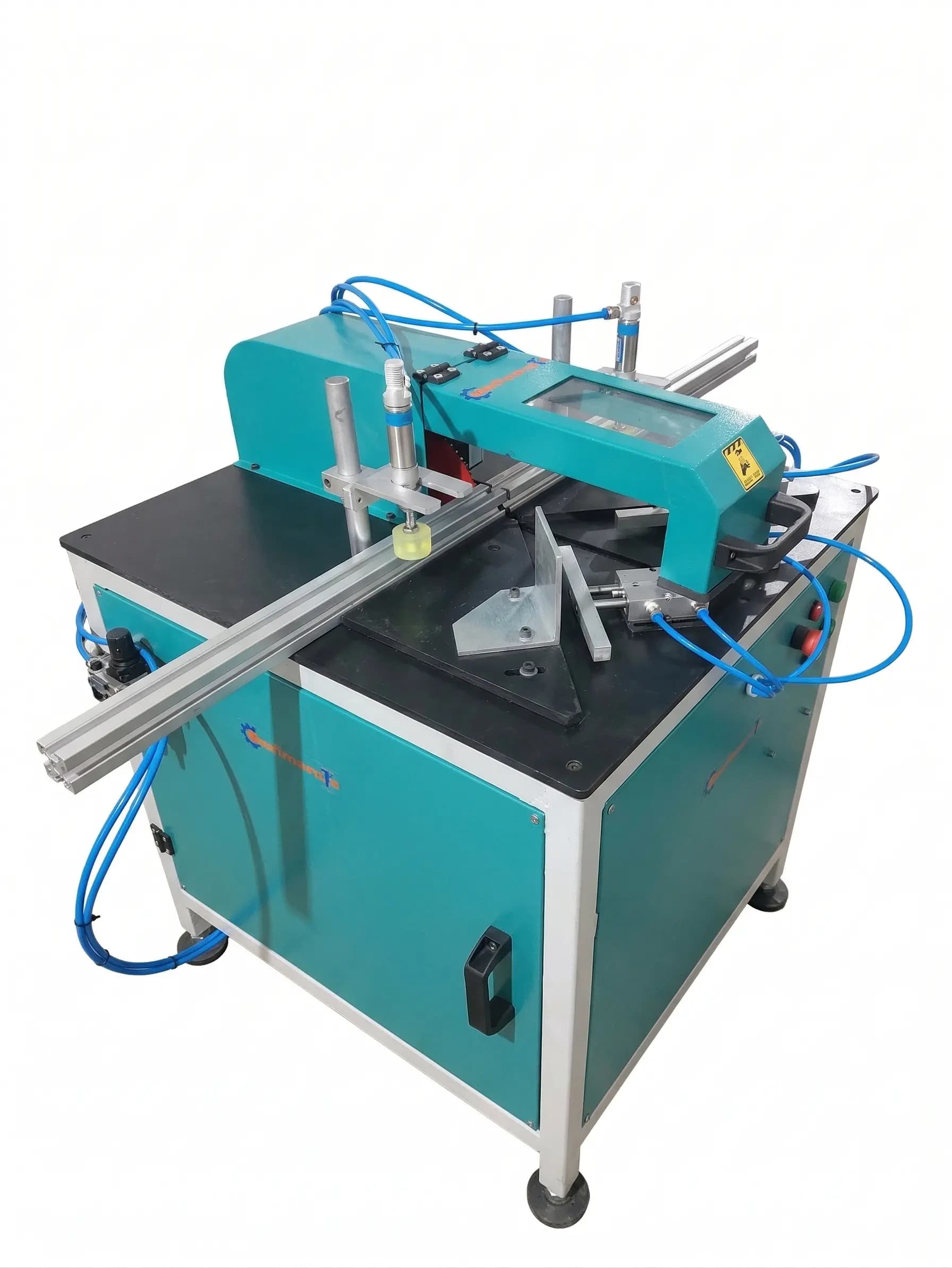
We implemented a mid-tier automatic line consisting of an Automatic Double Head Precision Cutting Saw and a high-speed CNC Copy Router.
The Results Over 6 Months:
- Waste Reduction: Dropped from 11.4% to 2.8% by using digital length positioning and 500mm TCT blades.
- Labor Efficiency: Reallocated 3 manual cutters to assembly and installation, effectively doubling their site-work capacity without hiring new staff.
- Precision: Achieved a tolerance of ±0.15mm, meeting ISO 9001 and IS 1285 standards for high-rise residential projects in Ghodbunder Road.
- Output: Increased from 12 frames/day to 48 frames/day with a single operator on the cutting station.
Technical Specifications for High-Performance Fabrication
When evaluating an aluminium cutting machine, the mechanical stability of the bed is more important than the software interface. For Thane's humid environment, we recommend machines with cast iron bases or heavy-duty electro-welded steel frames to prevent thermal expansion from affecting accuracy.
- Blade Specifications: Always opt for 450mm or 500mm TCT (Tungsten Carbide Tipped) blades. A 12-inch blade often lacks the peripheral speed required for a burr-free finish on 2.5mm thick profiles.
- Motor Torque: Look for 2.2kW to 3.0kW motors. Lower power units struggle with high-speed single cutting of thick-walled architectural sections, leading to motor overheating and jagged edges.
- Pneumatic Systems: Ensure the system operates reliably at 6-8 bar. We recommend installing an integrated refrigerated air dryer to protect the solenoid valves from Thane’s high humidity.
- Feeding Speed: A variable feed rate of 0-5 meters per minute is essential for balancing speed against cut quality.
Comparison: Manual vs. Semi-Automatic vs. Fully Automatic
| Feature | Manual 12-Inch Cutter | Semi-Auto Double Head | Fully Automatic CNC Line |
|---|---|---|---|
| Daily Output (Frames) | 10-15 | 35-45 | 80+ |
| Accuracy Tolerance | ±1.0mm | ±0.2mm | ±0.05mm |
| Labor Requirement | 2 Skilled + 2 Helper | 1 Skilled + 1 Helper | 1 Technician |
| Waste Factor | High (Human Error) | Low (Digital Stops) | Minimal (Software Optimized) |
| Safety Features | Minimal | Dual-hand Control | Light Curtains & Enclosures |
Essential Machinery for a Modern Thane Workshop
To compete for Tier-1 developer contracts, your floor must have more than just a cutting machine aluminium. You need a synchronized flow.
1. The Cutting Station
An automatic double head cutting machine price India varies, but investing in a unit with a 45-degree inward/outward tilt is critical for complex facade work. This eliminates the need for manual profile flipping, which is where 60% of scratches occur.
2. Punching and Milling
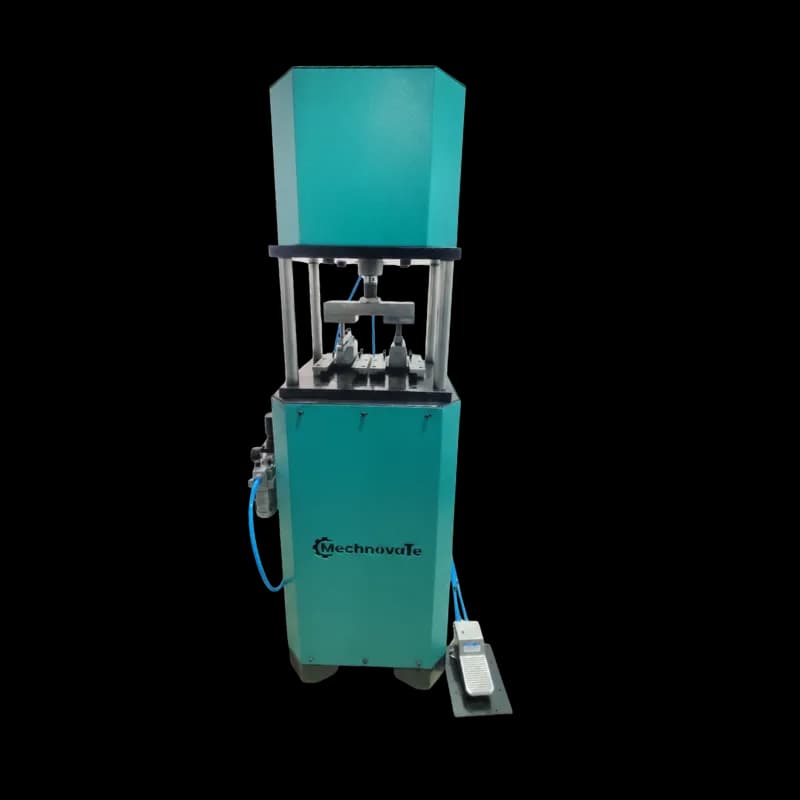
A heavy duty aluminium profile end milling machine is required for mullion joints, while an aluminium punching machine handles the hardware slots far faster than a drill. For high-volume uPVC projects, a uPVC welding machine with 0.2mm seamless technology ensures the aesthetic finish demanded by luxury home buyers.
3. Corner Crimping
For aluminium, the automatic aluminium corner crimping machine price is often the hurdle, but it is non-negotiable for structural integrity. A hydraulic system with 5 tons of pressure ensures the joint will never leak or sag, unlike screw-fixed corners.
Common Pitfalls in Workshop Upgrades
In my 15 years of engineering, I’ve seen many Thane fabricators fail during an upgrade. Avoid these three mistakes:
- Undersizing the Air Compressor: An automatic upvc window manufacturing plant or aluminium line requires massive volumes of clean air. If your compressor is constantly running, your pneumatic clamps will lose pressure mid-cut, ruining the profile.
- Neglecting Floor Leveling: High-speed degree cutting machines vibrate. If your floor isn't epoxy-coated and perfectly level (within 2mm across 5 meters), the machine frame will eventually twist, throwing your 45-degree angles out of alignment.
- Ignoring Blade Cooling: Never run an aluminium cutter dry. A micro-mist lubrication system using vegetable-based oil extends blade life by 400% compared to dry cutting.
Safety and ISO Standards
Any industrial aluminum door manufacturing equipment must comply with Industrial profile cutting safety standards ISO standards. This includes emergency stop circuits that cut power in less than 0.5 seconds and protective hoods that prevent operator contact with the blade during the cycle. At Mechnovate, we emphasize that a safe workshop is a profitable workshop.
FAQ: Fabricator Concerns in the Indian Market
Q1: Can I use the same line for both uPVC and Aluminium?
While the upvc windows making machine and aluminium cutters look similar, the blade tooth geometry and RPM requirements differ. You can cut uPVC on an aluminium saw (with some adjustment), but cutting aluminium on a dedicated upvc window machine will likely damage the motor and blade due to the higher torque required for metal.
Q2: What is the maintenance schedule for a CNC aluminium profile cutting machine?
Daily: Clear chips and check lubrication levels. Weekly: Check pneumatic leaks and guide rail alignment. Monthly: Inspect blade tension and motor brush wear. For units in industrial zones like Balkum or Ambernath, quarterly deep cleaning of the electrical cabinet is vital to prevent dust-induced short circuits.
Q3: How do I calculate the ROI on a new upvc window manufacturing machine?
Calculate your current cost per frame (Labor + Material Waste + Power). Compare it against the projected cost using an automatic double head cutting saw for aluminium profiles. Most of our clients see a 30% reduction in total cost per unit, which covers the machine cost within 5,000 frames.
Why Choose Mechnovate for Your Thane Facility?
As a leading uPVC machinery manufacturer and aluminium specialist, we don't just sell boxes. We provide the precision engineering layout and technician training required to make your investment work. Whether you are looking for an aluminium cutter machine price or a full uPVC window manufacturing unit cost breakdown, our team of engineers is ready to provide a site-specific consultation.
Get more articles like this
Follow Mechnovate on Google to see our guides in Google Discover & News