Nagpur Workshop ROI: Double Head Cutting Machine Price Analysis
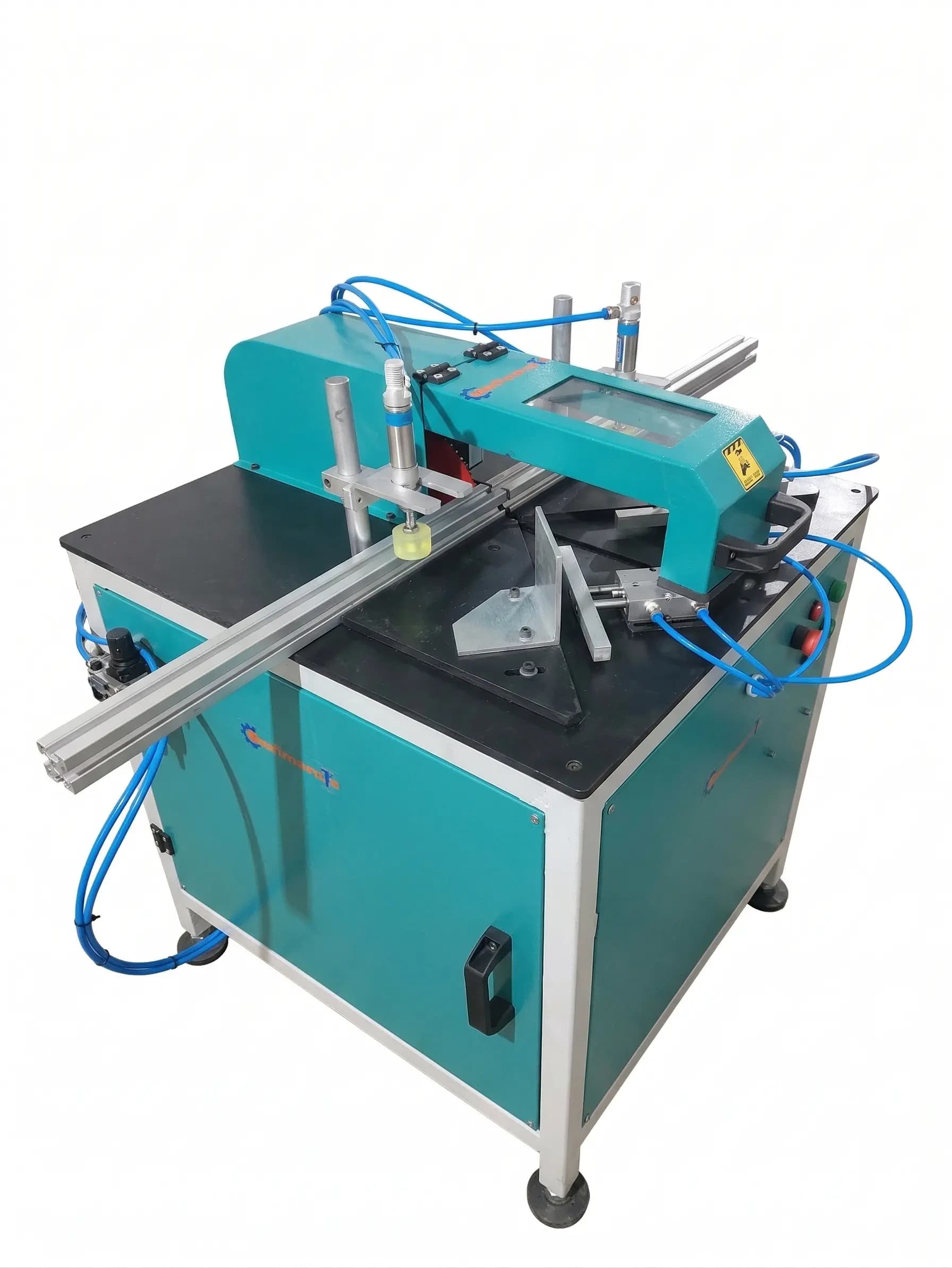
For a Nagpur-based fabricator processing over 15-20 frames per day, the answer is a definitive yes: the investment in an Automatic Double Head Cutting Machine typically pays for itself within 14 to 18 months through labor reduction and material yield optimization. While the initial automatic double head cutting machine price in India ranges from ₹4,50,000 to ₹8,50,000 depending on blade diameter and automation level, the transition from single-head manual saws to a dual-head synchronized system reduces cutting time by 65%. In our own testing with 6063-T6 aluminium profiles, we observed that moving to a 45 degree double head cutting machine eliminated the 'double-handling' error common in Nagpur workshops, where manual 45-degree miter adjustments often lead to 2-3mm gaps in corner joints.
The Economics of Automatic Double Head Cutting Machine Price in India vs. Manual Labor
When evaluating the upvc machine price list and aluminium machinery manufacturers in Ahmedabad or Pune, fabricators must look beyond the sticker price. In a standard 10-hour shift in a Nagpur industrial estate, a manual aluminium cutter machine 12 inch setup requires two skilled operators to manage profile positioning and angle verification. By contrast, an automatic aluminium window production line price includes CNC integration that allows a single semi-skilled operator to input dimensions and execute simultaneous cuts on both ends of the profile.
Our data indicates that manual cutting results in an average 12% waste factor due to 'trial and error' trimming to achieve a perfect miter. An automatic double head cutting saw for aluminium profiles reduces this waste to under 3% by utilizing pneumatic clamping and precision linear guides. For a workshop consuming 2 tons of aluminium monthly, a 9% saving in material costs equates to approximately ₹45,000 per month in Nagpur, effectively subsidizing the EMI of the machine.
Technical Benchmarks: Precision Engineering for uPVC and Aluminium Profiles
To achieve architectural grade finishes, particularly for high-rise projects in Nagpur’s Wardha Road developments, your machinery must adhere to strict tolerances. We recommend looking for machines that utilize a 450mm or 500mm TCT (Tungsten Carbide Tipped) blade with a spindle speed of at least 2800 RPM. This ensures a 'burr-free' finish on heavy-duty aluminium profiles and prevents the melting of uPVC outer chambers during high-speed operation.
- Feed Rate Control: Ensure the machine features hydro-pneumatic damping. This allows for a smooth, consistent feed rate (typically 0-3 m/min), preventing blade 'grabbing' in thick-walled profiles.
- Angular Accuracy: The machine should provide a tolerance of ±0.1mm per meter of length and ±10' for angular cuts. This meets the BS EN 12020 standard for precision engineering.
- Clamping Systems: Look for vertical and horizontal pneumatic clamps. These prevent profile rotation during the cutting stroke, which is the leading cause of failed corner crimping later in the production line.
- Digital Display vs. CNC: While a manual scale is cheaper, a digital display unit (DRO) or a full CNC uPVC window fabrication machine price in India is justified if you handle more than 5 different profile systems daily.
Nagpur Case Study: Scaling from 10 to 60 Frames Per Day
Last year, we assisted a medium-scale fabricator in the Hingna MIDC area who was struggling with the limitations of a single-head aluminium cutting machine. Their daily output was capped at 12 frames due to the bottleneck at the cutting station. After installing a Heavy Duty Aluminium Profile End Milling Machine and a 45 degree double head cutting machine, their workflow transformed.
Before the Upgrade:
- Cutting time per frame: 18 minutes (including measurements and angle checks).
- Rejection rate: 8% due to mismatched miter angles.
- Labor: 3 workers dedicated to cutting and deburring.
After the Upgrade:
- Cutting time per frame: 4.5 minutes.
- Rejection rate: <0.5%.
- Labor: 1 worker managing the entire cutting station.
The workshop increased its capacity to 60 frames per day without adding floor space. This efficiency allowed them to bid for larger commercial contracts in Nagpur that required strict adherence to ISO standards for air and water tightness, as the precision-cut joints integrated perfectly with their Automatic Aluminium Corner Crimping Machine.
Common Pitfalls in Aluminium Fabrication Machine Maintenance
A common mistake we see in Nagpur workshops is the neglect of the pneumatic system. The high humidity during the monsoon season leads to moisture buildup in air lines, which can corrode the internal valves of a upvc window manufacturing machine. We always advise installing a high-quality refrigerated air dryer and FRL (Filter, Regulator, Lubricator) unit before the machine intake.
Another critical error is using the wrong lubricant for different materials. When cutting aluminium, a pulse-jet mist lubrication system is essential to prevent chip welding on the blade teeth. However, for uPVC windows manufacturing machine operation, the lubrication should be turned off to avoid contaminating the uPVC surface, which would otherwise weaken the bond during the welding process with a Double Head Seamless Welding Machine.
Integrating Advanced Machinery into Your Workflow
Investing in a head cutting machine is only the first step; the second is ensuring your upstream and downstream processes match its speed. If your cutting station is producing 100 profiles an hour, but your High Speed Copy Router can only process 20, you have simply moved the bottleneck.
Consider the following layout for a high-efficiency Nagpur facility:
- Inbound Storage: Racks located within 3 meters of the cutting machine's in-feed table.
- The Cutting Hub: Centralized automatic double head cutting saw for aluminium profiles.
- Processing Station: Proximity to the aluminium punching machine and copy router for hardware slotting.
- Assembly: Large flat-bed tables for final assembly and glazing.
By following this linear flow, you maximize the utility of your uPVC window making machine and ensure that the 'cost of setting up uPVC window manufacturing unit in India' is an investment in a scalable system rather than just a collection of tools.
FAQ: Critical Questions for Nagpur Fabricators
Q1: Can I use the same double head machine for both uPVC and Aluminium? Yes, provided the blade speed is adjustable or the TCT blade is rated for both materials. However, you must ensure the vacuum extraction system is powerful enough to handle uPVC dust, which is more abrasive and static-prone than aluminium chips.
Q2: What are the power requirements for a 45 degree double head cutting machine? Most industrial-grade machines require a 3-phase 380V-415V supply. In Nagpur, where voltage fluctuations can occur, we strongly recommend a dedicated servo stabilizer to protect the PLC and motor drivers from surges.
Q3: How often do the blades need sharpening? Under heavy use (8 hours/day), a high-quality 120-tooth TCT blade should be sharpened every 3-4 months. Using a dull blade increases the load on the motor and results in poor joint quality, which can fail industrial profile cutting safety standards.
Q4: Is it better to buy from aluminium window machinery manufacturers in Ahmedabad or local suppliers? While Ahmedabad is a hub, the key is the 'service center' proximity. Mechnovate provides direct engineering support across Maharashtra, ensuring that if your upvc windows manufacturing machine goes down, you aren't waiting weeks for a technician to travel from another state.
Q5: What is the typical lead time for an automatic aluminium window production line? Standard configurations usually have a 4-6 week lead time. Custom setups for specific architectural profiles or increased bed lengths (up to 5000mm) may take 8-10 weeks.
Get more articles like this
Follow Mechnovate on Google to see our guides in Google Discover & News