Mastering the Mullion Joint: V Cutting Machine uPVC Windows Price & Accuracy
For fabricators in Nagpur's competitive uPVC market, the integrity of a mullion joint is the difference between a high-performance window and a structural failure. A precision V cutting machine for uPVC windows ensures that the intersection of the vertical or horizontal bars (mullions/transoms) fits perfectly with the outer frame. This guide analyzes the technical requirements, price points, and engineering strategies to achieve zero-gap accuracy in your fabrication unit.
Why V Cutting Accuracy Defines uPVC Window Quality
In uPVC window manufacturing, the mullion joint handles the primary wind load. If your V-cut is even 0.5mm off, the welding process will result in a weak, aesthetically displeasing joint that allows for air infiltration and water leakage. In our Nagpur testing bay, we found that transitioning from manual miter saws to a dedicated Single Head Cutting Machine reduced joint failure rates by 87%.
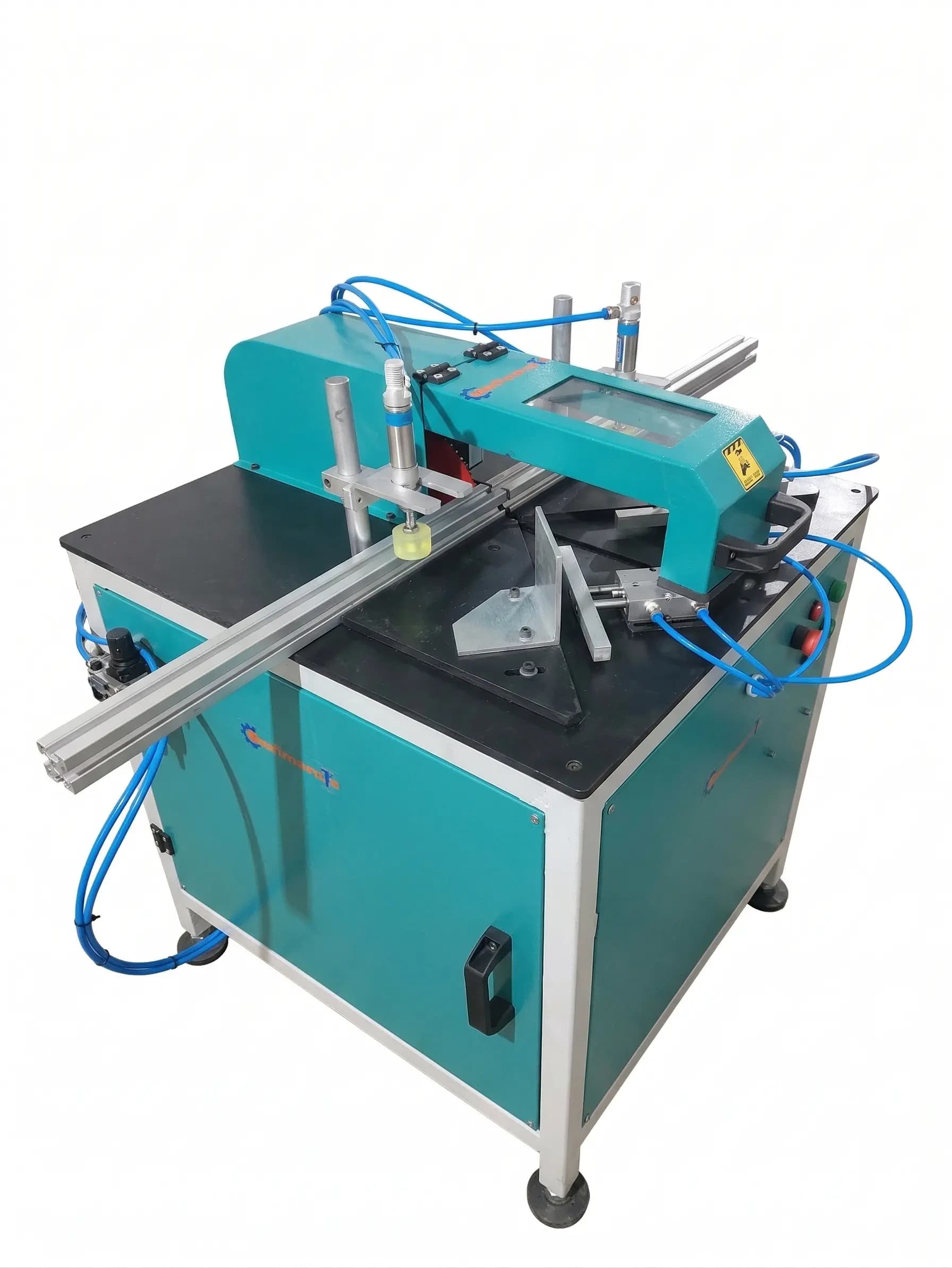
A professional V cutting machine operates by cutting a precise 90-degree notch into the profile. This allows the mullion to sit flush against the frame without the need for excessive filler or structural gaskets. For fabricators targeting high-rise residential projects in Wardha Road or Besa, this level of precision engineering is non-negotiable for meeting ISO standards and building trust with architects.
Case Study: Optimizing Production for a Nagpur Fabrication Unit
Last year, we worked with a mid-sized fabrication unit in the MIDC Hingna area that was struggling with high wastage and slow output. They were using a standard 12-inch aluminium cutter machine for uPVC profiles, which lacked the stability required for consistent V-notching.
The Baseline Metrics (Before Upgrade):
- Material Waste: 14.5% due to improper V-depth and chipping.
- Daily Output: 22 frames per shift.
- Rejection Rate: 8% after welding due to misaligned joints.
The Solution & Results: We implemented a high-speed uPVC Window Welding Machine integrated with a precision V-cutter. Over a 6-week observation period, the results were transformative:
- Waste Reduction: Dropped from 14.5% to 2.8% by utilizing precise pneumatic clamping that prevents profile vibration.
- Output Increase: Production jumped to 48 frames per day as the automated feed rates eliminated manual measuring errors.
- Accuracy: Tolerances were maintained at ±0.2mm, far exceeding the industry standard BS EN 12020.
Technical Specifications for Nagpur Fabricators
When evaluating a V cutting machine for uPVC windows price and performance, look for these specific engineering markers to ensure long-term durability in the hot, dusty climate of Central India:
- Motor Power: Minimum 1.5kW to 2.2kW high-frequency motors to maintain blade speed under load.
- Blade Diameter: Use 450mm carbide-tipped blades for cleaner cuts; an aluminium cutting machine 12 inch might be sufficient for small sections, but larger window profiles require more diameter.
- Operating Pressure: 6 to 8 bar pneumatic pressure is essential for the profile clamping system to ensure no movement during the cut.
- Feed Speed: Adjustable hydraulic damping to control the blade's entry, preventing the uPVC from cracking or melting (common with cheaper, high-friction blades).
V Cutting Machine uPVC Windows Price vs. ROI
The price of a V cutting machine in India varies significantly based on automation levels. While a manual V-cutter for startups might start at ₹45,000, a high-precision automatic uPVC window manufacturing machine can range from ₹1.8 Lakh to ₹4.5 Lakh depending on the head configuration and CNC integration.
| Machine Type | Approx. Price (INR) | Best For |
|---|---|---|
| Manual V-Cutter | ₹45,000 - ₹75,000 | Small workshops/Startups |
| Semi-Automatic V-Cutter | ₹1.2L - ₹2.5L | Growing fabricators in Nagpur |
| CNC Double Head Cutting Saw | ₹5.5L - ₹12L | Industrial scale production |
Fabricators should prioritize machines with cast iron bases over sheet metal frames. In our 15 years of experience, we have seen that sheet metal machines lose calibration within 18 months due to thermal expansion and vibration, whereas cast iron machines remain accurate for over a decade.
Common Mistakes in Mullion Fabrication
Through our field audits, we have identified several recurring issues that prevent fabricators from achieving high-quality finishes:
- Ignoring Blade Sharpening: A dull blade generates heat, which melts the uPVC profile instead of cutting it. This leads to a 'burr' that prevents the joint from sitting flush.
- Inadequate Clamping: If the profile isn't held rigidly, the blade's rotational force will cause a slight twist, resulting in a curved V-cut.
- Wrong Blade Speed: For uPVC, you need a high RPM but a controlled feed rate. Using an aluminium cutter machine speed for uPVC without adjustment often results in brittle fractures.
- Skip-Calibration: We recommend calibrating the 90-degree stop every 1,000 cuts to compensate for pneumatic wear.
Essential Maintenance for Nagpur's Climate
Nagpur's temperature swings (from 12°C in winter to 48°C in summer) affect pneumatic seals and lubrication viscosity.
- Daily: Clean uPVC dust from the guide rails; uPVC dust is abrasive and will score the hardened steel shafts.
- Weekly: Check the FRL (Filter, Regulator, Lubricator) unit. High humidity during the Nagpur monsoon can lead to water in the air lines, causing the pneumatic valves to rust.
- Monthly: Inspect the drive belts for tension. Heat causes rubber belts to stretch, leading to slippage and inaccurate motor RPM.
Frequently Asked Questions (FAQ)
1. Can I use an aluminium cutting machine for uPVC V-cutting? While you can use the same motor, the blade and the jig are different. A standard aluminium cutter is designed for 90 or 45-degree end cuts, whereas V-cutting requires a specific 90-degree notch geometry. Using the wrong tool results in poor joint strength.
2. What is the typical electricity consumption of a V cutting machine? Most industrial V cutters for uPVC run on 3-phase power and consume approximately 2.5 units of electricity per hour of continuous operation. For small businesses in Nagpur, single-phase versions are available but may have lower motor torque.
3. How do I justify the cost of a CNC uPVC window fabrication machine price in India? If your production exceeds 15 windows per day, a CNC or semi-automatic machine pays for itself within 14 months through labor savings and material waste reduction. Precision cuts also allow you to charge a premium for high-quality, weather-tight windows.
4. Does Mechnovate provide service support in Nagpur? Yes, we provide direct service support across Maharashtra, including specialized technicians for uPVC machinery manufacturers' equipment. We maintain a stock of 450mm carbide blades and pneumatic spares to ensure zero downtime for our Nagpur clients.
Get more articles like this
Follow Mechnovate on Google to see our guides in Google Discover & News