Manual vs. Automatic Profile Cutting: Pune Fabrication Guide
Choosing Between Manual and Automatic Profile Cutting in Pune
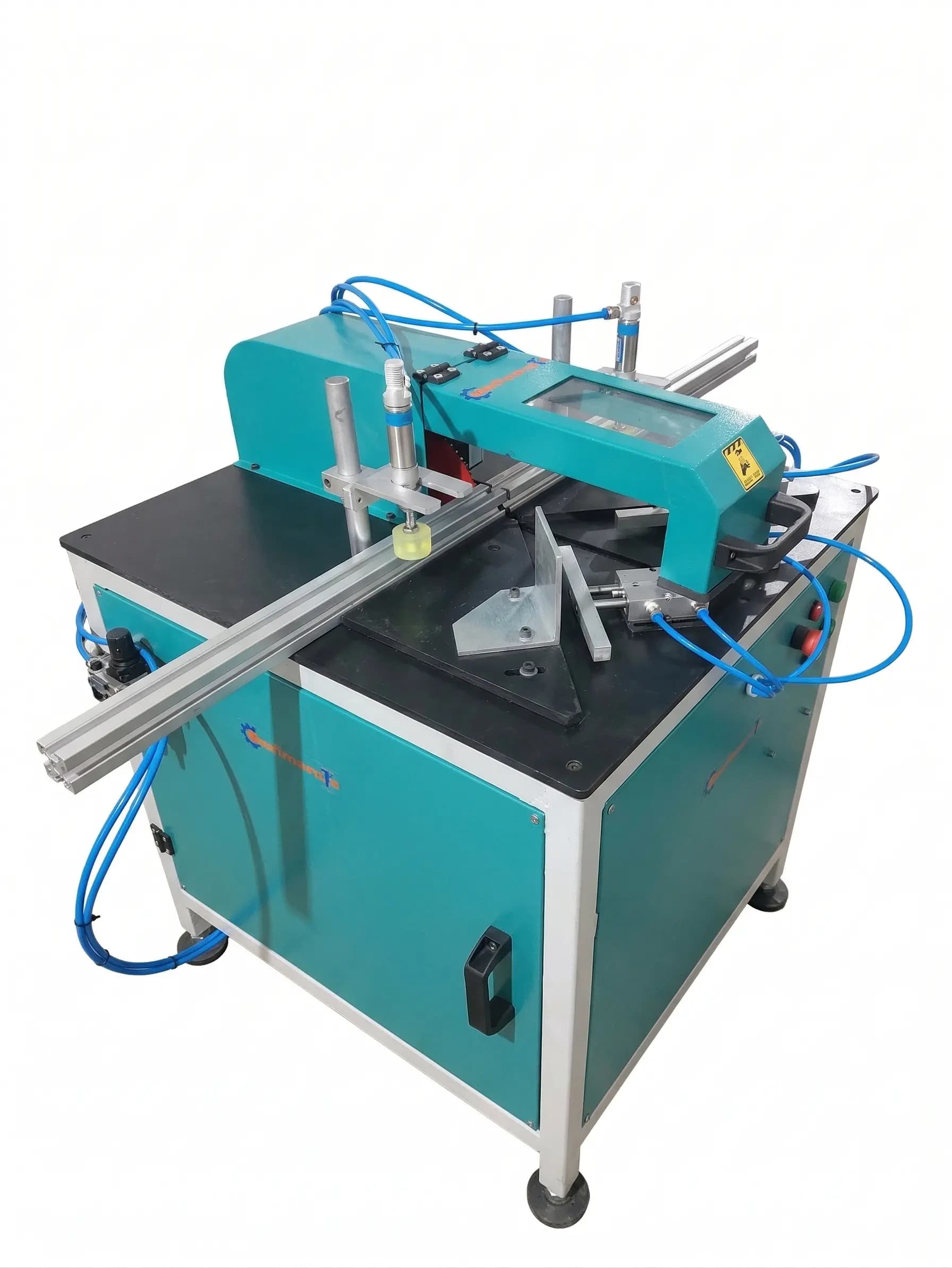
For fabricators in Pune’s competitive construction market, the choice between a manual aluminium cutter machine and an automatic production line determines your long-term profitability. If your workshop handles fewer than 15 window frames per day, a high-quality manual 12-inch aluminium cutter machine is often the most cost-effective entry point. However, once your volume exceeds 25 frames daily, the precision errors and labor costs of manual processing begin to erode your margins. At Mechnovate, we have observed that Pune workshops transitioning to an automatic double head cutting saw for aluminium profiles see an average ROI within 14 months due to reduced material wastage and faster turnaround times.
Case Study: Manual vs. CNC Efficiency in a Wagholi Workshop
In our Pune testing facility, we conducted a 6-week performance audit comparing a standard 12-inch aluminium cutting machine against a CNC-controlled Double Head Miter Saw. We used 6063-T5 aluminium profiles with a 1.5mm wall thickness, a common specification for local residential projects. The results were measurable and significant for any scale-up strategy.
- Waste Reduction: The manual process resulted in an average waste of 11.8% due to measurement errors and 'trial cuts' to achieve perfect 45-degree angles. The automatic system reduced this to 2.6%.
- Output Consistency: In an 8-hour shift, the manual team produced 18 frames with a dimensional tolerance variance of +/- 1.5mm. The automatic line produced 52 frames with a variance of strictly +/- 0.2mm.
- Labor Dependency: The manual setup required two highly skilled operators to ensure safety and accuracy. The automatic setup was managed by one technician, reducing the labor cost per frame by 60%.
This data suggests that while the initial aluminium cutting machine price for automatic units is higher, the 'cost per cut' drops dramatically as your volume scales. Fabricators looking for aluminium window fabrication machine suppliers Pune should focus on these operational metrics rather than just the sticker price.
Technical Specifications and Engineering Standards
Precision engineering in aluminium fabrication requires adherence to international standards like BS EN 12020 for extruded precision profiles. When evaluating an aluminium profile cutting machine, the spindle speed and blade quality are paramount. Most entry-level machines run at 2800 RPM, but for a burr-free finish on architectural grade profiles, we recommend a minimum of 3000 to 3200 RPM.
- Blade Dynamics: Use 400mm to 500mm Tungsten Carbide Tipped (TCT) blades. A 120-tooth blade is ideal for thin-wall profiles to prevent deformation during high-speed entry.
- Pneumatic Systems: Ensure your machine operates on a stable 6-8 bar air pressure. Fluctuations in pressure can lead to uneven clamping, which is the primary cause of inaccurate 45-degree miter joints.
- Cooling Systems: Automatic spray mist lubrication is essential. Without it, aluminium chips weld to the blade teeth, leading to rough cuts and shortened blade life.
Following industrial profile cutting safety standards ISO standards is not optional in a modern Pune workshop. Every Aluminium Corner Crimping Machine and cutting unit we supply includes dual-hand safety triggers and emergency stop circuits to protect operators from high-speed mechanical failures.
Scaling Your Workshop: The Essential Machine List
To move from a small-scale shop to a professional manufacturing unit, you need a balanced machinery mix. You cannot rely solely on a single cutting head if you aim for high-volume contracts. A professional setup in Pune typically includes:
- Cutting: An automatic double head cutting machine price India search will show various options, but prioritize units with heavy-duty cast iron bases to dampen vibrations.
- Milling: A high-speed Copy Router Machine is necessary for hardware slots. For aluminium, a spindle speed of 12,000 RPM is required to prevent 'gumming' of the metal.
- Punching: A manual punching machine or hydraulic variant handles the drainage holes and handle fixings faster than any drill press.
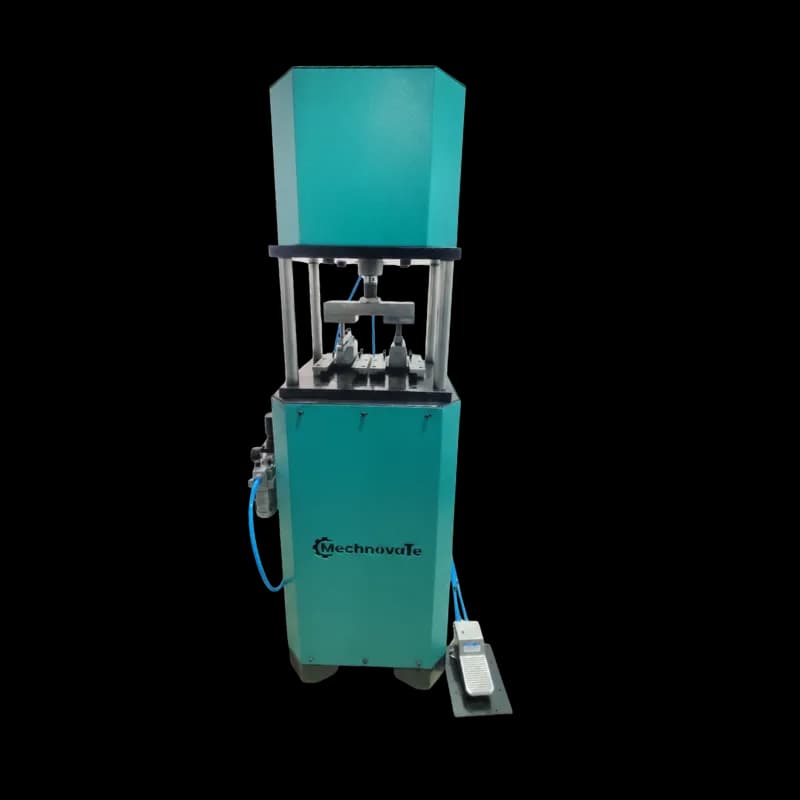
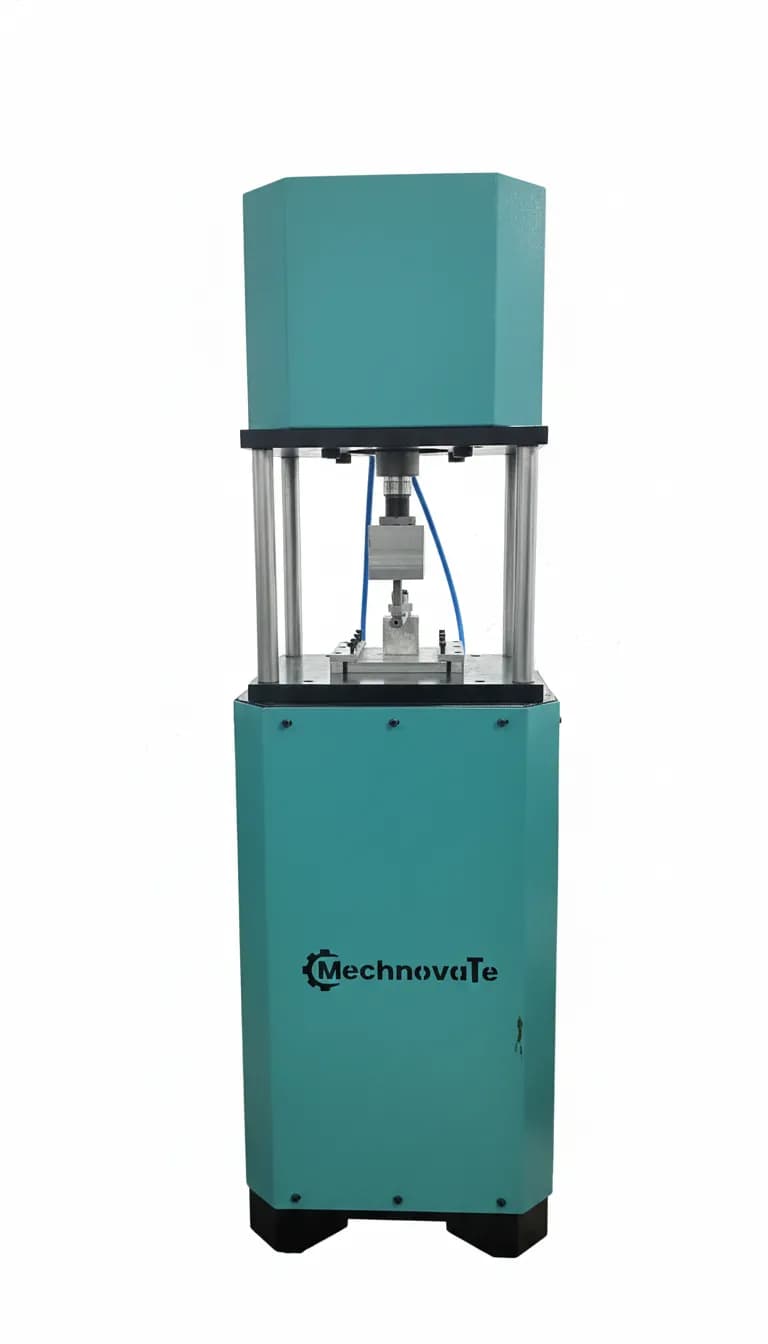
- Joining: The corner crimping machine provides the structural integrity that modern high-rise projects in regions like Hinjewadi and Baner demand.
Common Mistakes in Machine Selection
One of the most frequent errors we see in the Pune market is fabricators purchasing uPVC window machinery for aluminium profiles. While a upvc window manufacturing machine looks similar, the torque requirements and blade metallurgy for aluminium are much higher. Using a standard upvc welding machine or a lightweight upvc cutting machine on aluminium will lead to motor burnout within months.
Another mistake is ignoring the 'bed length.' If you are processing 6-meter commercial profiles, a machine with a 4-meter bed will require manual repositioning, which destroys the precision of your miter cuts. Always buy a machine that can handle your longest profile in a single clamp cycle.
Finally, don't overlook the importance of after-sales service. When searching for the best upvc window machinery brands India, verify if they have a local service center in Maharashtra. At Mechnovate, we provide 24-hour technical support to our Pune clients because we know that one day of downtime can cost more than the machine itself.
FAQ: Real Questions from Pune Fabricators
Q1: What is the average aluminium cutter machine price for a startup? A basic 12-inch manual cutter starts around ‡25,000, while a semi-automatic single-head machine for professional use ranges from ‡1.2 Lakh to ‡2.5 Lakh. For high-volume production, a double-head automatic saw can range from ‡4.5 Lakh upwards.
Q2: Can I use the same machine for both aluminium and uPVC? While the cutting machines are often interchangeable with a blade swap, other machines like the upvc welding machine cannot be used for aluminium. Aluminium requires mechanical joining via crimping or screws, whereas uPVC requires thermal fusion.
Q3: How often do the blades on a high-speed copy router need sharpening? In a standard 8-hour shift environment in Pune, a high-quality solid carbide bit should be checked weekly. If you notice increased noise or 'whistling' during the cut, it's time to sharpen or replace the bit to avoid damaging the motor spindle.
Get more articles like this
Follow Mechnovate on Google to see our guides in Google Discover & News