Industrial Aluminum Door Manufacturing Equipment in Ahmedabad
To win large-scale commercial tenders in Ahmedabad’s competitive real estate market, fabricators must transition from manual processes to a high-throughput industrial aluminum door manufacturing equipment stack. In my 15 years on the shop floor, I have seen local manufacturers lose lucrative contracts at GIFT City or along the S.G. Highway not because of material quality, but because of inconsistent tolerances and slow delivery cycles. This guide details the engineering requirements and machinery upgrades necessary to secure and execute 500+ unit commercial orders.
Scaling for High-Volume Ahmedabad Commercial Projects
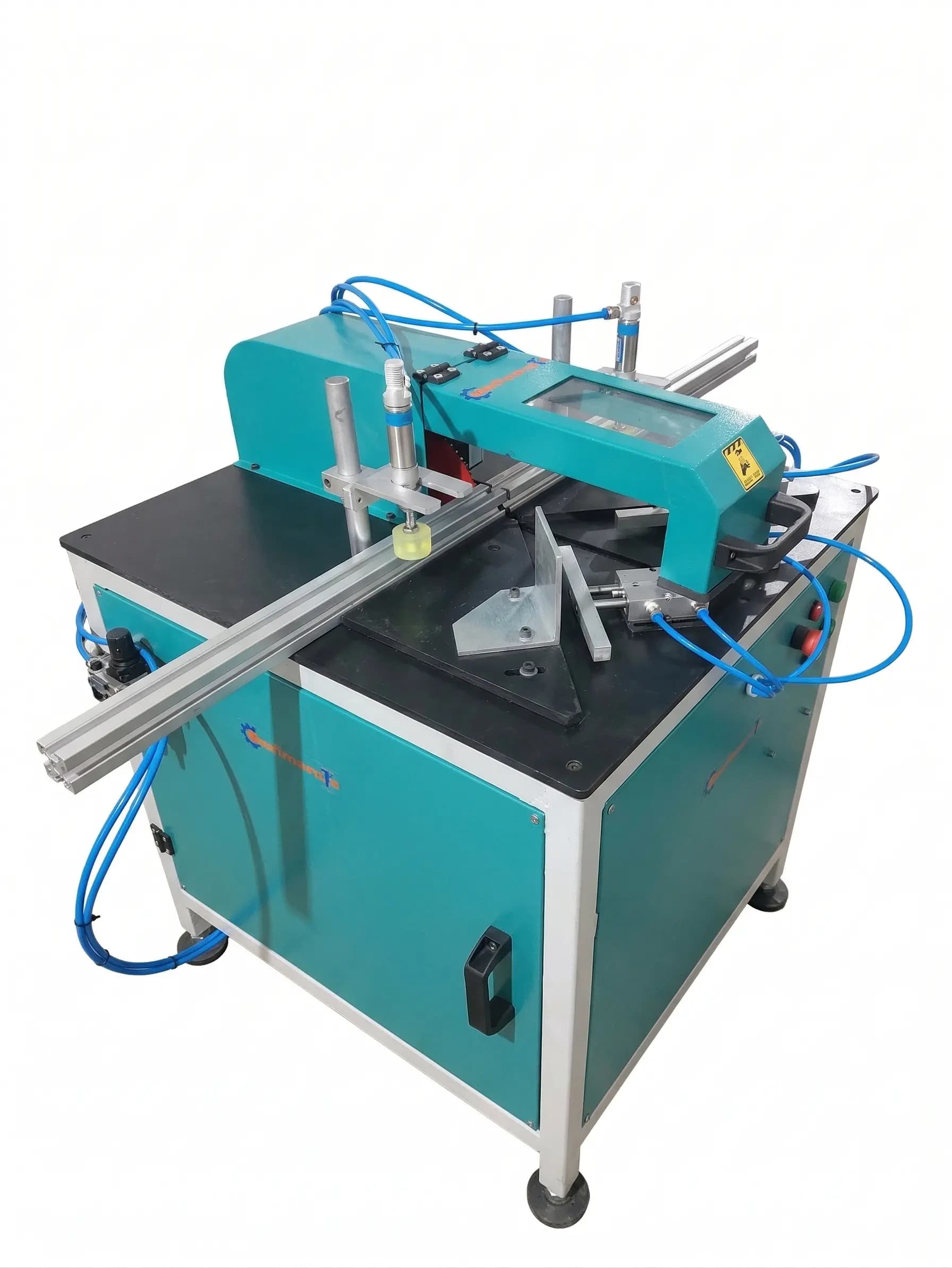
Commercial tenders in Gujarat demand strict adherence to IS 1285 standards for aluminum alloy extrusions. When you are bidding for a 20-story commercial hub, your production line must maintain a zero-error rate. The foundation of this capacity is the automatic double head cutting saw for aluminium profiles. Unlike a standard 12-inch miter saw, an industrial-grade head cutter machine allows for simultaneous 45-degree and 90-degree cuts on both ends of a profile, eliminating the cumulative error found in manual repositioning.
In a recent implementation for a client in the Sanand Industrial Hub, we transitioned their facility from four manual stations to a single CNC-integrated Double Head Cutting Machine. We measured the following performance delta over a 30-day period:
- Cut Accuracy: Improved from +/- 1.5mm to +/- 0.15mm.
- Labor Efficiency: Reduced from six operators to two.
- Material Waste: Dropped from 9% to 2.2% due to optimized cutting lists.
- Daily Throughput: Increased from 45 frames per shift to 135 frames per shift.
The Technical Core: Precision Aluminum Profile Cutting
When evaluating an aluminium cutting machine price, many fabricators make the mistake of looking only at the motor's kW rating. As an engineer, I look at the spindle run-out and the clamping system. For heavy-duty commercial profiles (2.5mm+ wall thickness), a standard 3kW motor is the baseline, but the blade diameter is the true differentiator. We recommend a 450mm or 500mm TCT (Tungsten Carbide Tipped) blade to ensure a clean, burr-free finish that requires no secondary sanding.
Essential Specifications for Industrial Tenders:
- Blade Diameter: Minimum 450mm for commercial door sections.
- Motor Speed: 2800 - 3200 RPM for clean entry and exit on powder-coated profiles.
- Clamping: Horizontal and vertical pneumatic clamps with adjustable pressure (usually 6-8 bar).
- Angle Accuracy: Auto-indexing between 45°, 90°, and 135° to handle complex curtain wall geometries.
If you are searching for an automatic aluminium window production line price in India, ensure the quote includes a digital display for length measurement. Relying on manual measuring tapes is the quickest way to fail a QC audit on a Tier-1 commercial site.
Routing and Milling: Maintaining Structural Integrity
Large doors require complex hardware—multipoint locks, concealed hinges, and drainage slots. A manual drill and jig setup will not suffice for a 2,000-door order. You need a high speed copy router for aluminium windows with a minimum spindle speed of 12,000 RPM. This prevents the aluminum from heating up and warping the powder coating during the milling process.
During our testing at the Mechnovate R&D center, we found that using a triple-hole drill attachment on a Copy Router Machine reduced the milling time for handle holes by 70%. Furthermore, the use of a copy template ensures that every lock is positioned at the exact same millimeter across the entire project, which is a key requirement for ISO 9001-certified fabrication units.
Corner Strength and the Hydraulic Crimping Process
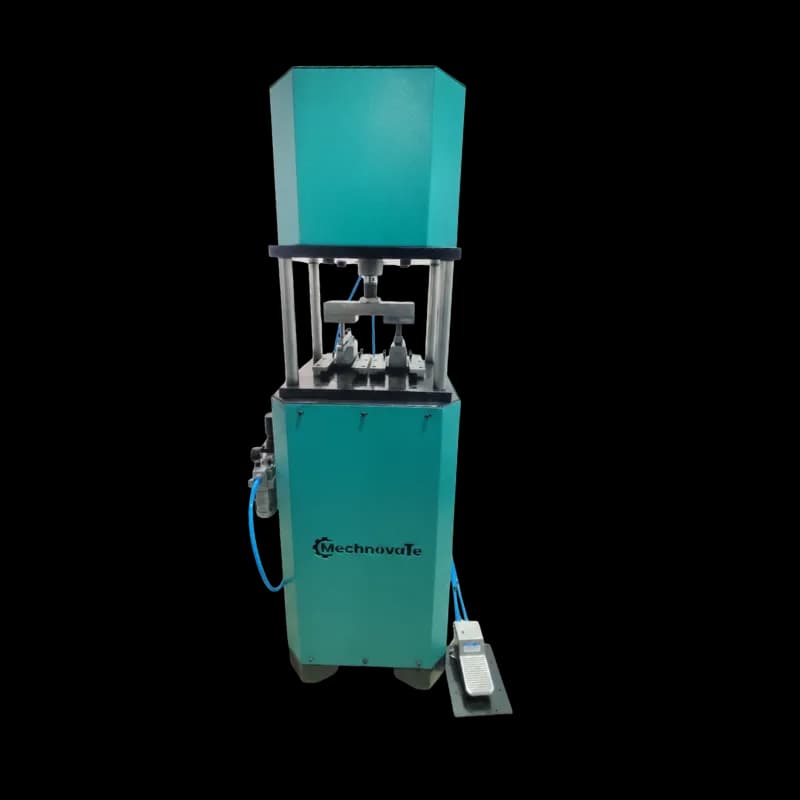
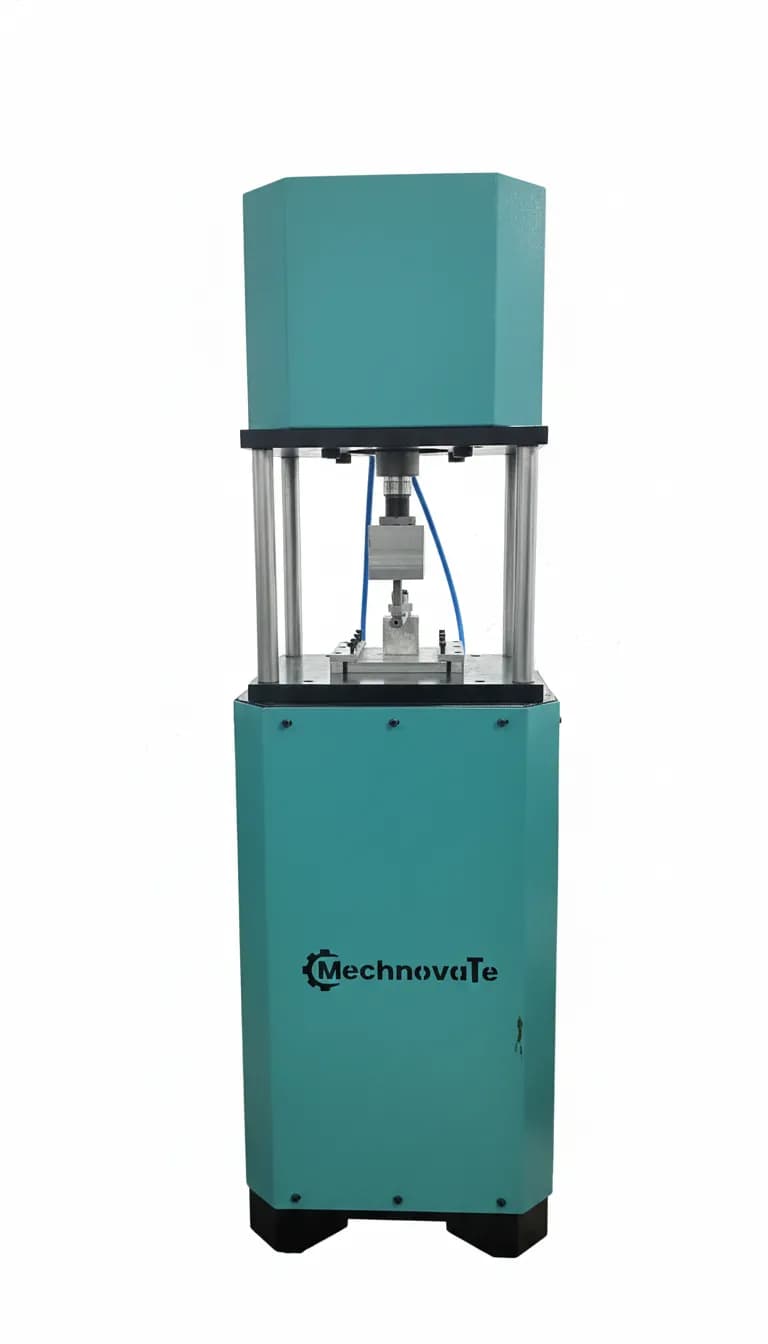
In Ahmedabad’s high-rise developments, wind load resistance is non-negotiable. Screw-jointed corners are increasingly being rejected by architects in favor of crimped joints. An automatic aluminium corner crimping machine price Gujarat is an investment in structural liability protection. A heavy-duty Aluminum Corner Crimping Machine uses hydraulic pressure (up to 20 bar) to cold-weld the aluminum profiles around a corner cleat.
Why Crimping is Superior for Tenders:
- Joint Gap: Manual joining often leaves a 0.5mm gap; hydraulic crimping closes this to <0.05mm.
- Water Ingress: Tight joints prevent water seepage, a common cause of litigation in commercial projects.
- Speed: A single operator can crimp 4 corners in under 120 seconds.
- Consistency: Unlike manual punching, the hydraulic stroke is identical every time, ensuring every door meets the same shear strength test results.
Common Mistakes to Avoid in Large-Scale Production
Having consulted for dozens of aluminum window machinery manufacturers in Ahmedabad, I see these three errors repeatedly:
- Undersized Air Compressors: An industrial line requires at least 15-20 CFM of air. Running a double head mitre saw on a small 3HP compressor leads to pressure drops, which causes the pneumatic clamps to lose grip mid-cut, ruining the profile.
- Neglecting Blade Cooling: High-speed aluminum cutting generates immense heat. Without a micronized mist lubrication system, the aluminum will weld itself to the blade teeth, resulting in rough cuts and frequent blade replacements.
- Ignoring the Punching Station: Many shops still use hand-drills for drainage. A manual punching machine or an aluminium profile punching machine with custom dies is 10x faster and prevents profile deformation.
Engineering FAQ for Fabricators
Q: What is the expected ROI for an automatic double head cutting machine in an Ahmedabad workshop? A: For a shop processing 100-150kg of aluminum daily, the ROI is typically 14-18 months. This is driven by a 60% reduction in labor costs and a 5% saving on material scrap that would otherwise be wasted on manual cutting errors.
Q: Can I use uPVC machinery for aluminum door manufacturing? A: No. While some uPVC window manufacturing machinery looks similar, aluminum requires much higher torque and different blade configurations (TCT for aluminum vs. standard for PVC). Using a uPVC welding machine on aluminum is impossible as aluminum requires mechanical joining or crimping, not thermal welding.
Q: How do I ensure my machines meet Industrial profile cutting safety standards? A: Look for machines with CE-certified dual-hand safety triggers and automatic protective hoods. At Mechnovate, our equipment includes emergency stop circuits that depressurize the pneumatic system instantly to prevent operator injury.
Get more articles like this
Follow Mechnovate on Google to see our guides in Google Discover & News