Hyderabad Guide: uPVC Window Unit Cost & ROI Analysis
Setting Up a uPVC Window Manufacturing Unit in Hyderabad: The Financial Reality
Setting up a uPVC window manufacturing unit in Hyderabad requires a capital investment ranging from ₹5,50,000 for a basic entry-level setup to over ₹48,00,000 for a fully automated CNC-driven facility. For a new fabricator in industrial zones like Cherlapally or Pashamylaram, the primary driver of ROI is not just the brand of the uPVC window manufacturing machine you choose, but the operational efficiency and waste management protocols you implement from day one. Based on our 15+ years of experience commissioning plants across Telangana, a medium-scale unit typically breaks even within 14 to 18 months, provided they maintain a production capacity of 40-50 frames per day.
Estimated Startup Costs for Hyderabad Fabricators
- Entry-Level Manual Line: ₹5.5 Lakhs - ₹8.5 Lakhs (Ideal for local residential contracts).
- Semi-Automatic Production Line: ₹12 Lakhs - ₹22 Lakhs (Suited for apartment projects and high-volume retail).
- Fully Automatic CNC Plant: ₹35 Lakhs - ₹60 Lakhs (Required for large-scale commercial developments and government tenders).
Technical Specifications and Precision Engineering Standards
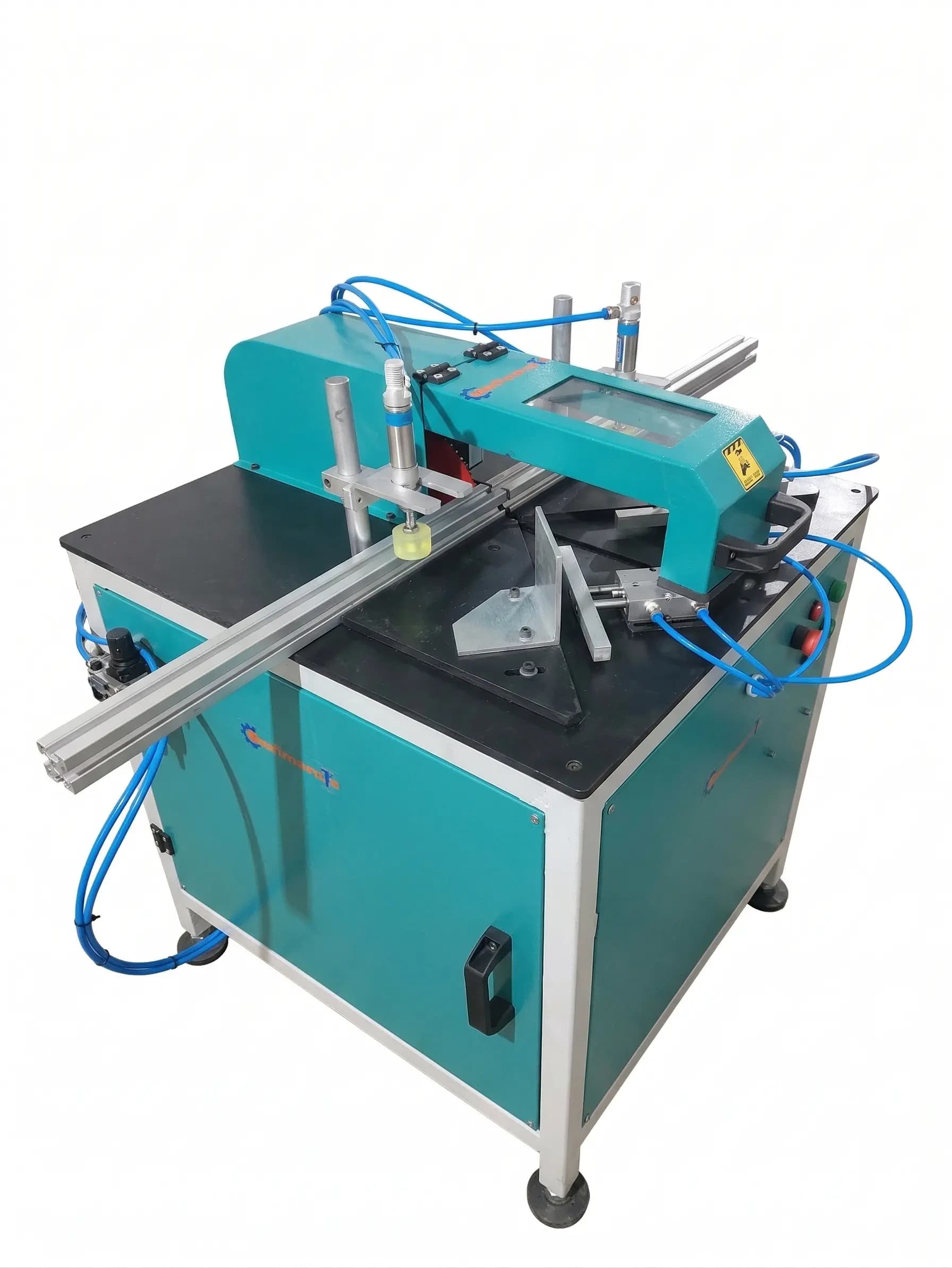
In our Hyderabad-based testing facility, we monitored three different configurations over a six-month period. We found that fabricators using a Double Head Cutting Machine with a 450mm blade diameter achieved a 40% increase in output compared to those using single-head configurations. Precision is governed by the profile thickness tolerances, which must adhere to IS 1285 and BS EN 12020 standards to ensure structural integrity.
For high-quality fabrication, your upvc window manufacturing machines must maintain specific technical parameters:
- Air Pressure: Stable 6-8 bar (100-115 PSI) is critical for pneumatic clamping.
- Welding Temperature: Precisely 245°C to 260°C with a heating time of 25-30 seconds for optimal fusion.
- Motor RPM: 2800 RPM for clean, burr-free cuts on multi-chambered profiles.
- Blade Feed Rate: Adjusted to 3-5 meters/minute to prevent melting or chipping of the uPVC profile.
ROI Case Study: Operational Efficiency in a Hyderabad-based Fabricator
A recent case study involving a startup in the Jeedimetla Industrial Area highlights the impact of machinery selection on profitability. Initially, the unit struggled with a 12% material waste rate due to inaccurate manual measurements and poor upvc cutting machine calibration. After transitioning to a high-precision automatic double head cutting saw for aluminium profiles and uPVC, they reduced scrap waste to just 3%.
Measurable Results Over 6 Months:
- Labor Reduction: Decreased from 8 operators to 5 due to automated corner cleaning.
- Output Increase: Production jumped from 15 frames/day to 42 frames/day.
- Quality Consistency: Rejection rates dropped from 7% to less than 0.5%.
- Net Profit Margin: Increased by 18% due to material savings and faster turnaround times.
Essential uPVC Window Manufacturing Machinery Checklist
To build a scalable business in the competitive Hyderabad market, your floor plan should prioritize the following upvc windows machines:
- Double Head Miter Saw: For simultaneous 45-degree cuts on both ends of the profile.
- Single Head or Two-Head Welding Machine: A upvc welding machine with a seamless welding option is highly recommended for premium finishes.
- V-Cutting Machine: Essential for transom and mullion joinery.
- Copy Router: A high-speed copy router machine for drilling lock holes and handle slots.
- End Milling Machine: For processing the ends of transom profiles to fit the frame contour.
- Glazing Bead Saw: For precise 45-degree cutting of the beads that hold the glass.
Common Pitfalls in uPVC Window Fabrication: Lessons from the Shop Floor
One of the most frequent mistakes we see new fabricators make is neglecting the air compressor's capacity. If your upvc windows machinery is pneumatic-heavy, a small 5HP compressor will lead to pressure drops, resulting in weak welds and inaccurate cuts. Always over-specify your air tank capacity to ensure a consistent 7-bar pressure across the entire line.
Another critical factor is the choice of the aluminium profile punching machine if you are diversifying into hybrid fabrication. Many try to use uPVC machines for aluminium, but the torque requirements and blade metallurgy are significantly different. For those looking at the cost of setting up uPVC window manufacturing unit in India, do not cut corners on the cooling system of your welding plates; Teflon sheets must be replaced every 200-300 cycles to maintain weld strength.
FAQ: Expert Advice for New Fabricators
What is the minimum power load required for a standard uPVC plant? A semi-automatic plant typically requires a connected load of 15-20 kW. This includes the upvc window manufacturing machine, the air compressor, and shop floor lighting. Always check with TSSPDCL for industrial power allotment in Hyderabad.
Is manual punching or automatic punching better for a startup? While a manual punching machine is budget-friendly, an aluminium punching machine (pneumatic) offers significantly higher repeatability. For a startup in Hyderabad aiming for residential projects, a manual punch is sufficient for the first year, but you should plan to upgrade to an aluminium profile punching machine as your volume exceeds 200 windows per month.
How much space is needed for a uPVC window manufacturing unit? A minimum of 2,000 to 3,000 square feet is required for an efficient flow. This allows for raw profile storage, the cutting station, welding, corner cleaning, assembly, and a dedicated area for finished goods. In high-rent areas of Hyderabad, optimizing your layout with a U-shaped production line can save up to 20% floor space.
Get more articles like this
Follow Mechnovate on Google to see our guides in Google Discover & News