How to Cut Perfect 45° Mitre Joints in Aluminium Window Frames

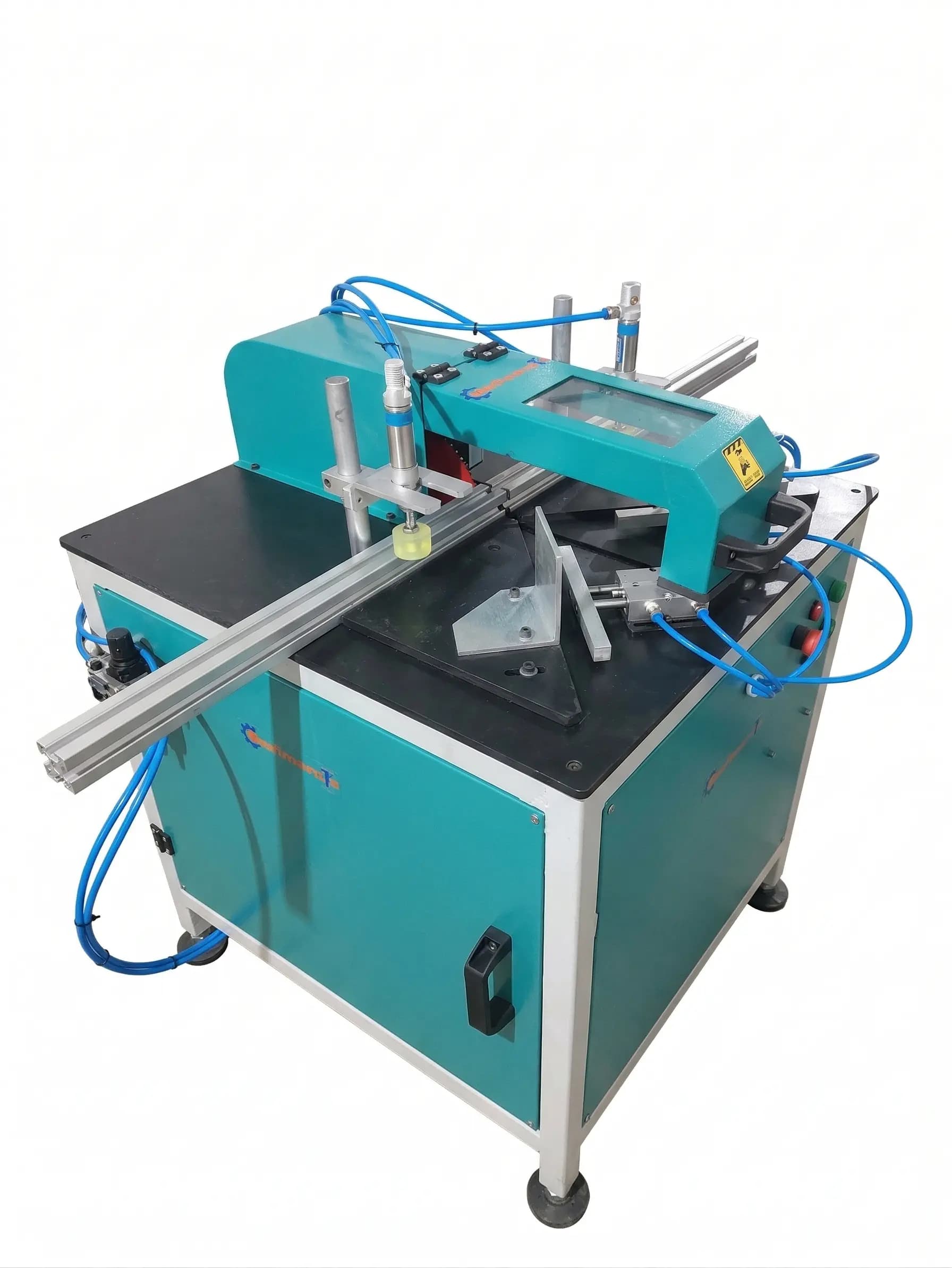
A perfect mitre joint comes from four things done right: a sharp blade of the correct type, firm clamping, an accurate 45° stop and a quick check of every first cut. A good 45 degree cutting machine with pneumatic clamping makes all four easy to repeat, frame after frame. Mechnovate's MEPCCSH1, a 14-inch single head machine, is built for exactly this job and starts from ₹1,55,000 + GST.
This guide walks through the process step by step, from preparing the profile to checking the corner, so your aluminium window frames close up without gaps.
Why the 45° Mitre Joint Matters
In a window frame, four profile lengths meet at four corners. Each corner is two 45° cuts. If either cut is even slightly off, the corner opens up into a visible gap, the frame goes out of square, and the sash may not close properly.
A poor mitre causes:
- Visible gaps at the corner, which look bad and let in dust and water
- A frame that is twisted or out of square during assembly
- Extra time spent filing, filling or re-cutting
- Wasted profile, which is the most expensive material in your workshop
Most of these problems start at the cutting stage, not at assembly. That is why the cutting machine is the first place to invest.
What You Need Before You Start
Before cutting, make sure the following are ready:
| Item | What to check |
|---|---|
| Cutting machine | 45° and 90° stops set correctly, table clean |
| Blade | Sharp TCT blade, suitable for aluminium |
| Clamping | Compressed air connected at 6–8 bar for pneumatic clamps |
| Profile | Straight, clean, free of dents and burrs from handling |
| Measuring tools | Tape, square and a marking pencil or marker |
| Safety | Guards in place, eye and ear protection, no loose clothing |
The MEPCCSH1 uses a 14-inch (350 mm) TCT blade and pneumatic clamping, and runs on single-phase or 3-phase power plus compressed air at 6–8 bar. If your workshop already has a compressor, there is nothing extra to arrange.
Step 1: Choose the Right Blade
The blade decides the finish of the cut. A tungsten carbide tipped (TCT) blade made for aluminium gives a clean edge with little burr. Using a worn or wrong-type blade causes rough cuts, vibration and chatter marks, and these show up later as poor corners.
- Keep a spare blade ready so production does not stop for sharpening
- Use an aluminium-grade blade for aluminium and a uPVC-grade blade for uPVC
- Replace or sharpen the blade as soon as the cut quality drops
Step 2: Set and Check the 45° Angle
Never assume the angle is correct. Before a production run:
- Set the machine to 45°
- Cut a short offcut of the same profile on each side of the blade
- Place the two offcuts together on a flat surface and check the corner with a square
- If the corner is not exactly 90°, adjust the stop and repeat
Do this at the start of each shift and whenever you change the profile. It takes a few minutes and saves a lot of rework.
Step 3: Clamp the Profile Firmly
Movement during the cut is the biggest cause of bad mitres. If the profile shifts even slightly as the blade enters, the angle and length are both affected.
Pneumatic clamping holds the profile firmly and the same way every time, so the result does not depend on how hard the operator tightens a screw. The MEPCCSH1 uses pneumatic clamps, which also speeds up loading and unloading. For heavier daily production, this is a clear advantage over hand clamping.
Tips for clamping:
- Keep the profile fully against the fence and the table
- Make sure the clamp pressure is steady, with air at 6–8 bar
- Support long lengths at both ends so they do not sag or vibrate
Step 4: Cut Smoothly and Consistently
Bring the blade down at a steady pace. Pushing too fast loads the blade and leaves burrs. Going too slowly can overheat the cut. A smooth, even stroke gives the cleanest edge.
For a window frame, cut matching pairs one after the other so the lengths stay equal:
- Top and bottom rails, with 45° cuts at both ends
- Left and right stiles, with 45° cuts at both ends
- Take care to mirror the cuts so each corner meets correctly
Mechnovate's single head machine handles both 45° and 90° cuts, so the same machine also cuts straight ends for mullions and transoms. You can see more options on our aluminium cutting machines page.
Step 5: Check the First Frame Before Running the Batch
Dry-assemble the first frame before cutting the full batch. Look for:
- Corners that close with no gap
- Equal diagonal measurements, which show that the frame is square
- Clean, burr-free cut faces
If something is wrong, correct it now, not after fifty frames. Once the first frame is perfect, keep the settings and repeat.
Common Mistakes to Avoid
- Cutting with a dull blade. It leaves a rough finish and a burr that stops the corner closing.
- Skipping the angle check. Stops can shift over time, especially in a busy workshop.
- Poor clamping. A profile that moves even slightly ruins the cut.
- Dirty table and fence. Swarf trapped under the profile changes the angle.
- Mixing blades. Use the correct blade for aluminium and uPVC.
Single Head or Double Head?
A single head machine cuts one end of the profile at a time and gives you flexibility for varied work. A double head machine cuts both ends in one operation and suits large repeated batches. Mechnovate supplies double head machines to order, with price and specifications by written quotation. For a detailed comparison, read our single head vs double head cutter guide.
Why Buy Factory-Direct
When you buy from Mechnovate, you deal directly with the manufacturer in Ahmedabad:
- Factory-direct price with a GST invoice, the same across India
- 6-month warranty on all machines
- Pan-India delivery: same day in Ahmedabad and typically 1–5 days elsewhere
- On-site installation and operator training on request
You can read the specifications of the 45°/90° cutting machine and see current pricing in our aluminium cutting machine price guide.
Frequently Asked Questions
What is the best machine for cutting 45° mitre joints in aluminium?
An industrial 45° cutting machine with a sturdy base, an accurate angle stop and pneumatic clamping gives the most consistent results. Mechnovate's MEPCCSH1 has a 14-inch TCT blade, cuts at 45° and 90°, and handles aluminium and uPVC profiles up to 3 mm.
Why do my aluminium frame corners have gaps?
The usual causes are a dull blade, a 45° stop that is slightly off, or a profile that moved while being cut. Check the angle with two offcuts and a square, replace the blade if the cut is rough, and make sure the clamps hold the profile firmly.
Can the same machine cut both aluminium and uPVC?
Yes. The MEPCCSH1 cuts both aluminium and uPVC. Use the correct blade type for each material to get a clean cut.
What power and air supply does the machine need?
The machine runs on single-phase or 3-phase power, plus compressed air at 6–8 bar for the pneumatic clamps.
Does Mechnovate provide installation and training?
Yes. On-site installation and operator training are available on request, and every machine comes with a 6-month warranty.
Get a Quotation
Want clean mitre joints on every frame? Call +91-9265699061, message us on WhatsApp, or send an enquiry. We will recommend the right machine for your workshop and send a factory-direct quotation.
Get more articles like this
Follow Mechnovate on Google to see our guides in Google Discover & News