Back to Blog
7/29/2026

Calibrate 45 Degree Double Head Cutting Machine: Kolkata Guide

Calibrate 45 Degree Double Head Cutting Machine: Kolkata Guide

Stop the Rework: Achieving Perfect 45-Degree Miter Cuts in Kolkata Workshops In the competitive window fabrication market of Kolkata, the difference between a premium product and a rejected order often comes down to 0.5 millimeters. Precision in window fabrication isn't about luck; it is a direct result of the mechanical alignment of your 45 degree double head cutting machine. In our decades of experience across West Bengal’s industrial belts, we have seen that most 'machine errors' are actually calibration drifts caused by high-volume production and local environmental factors. To achieve air-tight joinery, you must systematically calibrate the pivot points, verify blade parallelism, and maintain a consistent pneumatic pressure of 6-8 bar. This guide provides the exact engineering protocol we use at Mechnovate to ensure our uPVC window making machine price in Kolkata reflects the high-performance value we deliver to our partners. ## The Engineering Logic Behind Precision Joinery A 45-degree cut is more than just a miter; it is the intersection of two geometric planes that must account for profile wall thickness and material elasticity. When using an aluminum cutting machine, the centrifugal force of a 500mm TCT blade rotating at 2800 RPM can cause minor vibrations if the spindle isn't perfectly balanced. According to industry standards like BS EN 12020, the tolerance for architectural profiles is extremely tight. If your upvc cutting machine is off by even 0.2 degrees, the cumulative error in a rectangular frame results in a 1.6-degree total gap at the final corner. This leads to poor thermal insulation and structural weakness. In Kolkata's humid climate, the thermal expansion of aluminium profiles must also be considered during the morning-to-afternoon shifts. We recommend calibrating your machines at a stable ambient temperature to ensure the 'zero-point' is accurate for all-day production. ## 5-Step Calibration Guide for Your Double Head Miter Saw Follow this technical sequence to eliminate gaps and reduce material waste by up to 15%. 1. Bed Leveling and Rail Alignment: Use a precision spirit level or a digital inclinometer to ensure the machine bed is perfectly horizontal. Any twist in the main frame will translate into a skewed cut. 2. Blade Parallelism Check: Mount a dial indicator on the fence and move the saw head across its travel path. The deviation should be less than 0.05mm over a 300mm run. If the blade 'wobbles,' check the flange for debris or wear. 3. Fence Squareness: The back fence must be perfectly perpendicular to the blade's travel at the 90-degree position before you even attempt the 45-degree calibration. Use a precision square to lock this in. 4. Pivot Point Adjustment: For the 45 degree double head cutting machine, locate the hard-stop bolts. Adjust these in micro-increments (1/8th turns) and perform test cuts on scrap profiles until the two mitered pieces form a perfect 90-degree angle with no light passing through the join. 5. Pneumatic Clamp Synchronization: Ensure the vertical and horizontal clamps engage 0.5 seconds before the blade begins its descent. Uneven clamping pressure is the leading cause of profile 'kick-back' which ruins miter accuracy. ## Case Study: Rework Reduction in a Howrah uPVC Facility Last year, we consulted for a medium-scale workshop in Howrah that was seeing a 12% rejection rate on their uPVC windows manufacturing machine output. Their joinery gaps were being filled with excessive silicone, which was failing during monsoon testing. Upon auditing their setup, we discovered their automatic double head cutting saw for aluminium profiles had misaligned guide rails due to floor settling. We implemented a bi-weekly calibration schedule and replaced their standard blades with high-grade TCT blades specifically designed for the upvc window manufacturing machine. The results were immediate. Their rework dropped from 12% to under 2.5%, and their daily output increased from 40 frames to 65 frames because they no longer spent time 'fixing' bad cuts. This shift saved them approximately ₹45,000 per month in wasted profile costs alone. ## Common Mistakes and Insider Maintenance Tips One of the most frequent errors we see in West Bengal workshops is neglecting the air filtration system. Kolkata’s industrial dust can clog pneumatic valves, leading to jerky blade feeds. Always use a high-quality FRL (Filter-Regulator-Lubricator) unit. Another mistake is using the same blade for thin-walled aluminium and heavy-duty uPVC profiles without adjusting the feed rate. For an aluminum profile cutting machine, a slower, consistent feed prevents the 'burr' effect. Furthermore, never overlook the Aluminium corner crimping machine calibration; even a perfect cut can be ruined by a poorly adjusted crimper. Ensure your upvc window manufacturing machines are serviced by technicians who understand the specific metallurgy of the profiles you are using. High-speed copy routers and single cutting machines also require similar attention to spindle run-out to maintain the overall quality of the production line. ## FAQ on Window Machinery Calibration ### 1. How often should I calibrate my 45-degree double head cutting machine? For high-volume workshops in Kolkata, we recommend a quick check every Monday morning and a deep calibration every 5000 cuts. If you notice even a 1mm gap in your joinery, stop production and recalibrate immediately. ### 2. What is the best blade size for a uPVC window making machine? A 450mm or 500mm TCT (Tungsten Carbide Tipped) blade is standard. The larger diameter provides a cleaner cut and can handle wider multi-chamber profiles without overheating. ### 3. Can power fluctuations in Kolkata affect my cutting precision? Yes, voltage drops can cause the motors to lose RPM, leading to 'tearing' rather than cutting. We highly recommend using a dedicated servo-stabilizer for your automatic double head cutting machine price India investment to protect the electronics and maintain motor torque. ### 4. Why are my 45-degree cuts perfect on small profiles but off on larger ones? This usually indicates a 'deflection' issue. As the blade extends further, any slight play in the bearings or the guide rails is magnified. Check your linear bearings for wear and tear. ### 5. Where can I find reliable uPVC window machinery manufacturers in Kolkata? Mechnovate provides end-to-end solutions, from upvc window manufacturing machinery to aluminium punching machine setups, backed by local service support across West Bengal.

Get more articles like this

Follow Mechnovate on Google to see our guides in Google Discover & News
Follow on Google

Calibrate 45 Degree Double Head Cutting Machine: Kolkata Guide

Stop the Rework: Achieving Perfect 45-Degree Miter Cuts in Kolkata Workshops In the competitive window fabrication market of Kolkata, the difference between a premium product and a rejected order often comes down to 0.5 millimeters. Precision in window fabrication isn't about luck; it is a direct result of the mechanical alignment of your 45 degree double head cutting machine. In our decades of experience across West Bengal’s industrial belts, we have seen that most 'machine errors' are actually calibration drifts caused by high-volume production and local environmental factors. To achieve air-tight joinery, you must systematically calibrate the pivot points, verify blade parallelism, and maintain a consistent pneumatic pressure of 6-8 bar. This guide provides the exact engineering protocol we use at Mechnovate to ensure our uPVC window making machine price in Kolkata reflects the high-performance value we deliver to our partners. The Engineering Logic Behind Precision Joinery A 45-degree cut is more than just a miter; it is the intersection of two geometric planes that must account for profile wall thickness and material elasticity. When using an aluminum cutting machine, the centrifugal force of a 500mm TCT blade rotating at 2800 RPM can cause minor vibrations if the spindle isn't perfectly balanced. According to industry standards like BS EN 12020, the tolerance for architectural profiles is extremely tight. If your upvc cutting machine is off by even 0.2 degrees, the cumulative error in a rectangular frame results in a 1.6-degree total gap at the final corner. This leads to poor thermal insulation and structural weakness. In Kolkata's humid climate, the thermal expansion of aluminium profiles must also be considered during the morning-to-afternoon shifts. We recommend calibrating your machines at a stable ambient temperature to ensure the 'zero-point' is accurate for all-day production. 5-Step Calibration Guide for Your Double Head Miter Saw Follow this technical sequence to eliminate gaps and reduce material waste by up to 15%. 1. Bed Leveling and Rail Alignment: Use a precision spirit level or a digital inclinometer to ensure the machine bed is perfectly horizontal. Any twist in the main frame will translate into a skewed cut. 2. Blade Parallelism Check: Mount a dial indicator on the fence and move the saw head across its travel path. The deviation should be less than 0.05mm over a 300mm run. If the blade 'wobbles,' check the flange for debris or wear. 3. Fence Squareness: The back fence must be perfectly perpendicular to the blade's travel at the 90-degree position before you even attempt the 45-degree calibration. Use a precision square to lock this in. 4. Pivot Point Adjustment: For the 45 degree double head cutting machine, locate the hard-stop bolts. Adjust these in micro-increments (1/8th turns) and perform test cuts on scrap profiles until the two mitered pieces form a perfect 90-degree angle with no light passing through the join. 5. Pneumatic Clamp Synchronization: Ensure the vertical and horizontal clamps engage 0.5 seconds before the blade begins its descent. Uneven clamping pressure is the leading cause of profile 'kick-back' which ruins miter accuracy. Case Study: Rework Reduction in a Howrah uPVC Facility Last year, we consulted for a medium-scale workshop in Howrah that was seeing a 12% rejection rate on their uPVC windows manufacturing machine output. Their joinery gaps were being filled with excessive silicone, which was failing during monsoon testing. Upon auditing their setup, we discovered their automatic double head cutting saw for aluminium profiles had misaligned guide rails due to floor settling. We implemented a bi-weekly calibration schedule and replaced their standard blades with high-grade TCT blades specifically designed for the upvc window manufacturing machine. The results were immediate. Their rework dropped from 12% to under 2.5%, and their daily output increased from 40 frames to 65 frames because they no longer spent time 'fixing' bad cuts. This shift saved them approximately ₹45,000 per month in wasted profile costs alone. Common Mistakes and Insider Maintenance Tips One of the most frequent errors we see in West Bengal workshops is neglecting the air filtration system. Kolkata’s industrial dust can clog pneumatic valves, leading to jerky blade feeds. Always use a high-quality FRL (Filter-Regulator-Lubricator) unit. Another mistake is using the same blade for thin-walled aluminium and heavy-duty uPVC profiles without adjusting the feed rate. For an aluminum profile cutting machine, a slower, consistent feed prevents the 'burr' effect. Furthermore, never overlook the Aluminium corner crimping machine calibration; even a perfect cut can be ruined by a poorly adjusted crimper. Ensure your upvc window manufacturing machines are serviced by technicians who understand the specific metallurgy of the profiles you are using. High-speed copy routers and single cutting machines also require similar attention to spindle run-out to maintain the overall quality of the production line. FAQ on Window Machinery Calibration 1. How often should I calibrate my 45-degree double head cutting machine? For high-volume workshops in Kolkata, we recommend a quick check every Monday morning and a deep calibration every 5000 cuts. If you notice even a 1mm gap in your joinery, stop production and recalibrate immediately. 2. What is the best blade size for a uPVC window making machine? A 450mm or 500mm TCT (Tungsten Carbide Tipped) blade is standard. The larger diameter provides a cleaner cut and can handle wider multi-chamber profiles without overheating. 3. Can power fluctuations in Kolkata affect my cutting precision? Yes, voltage drops can cause the motors to lose RPM, leading to 'tearing' rather than cutting. We highly recommend using a dedicated servo-stabilizer for your automatic double head cutting machine price India investment to protect the electronics and maintain motor torque. 4. Why are my 45-degree cuts perfect on small profiles but off on larger ones? This usually indicates a 'deflection' issue. As the blade extends further, any slight play in the bearings or the guide rails is magnified. Check your linear bearings for wear and tear. 5. Where can I find reliable uPVC window machinery manufacturers in Kolkata? Mechnovate provides end-to-end solutions, from upvc window manufacturing machinery to aluminium punching machine setups, backed by local service support across West Bengal.

Related Machines From Mechnovate

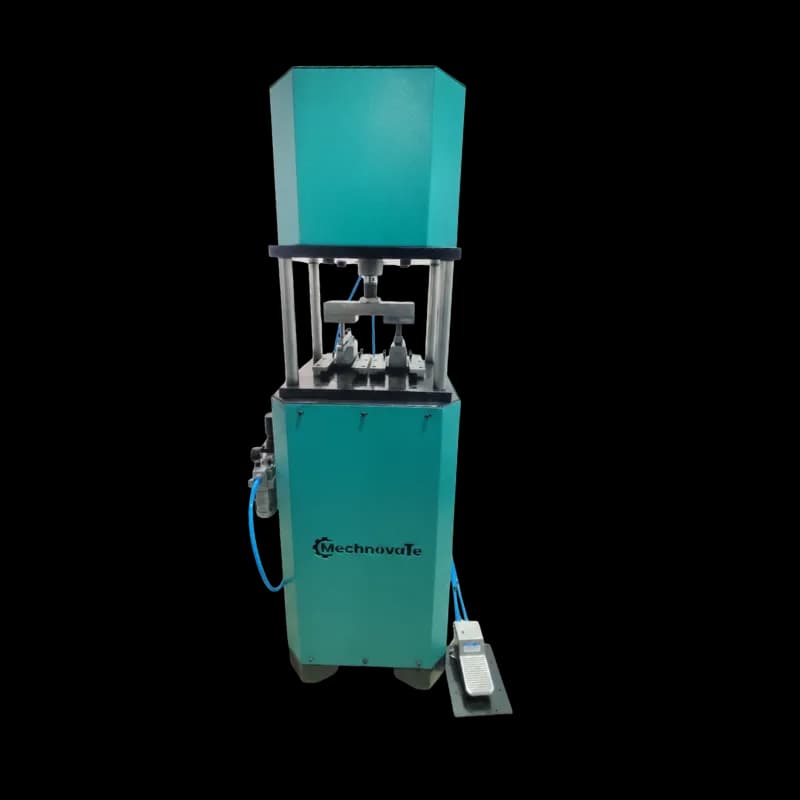
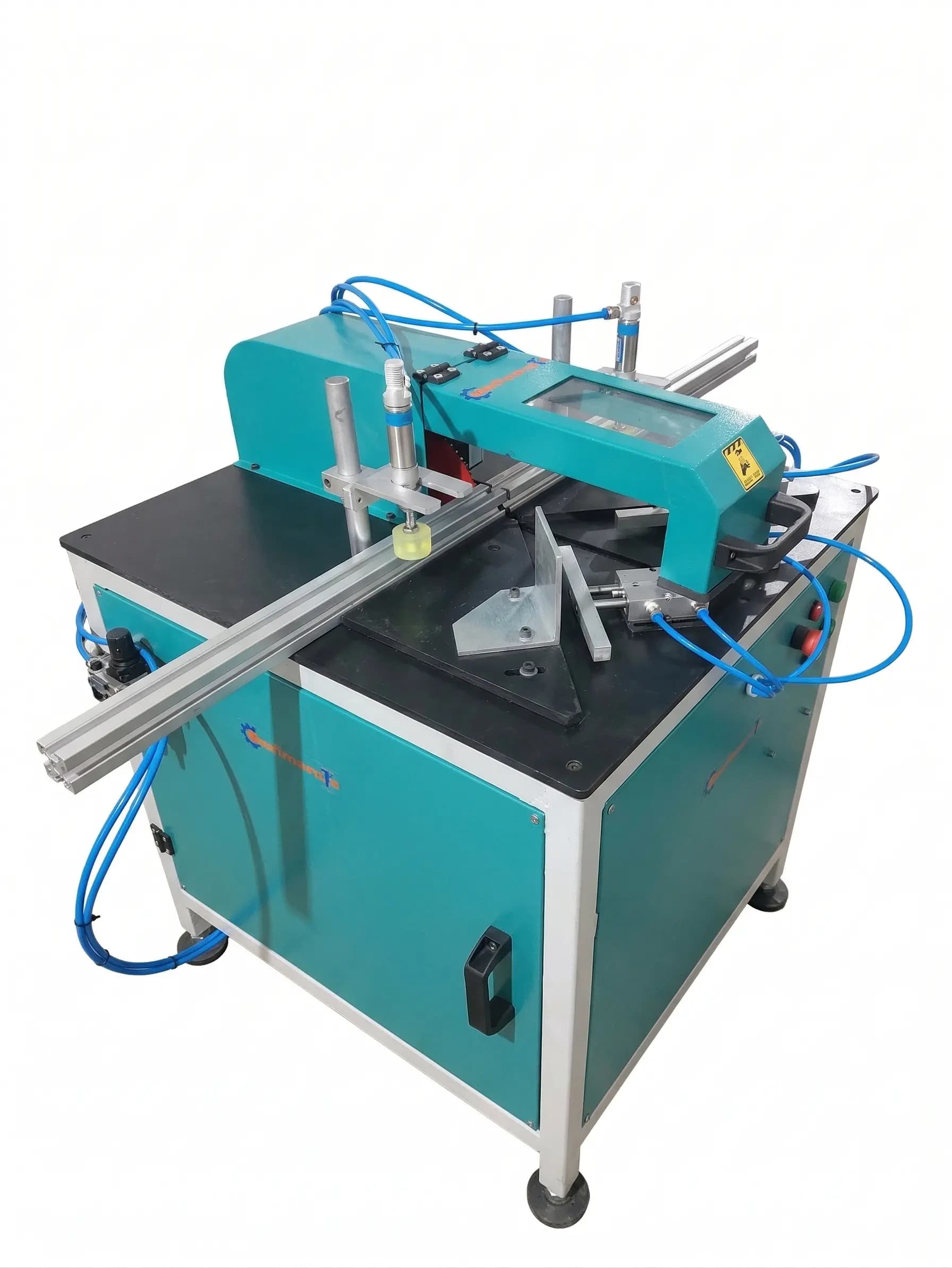
Single Head Cutting Machine for Aluminium and UPVC

Model: MEPCCSH1 | Cutting

Single-head 45°/90° aluminium & uPVC profile cutting machine with pneumatic clamping for burr-free miter cuts.

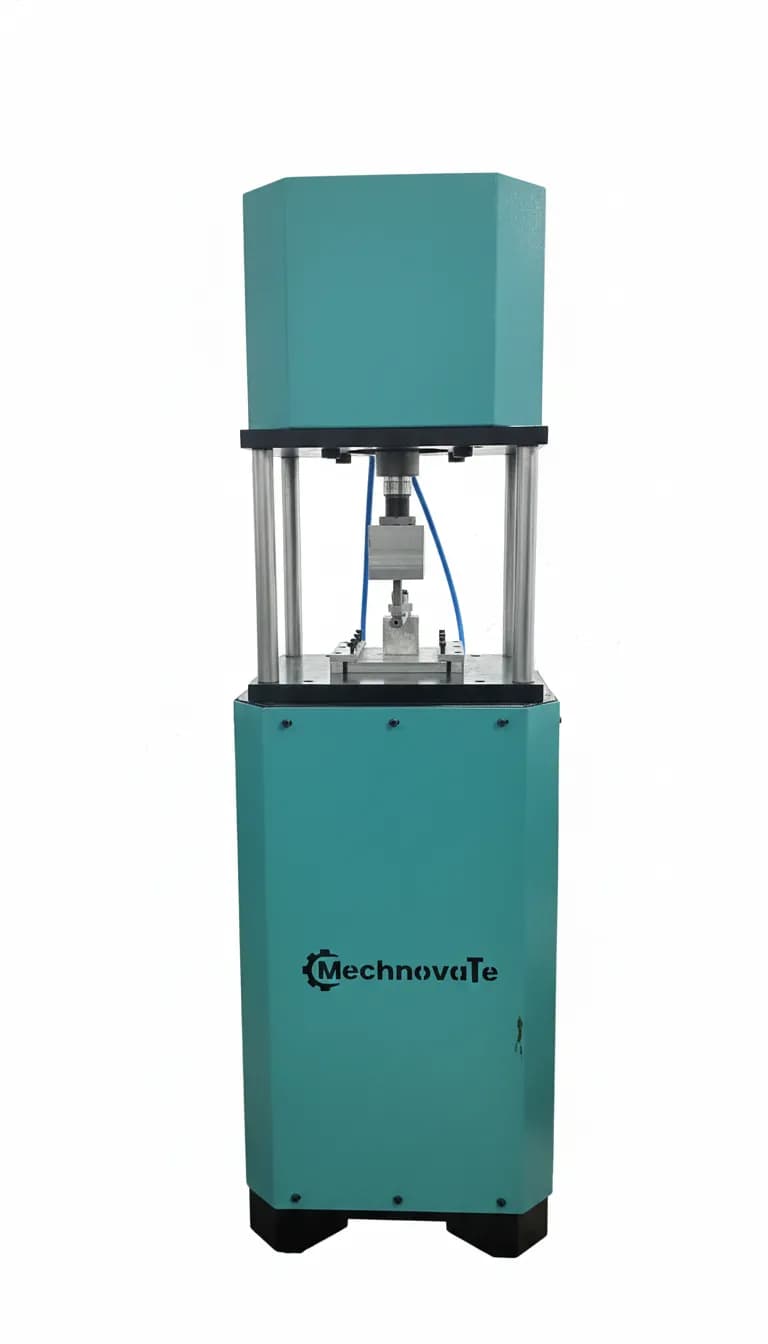
2 Station Pneumatic Aluminium Punching Machine

Model: MEPPPST2 | Punching

Multi-tool setup with adjustable cutting depth.

1 Station Pneumatic Aluminium Punching Machine

Model: MEPPPST1 | Punching

Precision alignment with Easy Guiding System for Aluminium.

Pneumatic Copy Router Machine for Aluminium and UPVC

Model: MEPCR Series | Router

High-speed routing with secure pneumatic clamping.

Explore Mechnovate Machinery

Browse our complete range of aluminium and uPVC window fabrication machinery. Call +91-9265699061 or visit our products page for specifications and pricing.