Best uPVC Window Making Machine for Small Shops in Delhi
Maximizing Small Workshop Footprints in Okhla and Mayapuri
For small business owners in Okhla Phase III or Mayapuri Industrial Area, square footage is often the most expensive line item on the balance sheet. To run a profitable fabrication business in these tight Delhi zones, you cannot afford bulky, underutilized equipment. The best uPVC window making machine for a startup isn't necessarily the largest or the most expensive; it is the one that offers the highest 'output per square foot.' In our 15 years of helping fabricators set up shops, we have found that a compact, modular approach allows a 600-800 sq. ft. unit to produce 25-35 high-quality window frames per 8-hour shift.
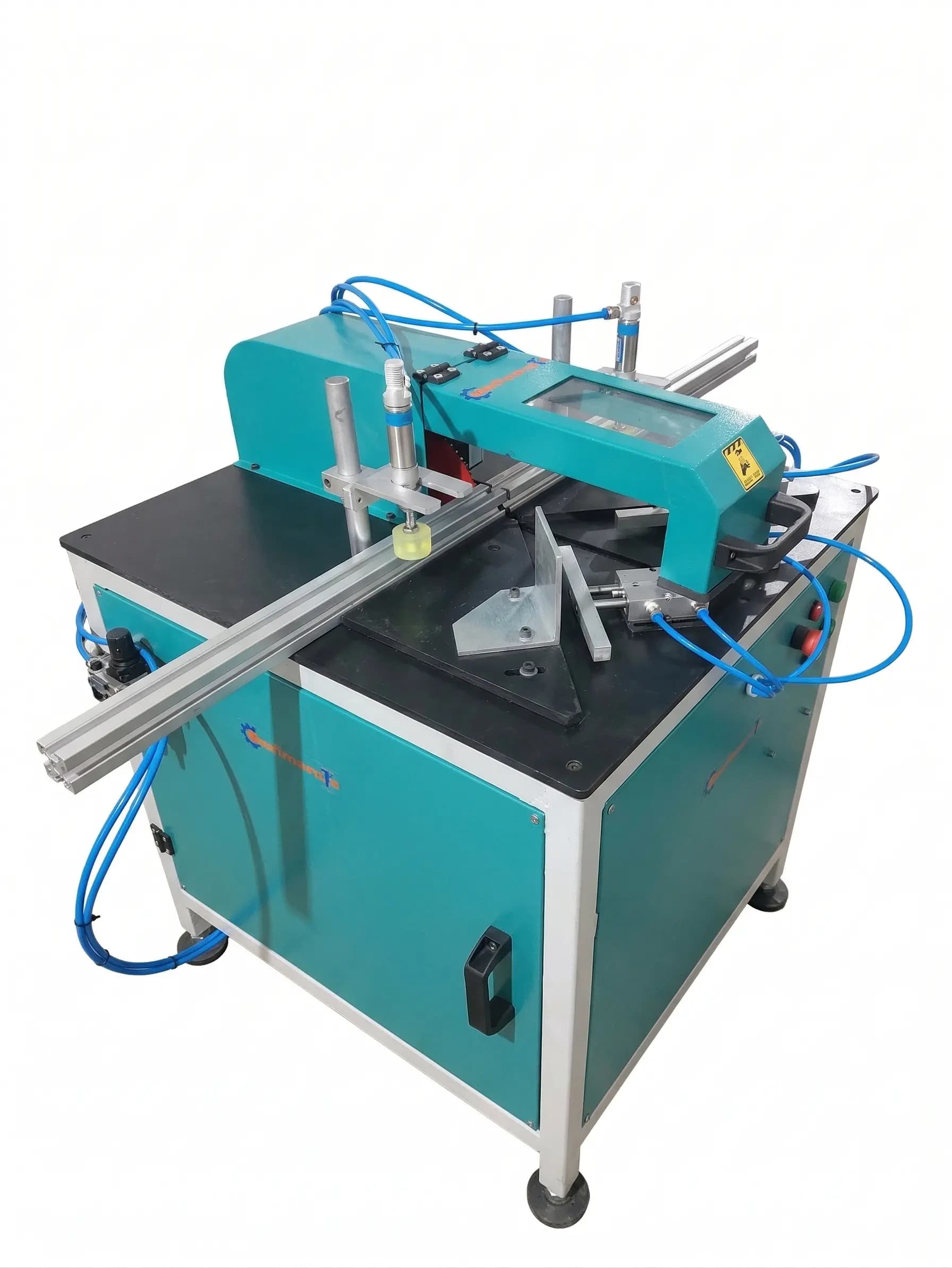
Front-loading the solution: If you are operating in a constrained space, prioritize a high-precision Single Head Cutting Machine paired with a Portable Welding Machine. This combination occupies 60% less space than a standard double-head line while maintaining the precision engineering required for high-end residential projects in South Delhi. Avoid the 'entry-level' manual machines that lack pneumatic clamping; the slight cost saving is quickly wiped out by profile wastage and rework costs.
Case Study: Optimizing a 500 sq. ft. Mayapuri Unit
Last year, we assisted a fabricator in Mayapuri Phase II who was struggling with a 12% material waste rate and a bottleneck at the milling stage. By auditing their workflow, we implemented the following changes over a 4-week period:
- Workflow Redesign: Switched from a linear assembly line to a 'U-shaped' flow to minimize profile handling.
- Equipment Upgrade: Replaced a generic 12-inch wood cutter with a dedicated upvc cutting machine featuring a 400mm TCT blade and 2.2kW induction motor.
- Tooling Precision: Integrated a semi-automatic Copy Router Machine with a 1:1 ratio template to ensure hardware slots were milled to +/- 0.2mm tolerance.
The Results: Production increased from 12 frames/day to 22 frames/day without hiring additional staff. More importantly, the waste rate dropped to 2.5%, saving the owner approximately ₹18,000 per month in raw profile costs alone. This proves that window machinery selection is about ROI, not just the initial upvc machine price list.
The "Small Business Starter Kit": Essential uPVC Machinery
When scaling a small fabrication unit, you must choose machines that comply with ISO 9001 standards to ensure long-term durability. Here is the recommended configuration for a space-efficient Delhi workshop:
- Single Head Cutting Machine: Must feature a 45 and 90-degree miter capability. Ensure it has pneumatic vertical and horizontal clamps to prevent profile 'kick' during the cut.
- Single Head Seamless Welding Machine: Essential for the 'Zero-G' look that premium clients demand. It should handle profile heights from 20mm to 120mm.
- Water Slot Milling Machine: A three-spindle setup is ideal to mill drainage holes at different angles simultaneously, significantly reducing handling time.
- Manual End Milling Machine: For transom processing. Look for a quick-change blade system to switch between different profile brands (e.g., Okotech, Aparna, or Fenesta-compatible profiles) in under 2 minutes.
Technical Deep-Dive: Engineering Standards and Tolerances
In uPVC machinery fabrication, heat and pressure control are the two pillars of structural integrity. A common mistake we see in Okhla workshops is setting the upvc welding machine temperature to 260°C to 'speed up' the cycle. This degrades the PVC polymer. The industry standard, which we strictly adhere to at Mechnovate, is a melting temperature of 245°C - 250°C with a melting time of 25-30 seconds and a cooling time of at least 30 seconds.
Your upvc windows manufacturing machine must be able to maintain a constant air pressure of 6-8 bar. If your compressor fluctuates, your weld strength will be inconsistent, leading to corner cracks during installation. We recommend a 5HP reciprocating compressor with a 220L tank for small units to ensure stable pneumatic pressure across the head cutting machine and welding stations.
Common Mistakes in Setting Up an Aluminium Window Fabrication Line
Many entrepreneurs in Delhi try to use the same tools for both uPVC and aluminium fabrication. This is a recipe for failure. Aluminium requires higher RPMs and specialized lubrication systems. Here are the top mistakes to avoid:
- Using High-Speed Steel (HSS) Blades: For an aluminium cutter machine, always use Tungsten Carbide Tipped (TCT) blades with a negative rake angle to prevent the blade from 'grabbing' the thin-walled profile.
- Neglecting the Corner Crimper: While uPVC is welded, aluminium requires a high-pressure aluminium punching machine or a corner crimping machine to join profiles. Relying solely on screws leads to sagging frames over time.
- Ignoring Profile Support: In small shops, fabricators often let the 6-meter profile hang off the end of the aluminium profile cutting machine. This introduces a 'bow' in the profile, resulting in a 44-degree cut instead of a perfect 45-degree miter.
Cost Analysis and ROI for uPVC Window Units in Delhi
Setting up a uPVC window manufacturing unit in India requires an initial investment ranging from ₹4 Lakhs for a basic manual setup to ₹15 Lakhs for a semi-automatic line. For a business in Okhla, the break-even point is typically reached when you hit a volume of 400-500 windows.
| Machine Type | Estimated Price (INR) | Expected Life (Years) | Key Feature |
|---|---|---|---|
| Single Head Cutter (Pneumatic) | ₹85,000 - ₹1,20,000 | 10+ | 400mm TCT Blade |
| Single Head Welder | ₹1,10,000 - ₹1,60,000 | 8+ | Digital Temp Control |
| Portable Copy Router | ₹25,000 - ₹45,000 | 5+ | 12000 RPM Motor |
| End Miller | ₹45,000 - ₹75,000 | 10+ | Quick Change Tooling |
When comparing the upvc windows machine price, don't just look at the sticker. Factor in the cost of spare parts and the availability of a local service center. Mechnovate provides 24-hour onsite support for the Delhi-NCR region, which is critical when a head cutter machine goes down in the middle of a project deadline.
FAQ: Critical Questions for Delhi Fabricators
Q1: Can I run a uPVC window making machine on a single-phase connection? Yes, most small-scale machines like our Portable Welding Machine and single-head cutters are available in 220V single-phase configurations, making them ideal for small units in Okhla where a 3-phase industrial load might be restricted.
Q2: What is the difference between a 12-inch and 14-inch aluminium cutting machine? A 12-inch blade (approx 300mm) is sufficient for residential casement windows, but if you are fabricating large sliding doors or heavy-duty curtain walls, a 14-inch (350mm) or 400mm blade is required to achieve the necessary depth of cut without multiple passes.
Q3: How much space do I need for a complete uPVC windows manufacturing machine setup? While you can start in 500 sq. ft., the ideal 'sweet spot' for a comfortable workflow is 800-1000 sq. ft. This allows enough room for a 6-meter profile storage rack, an assembly table, and a final glass glazing station without the workers tripping over each other.
Q4: Is it better to buy a used automatic double head cutting machine? Only if you have a dedicated maintenance engineer. Used CNC machines often have worn-out linear guides or outdated PLC software. For a small business in Mayapuri, a new, high-quality semi-automatic upvc window manufacturing machine with a warranty is always a safer investment.
Get more articles like this
Follow Mechnovate on Google to see our guides in Google Discover & News