sales@mechnovate.co.in
Back to Blog
11/3/2026

Aluminium Window Fabrication Machine Setup Guide for a New Workshop

Aluminium Window Fabrication Machine Setup Guide for a New Workshop

Setting up an aluminium window fabrication workshop takes six machines and a compressor. You need a cutting machine, an end milling machine, a copy router, a punching machine, a pillar drill and an air compressor for the pneumatic machines. This guide explains what each machine does, the order of work on a window frame, and how to choose between manual and pneumatic models.

Mechnovate manufactures the cutting machine, end milling machine, copy router and punching machine in Ahmedabad. We do not manufacture the pillar drill or the compressor, but we supply both with your order so you can buy the whole setup from one place.

The machines in an aluminium window workshop

MachineWhat it doesMade by Mechnovate?
Cutting machineCuts profiles to length at 45° or 90°Yes
End milling machineShapes mullion and transom ends so T-joints close without gapsYes
Copy routerRoutes lock, handle and drainage slots using a templateYes
Punching machinePunches cleat holes, interlock slots, drainage slots and hardware holesYes
Pillar drillDrills screw and fixing holesSupplied, not manufactured by us
Air compressorSupplies compressed air to pneumatic machines at 6–8 barSupplied, not manufactured by us

The order of work on a window frame

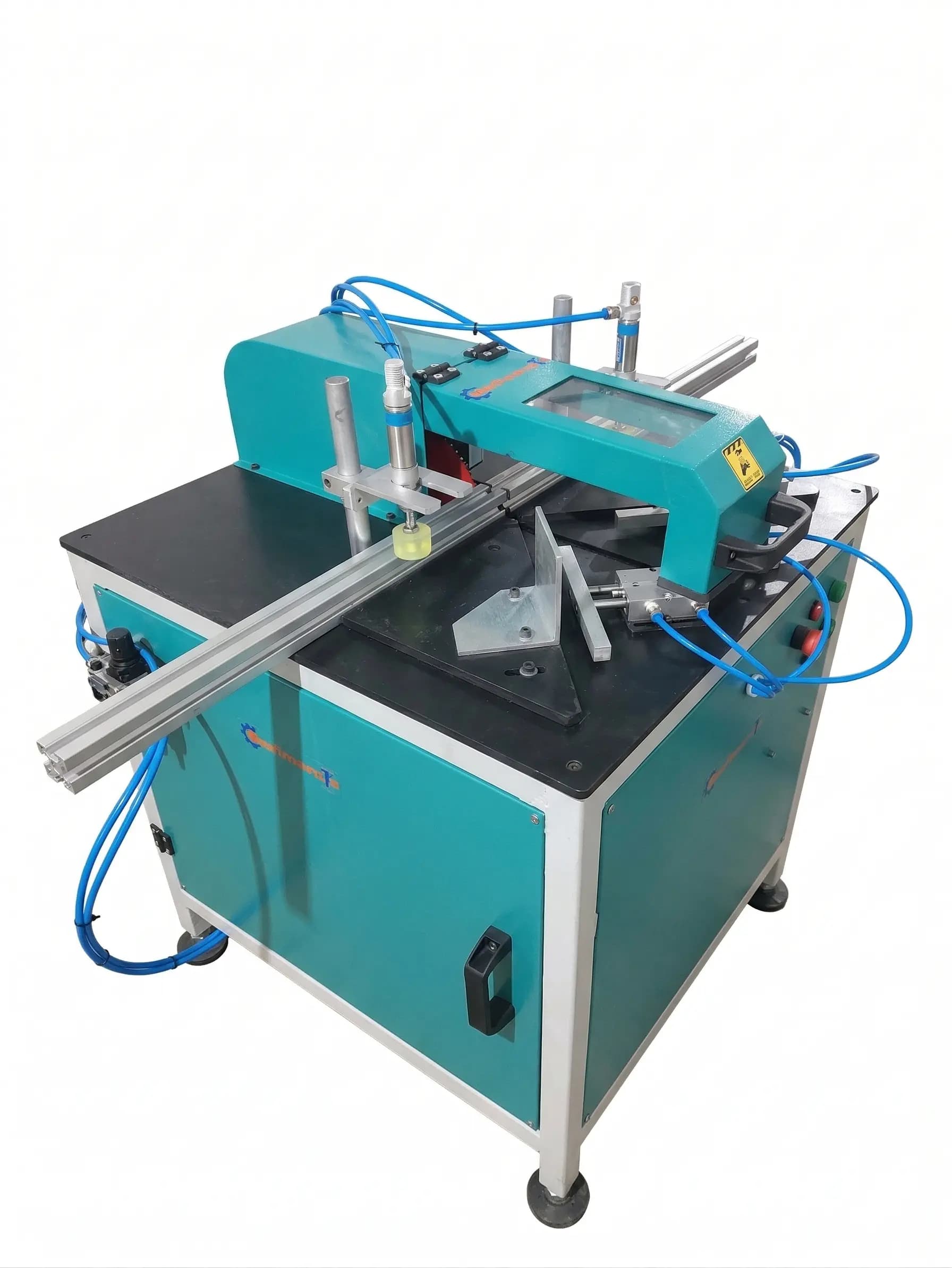
  1. Cut. Every profile is cut to length first. A 14 inch aluminium cutting machine with pneumatic clamping gives square, burr-free 45° mitre and 90° straight cuts.
  2. Mill the ends. Mullions and transoms that meet another member are shaped on the end milling machine so the T-joint closes tight.
  3. Route. Lock, handle and drainage slots are routed on a manual copy router or a pneumatic copy router. A template guides the cutter, so every frame is identical.
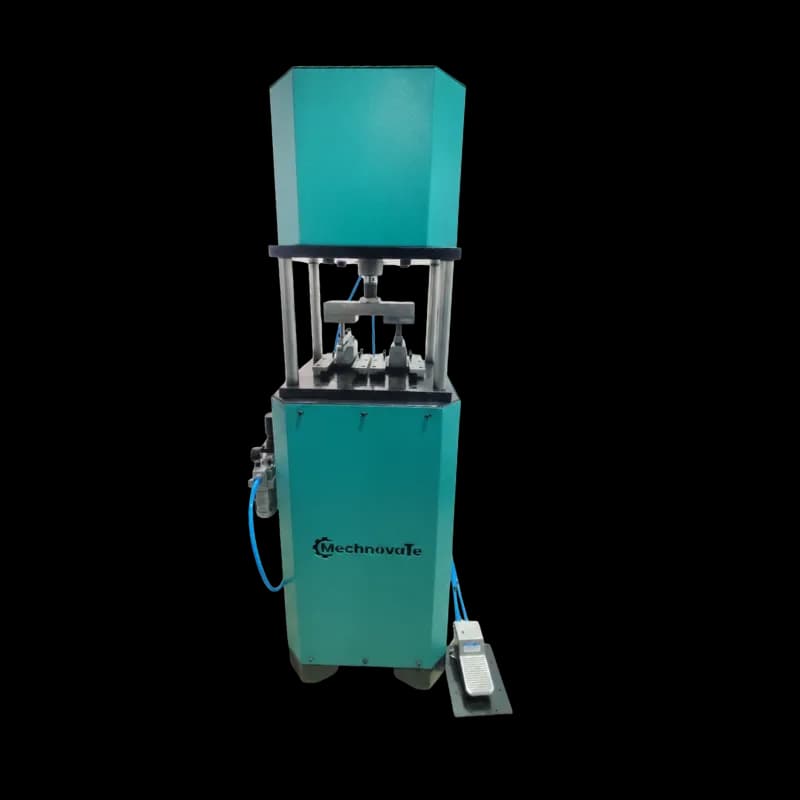
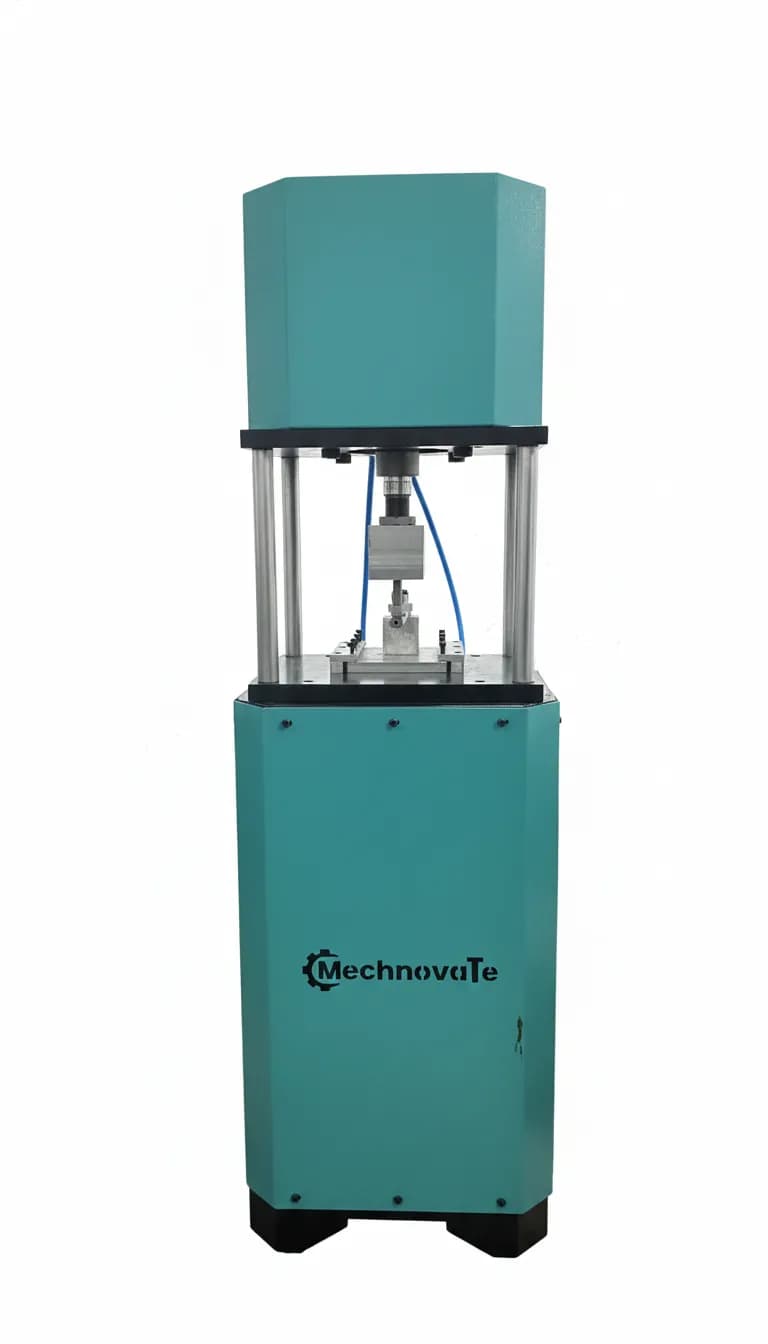
  4. Punch. Cleat holes, interlock slots and drainage holes are punched next. The manual punching machine handles cleat punching and interlock punching with the matching die, and the two station pneumatic punching machine punches two patterns without changing dies.
  5. Drill. Screw and fixing holes are drilled on the pillar drill.
  6. Assemble and glaze. Corner cleats, gaskets and glass go in at the assembly bench.

Manual or pneumatic?

  • Manual machines need no compressor and cost less. They suit start-ups, small workshops and site work.
  • Pneumatic machines are faster and less tiring because air does the clamping and punching. They suit workshops that make many windows a day.

A common path is to start with manual machines and add pneumatic ones as orders grow. Copy router templates work on both the manual and the pneumatic model, so nothing you set up is wasted.

Choosing the compressor

Pneumatic machines run on compressed air at 6–8 bar. The right compressor depends on how many pneumatic machines run at the same time. Tell us which machines you plan to buy and we will recommend and supply a compressor that suits them.

Workshop space and power

  • Allow clear floor space around the cutting machine for long profiles. A cut profile needs room on both sides.
  • Keep the copy router, punching machine and pillar drill near each other. A frame member moves between them.
  • The cutting and end milling machines are available for single-phase or three-phase power, so you do not need to upgrade your supply for them.

What to share to get a quotation

  • The profile systems you will work with.
  • How many windows you plan to make per day.
  • Whether you need manual or pneumatic machines, or a mix.
  • Whether you want us to supply the pillar drill and compressor.

Send these on the quotation form or call +91-9265699061 and we will propose a setup with a written quotation. For a deeper plan on layout and budget, read our workshop setup guide.

Frequently asked questions

What machines do I need to start an aluminium window workshop? A cutting machine, an end milling machine, a copy router, a punching machine and a pillar drill, plus a compressor if you choose pneumatic machines.

Do you make the pillar drill and compressor? No. We manufacture the cutting, end milling, copy router and punching machines. We supply the pillar drill and compressor so you can order the full setup together.

Can one punching machine do cleat and interlock punching? Yes. The manual punching machine does cleat punching and interlock punching on aluminium profiles with the die made for your section.

Can I start with manual machines and upgrade later? Yes. Copy router templates are the same on the manual and pneumatic models, so you can move to pneumatic without redoing your templates.

Get more articles like this

Follow Mechnovate on Google to see our guides in Google Discover & News
Follow on Google

Aluminium Window Fabrication Machine Setup Guide for a New Workshop

Setting up an aluminium window fabrication workshop takes six machines and a compressor. You need a cutting machine, an end milling machine, a copy router, a punching machine, a pillar drill and an air compressor for the pneumatic machines. This guide explains what each machine does, the order of work on a window frame, and how to choose between manual and pneumatic models.

Mechnovate manufactures the cutting machine, end milling machine, copy router and punching machine in Ahmedabad. We do not manufacture the pillar drill or the compressor, but we supply both with your order so you can buy the whole setup from one place.

The machines in an aluminium window workshop

| Machine | What it does | Made by Mechnovate? | |||| | Cutting machine | Cuts profiles to length at 45° or 90° | Yes | | End milling machine | Shapes mullion and transom ends so T-joints close without gaps | Yes | | Copy router | Routes lock, handle and drainage slots using a template | Yes | | Punching machine | Punches cleat holes, interlock slots, drainage slots and hardware holes | Yes | | Pillar drill | Drills screw and fixing holes | Supplied, not manufactured by us | | Air compressor | Supplies compressed air to pneumatic machines at 6–8 bar | Supplied, not manufactured by us |

The order of work on a window frame Cut. Every profile is cut to length first. A 14 inch aluminium cutting machine with pneumatic clamping gives square, burr-free 45° mitre and 90° straight cuts. Mill the ends. Mullions and transoms that meet another member are shaped on the end milling machine so the T-joint closes tight. Route. Lock, handle and drainage slots are routed on a manual copy router or a pneumatic copy router. A template guides the cutter, so every frame is identical. Punch. Cleat holes, interlock slots and drainage holes are punched next. The manual punching machine handles cleat punching and interlock punching with the matching die, and the two station pneumatic punching machine punches two patterns without changing dies. Drill. Screw and fixing holes are drilled on the pillar drill. Assemble and glaze. Corner cleats, gaskets and glass go in at the assembly bench.

Manual or pneumatic? Manual machines need no compressor and cost less. They suit start-ups, small workshops and site work. Pneumatic machines are faster and less tiring because air does the clamping and punching. They suit workshops that make many windows a day.

A common path is to start with manual machines and add pneumatic ones as orders grow. Copy router templates work on both the manual and the pneumatic model, so nothing you set up is wasted.

Pneumatic machines run on compressed air at 6–8 bar. The right compressor depends on how many pneumatic machines run at the same time. Tell us which machines you plan to buy and we will recommend and supply a compressor that suits them.

Workshop space and power Allow clear floor space around the cutting machine for long profiles. A cut profile needs room on both sides. Keep the copy router, punching machine and pillar drill near each other. A frame member moves between them. The cutting and end milling machines are available for single-phase or three-phase power, so you do not need to upgrade your supply for them.

What to share to get a quotation The profile systems you will work with. How many windows you plan to make per day. Whether you need manual or pneumatic machines, or a mix. Whether you want us to supply the pillar drill and compressor.

Related Machines From Mechnovate

Single Head Cutting Machine for Aluminium and UPVC

Model: MEPCCSH1 | Cutting

Single head 45°/90° aluminium & uPVC cutting machine with pneumatic clamping and cast-iron body. Handles Domal, Jindal, European and all standard Indian profiles. 3 HP motor, burr-free cuts. Factory-direct price ₹1,55,000 + GST from Ahmedabad. Model MEPCCSH1.

2 Station Pneumatic Aluminium Punching Machine

Model: MEPPPST2 | Punching

Two station pneumatic punching machine with dual independent dies — 1.8 ton force per station at 8–10 bar. Punch two different hole patterns without die changes, reducing punching time by up to 50%. Factory-direct price ₹1,20,000 + GST from Ahmedabad. Model MEPPPST2.

1 Station Pneumatic Aluminium Punching Machine

Model: MEPPPST1 | Punching

Single station pneumatic punching machine for aluminium window profiles — 1.85 ton punching force, Easy Guiding System, 6–8 bar compressed air. Punches clean holes in up to 2.5 mm wall thickness. Factory-direct price ₹1,10,000 + GST from Ahmedabad. Model MEPPPST1.

Pneumatic Copy Router Machine for Aluminium and UPVC

Model: MEPCR Series | Router

Pneumatic copy router machine with foot-pedal clamping for aluminium and uPVC window profiles. Optional air-oil spray system, 4 motor options (900 W–1860 W), 550×550 mm compact footprint. Factory-direct price from ₹70,000 + GST from Ahmedabad. MEPCR Series.

Explore Mechnovate Machinery

Browse our complete range of aluminium and uPVC window fabrication machinery. Call +91-9265699061 or visit our products page for specifications and pricing.