Ahmedabad Workshop Guide: Selecting Aluminum Window Manufacturers
Achieving Sub-60 Second Cycle Times with Automatic Corner Crimping
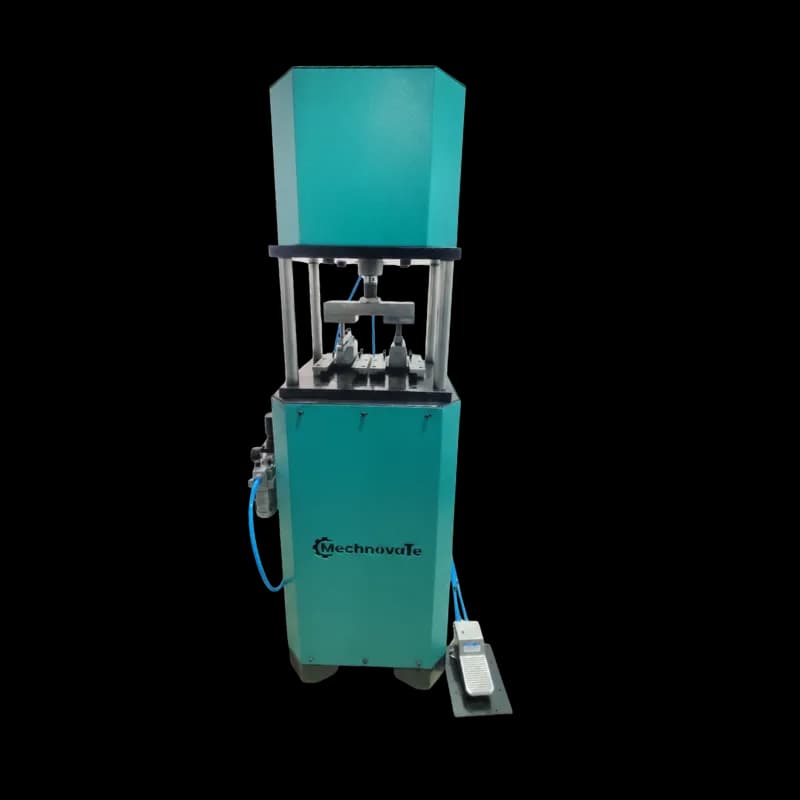
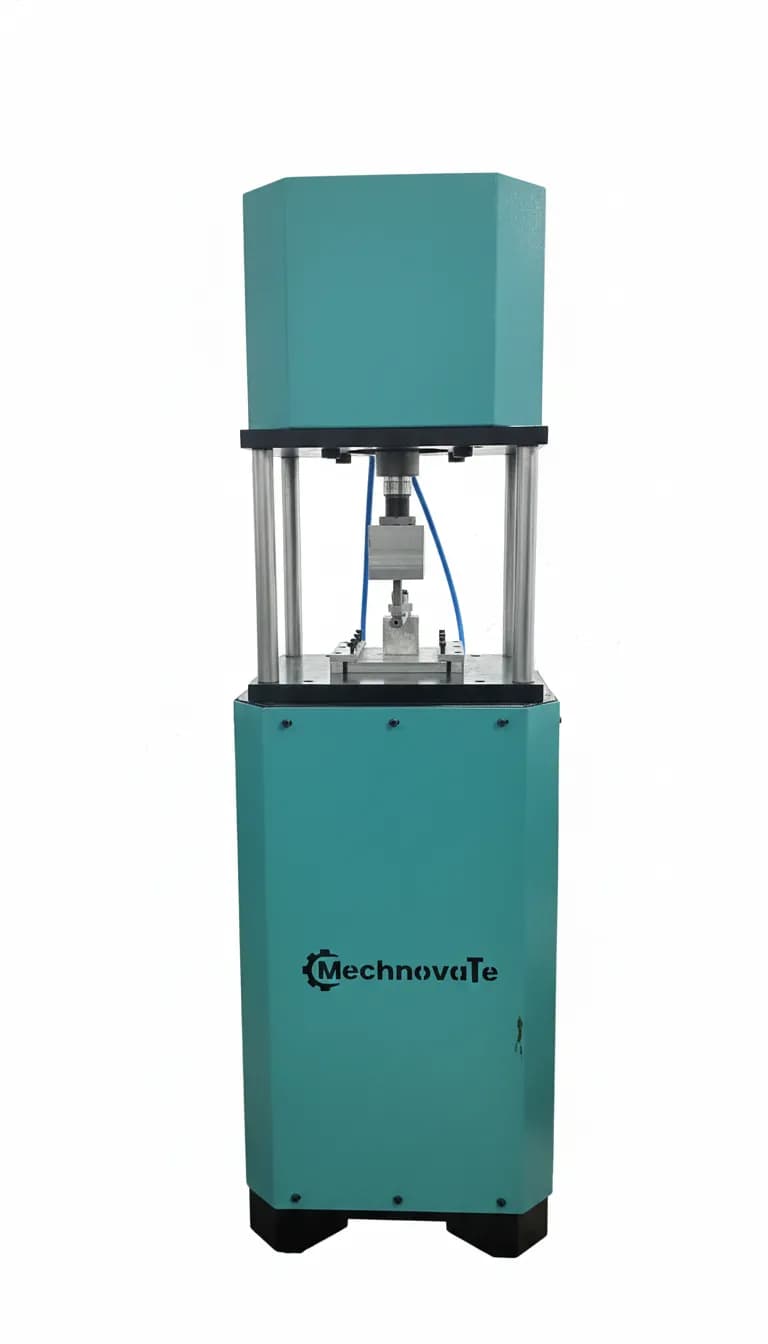
To reduce cycle times in high-volume aluminium fabrication, you must eliminate the bottleneck inherent in manual assembly. In our experience working with fabricators across Gujarat, the transition from manual punching to an automatic corner crimping machine is the single most effective way to increase throughput by up to 400%. Manual assembly typically requires 4 to 6 minutes per corner when accounting for alignment, screw fixing, and sealant application. By utilizing professional Automatic Corner Crimping Machine technology, this is reduced to under 55 seconds. This efficiency is critical for workshops in industrial hubs like Vatva and Odhav, where labor costs and project deadlines are tightening. Precision engineering allows for a seamless join that manual methods cannot replicate, ensuring that every frame meets the strict tolerances required for high-rise glazing projects in Ahmedabad.
Case Study: 45% Efficiency Gain in an Ahmedabad High-Rise Project
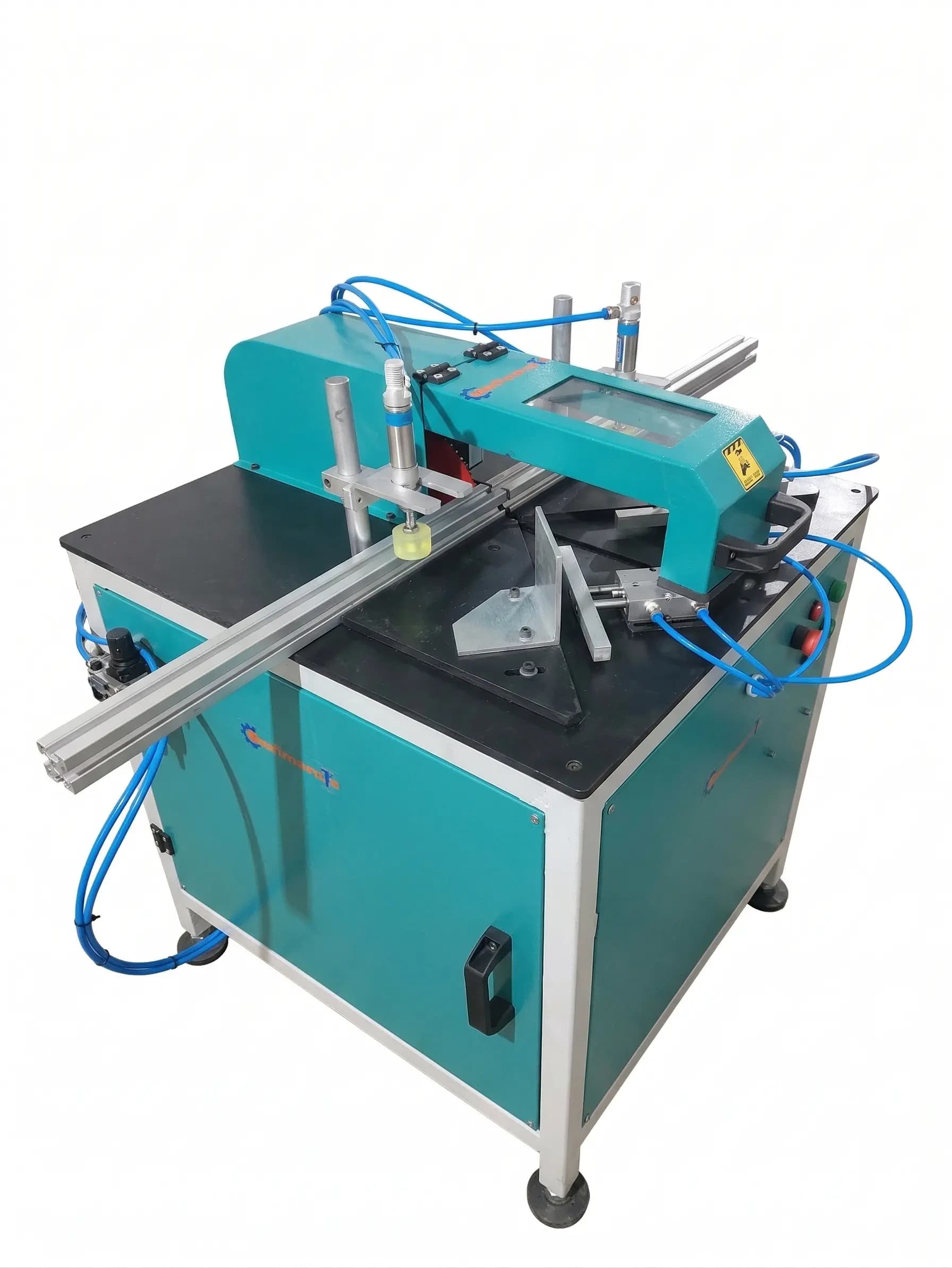
In a recent project for a commercial developer in Prahlad Nagar, we audited a workshop that was struggling to meet a delivery schedule of 120 windows per week. Their existing process relied on manual punching and mechanical corner cleats, which resulted in a 12% rejection rate due to misaligned miters. We implemented a strategy centered on the Double Head Miter Saw for Aluminium Profiles for precision cutting and an automatic crimper for assembly.
Over a 6-week testing period, the results were measurable:
- Cutting precision improved from ±0.8mm to ±0.2mm, virtually eliminating gap issues.
- Corner crimping cycle time dropped from 240 seconds to 48 seconds per joint.
- Daily output increased from 18 frames per day to 42 frames per day without adding additional staff.
- Material waste was reduced from 8% to 2.5% through better optimization of the aluminium profile cutting machine settings.
This transformation highlights why selecting the right aluminum window machine manufacturers in Ahmedabad is not just about the sticker price, but about the long-term ROI of the equipment. If your manufacturer cannot provide specific cycle time data for your specific profile thickness (e.g., 1.5mm vs 2.5mm), they do not understand the technical demands of your workshop.
Technical Specs You Must Demand from Aluminum Window Machine Manufacturers in Ahmedabad
When evaluating industrial aluminum door manufacturing equipment, you must look beyond the glossy brochure and interrogate the engineering specifications. Not all machines are built to handle the varying grades of alloy used in India. Here are the non-negotiables for high-speed production:
- Hydraulic Pressure Range: Ensure the machine can deliver at least 60-100 bar of pressure. This is essential for clean crimping of heavy-duty thermal break profiles without deforming the outer surface.
- Punching Blade Adjustability: The blades must be adjustable in three axes (X, Y, Z). This allows for microscopic alignment to compensate for profile wall thickness variances, which often occur in locally sourced extrusions.
- Motor Power: For cutting operations, look for a minimum of 2.2kW per head. A weak motor leads to blade deflection, causing the 'burr' that ruins corner joints.
- Profile Support Systems: Look for pneumatic clamping systems that secure the profile close to the blade or punch. This minimizes vibration, which is the primary cause of premature tool wear.
We often see workshops attempt to use a 12-inch aluminium cutter machine for large curtain wall profiles. This is a mistake. For industrial-scale work, an aluminium cutting machine 12 inch blade is insufficient for deep profiles; you should opt for 450mm or 500mm blades to ensure a single-pass clean cut. Additionally, every machine should comply with ISO 9001 and industrial aluminum profile cutting safety standards to protect your operators.
Avoiding the 'Cheap Machine' Trap: Trade-offs in Precision Engineering
The market for upvc window manufacturing machinery and aluminium machinery manufacturers in Ahmedabad is flooded with low-cost alternatives. However, as senior engineers, we have seen these machines fail within 12-18 months due to 'frame fatigue.' A cheap automatic double head cutting machine price India might look attractive, but if the bed is made of thin-gauge steel instead of cast iron or heavy-walled rectangular tubing, it will warp over time.
Once the bed warps, your 45-degree cuts will become 44.5 degrees. This 0.5-degree error creates a 1mm gap at the corner of a standard window, making it impossible to achieve a water-tight seal. Furthermore, high-speed production requires reliable components. We recommend machines that utilize Schneider electrics and Omron sensors. If a manufacturer cannot identify the brand of their solenoid valves or PLC, they are likely using generic components that will be impossible to replace when they fail during your peak season.
Integrating the Right Ancillary Equipment
A common mistake we observe in Gujarat workshops is investing heavily in a cutting saw but neglecting the Heavy Duty End Milling Machine. The end miller is vital for mullion joints. Without a high-speed copy router for aluminium windows, your hardware slots will be ragged and unprofessional.
To optimize your workflow, consider this standard production line layout:
- Profile Storage and Loading Racks.
- CNC aluminium profile cutting machine for miter cuts.
- Heavy-duty end milling for transom and mullion preparation.
- High-speed copy router for lock holes and handle slots.
- Multi-head aluminium punching machine for drainage and screw holes.
- Automatic corner crimping machine for final assembly.
This flow ensures that no single station becomes a bottleneck. In our time at Mechnovate, we've found that fabricators who invest in a complete, synchronized line see a 30% faster return on investment than those who buy piecemeal equipment from different vendors.
FAQ: Critical Questions for Fabricators
1. What is the difference between a single-head and double-head cutting saw for a startup? A single-head aluminium cutter machine price is lower, but it requires the operator to manually flip the profile for the second miter cut, doubling the chance of measurement errors. A double-head saw cuts both ends simultaneously, ensuring the length is perfect every time. For any workshop aiming to produce more than 10 windows a day, a double-head machine is mandatory.
2. How often should we sharpen the blades on an aluminium profile cutting machine? In an Ahmedabad workshop running 8 hours a day, blades should be checked every 15 days. We recommend professional sharpening every 3-4 months. Using a dull blade increases the load on the motor and creates heat that can melt the protective coating on the aluminium profile.
3. Is an automatic aluminium corner crimping machine price Gujarat worth it for small residential projects? Yes. While residential projects are smaller, the quality expectation is higher. Homeowners will notice a 1mm gap in a window corner. An automatic crimper ensures the joint is physically fused, providing a structural integrity that screws cannot match, especially in the high-wind coastal areas of Gujarat.
4. Can I use the same machine for uPVC and Aluminium? Generally, no. While some cutting machines can handle both with different blades, the joining processes are entirely different. uPVC requires a upvc welding machine to melt the corners together, while aluminium requires mechanical crimping. Attempting to use the wrong equipment will lead to structural failure of the window frame.
Get more articles like this
Follow Mechnovate on Google to see our guides in Google Discover & News