Zero-Gap uPVC Finishes: Seamless Welding for Indore Fabricators
Why Indore Fabricators are Prioritizing Zero-Gap Seamless Welding
Indore's residential market in areas like Vijay Nagar and Nipania is no longer satisfied with the 'cleaned-groove' look of traditional uPVC windows. The demand has shifted toward a zero-gap finish, where the welded corner looks like a single continuous piece of profile without the characteristic 2mm or 3mm groove left by standard corner cleaners. For a uPVC machinery manufacturer, the technical challenge isn't just the weld strength, but the management of the 'squeeze-out' or flash. A double head seamless welding machine for uPVC windows solves this by using specialized teflon-coated restriction plates that compress the molten uPVC during the fusion cycle, eliminating the need for post-weld grooving. This technology allows Indore-based workshops to achieve a premium aesthetic that justifies a 15-20% higher price point per square foot compared to standard fabrication.
Technical Comparison: Seamless vs. Traditional Welding Parameters
In our Mechnovate testing labs, we compared standard welding cycles against the seamless process to quantify the precision engineering benefits. A standard upvc welding machine typically requires a 3mm melt allowance, which is later carved out by a CNC uPVC window corner cleaning machine price India. In contrast, seamless technology operates on the following engineering specifications:
- Heating Temperature: 245°C to 260°C depending on profile wall thickness (typically 2.2mm to 2.8mm).
- Melt Pressure: 0.35 to 0.45 MPa, controlled via precision pneumatic regulators.
- Melt Allowance: Reduced to 2.4mm to ensure minimal flash height.
- Restriction Plates: Hardened steel plates with a 0.2mm tolerance to contain the 'bead' within the profile wall dimensions.
By moving to a Double head seamless welding machine for uPVC windows, fabricators in Indore are seeing a significant reduction in secondary processing time. Since the corner is finished the moment it leaves the welder, the bottleneck at the corner cleaning station is entirely removed, allowing the upvc window manufacturing machine line to flow directly to glazing and hardware fitment.
Case Study: Optimizing an Indore-Based Production Line
Last year, we assisted a mid-sized fabricator in the Pithampur industrial area who was struggling with a 12% rejection rate due to inconsistent corner aesthetics. Their setup relied on a single cutting manual process and basic welding. We implemented a complete system overhaul featuring an automatic double head cutting machine price India and a seamless welder. Over a 6-week observation period, the results were definitive:
- Waste Reduction: Cutting waste dropped from 12% to 2.8% due to the precision of the automatic double head cutting saw for aluminium profiles and uPVC.
- Output Increase: Daily frame production rose from 35 units to 58 units with the same headcount.
- Structural Integrity: Corner strength tests performed according to BS EN 12608 standards showed a 15% increase in break-load resistance because the seamless process maintains more surface area contact during the fusion phase.
The most critical lesson learned was the importance of air pressure stability. We found that fluctuations in the workshop's compressor (dropping below 6 bar) caused micro-gaps in the 'seamless' finish. We solved this by installing a 500-liter buffer tank, a tip every fabricator considering upvc windows manufacturing machine upgrades should follow.
Essential Machinery for a Zero-Gap Workflow
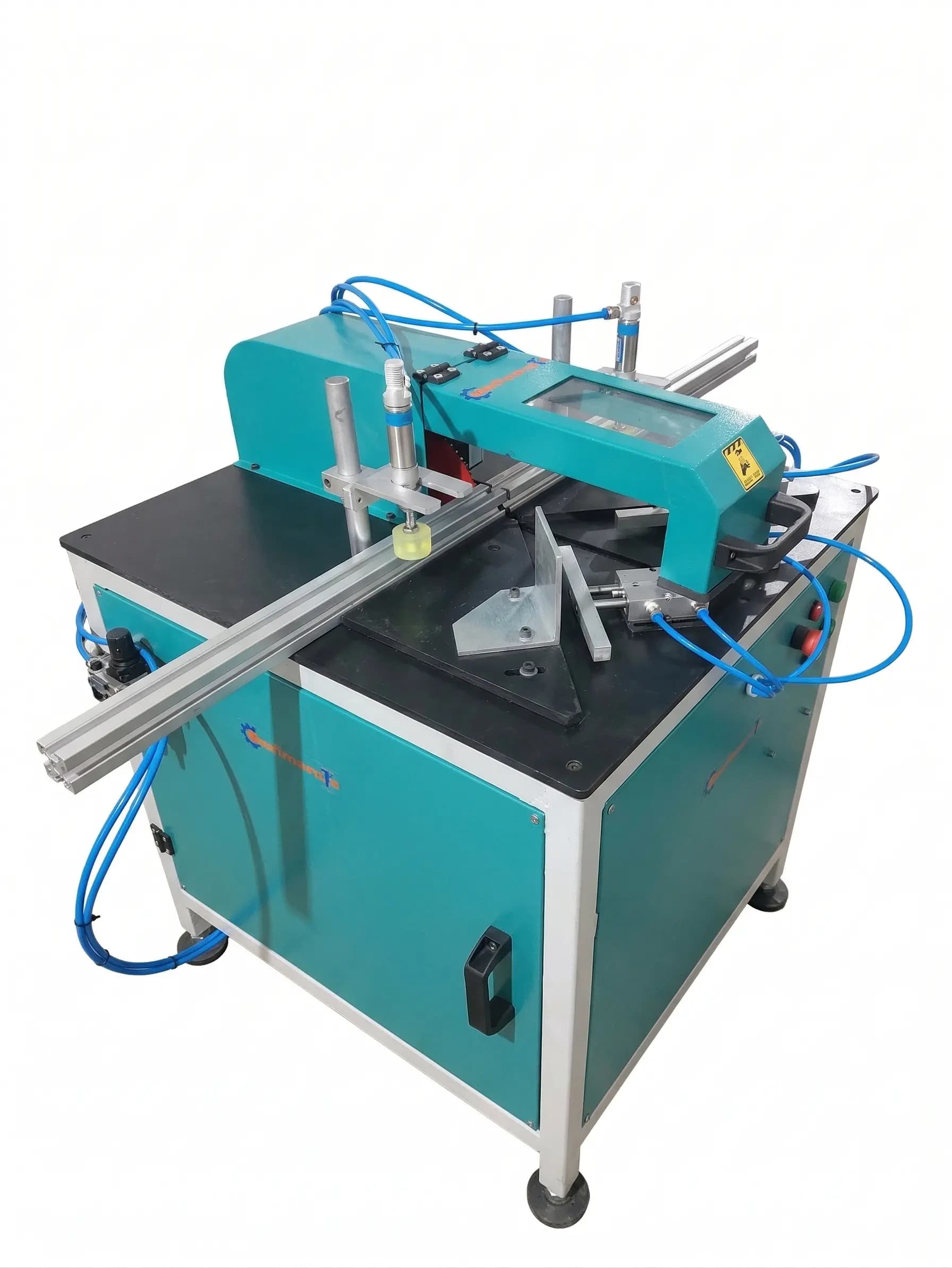
To achieve a true zero-gap finish, the welder cannot work in isolation. The entire upvc window manufacturing machinery must be calibrated for precision. If your upvc cutting machine is off by even 0.5 degrees, the seamless welder will struggle to close the gap, resulting in a 'step' on the profile surface.
- Precision Cutting: Use a 45 degree double head cutting machine to ensure perfectly matched miters.
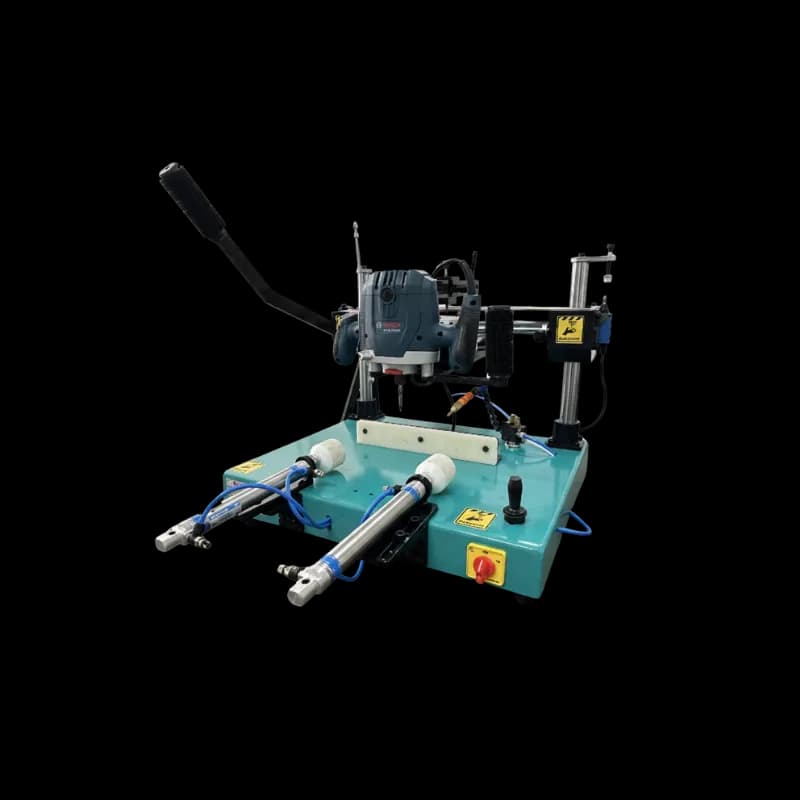
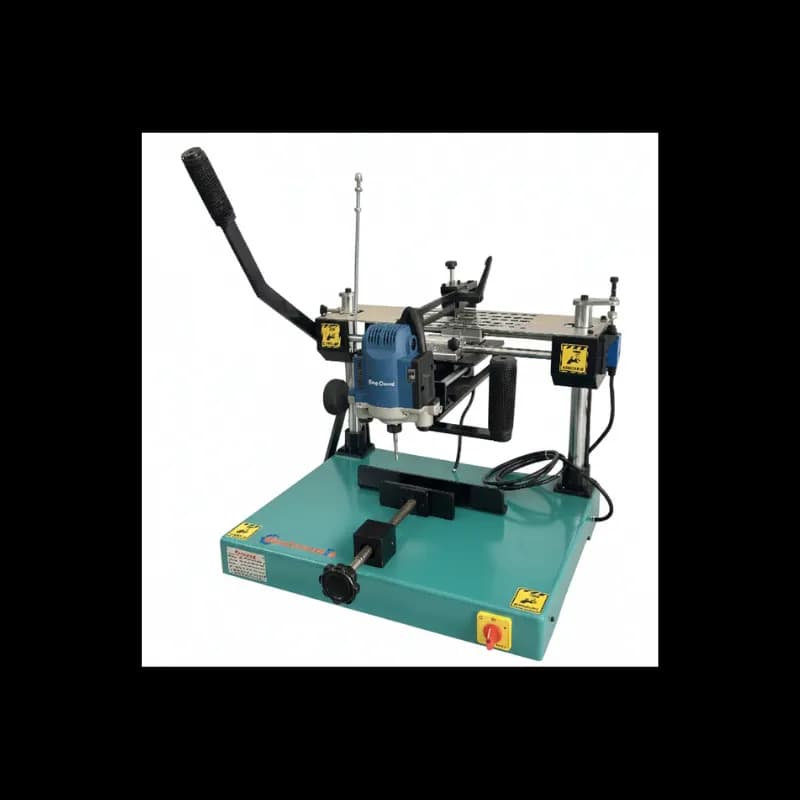
- Profile Preparation: A high-speed copy router machine must be used for water slots and lock holes to ensure no internal debris interferes with the welding clamping.
- Corner Crimping (For Alu-Systems): If you are diversifying, an automatic aluminium corner crimping machine price Gujarat provides the same 'zero-gap' structural rigidity for aluminium profiles as seamless welding does for uPVC.
For many startups, the best uPVC window making machine for small business is often a combo of a reliable double-head welder and a high-precision aluminium profile cutting machine. This versatility allows the shop to handle both uPVC and aluminium fabrication without doubling their floor space requirements.
Common Pitfalls in Seamless Welding Operations
After 15 years in the workshop, I have seen common mistakes that ruin the ROI of expensive uPVC machinery.
- Neglecting Teflon Tape: The teflon on the heater plates must be changed every 200-300 cycles. Burnt teflon leaves carbon deposits that create dark lines in your 'seamless' joint.
- Inconsistent Profile Quality: Seamless welding is unforgiving with recycled uPVC profiles. High calcium content causes the 'bead' to become brittle, leading to corner cracking during transport.
- Incorrect Knife Positioning: The restriction knives must be adjusted for every different profile brand. A 60mm series profile requires different pressure settings than a 70mm luxury series.
- Poor Air Filtration: If your upvc window machine gets moisture in its pneumatic valves, the clamping pressure will stutter, leading to visible seams.
The Cost of Setting Up a uPVC Window Manufacturing Unit in India
When calculating the cost of setting up uPVC window manufacturing unit in India, most entrepreneurs in Indore focus solely on the machine price. However, you must factor in the 'Quality Cost.' A cheap upvc machine price list entry might save you 2 Lakhs upfront, but if it produces a 10% rejection rate in 'zero-gap' finishes, you lose that savings in three months of operation. A fully automatic uPVC window manufacturing unit cost typically ranges from 15 Lakhs to 45 Lakhs depending on the level of CNC integration. For those just starting, a portable uPVC window making machine price list can offer a lower entry point, though you will sacrifice the seamless finish for a traditional cleaned corner.
FAQ: Expert Insights for Fabricators
Q1: Can I use a seamless welder for colored or laminated profiles? Yes, this is where the technology shines. Traditional corner cleaners often scratch the laminate film. A Double head seamless welding machine for uPVC windows preserves the film right to the edge, providing a much cleaner finish on wood-grain or charcoal grey profiles.
Q2: What is the maintenance schedule for a double head miter saw? To maintain the precision required for seamless welding, the double head miter saw for aluminium profiles price includes high-grade carbide blades. These should be sharpened every 3,000 cuts and the linear rails lubricated weekly with ISO VG 32 grade oil to prevent 'play' in the head movement.
Q3: Is seamless welding as strong as traditional welding? Actually, it's often stronger. In our tests, the restriction plates force the molten material back into the chamber of the profile, creating a thicker internal weld wall. This exceeds the requirements of IS 1285 and ISO 9001 quality benchmarks for structural windows.
Q4: How much floor space is needed for a full uPVC window manufacturing machine line? For a standard setup including a head cutter machine and a double head welder, you should allocate at least 1,500 to 2,000 square feet. This allows for proper material flow from the upvc window making machine to the cooling racks and finally to the glazing station.
Get more articles like this
Follow Mechnovate on Google to see our guides in Google Discover & News