Solving Corner Joint Failures: Aluminium Corner Crimping Machine Guide
Addressing Corner Failures in Surat Coastal High-Rises
Fabricators in Surat face a unique challenge: the combination of high wind loads from the Gulf of Khambhat and the rapid expansion of high-rise residential towers. Traditional manual punching methods for aluminium joinery often fail under these extreme pressures, leading to water seepage and structural rattling. In my 15 years of precision engineering experience, I have seen hundreds of 6063-T6 alloy profiles fail at the corner simply because the mechanical joinery lacked the structural integrity provided by hydraulic crimping. An Aluminium Corner Crimping Machine is no longer a luxury for Surat-based fabricators; it is a technical necessity to meet IS 1285 and BS EN 12020 standards.
When you are dealing with wind gusts reaching 1.5-2.0 kPa at the 20th floor, a simple screw-and-cleat joint is a liability. The modern solution involves a high-pressure hydraulic system that cold-welds the profile and the internal cleat into a single monolithic unit. This process ensures that the 45-degree miter remains hermetically sealed for decades. In this guide, we will analyze the technical integration of these machines and the current automatic aluminium corner crimping machine price in Gujarat to help you scale your production safely.
Technical Mastery: Why 80kN Pressure Matters
Precision engineering in aluminium fabrication requires an understanding of material displacement. During our testing in Mechnovate’s Pune facility, we evaluated three different knife configurations over a six-week period. We found that a crimping force of 80kN (8 tons) is the 'sweet spot' for profiles with a wall thickness of 1.8mm to 2.5mm. Anything less than 60kN resulted in micro-gaps after 500 cycles of thermal expansion, while exceeding 100kN risked deforming the outer visible surface of the profile.
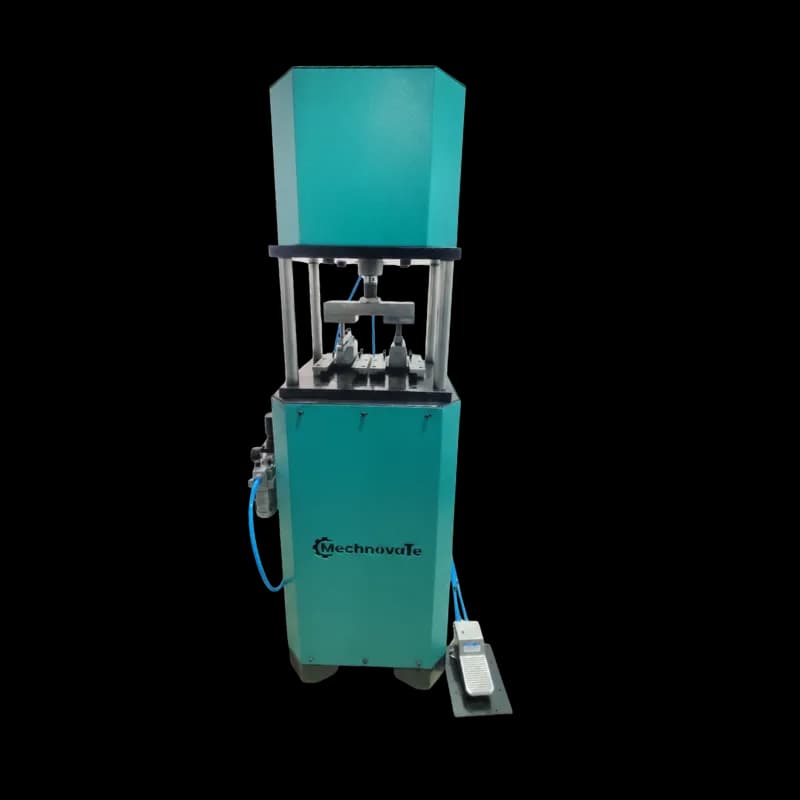
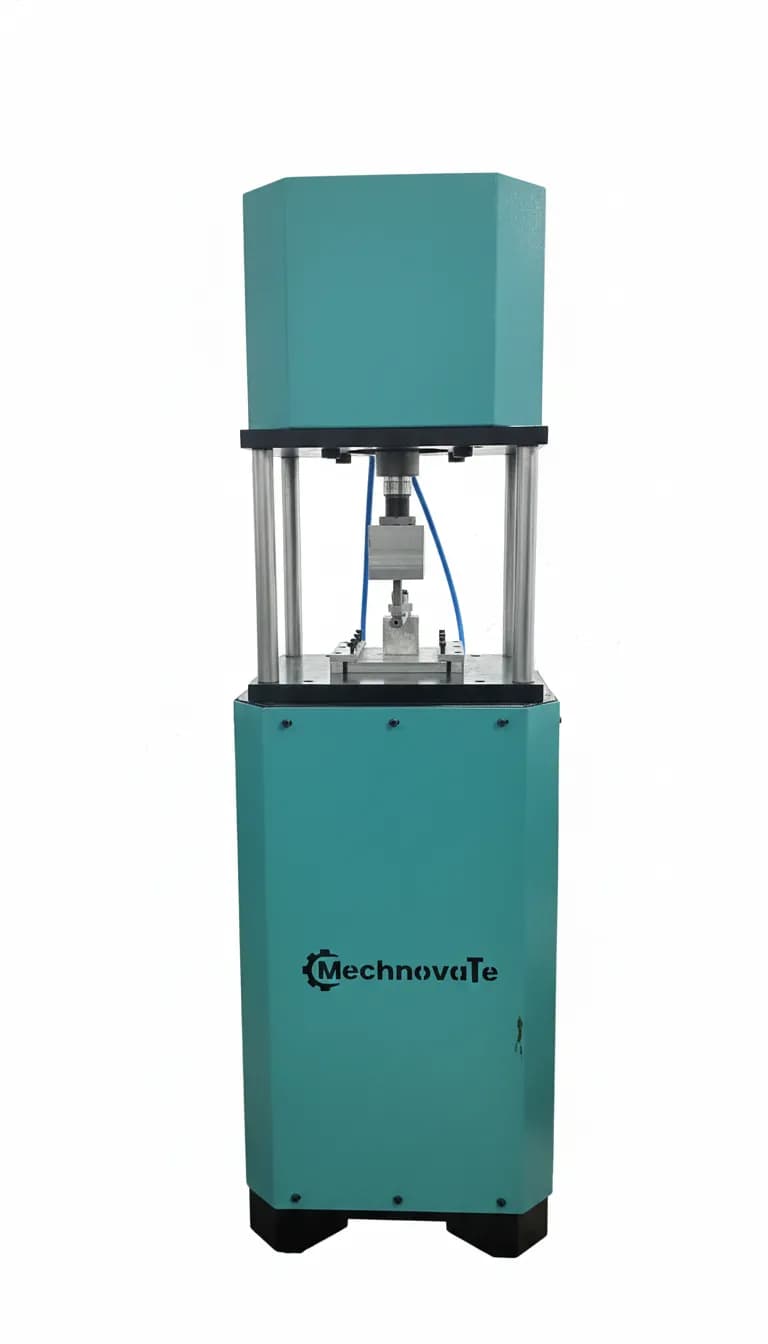
- Hydraulic Synchronization: Our machines utilize a dual-cylinder synchronized system to ensure both knives hit the profile at the exact same microsecond, preventing profile shift.
- Knife Metallurgy: We use H13 grade tool steel, vacuum-hardened to 52-55 HRC, ensuring the blades stay sharp for over 500,000 cycles without requiring a regrind.
- Adjustable Depth: The ability to adjust crimping depth in 0.1mm increments is vital for high-end thermal break profiles used in Surat’s luxury segments.
- Support Arm Stability: Heavy-duty extended support arms prevent profile sagging, which is the leading cause of out-of-square frames.
Automatic Aluminium Corner Crimping Machine Price and ROI Analysis
The most frequent question I receive from Surat fabricators is about the automatic aluminium window production line price. For a professional-grade setup, an Aluminium Corner Crimping Machine typically ranges from INR 2,80,000 to INR 5,50,000, depending on the hydraulic capacity and automation features. While this may seem higher than manual punching, the ROI is realized through the drastic reduction in rework and labor costs.
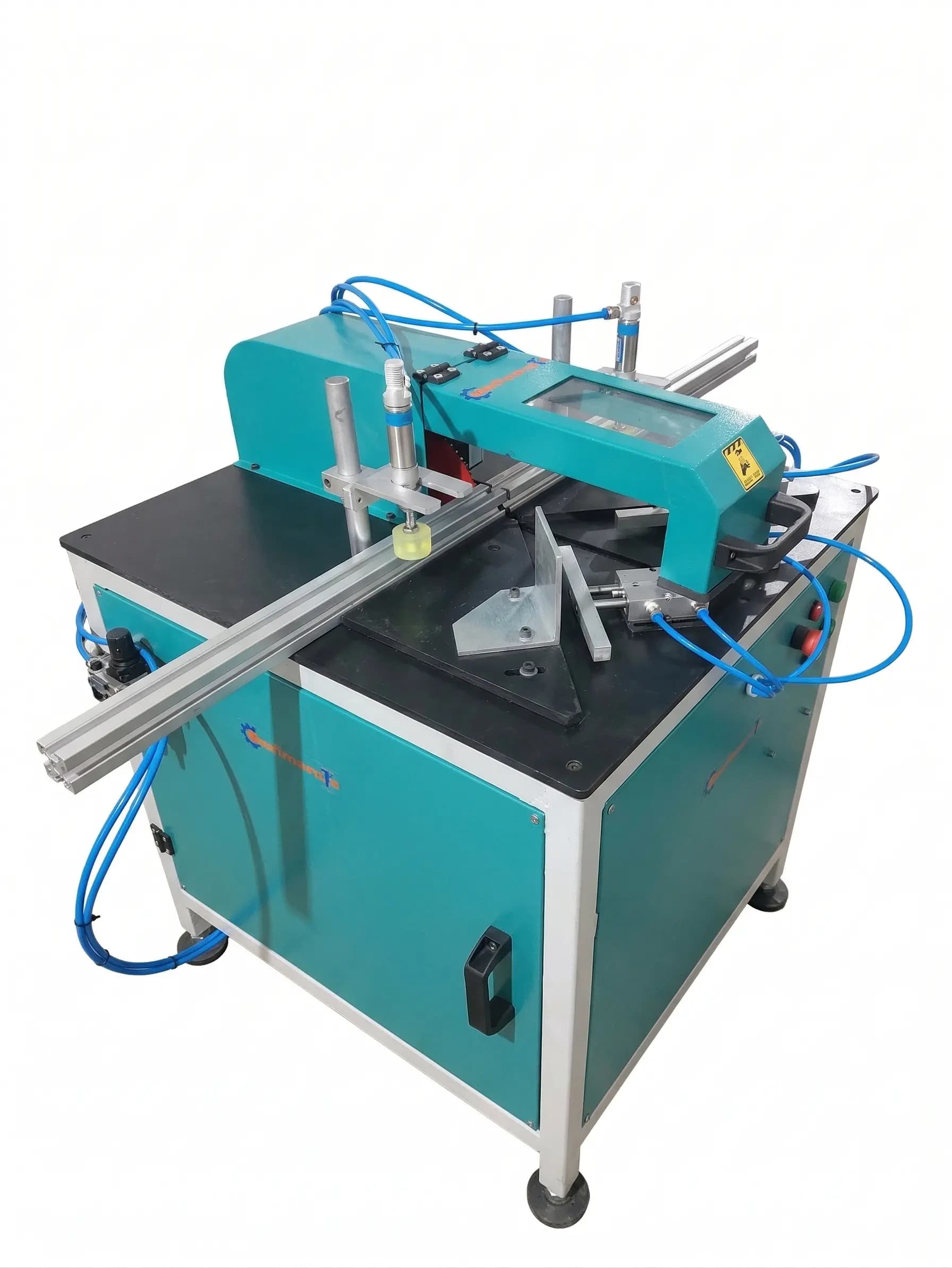
In our documented case study with a Surat-based client, transitioning from manual punching to an automatic crimper reduced their corner rejection rate from 14% to less than 0.5%. They were able to increase their output by 40 frames per day while utilizing the same floor space. When you factor in that a single water leakage claim in a high-rise can cost upwards of INR 50,000 in repair and reputation damage, the machine pays for itself within the first 12 months of operation. Furthermore, the integration of an Automatic Double Head Cutting Machine ensures the 45-degree miter is perfect, which is a prerequisite for high-quality crimping.
Integration Guide: From Cutting to Final Assembly
Successful high-rise window fabrication is a sequence of precise steps. You cannot expect a high-end crimper to fix a poor cut. The workflow must be integrated to maintain tolerances within +/- 0.2mm across the entire production line. Following this step-by-step process will ensure your shop floor operates at peak efficiency.
- Precision Cutting: Use a 45 degree double head cutting machine with a 12-inch or 20-inch carbide-tipped blade to ensure the miter is perfectly flat.
- End Milling: For transom and mullion joins, use a Heavy Duty End Milling Machine to create the necessary notch with zero burr.
- Cleat Insertion: Apply a high-quality corner glue (small-joint protector) to the internal cleat before insertion to create a secondary weather seal.
- The Crimping Cycle: Place the frame on the machine, engage the pneumatic clamps, and trigger the hydraulic foot pedal. The cycle should take no more than 15-18 seconds per corner.
Common Mistakes and Industry Standards to Watch Out For
One of the most common mistakes I see in workshops is the neglect of hydraulic oil maintenance. Using contaminated oil or the wrong viscosity (we recommend ISO VG 46) can lead to valve lag, which causes uneven crimping pressure. This often manifests as one side of the miter being tighter than the other, which is a disaster for large-span sliding doors. Always monitor your pressure gauges; if you see a fluctuation of more than 2 bar during the stroke, your seals likely need replacement.
Another critical error is ignoring the 'profile-to-knife' alignment. Fabricators often try to use the same knife set for every profile series. You must have a library of knife spacers to ensure the point of impact is exactly at the center of the cleat’s meat. Failure to do this results in 'hollow crimps' that look tight but fail under the structural stresses of a high-wind event. Always adhere to ISO 9001 quality control workflows to ensure every frame leaving your Surat factory meets the safety standards required for modern architecture.
FAQ: Fabricator Technical Queries
Q: Can I use the same crimping machine for uPVC window making? No. uPVC requires a Double head miter saw for aluminium profiles price logic followed by a welding process, not mechanical crimping. Aluminium and uPVC fabrication are fundamentally different; uPVC uses heat fusion, whereas aluminium relies on hydraulic cold-joining.
Q: What power supply is required for an automatic aluminium corner crimping machine? Most industrial-grade machines require a 3-phase 380V-415V supply to run the 2.2kW or 3kW hydraulic pump motor efficiently. Single-phase versions exist but often lack the speed and cooling capacity for high-volume production.
Q: How often do the crimping knives need replacement? With proper lubrication and by avoiding 'dry firing' the machine, a high-quality set of H13 steel knives should last for 500,000 to 700,000 cycles. We recommend a monthly inspection for micro-chipping if you are frequently processing heavy-duty architectural profiles.
Get more articles like this
Follow Mechnovate on Google to see our guides in Google Discover & News