Preventing Brittle Joints: uPVC Window Welding Machine Guide
To prevent brittle joints in uPVC window fabrication, you must synchronize three critical variables: heating plate temperature (250°C ± 5°C), melting pressure (0.3 to 0.5 MPa), and a minimum cooling time of 30 seconds. In Indore’s high-volume environments, thermal fluctuations and dust ingress often lead to 'cold welds' or 'burnt profiles,' both of which compromise structural integrity. This guide provides a technical roadmap for maintaining your uPVC Welding Machine to ensure every corner meets international corner strength standards.
The Engineering Science of uPVC Welding
Brittle joints are rarely a fault of the profile itself; they are almost always a failure of the heat-transfer cycle. A uPVC window manufacturing machine must achieve a molecular fusion where the polymer chains of two profile ends intermingle. If the heater plate temperature drops below 240°C, the fusion is superficial, leading to joints that snap under wind load. Conversely, exceeding 260°C degrades the PVC material, turning the weld yellow and making it structurally fragile.
We adhere to BS EN 12020 and ISO 9001 standards during our own manufacturing process to ensure our machinery maintains these tolerances. For high-speed production, we recommend using a Double head seamless welding machine for uPVC windows because it eliminates the need for manual groove cleaning which can further weaken the joint. Precision engineering dictates that the weld bead must be uniform, typically between 2.5mm and 3.5mm for optimum strength.
Indore Case Study: Reducing 15% Rejection Rates
Last year, we assisted a high-volume fabricator in Indore’s Sanwer Road Industrial Area who was seeing a 15% failure rate during the glazing process. Upon inspection of their uPVC window manufacturing machines, we discovered that the Teflon cloths had not been rotated in 45 days, causing uneven heat distribution. Additionally, the pneumatic pressure was fluctuating between 3 and 6 bar due to a faulty moisture separator in their air line.
By implementing a 15-minute daily calibration routine and installing a centralized voltage stabilizer, the rejection rate dropped to less than 0.5% within three weeks. We also recalibrated their Automatic double head cutting machine price India to ensure exact 45-degree angles, as a gap of even 0.5mm forces the welder to 'bridge' the space, resulting in a weak joint. This intervention saved the client approximately ₹1.2 Lakhs per month in wasted profile costs.
Essential Maintenance for uPVC Window Manufacturing Machinery
Maintaining your uPVC machinery requires more than just superficial cleaning. To sustain the output of 80+ frames per shift, a senior technician should follow this rigorous maintenance protocol.
- Heater Plate Surface Care: Inspect the Teflon cloth every 4 hours for carbon buildup or pinholes. Replace immediately if you see any discoloration on the profile surface, as burnt residue acts as an insulator.
- Thermocouple Calibration: Once a week, use an external digital pyrometer to verify that the PLC-displayed temperature matches the actual plate surface. Discrepancies often indicate a failing heater element or a loose thermocouple sensor.
- Pneumatic System Optimization: High-volume uPVC windows machinery relies on consistent air pressure. Check the FRL (Filter-Regulator-Lubricator) unit daily and ensure the oiler is feeding 1 drop per 10 cycles to the solenoid valves.
- Slider Rail Lubrication: Clean the linear guide rails with isopropyl alcohol and apply a light coat of lithium-based grease. This prevents the welding heads from 'stuttering,' which is a common cause of uneven melting pressure.
Troubleshooting Common Welding Defects
If your uPVC window machine is producing joints that crack, the first place to look is the heating time versus the cooling time. Many fabricators in Indore attempt to increase output by shortening the cooling cycle to 20 seconds. However, uPVC requires a stabilized cooling period under clamp pressure to recrystallize the polymer structure.
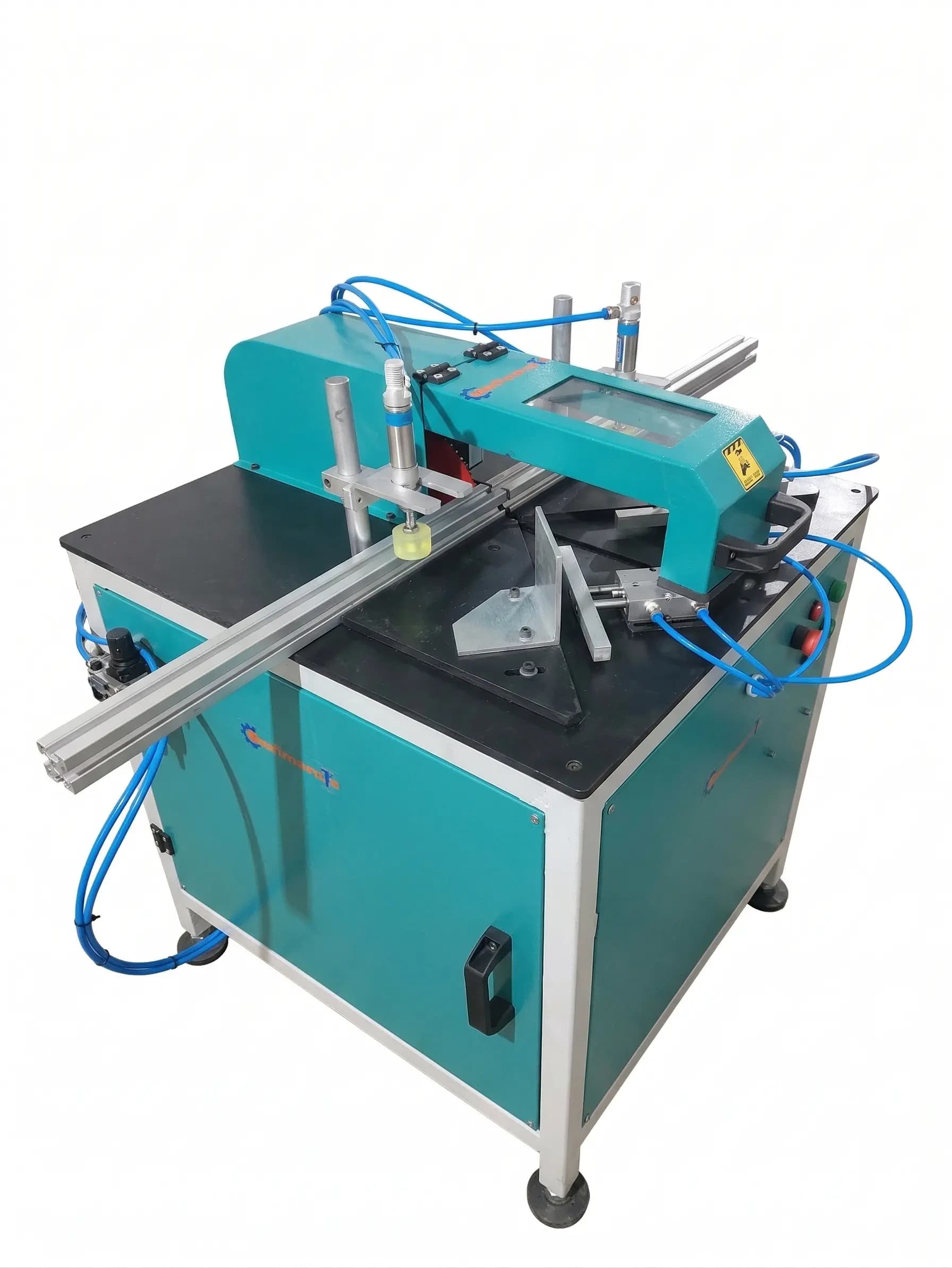
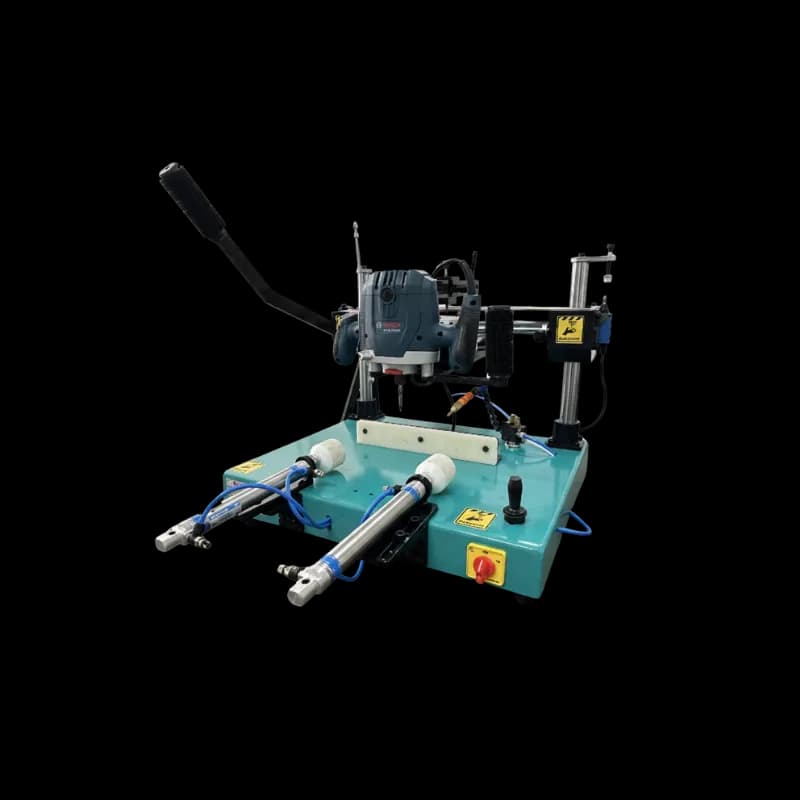
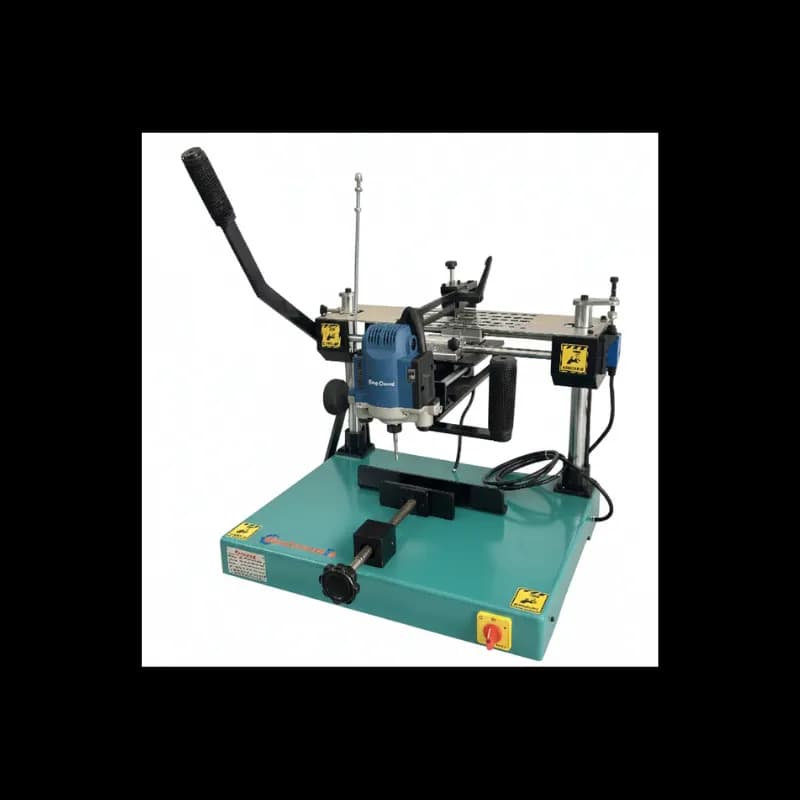
Another frequent mistake involves the copy router machine or the uPVC window corner cleaning machine price India. If the corner cleaner is set too deep, it removes the structural weld bead entirely, leaving only a thin layer of plastic holding the frame together. Ensure your CNC settings leave at least 0.2mm of the weld 'flash' to maintain the corner's rated load capacity.
Technical Specifications for High-Volume Setup
When scaling up your facility, the uPVC window manufacturing machine price is only one factor; you must look at the duty cycle and precision specs. For Indore's climate, we recommend the following specifications for heavy-duty production:
- Voltage: 220V/380V with ±2% stabilization.
- Total Power: 2.5 kW to 4.5 kW for double-head units.
- Air Consumption: 100-150 Liters/min at 6-8 bar.
- Welding Height: 20mm to 120mm to accommodate both casement and sliding profiles.
- Melting Range: Adjustable 0.1mm to 20mm to allow for seamless or 0.2mm weld finishes.
FAQ: Expert Answers for uPVC Fabricators
Q1: Why is my uPVC welding machine showing the correct temperature but the joints are still brittle? This usually indicates a 'soaking time' issue. While the plate is hot, the heat is not penetrating the profile deep enough because the heating time is too short. Increase your heating timer by 3-5 seconds and check if the 'melt bead' reaches the required 3mm thickness.
Q2: Can I use the same welding parameters for different profile brands? No. Different uPVC formulations (especially variations in calcium carbonate levels) have different melting points. Always perform a 'break test' when switching suppliers. A good weld should cause the profile wall to break before the weld joint itself snaps.
Q3: How often should I replace the Teflon cloth on my uPVC windows machines? In a high-volume Indore workshop operating 10 hours a day, Teflon should be rotated every 7 days and replaced every 21 days. Using high-micron, premium-grade Teflon reduces sticking and ensures a smoother finish on the upvc welding machine surface.
Get more articles like this
Follow Mechnovate on Google to see our guides in Google Discover & News