uPVC Corner Cleaning Machine: Price, Types, and Selection Guide for Indian Fabricators
After a uPVC window frame is welded at the corners, a ridge of melted plastic — the weld bead — forms at every joint. Removing it cleanly determines whether a finished frame looks factory-produced or hand-finished. For small workshops producing fewer than 10 frames a day, a chisel and scraper are workable. Once daily output crosses 15 frames, manual bead removal becomes the single biggest time loss in the fabrication line, and a dedicated corner cleaning machine becomes a sound investment. This guide covers what these machines do, how manual and CNC types compare, what drives price in India, and how to judge when the investment makes sense for your workshop.
What a Corner Cleaning Machine Does
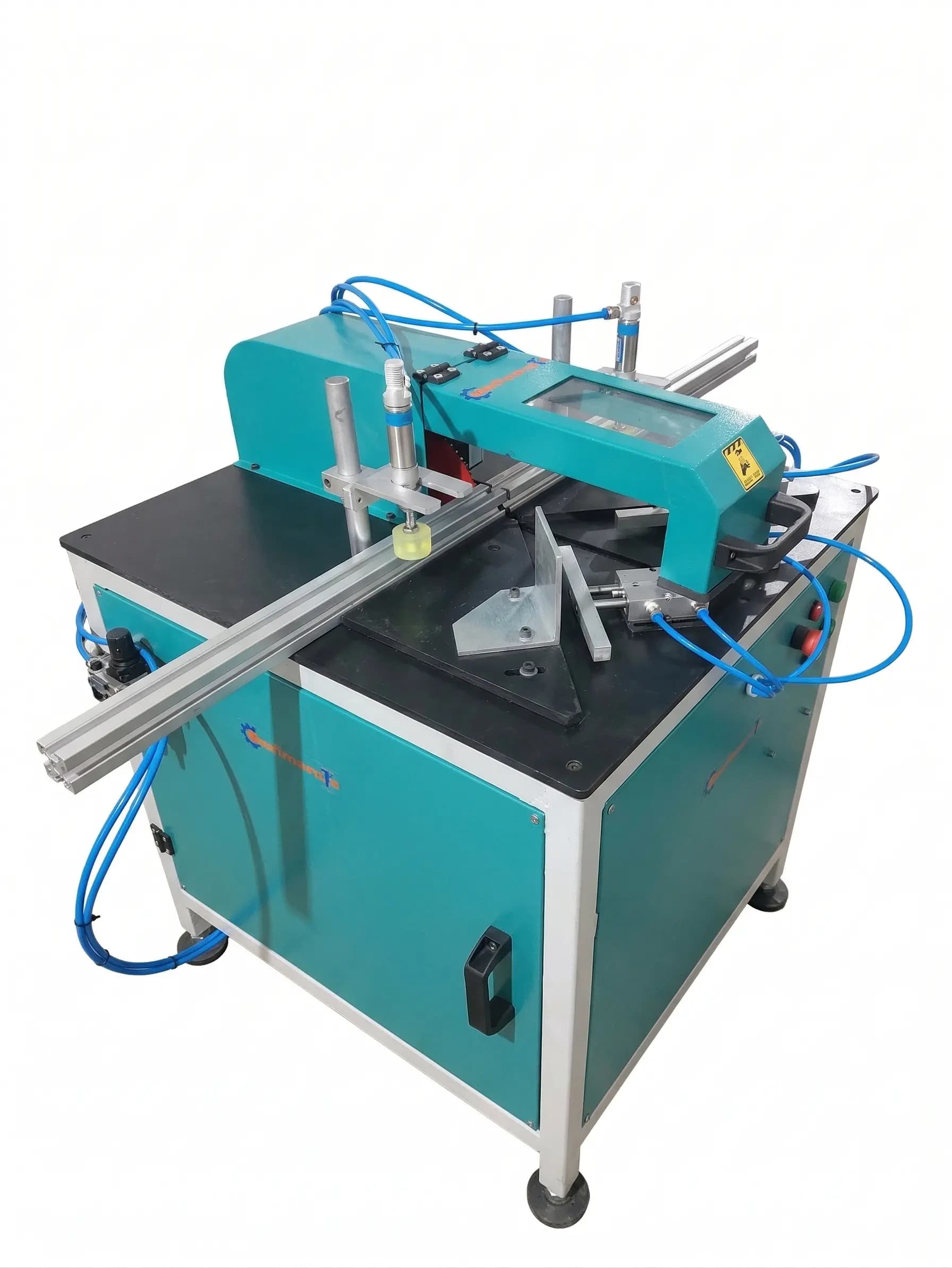
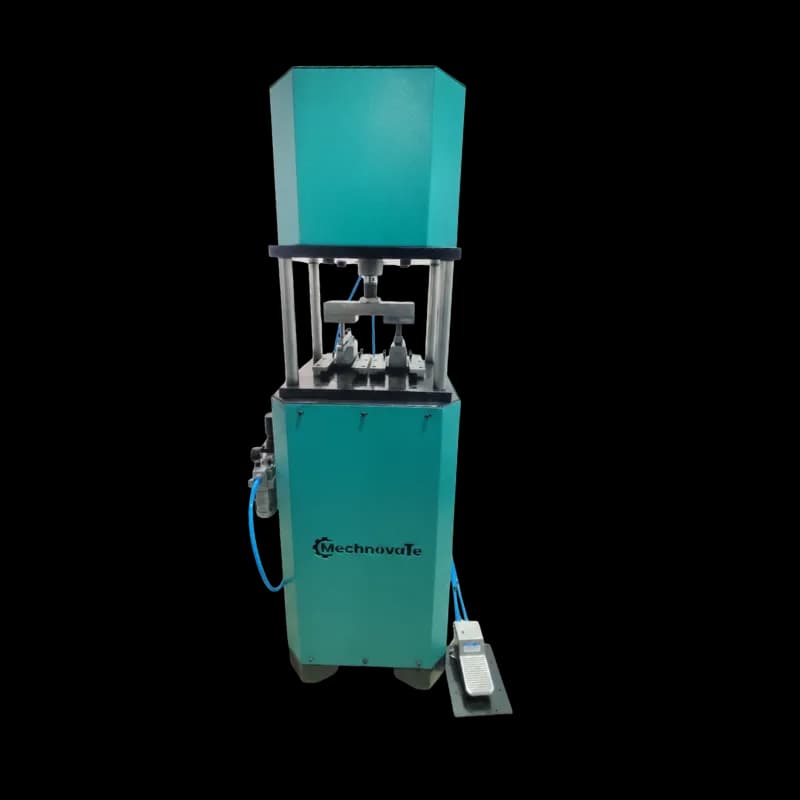
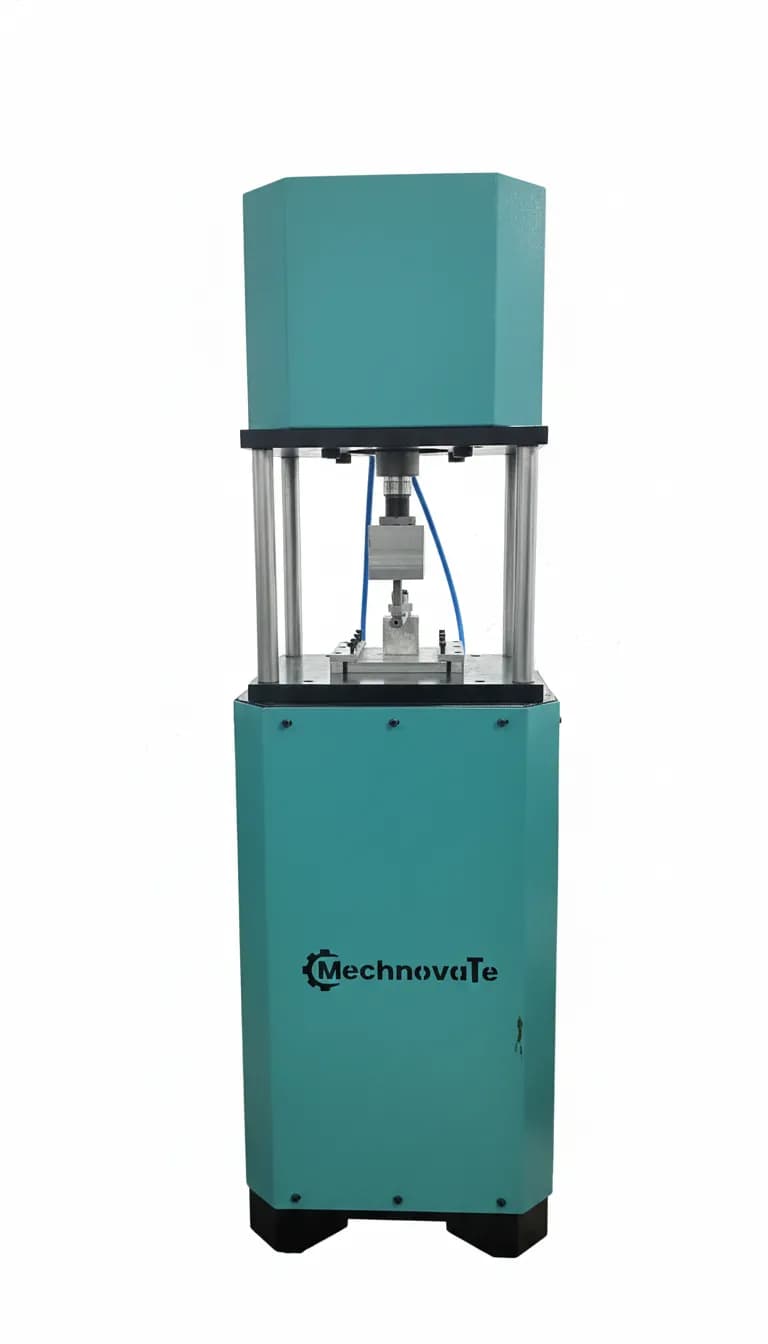
A corner cleaning machine holds a welded uPVC corner in a precision fixture and uses rotating milling cutters to shave the weld bead flush with the profile surface in a single controlled pass. The cutters work across the inner and outer faces of the joint and leave a sharp corner that matches the original profile geometry — with no sanding, no chisel marks, and no risk of the blade scoring the profile face.
The operation fits between uPVC welding and glass fitting in the standard fabrication sequence. A corner that is not cleaned flush will show a raised ridge under paint and may prevent the rubber gasket from seating properly against the glass. If you are planning or reviewing your full uPVC production line, the Workshop setup guide covers the recommended machine sequence and floor layout for a 3–5 machine workshop.
Manual vs CNC Corner Cleaning: Speed and Quality
Three tiers of corner cleaning machine are available in the Indian market:
Manual machines (₹80,000–₹1,20,000) require the operator to position the corner under the cutter head and control each pass by hand. Each surface is cleaned separately, so the operator must reposition the frame multiple times per corner. A four-corner window takes 6–10 minutes, and surface quality varies with operator skill and fatigue.
Semi-automatic machines (₹1,20,000–₹2,00,000) use a pneumatic clamp to hold the corner while the cutter traverses automatically. The operator still moves the frame between corners, but the cutting pass itself is controlled. Cycle time drops to 3–5 minutes per window with more consistent surface results.
CNC four-head machines (₹2,00,000–₹3,50,000) clean all surfaces of a corner simultaneously in a single automated cycle. A complete four-corner window is finished in 60–90 seconds. One operator can produce 35–50 finished windows per 8-hour shift without quality variability between units.
For high-end residential and commercial projects — particularly with dark-coloured uPVC profiles where surface marks are visible after installation — CNC-quality cleaning is difficult to replicate consistently by hand.
When to Invest in a Corner Cleaning Machine
The practical threshold is 15 welded uPVC frames per day. Below that level, a corner chisel set (₹2,000–₹5,000) remains a workable approach. Above 15 frames per day, the daily labour cost of manual cleaning and the quality inconsistency it introduces make a machine worthwhile within 6–12 months.
Use this checklist to evaluate your own production situation:
- Count daily output. If you are consistently producing 15 or more welded uPVC frames per day, manual cleaning is absorbing 2–3 hours of your team's labour time daily.
- Time the current process. Manual bead removal runs 8–12 minutes per window. A CNC machine reduces that to 60–90 seconds — calculate the daily time saved multiplied by your per-hour labour cost.
- Check profile thickness. 70mm and 80mm uPVC profiles produce larger weld beads that are harder and slower to remove cleanly by hand than 60mm profiles.
- Review finish complaints. Recurring corner quality issues flagged by customers or site supervisors indicate a process-level problem that technique improvements alone will not fully resolve.
- Plan floor space early. A corner cleaning machine needs a clear position between the welding station and the glass fitting table. The Workshop setup guide covers standard spacing and sequencing for a complete uPVC fabrication line.
Price Range and What Drives Cost
Corner cleaning machines in India range from ₹80,000 to ₹3,50,000. The four main factors that move the price:
- Number of cutter heads: A single-head machine processes one surface per pass. A four-head CNC machine cleans all surfaces simultaneously. More heads means higher throughput and a proportionally higher machine cost.
- Automation level: Manual positioning, pneumatic clamping, and CNC servo control each represent a step up in both price and output consistency.
- Profile width range: Machines rated for a single profile width cost less than those that handle 60mm, 70mm, and 80mm systems interchangeably with tooling adjustments.
- Origin: European-manufactured machines carry import costs. Indian-made machines in the ₹80,000–₹2,00,000 range deliver competitive build quality for domestic production volumes.
For a workshop running 20–30 frames per day, a semi-automatic machine at ₹1,20,000–₹1,80,000 typically offers the strongest return on investment. For 40+ frames per day or commercial-grade output where finish quality is inspected on-site, a CNC machine at ₹2,50,000–₹3,50,000 pays off faster because of the labour cost saved per unit produced.
Profile Compatibility for Indian Fabricators
Most corner cleaning machines sold in India support 60mm, 70mm, and 80mm uPVC profile widths. They are compatible with the major profile brands used across Indian fabrication shops: Domal, Jindalinium, Dumal, Hindalco, and Alumil. Cutter tooling may need to match your specific profile's geometry — particularly if the profile has an angled or sculpted outer face rather than a flat surface.
Before purchasing, confirm that the machine handles every profile width your shop uses, and check that replacement cutters for your profile brands are stocked locally. A machine that works with one profile system but requires special-order tooling for another creates a production split that reduces the efficiency gains you are investing for.
FAQ
How long does a CNC corner cleaning machine take to clean a four-corner window?
A CNC four-head corner cleaning machine cleans all four corners of a standard uPVC window — inner and outer bead surfaces included — in 60 to 90 seconds. Manual chiseling takes 8–12 minutes per window. Over an 8-hour shift, a CNC machine allows one operator to produce 35–50 fully cleaned windows, compared to 8–12 windows through manual work. The difference compounds quickly once a workshop is producing at scale.
At what production volume does a corner cleaning machine become worthwhile?
The threshold is 15 or more welded uPVC frames per day. Below this level, manual chiseling is time-consuming but manageable. Above 15 frames, the daily labour time absorbed by manual bead removal accumulates to several hours across your team, and quality inconsistency becomes a visible problem — particularly on dark-coloured profiles or high-specification commercial work where surface marks are difficult to conceal after installation.
What does a corner cleaning machine cost in India?
Prices range from approximately ₹80,000 for a basic single-head manual machine to ₹3,50,000 for a fully automatic four-head CNC model. Semi-automatic machines that use pneumatic clamping but require manual repositioning between corners fall in the ₹1,20,000–₹2,00,000 range. The primary cost drivers are the number of cutter heads, the level of automation, and the range of uPVC profile widths the machine can handle.
Which uPVC profiles are compatible with corner cleaning machines available in India?
Most machines sold in the Indian market support 60mm, 70mm, and 80mm profile widths and are compatible with Domal, Jindalinium, Dumal, Hindalco, and Alumil systems. Cutter tooling may need to be matched to your profile's specific face geometry. If your workshop uses multiple profile brands, confirm compatibility for each before purchase and verify that replacement cutters are available from local suppliers rather than on import lead times.
Get Expert Advice
Mechnovate supplies aluminium and uPVC window machinery to 500+ fabricators across 20+ Indian cities, with 15+ years of combined engineering experience. If you are building or expanding a uPVC fabrication line and want guidance on how a corner cleaning machine fits into your overall workflow — or which machines to prioritise first based on your current output — call us at +91-9265699061 or contact us. We can advise based on your actual production volume, profile range, and budget without pushing equipment you do not yet need.
Get more articles like this
Follow Mechnovate on Google to see our guides in Google Discover & News