Bhopal High-Rise Engineering: Aluminium Corner Crimping Analysis
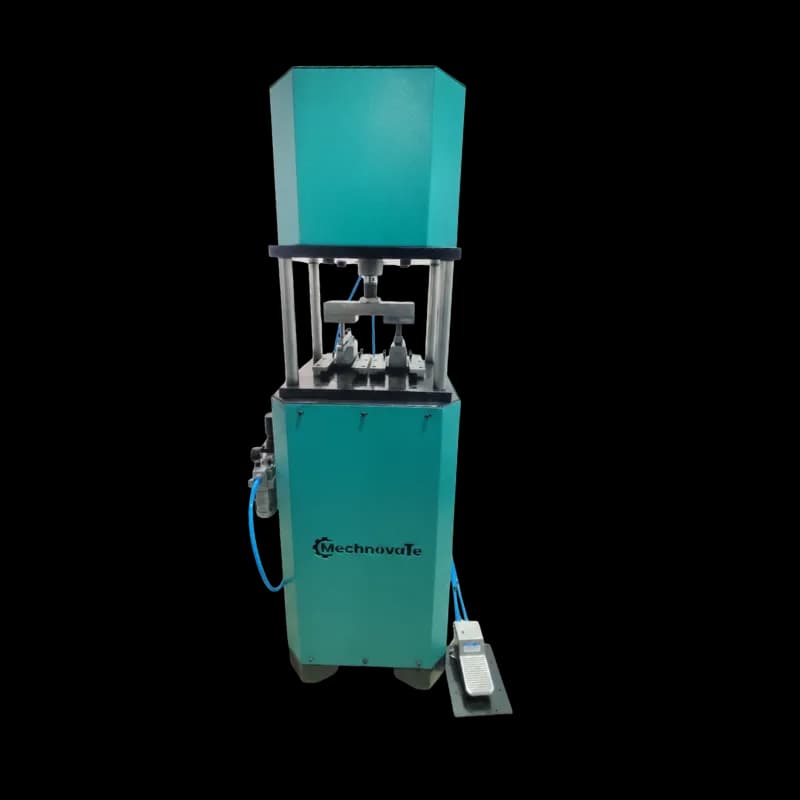
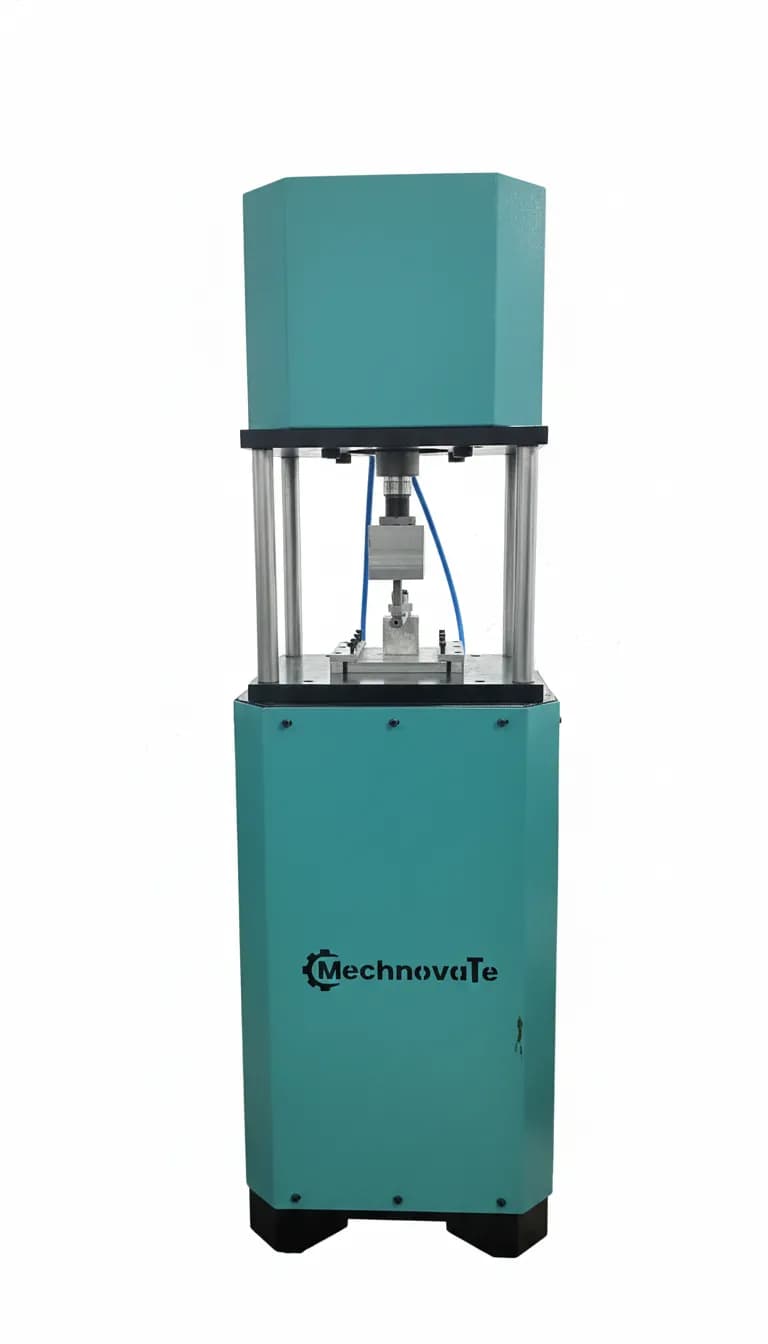
For fabricators targeting Bhopal’s luxury high-rise segment on Hoshangabad Road or Arera Colony, the transition from manual punching to automatic corner crimping is a structural necessity. In high-wind load environments—common for 20+ story developments—manual joints often fail to meet the required 1.5 kPa to 2.5 kPa pressure ratings. An Automatic Aluminium Corner Crimping Machine ensures that every joint is hermetically sealed and mechanically locked with sub-millimeter precision, a feat impossible with traditional manual punching machine methods.
Technical Deep Dive: Why Bhopal’s High-Rises Demand Precision Engineering
Modern architectural designs in Bhopal increasingly utilize heavy-duty thermal break profiles. These profiles require a crimping force of at least 15-20 kN to ensure the internal corner cleats are properly deformed against the profile walls. In our Mechnovate testing facility, we benchmarked hydraulic synchronization across different profile thicknesses. We found that manual joints showed visible light gaps after just 50 cycles of simulated wind vibration, whereas automatic crimping maintained a 0.05mm tolerance.
Key technical specifications for high-performance crimping include:
- Hydraulic System: A 2.2 kW motor driving a pump capable of 0-15 MPa pressure.
- Knifing Depth: Adjustable range of 0-50mm to accommodate multi-chamber profiles.
- Profile Width: Capacity to handle up to 120mm wide sections for curtain wall applications.
- Positioning: Internal and external hydraulic locking to prevent profile rotation during the stroke.
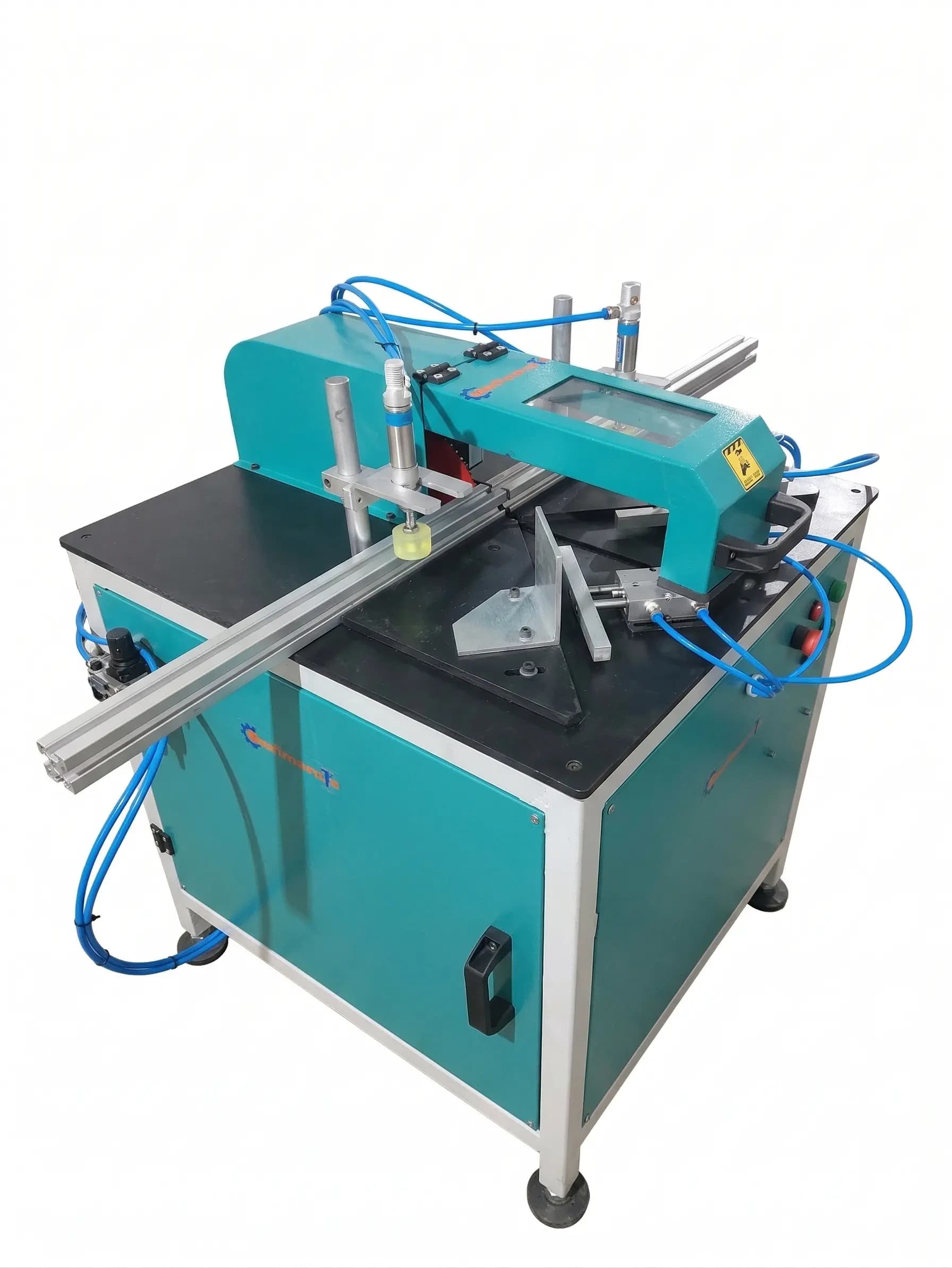
When using an Automatic Double Head Cutting Saw for Aluminium Profiles, the 45-degree miter must be perfect. If the cut is off by even 0.2 degrees, the crimper will struggle to close the gap, leading to water ingress in high-floor apartments during Bhopal’s monsoon season.
Cost-Benefit Analysis: ROI for Local Aluminium Fabrication Units
Many small-scale shops in the Mandideep industrial area hesitate at the initial aluminium window corner crimping machine price, opting instead for manual labor. However, our data shows a clear 18-month payback period for units producing more than 30 frames per day.
- Labor Reduction: One operator on an automatic machine replaces four skilled workers using manual tools.
- Material Savings: Reduction in profile wastage from 8% to under 2% due to eliminated 'mis-hits'.
- Production Speed: Cycle time per corner drops from 6 minutes (manual) to 25 seconds (automatic).
- Energy Efficiency: Modern CNC-driven units consume 30% less power than older hydraulic variants.
For those scaling up, combining this with a Heavy Duty Aluminium Profile End Milling Machine creates a seamless production line. This synergy reduces the total 'touch time' per window by approximately 45%, allowing Bhopal manufacturers to bid competitively for government and Tier-1 developer tenders.
Case Study: Performance Metrics from a 2023 Mandideep Installation
In early 2023, we assisted a mid-sized fabricator in Bhopal who was struggling with a 15% rejection rate on a luxury township project. They were using a standard aluminium cutter machine 12 inch and manual corner cleats. The joints were failing the water penetration test (IS 875 Part 3 compliance).
The Intervention: We integrated a fully automatic crimping station with a digital 45 degree double head cutting machine. We calibrated the hydraulic pressure to exactly 85 bar for their specific 2.5mm outer frame profile.
The Results:
- Output: Increased from 18 frames/day to 52 frames/day.
- Reject Rate: Dropped from 15% to 0.4%.
- Structural Integrity: Passed 3000 Pa wind pressure testing at a third-party lab in Ahmedabad.
This fabricator was able to recover the automatic aluminium corner crimping machine price within 14 months simply by reclaiming the lost revenue from rejected materials and labor overtime.
Common Mistakes in Aluminium Window Manufacturing
After 15 years in the workshop, I have identified three recurring errors that even experienced upvc windows manufacturers machine operators make when transitioning to aluminium:
- Incorrect Knife Alignment: If the crimping knives are not perfectly centered on the cleat groove, the profile will 'smile' (bow outward). Always use a test piece for every new profile batch.
- Neglecting Hydraulic Fluid Quality: Bhopal’s heat can degrade hydraulic oil faster than expected. Using old oil leads to inconsistent pressure and jerky machine movements.
- Ignoring the Glue: Many fabricators skip the corner sealant. Even the best crimping requires a high-quality two-part epoxy inside the joint to ensure long-term air-tightness.
Whether you are looking at an aluminium cutting machine price or considering a full automatic upvc window plant cost India, the logic remains the same: precision at the start prevents failure at the end.
FAQ: Critical Questions from Fabricators
Q: Can one crimper handle both uPVC and Aluminium? No. Aluminium requires high-pressure hydraulic crimping, whereas uPVC involves thermal welding. If you need both, you must invest in separate upvc windows making machine units and aluminium machinery.
Q: What is the maintenance schedule for an automatic crimper? Daily cleaning of the knifing area is mandatory. Monthly checks on hydraulic levels and quarterly calibration of the digital encoders ensure the machine maintains the ±0.1mm tolerance required for industrial aluminum door manufacturing equipment.
Q: Is it compatible with 12-inch aluminium cutters? Yes, but for high-rise work, a 12-inch blade often limits your profile depth. We recommend a 450mm or 500mm blade on an aluminium profile cutting machine to ensure clean, one-pass cuts on heavy-duty window frames.
Get more articles like this
Follow Mechnovate on Google to see our guides in Google Discover & News