uPVC Window Manufacturing Plant Cost in India: Complete Setup Guide
Setting up a uPVC window manufacturing plant in India requires five specific machine types working in sequence, a clear understanding of space and utility demands, and a realistic capital plan. Whether you are a first-time fabricator or expanding an existing aluminium workshop into uPVC, knowing the real cost of each machine — and how those costs translate into daily production output — lets you build a profitable line without overcapitalising at the start. This guide breaks down everything from a ₹3 lakh entry setup to a ₹30 lakh professional operation.
The 5 Essential Machines for a uPVC Window Line
Every uPVC frame moves through five production steps, and skipping any one of them creates a bottleneck that forces costly outsourcing.
-
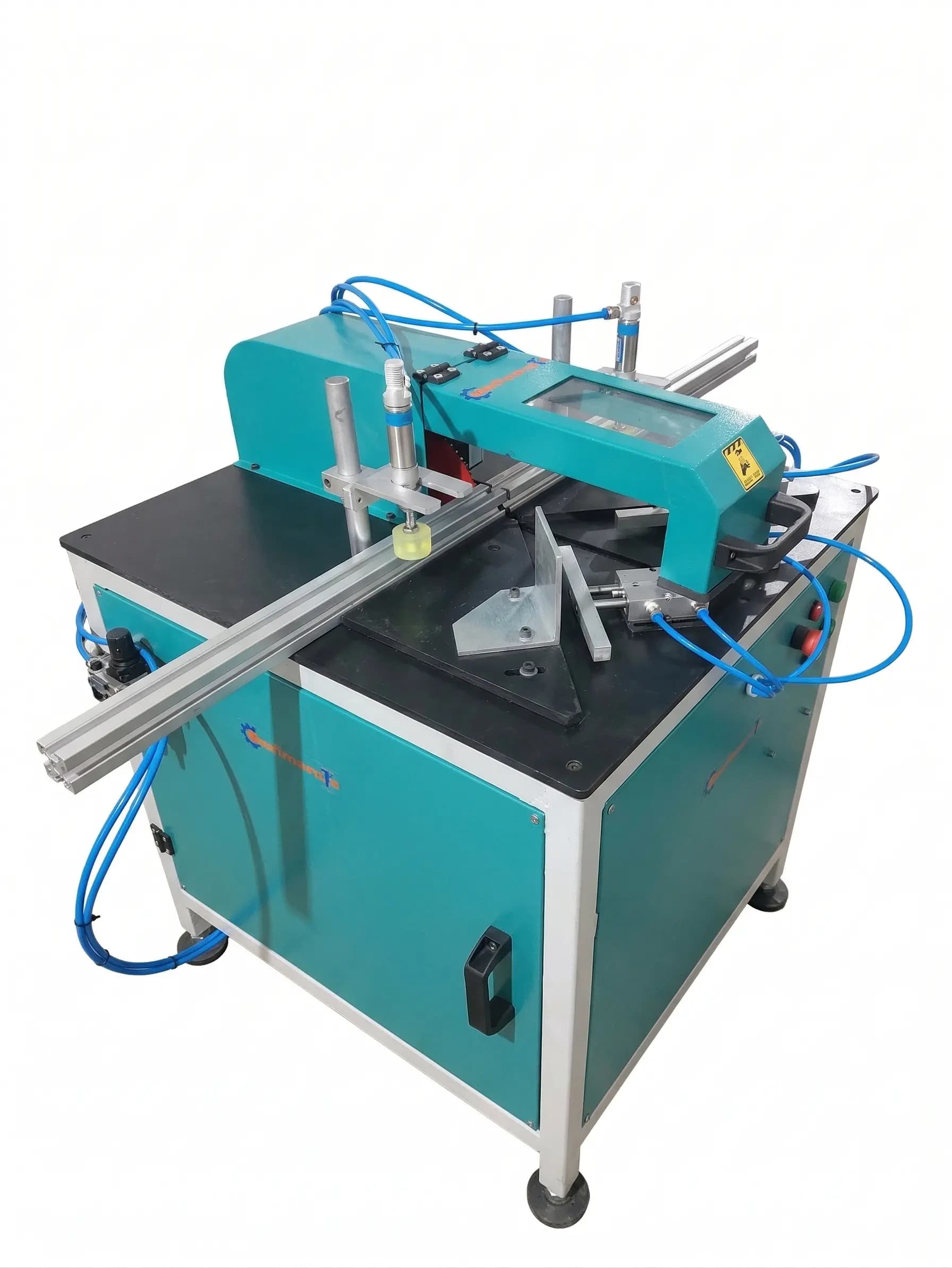
45/90 Degree Cutting Machine — All production starts here. A double-head cutter handles both 45° miter cuts for corners and 90° transom cuts without repositioning the profile. Entry single-head models start around ₹30,000–₹40,000; a professional double-head unit from Mechnovate starts at ₹55,000. This is always the first machine to purchase. See the 45/90 Degree Cutting Machine for full specifications and compatible profile brands including Domal, Jindalinium, Hindalco, and Alumil.
-
End Milling Machine — After cutting, profile ends must be milled flat so the weld joint closes without gaps. Manual models cost ₹40,000–₹60,000; auto-feed versions run ₹70,000–₹90,000.
-
Welding Machine — A corner welder fuses milled profile ends at 90° under heat and pressure. Single-head welders cost ₹70,000–₹90,000; 4-head simultaneous welders that complete all corners in one cycle cost ₹1.5 lakh–₹2.5 lakh. The 4-head machine is what separates a 20-frame/day shop from a 100-frame/day operation.
-
Corner Cleaning Machine — Welding leaves a PVC bead at each corner joint that must be routed away for a finished appearance. Manual cleaners cost ₹25,000–₹40,000; pneumatic 4-corner simultaneous machines start at ₹60,000.
-
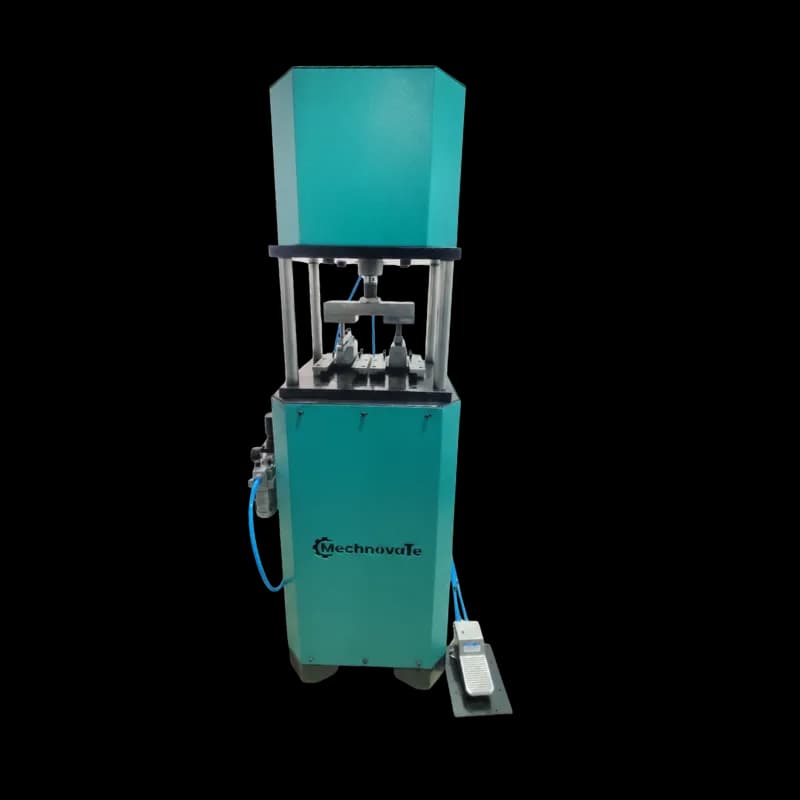
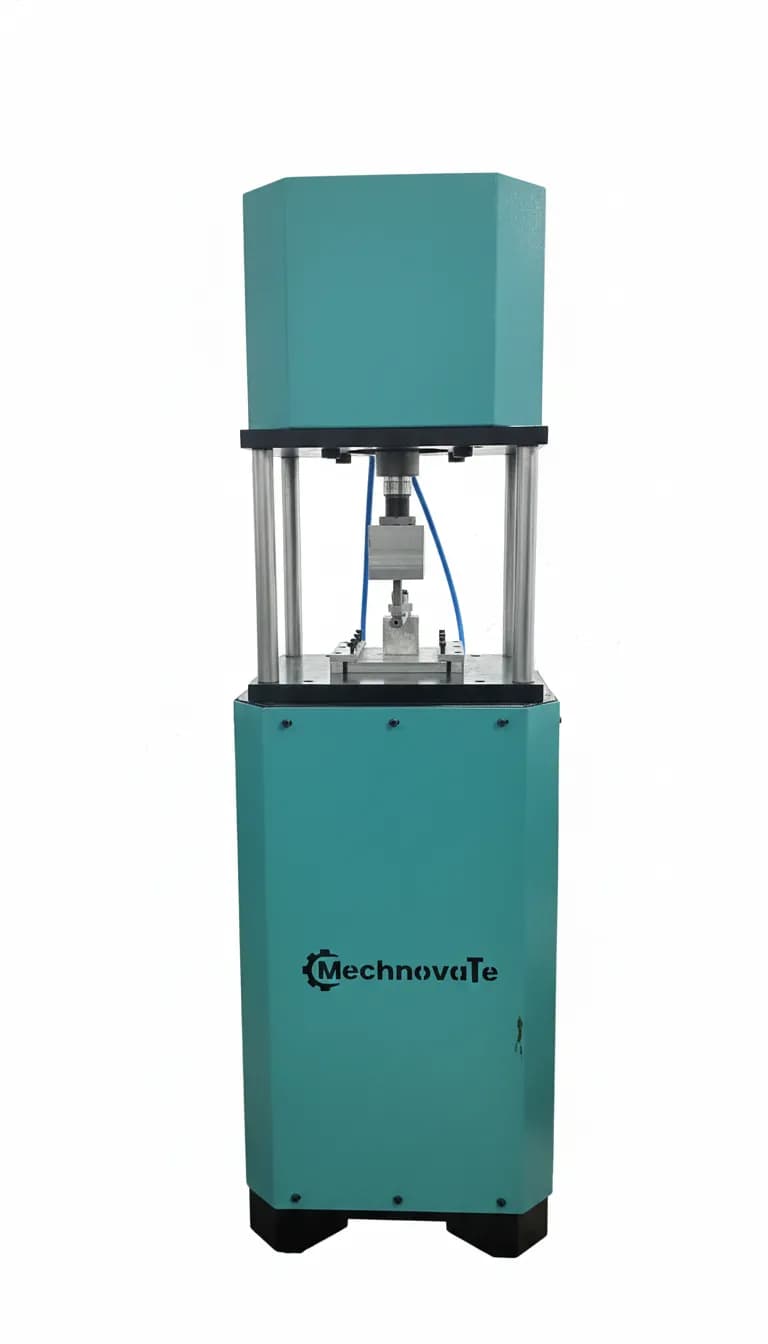
Punching Machine — Hardware holes for locks, handles, and drainage slots are punched after frame assembly. A Manual Punching Machine at ₹20,000 suits low-volume shops; a 1-Station Pneumatic Punching Machine at ₹40,000 is the right upgrade for 20+ frames/day; a 2-Station Pneumatic Punching Machine at ₹65,000 handles multiple die sets and high-volume output simultaneously.
Production Capacity Tiers and Total Investment
Machine selection directly determines your daily output ceiling. Here is how capital investment maps to production capacity:
Entry Tier — 5 to 15 frames/day | ₹3–5 lakh total investment A single-head cutter, basic end miller, 2-head welder, manual corner cleaner, and manual punching machine form a functional entry line. This tier suits a home workshop or a fabricator testing the uPVC market alongside an existing business. Minimum floor space required: 400 sq ft.
Mid-Scale Tier — 20 to 50 frames/day | ₹7–12 lakh total investment A double-head cutter, auto-feed end miller, 4-head welder, pneumatic corner cleaner, and pneumatic punching machine enable commercial-scale output. This configuration typically employs 3–5 workers and operates from a 600–800 sq ft space.
Professional Tier — 50 to 200 frames/day | ₹15–30 lakh total investment High-speed 4-head welders, dual-station pneumatic punching, and automated material flow bring cycle times under 8 minutes per frame. A professional setup needs 800 sq ft minimum and 1,200+ sq ft for comfortable workflow with raw material racking and finished goods storage.
Space, Compressor, and Utility Requirements
Beyond machine cost, a uPVC plant has fixed infrastructure demands that must be budgeted upfront:
- Floor space: 400 sq ft minimum for entry tier; 800+ sq ft for mid-scale; 1,200 sq ft for professional output with adequate racking.
- Electrical load: Entry machines can often run on single-phase 15A. From the mid-scale tier upward — particularly with a 4-head welder — budget for a three-phase connection of at least 10 kVA to avoid power trips during simultaneous operation.
- Air compressor: A 3 HP compressor with a 50-litre tank handles a single pneumatic punching machine. A full mid-scale line with pneumatic punching, pneumatic corner cleaning, and any pneumatic routing requires a 5 HP compressor with a 100+ litre receiver tank. Under-sized compressors lose pressure mid-cycle, causing incomplete punches and weak corner joints. Budget ₹25,000–₹45,000 for a suitable industrial-grade unit.
- Profile storage: Allocate 100–150 sq ft of racking for uPVC profile bars, which run 6 metres in length. Stacking them on the floor risks bending and warping that causes cut rejects.
The Workshop setup guide covers machine placement for linear workflow, compressor positioning, and electrical load planning in detail.
ROI Calculation: When Does Your Plant Pay Back?
A fabricator selling finished uPVC windows in Tier-2 Indian cities typically earns ₹2,500–₹3,500 gross margin per frame after material cost. Using ₹3,000 as a conservative benchmark:
- 30 frames/day at ₹3,000 margin = ₹90,000/day gross production value
- Monthly gross margin (25 working days at 30 frames): ₹2.25 lakh
- Monthly overheads (labour, power, rent for a mid-scale setup): ₹80,000–₹1 lakh
- Net monthly profit: ₹1.2–1.5 lakh
- Payback on ₹8 lakh investment: approximately 5–7 months
A ₹15 lakh professional setup targeting 80 frames/day under the same margin assumptions achieves payback in 6–9 months. These are conservative numbers based on average Indian fabricator margins — workshops supplying architects or housing developers on repeat contracts typically earn higher per-frame margins.
What to Buy First If Capital Is Limited
If your starting budget is under ₹2.5–3 lakh, buy machines in this order:
- Purchase the 45/90 Degree Cutting Machine first — production cannot begin without precise cuts.
- Add an end milling machine next — it directly determines weld quality.
- Buy a Manual Punching Machine early — at ₹20,000 it is the lowest-cost machine with immediate utility.
- Add a 2-head welder once cut and milled profiles are available.
- Add a corner cleaning machine before approaching retail clients — visible corner quality drives purchase decisions.
Outsource the steps you cannot yet handle in-house until cash flow supports the next machine. Most fabricators reach a complete 5-machine line within 6–12 months of starting with a cutter alone. Mechnovate machines shipped from Ahmedabad reach Gujarat cities in 1–2 days, Maharashtra/Rajasthan/Delhi NCR in 2–3 days, and South or East India in 3–5 days, so delivery rarely delays a planned launch.
FAQ
How much does it cost to start a small uPVC window unit in India?
A functional small-scale unit producing 5–15 frames per day requires ₹3–5 lakh in machines: a single-head cutter, basic end miller, 2-head welder, manual corner cleaner, and a manual punching machine. Add ₹30,000–₹50,000 for a 3 HP compressor and initial tooling. A 400 sq ft workshop is sufficient. Total startup cost including first batch of profile stock and hardware fittings typically falls between ₹4.5–6 lakh.
Do I need three-phase electricity for a uPVC plant?
Entry-level machines — small welders and manual punching machines — can run on single-phase power. However, a 4-head corner welder draws significantly more current and generally requires three-phase power or a well-rated single-phase inverter. From the mid-scale tier (20+ frames/day) onward, a three-phase connection of at least 10 kVA is the practical choice to run multiple machines simultaneously without tripping the supply.
What compressor size do I need for a full uPVC line?
A single pneumatic punching machine needs a 3 HP compressor with a 50-litre tank. A full uPVC line — pneumatic punching, pneumatic corner cleaning, and pneumatic routing — needs a minimum 5 HP compressor with a 100-litre or larger receiver. An under-sized compressor drops pressure during back-to-back cycles, which causes incomplete punches and poor corner cleaning. Budget ₹25,000–₹45,000 for a good-quality industrial-grade unit from a reputable brand.
How long does machine delivery take across India?
Mechnovate ships from Ahmedabad, Gujarat. Gujarat fabricators receive machines in 1–2 working days. Maharashtra, Rajasthan, and Delhi NCR take 2–3 days. South India (Karnataka, Tamil Nadu, Andhra Pradesh, Telangana, Kerala) and East India (West Bengal, Odisha) typically take 3–5 days. All machines are packed in wooden crates with foam padding to prevent transit damage, and tracking is provided at dispatch.
Ready to Upgrade?
A uPVC window manufacturing plant delivers one of the strongest ROI profiles in the fabrication industry — ₹8 lakh invested in a 30-frame/day mid-scale line pays back in under 7 months at standard margins. Mechnovate has helped 500+ fabricators across 20+ Indian cities build exactly this kind of operation, backed by ISO 9001:2015 and CE-certified machines with up to 1-year warranty on punching and routing machines.
Call us at +91-9265699061 or contact us to get a customised machine list and quotation matched to your target daily output and available floor space.
Get more articles like this
Follow Mechnovate on Google to see our guides in Google Discover & News