45-Degree Precision for Rajkot Facades: Double Head Saw ROI
The Economics of the Perfect 45-Degree Cut in Gujarat’s Luxury Segment
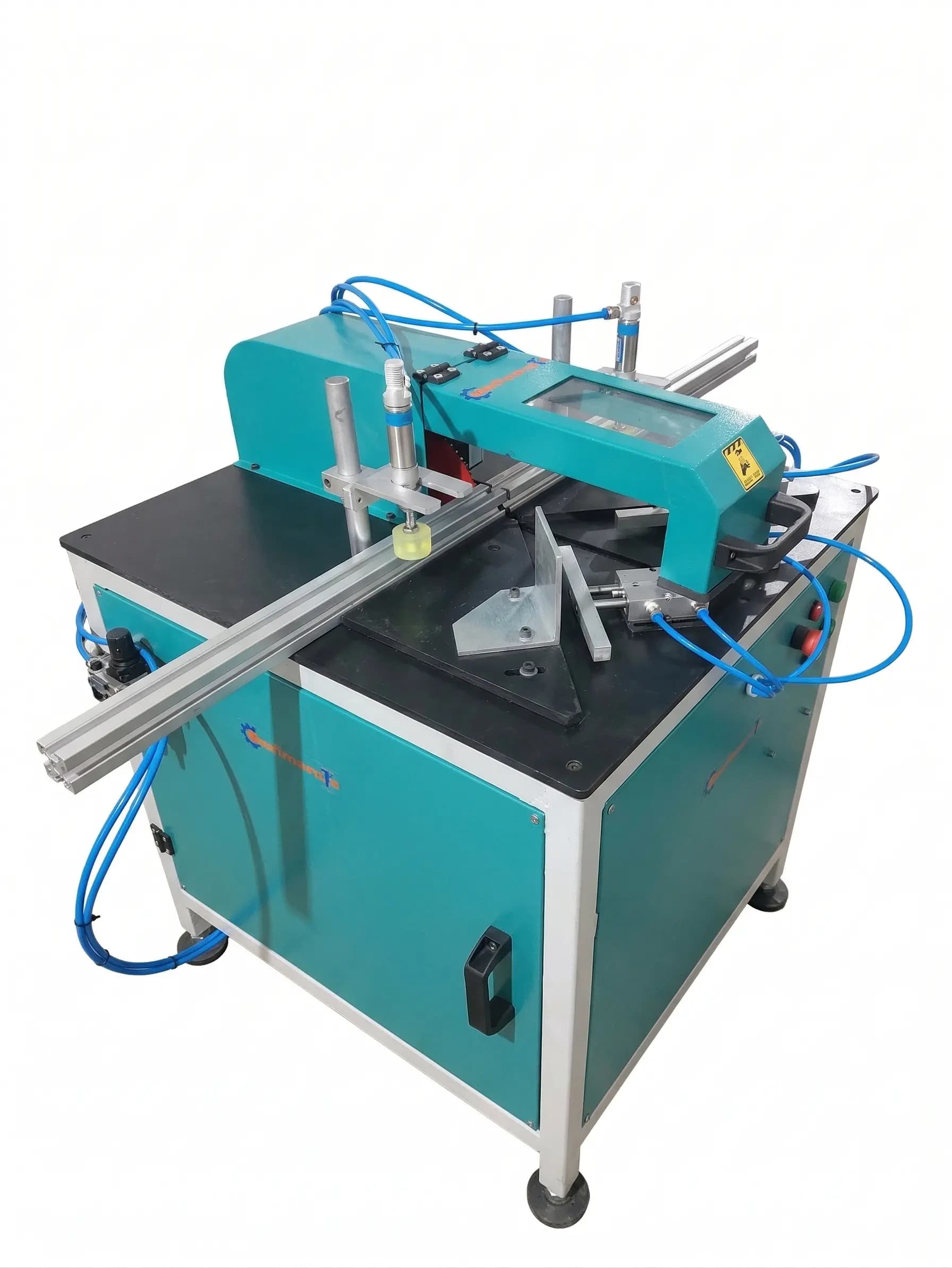
In Rajkot’s rapidly expanding luxury real estate market, the difference between a high-end facade and a mediocre installation lies in the precision of the mitre joint. For aluminium fabrication professionals, achieving a consistent 45-degree cut is no longer just a quality metric; it is the cornerstone of business scalability. When dealing with premium 2.5mm to 3.0mm wall thickness profiles for thermal-break systems, manual errors on a Automatic Double Head Cutting Saw can result in thousands of rupees in wasted material per shift.
Directly addressing the ROI: A high-precision automatic saw reduces material wastage from the industry average of 12% down to less than 3% by utilizing optimized nesting software and pneumatic clamping that prevents profile displacement. For a mid-sized workshop in Ahmedabad or Surat, this 9% saving in raw aluminium often pays for the machine’s monthly EMI within the first 14 months of operation. Furthermore, the ability to cut two heads simultaneously increases frame output by approximately 240% compared to single-head manual machines.
Technical Specifications: Engineering the Burr-Free Joint
True precision engineering in window machinery is defined by the stability of the saw blade and the accuracy of the indexing system. In our recent testing at a facility in GIDC Shapar, we found that blade vibration at 2800 RPM was the primary cause of joint gaps in large-span curtain walls. To eliminate this, we recommend a 500mm TCT (Tungsten Carbide Tipped) blade with a 120-tooth configuration for a cleaner finish on architectural-grade 6063-T6 aluminium.
Key technical parameters for Rajkot’s luxury facade requirements include:
- Angular Accuracy: Tolerance must be within ±0.1mm per 1000mm length to ensure the Aluminium Corner Crimping Machine can create a seamless weather-tight seal.
- Blade Feed: Hydro-pneumatic feeding systems are essential to maintain a constant feed rate, preventing heat buildup that warps thin-walled profiles.
- Clamping Pressure: Dual-stage vertical and horizontal pneumatic clamps (operating at 6-8 bar) are necessary to secure heavy industrial profiles without marring the powder-coated surface.
Case Study: 40% Output Increase in a Rajkot High-Rise Project
Last year, we assisted a fabricator in Ahmedabad who was struggling with a 15-story residential project requiring 800+ high-performance sliding windows. They were using a standard aluminium cutter machine 12 inch which required manual measurement for every cut. The scrap rate was nearly 15% due to human error in reading the scale, and the production speed was capped at 12 frames per day.
We transitioned them to a fully automatic double head miter saw for aluminium profiles price with a digital display and pneumatic tilting (90° to 45°). Within six weeks, the data showed:
- Output Growth: Production jumped from 12 frames to 42 frames per 8-hour shift.
- Labor Efficiency: Two manual measurement stations were eliminated, allowing those technicians to be redeployed to the copy router machine and assembly line.
- Reject Rate: The rejection of finished frames due to light leakage at the joints dropped to zero.
ROI Breakdown: Manual vs. Automatic Double Head Cutting Saw
When calculating the automatic double head cutting machine price India against long-term gains, fabricators must look beyond the initial ticket price. Consider the following comparison for a standard 3-ton monthly aluminium consumption unit:
- Waste Reduction: Manual cutting often leaves 'short ends' that cannot be used. An automatic saw with digital positioning reduces this by 70%, saving roughly ₹45,000 per month in raw material costs.
- Labor Savings: An automatic upvc windows manufacturing machine or aluminium saw requires one operator instead of three. Over a year, this saves ₹3.6 Lakhs in wages at current Gujarat labor rates.
- Consistency: Unlike manual setups, the machine does not get tired. The 400th cut of the day is as precise as the 1st, ensuring the upvc welding machine or corner crimper works perfectly every time.
Common Mistakes in Aluminium Profile Cutting
Having spent 15 years on shop floors, I’ve seen common errors that even the best aluminum window machinery manufacturers in Ahmedabad cannot fix if the operator is not trained.
- Neglecting Blade Lubrication: Many shops skip the micro-mist oiling system to save costs. This leads to aluminium buildup on the blade teeth, causing 'burrs' that ruin the 45-degree mating surface.
- Ignoring ISO Standards: Ensure your cutting process adheres to BS EN 12020 for tolerances. Cutting outside these tolerances makes the window structurally unsound for high-wind zones like coastal Gujarat.
- Lack of Foundation Leveling: A head cutting machine that isn't perfectly leveled on a concrete base will experience 'frame twist' during long profile cuts.
FAQ: What Fabricators Ask About Automatic Saws
Q: Is the automatic double head cutting saw suitable for both uPVC and Aluminium? Yes, though the blade TPI (Teeth Per Inch) and RPM settings should be adjusted. While many uPVC window machinery manufacturers in Lucknow offer hybrid machines, we recommend dedicated blades for aluminium to maintain cut quality.
Q: What is the maintenance schedule for a CNC aluminium profile cutting machine? Daily cleaning of the linear guide rails is mandatory. Monthly checks on the pneumatic water separator and blade tensioning are critical to prevent 45-degree deviations.
Q: Can I integrate this with my existing window software? Most modern upvc window manufacturing machine controllers accept CSV or XML exports from popular design software, allowing for automatic cut-list generation and zero-waste nesting.
Get more articles like this
Follow Mechnovate on Google to see our guides in Google Discover & News