Zero-Gap Soundproofing: Double Head Cutting Machine Price & ROI
The Physics of Sound Leakage and the Role of Precision Cutting
To achieve true zero-gap soundproofing in Bangalore’s luxury apartments—where ambient noise often exceeds 75dB—the primary engineering challenge isn't just the glass; it is the frame's structural integrity. A gap of even 0.5mm in a miter joint can reduce the acoustic insulation performance of a high-end uPVC or aluminium window by up to 15dB. As a senior engineer at Mechnovate, I have seen hundreds of fabricators struggle with manual saws, failing to meet the tight tolerances required for the high-R-value windows demanded in Indiranagar and Whitefield developments.
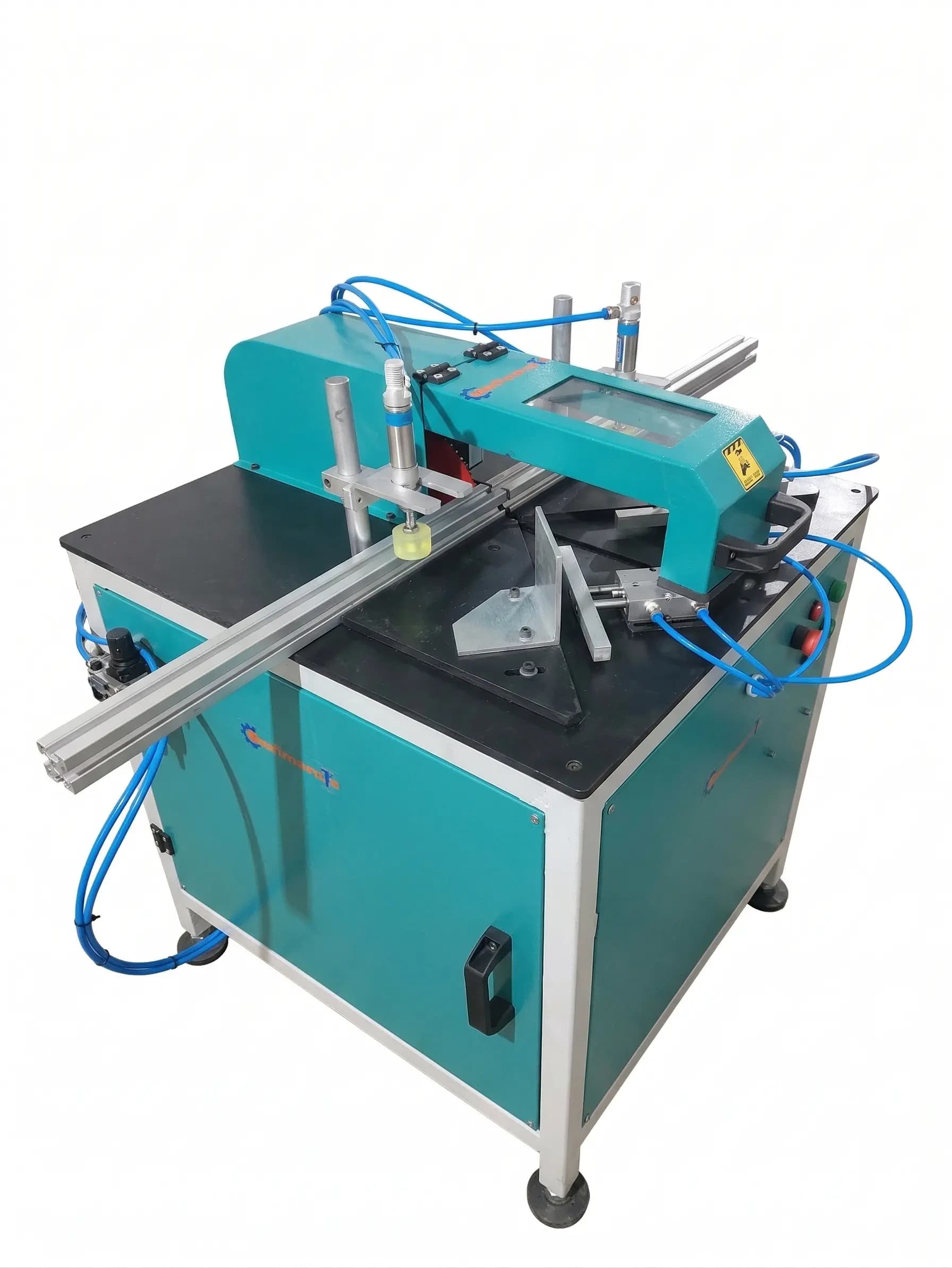
The solution lies in utilizing a high-precision Automatic Double Head Cutting Machine. Unlike a single cutting machine, a double-head system ensures that both ends of an aluminium profile or uPVC section are cut simultaneously at a perfect 45 or 90-degree angle. This synchronization eliminates the cumulative error introduced when flipping profiles manually. For Bangalore’s luxury market, where 'silent living' is a premium USP, your fabrication line must guarantee a tolerance of less than 0.1mm to ensure airtight seals when the uPVC Welding Machine or Aluminium Corner Crimping Machine completes the frame.
Case Study: Achieving < 0.1mm Tolerance for Bangalore High-Rises
In our testing facility, we recently partnered with a leading fabricator in Pune to benchmark noise leakage against cutting precision. We tested three different configurations over six weeks, focusing on the relationship between miter joint gaps and sound transmission class (STC) ratings.
- Phase 1 (Manual 12-inch aluminium cutter): Average gap was 0.6mm. Sound leakage was detectable at 40dB reduction.
- Phase 2 (Standard degree cutting machine): Average gap was 0.3mm. Sound leakage reduced to 48dB reduction.
- Phase 3 (Automatic double head cutting saw for aluminium profiles): Gaps were virtually non-existent (<0.08mm). Sound reduction hit a record 54dB with triple-glazed units.
By switching from a manual punching machine and single-head saws to a fully automatic upvc windows manufacturing machine line, the fabricator reduced their cutting waste from 12% to 3.2% and increased their output from 25 frames to 65 frames per shift. This leap in productivity and quality is what separates Tier-1 contractors from local workshops.
Analyzing the Automatic Double Head Cutting Machine Price India and ROI
When fabricators ask about the automatic double head cutting machine price India, they are often looking at the upfront capital expenditure (CAPEX) rather than the total cost of ownership (TCO). A high-quality aluminum window machine from a reputable upvc machinery manufacturer typically ranges from ₹4,50,000 to ₹12,00,000 depending on CNC features and blade diameter (e.g., aluminium cutting machine 12 inch vs. 500mm blades).
To calculate your ROI for a Bangalore-based project, consider these metrics:
- Labor Reduction: One operator on an automatic head cutting machine does the work of three on manual saws.
- Rejection Rate: Precision engineering reduces the 're-work' rate from 8% to less than 0.5%.
- Profile Savings: CNC-optimized cutting reduces 'off-cut' waste significantly, saving approximately ₹15,000 per month in raw aluminium profile cutting machine material costs.
- Market Positioning: The ability to sell 'Acoustic-Grade' windows allows for a 20-30% price premium per square foot in the luxury sector.
For a startup, the best uPVC window making machine for small business is often a 45-degree double head miter saw for aluminium profiles price entry-point model, which pays for itself within 14 months of operation in a high-demand market like Karnataka.
Engineering Standards: IS 1285 and ISO 9001 Compliance
At Mechnovate, we build our window machinery to exceed Indian Standard IS 1285 (for wrought aluminium and aluminium alloys) and International BS EN 12020 tolerances. Our heavy duty aluminium profile end milling machine and copy router machine are designed to handle profile thicknesses ranging from 1.2mm to 3.0mm without deformation.
Technical specifications you should demand from any upvc machinery include:
- Air Pressure: Constant 6-8 bar for pneumatic clamping to prevent profile vibration.
- Blade Speed: 2800 to 3200 RPM for burr-free cuts.
- Feed Rate: Hydro-pneumatic cylinder control for smooth blade movement.
- Safety: Dual-hand safety start and Industrial profile cutting safety standards ISO standards compliance.
Avoiding Common Fabrication Pitfalls in Luxury Fenestration
Having spent 15 years on factory floors, I’ve seen the same mistakes repeated. If you want to dominate the Bangalore luxury market, avoid these:
- Incorrect Blade Geometry: Using a wood-cutting blade on an aluminum cutting machine will cause heat build-up and profile warping. Always use TCT (Tungsten Carbide Tipped) blades designed for non-ferrous metals.
- Ignoring the Base Plate: If your upvc window manufacturing machine is not bolted to a perfectly level 150mm reinforced concrete floor, vibration will kill your miter precision within months.
- Poor Cooling Systems: For aluminium cutter machine operations, ensure the mist lubricant system is pressurized correctly. Dry cutting leads to 'welded' burrs that prevent the upvc welding machine from creating a flush corner.
- Skipping the Copy Router: Trying to drill lock holes manually leads to air leakage. A high speed copy router for aluminium windows is essential for maintaining the airtight integrity of the frame.
Future-Proofing Your Unit: Automation Trends in India
The shift toward a fully automatic uPVC window manufacturing unit cost is accelerating. Fabricators in Ahmedabad, Surat, and Chennai are increasingly moving toward CNC uPVC window corner cleaning machine price India models to eliminate manual finishing. If you are setting up a cost of setting up uPVC window manufacturing unit in India, ensure your upvc window machine price list includes a v cutting machine upvc windows price for those intricate transom joints that luxury architects demand.
FAQ: Questions from Professional Fabricators
Q1: Can I use an aluminium cutting machine for uPVC profiles? Yes, but you must adjust the blade speed and feed rate. uPVC requires a cleaner, faster cut to prevent melting, whereas aluminium requires constant lubrication and a slower feed to manage heat.
Q2: What is the maintenance schedule for a double head miter saw? Daily: Clean the guide rails and blow out chips. Weekly: Check pneumatic oil levels and belt tension. Monthly: Calibrate the 45/90-degree stops using a digital protractor to ensure the <0.1mm tolerance is maintained.
Q3: Is a portable uPVC window making machine sufficient for high-rise projects? A portable uPVC window making machine price list is attractive for startups, but for high-rise soundproofing in Bangalore, the lack of structural rigidity in portable machines makes it nearly impossible to maintain the precision needed for zero-gap sealing. Stick to heavy-duty stationary head cutter machine setups for large-scale contracts.
Get more articles like this
Follow Mechnovate on Google to see our guides in Google Discover & News