uPVC Window Machinery for Chennai Fabricators: Engineering Guide for Coastal Climate
Chennai fabricators operate in one of the most demanding window manufacturing environments in India. Annual relative humidity sits above 80% year-round, and direct coastal exposure to salt-laden air from the Bay of Bengal means material and machine choices have real consequences — not just on production efficiency, but on how long finished window installations last before corrosion, joint failure, or frame degradation forces replacement. This guide is written for uPVC window fabricators in Chennai who are evaluating a first machinery line, expanding production capacity, or replacing ageing equipment in preparation for commercial contracts on the OMR corridor or Tamil Nadu Smart Cities projects.
Why uPVC Dominates Chennai's Coastal Residential Market
Aluminium window frames offer structural rigidity, but in Chennai's salt-air environment they require anodising or powder coating to resist corrosion — and even treated aluminium develops surface oxidation within two to five years on seafront-facing installations in areas like Besant Nagar, Thiruvanmiyur, and ECR (East Coast Road). uPVC profiles are inherently corrosion-resistant: the polymer does not react with salt, chloride ions, or coastal moisture, which is why residential developers along OMR and ECR increasingly specify uPVC as the default for all external glazing.
The dominant profile systems supplied to Chennai fabricators are Rehau, VEKA, Profine (KBE), and Fenesta. Each system uses distinct chamber geometries, drainage slot positions, and hardware hole patterns, which means your punching machine tooling must be specified for your chosen system before any machine order is placed. Confirm your profile system supplier before purchasing tooling — retrofitting tooling to the wrong profile wastes both time and money.
uPVC also supports Tamil Nadu's energy efficiency agenda. The Energy Conservation Building Code (ECBC) mandates minimum U-values for glazing across climate zone 1A — the hot-and-humid classification covering all of coastal Tamil Nadu. Multi-chamber uPVC profiles with double glazing routinely satisfy these thresholds, whereas single-glazed aluminium cannot, making uPVC the compliant default on government-linked commercial projects.
What Chennai Fabricators Specifically Need in a Machinery Line
Chennai's humidity creates a production challenge that fabricators in drier states rarely encounter: welding temperature instability. uPVC welding machines must maintain a plate temperature of 250°C ± 5°C. In a workshop where ambient humidity fluctuates between 75% and 90%, heating elements and temperature controllers on budget machines drift outside this band, producing weak weld corners that fail pull-out strength tests and generate rework. When evaluating welding machines, ask for the temperature controller specification — a PID controller with ±2°C tolerance is the minimum acceptable standard for Chennai conditions.
Machine frame corrosion is the second practical concern. Workshop floors in coastal Chennai accumulate moisture during the northeast monsoon (October to December). Machine bases and table surfaces with powder-coated mild steel frames corrode faster in this environment than those using galvanised steel or stainless-steel contact surfaces. Ask your supplier whether frame components are treated for sustained high-humidity environments before committing to a purchase.
For cutting operations, the 45/90 Degree Cutting Machine (starting at ₹55,000) handles both 45° mitre cuts for corner joints and 90° straight cuts for T-joints and mullion cropping. Blade runout must be within 0.05 mm for clean cuts on uPVC — excess runout causes microfractures at the cut face that compromise weld strength.
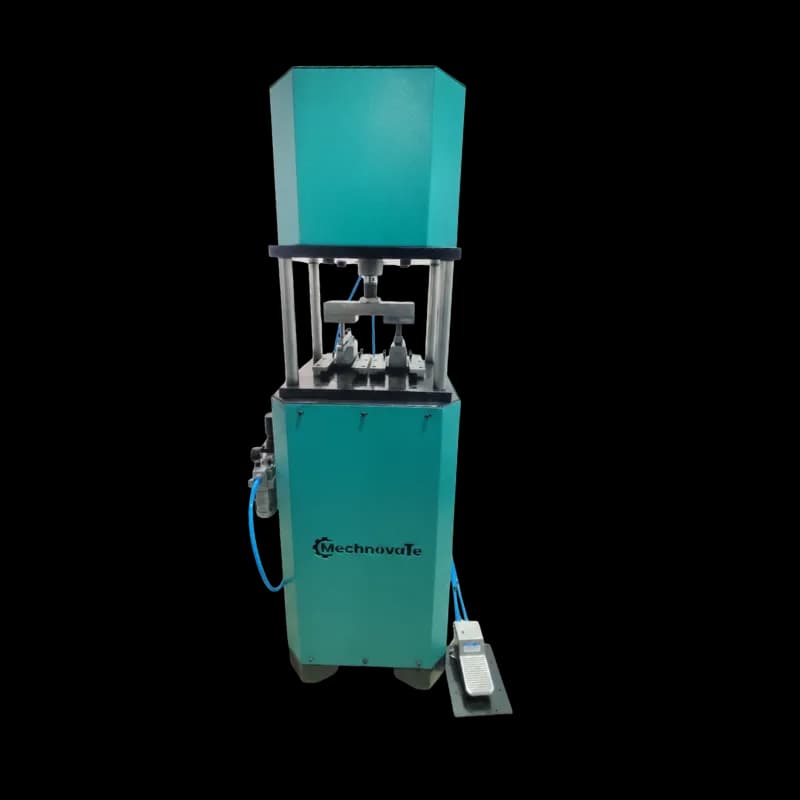
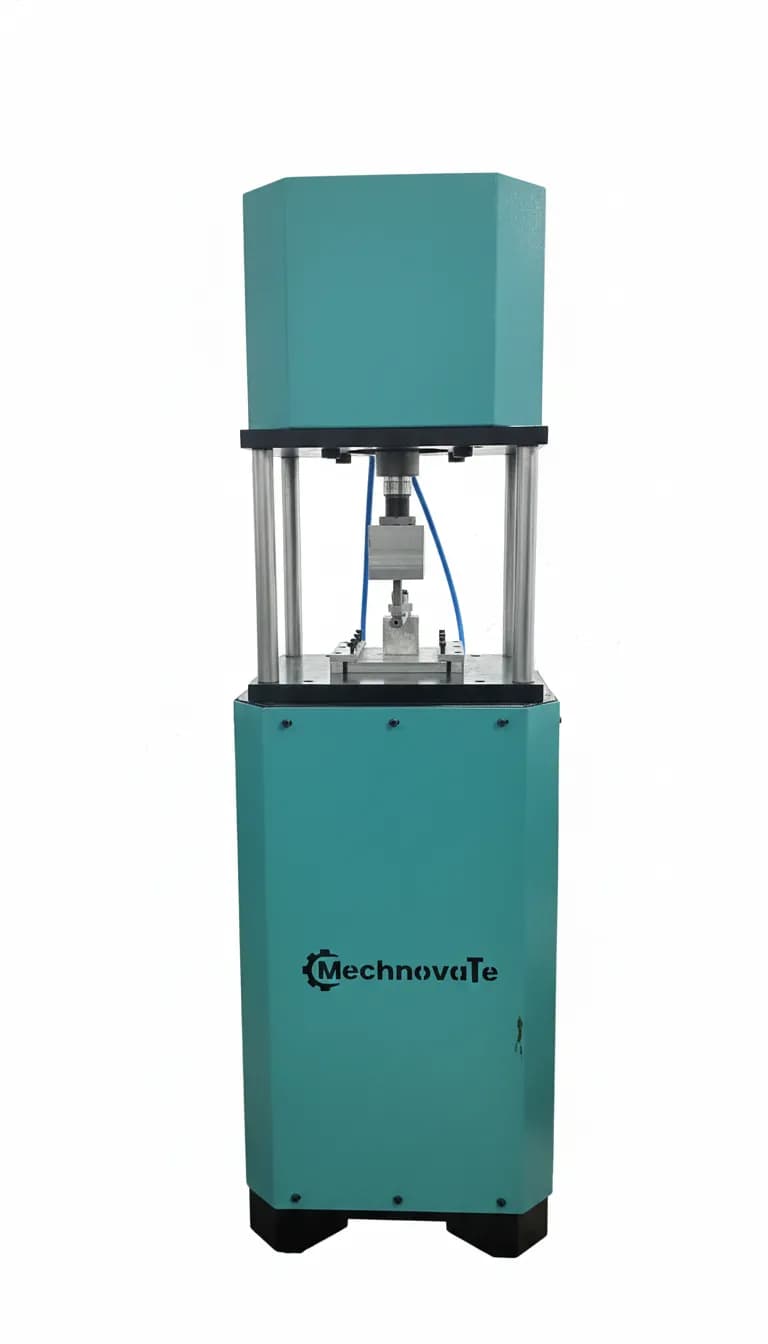
For hardware punching, fabricators scaling up for OMR volume contracts will find pneumatic machines significantly faster than manual alternatives. The 1-Station Pneumatic Punching Machine (₹40,000) handles single-operation punching; the 2-Station Pneumatic Punching Machine (₹65,000) runs two tools simultaneously, cutting cycle time by nearly half on drainage-slot-heavy profiles. See the Manual vs pneumatic punching machine comparison for a detailed ROI break-even calculation before deciding.
Tamil Nadu Smart Cities and the OMR Commercial Demand Surge
The Tamil Nadu Smart Cities Mission has directed significant infrastructure investment into Chennai, Coimbatore, and Madurai. Chennai-specific projects — including the North Chennai rejuvenation zone, Koyambedu transit hub redevelopment, and ongoing OMR commercial expansion — specify ECBC-compliant fenestration, which directly favours thermally efficient uPVC systems over standard single-glazed aluminium.
The OMR IT corridor, stretching from Perungudi to Siruseri, houses hundreds of office campuses, service apartments, and premium residential towers. Fabricators serving OMR projects typically produce 80 to 150 window frames per month at minimum. At that volume, manual copy routing for lock pockets and hinge recesses creates a consistent production bottleneck. The Pneumatic Copy Router Machine (₹55,000) uses an air-driven spindle for consistent routing depth across consecutive frames, reducing operator fatigue and output variance compared to the Manual Copy Router Machine (₹35,000), which suits lower-volume workshops or fabricators who are just starting out.
Oragadam's automotive manufacturing belt — home to Renault-Nissan, Hyundai, and Daimler facilities — also generates large industrial glazing contracts for factory buildings. Industrial windows use thicker-walled uPVC profiles with larger punching tool requirements; confirm tool bit compatibility with your pneumatic punching machine before quoting on industrial tenders.
Setting Up Your Chennai uPVC Workshop: Step-by-Step
The Workshop setup guide covers floor plan and machine sequencing in detail. For Chennai-specific conditions, follow these steps when commissioning a new line:
- Confirm your profile system (Rehau, VEKA, Profine, or Fenesta) before ordering punching tooling — drainage slot positions differ between systems.
- Position your welding machine away from direct airflow from open windows or exhaust fans; ambient air movement causes plate temperature drift.
- Install a dehumidifier in the welding area if workshop humidity exceeds 80% during production hours — this protects both the heating plate and the PID controller electronics.
- Ground all pneumatic machines correctly; coastal salt air can accelerate static discharge on powder-coated surfaces during dry weather periods.
- Keep at least two spare sets of punching blades on hand — Tamil Nadu replacement tooling lead times can reach 7 to 10 days, and unplanned downtime on a commercial contract is expensive.
- Schedule quarterly lubrication of all sliding guide rails; sustained moisture accelerates rust on unprotected guide surfaces even in machines with powder-coated frames.
FAQ
How long does delivery from Ahmedabad to Chennai take?
Mechnovate ships to Chennai and all South India destinations within 3 to 5 business days from order confirmation. Machines are crated and dispatched via road freight with transit insurance. Tracking details are shared once the consignment leaves our Ahmedabad facility. For urgent project timelines, call +91-9265699061 to verify current dispatch slots before placing your order.
Which profile systems do Mechnovate machines support in Chennai?
Mechnovate cutting, punching, and routing machines are compatible with all major systems available in Chennai — Rehau, VEKA, Profine (KBE), Fenesta, Domal, Jindalinium, Dumal, Hindalco, and Alumil. Punching tooling is ordered separately and specified to match your profile system's drainage slot positions and hardware hole patterns, so no modification is needed after delivery.
What warranty applies to machines purchased by Chennai fabricators?
Punching and routing machines carry a 1-year warranty covering manufacturing defects in mechanical and pneumatic components. Cutting machines carry a 6-month warranty. Warranty coverage applies regardless of delivery location — distance to Chennai does not affect terms. Contact +91-9265699061 to initiate any warranty claim.
Should a new Chennai fabricator start with manual or pneumatic punching?
Volume determines the right answer. At under 40 frames per month, the Manual Punching Machine (₹20,000) offers a low entry cost with acceptable throughput. Above 60 frames per month, the 1-Station Pneumatic Punching Machine (₹40,000) recovers the price difference within three to four months through faster cycle times and reduced operator fatigue. The Manual vs pneumatic punching machine comparison walks through this calculation with specific cycle-time figures.
Ready to Upgrade?
Mechnovate supplies uPVC and aluminium window machinery to fabricators across Tamil Nadu, with delivery to Chennai in 3 to 5 business days. All machines carry ISO 9001:2015 and CE certification and are built to perform in high-humidity coastal workshop environments. To discuss your production volume, profile system, and machine requirements, call +91-9265699061 or contact us — our engineering team will recommend the right machinery combination for your Chennai operation.
Get more articles like this
Follow Mechnovate on Google to see our guides in Google Discover & News