Aluminium Window Machine Buyers Guide for Pune Fabricators
Pune has become one of India's most active markets for aluminium window fabrication, driven by two parallel construction booms: IT office campuses expanding across Hinjewadi, Kharadi, Baner, and Wakad, and residential housing projects multiplying inside PMC and PCMC development zones. Fabricators in Bhosari MIDC and Pimpri MIDC who were producing 30 windows per day three years ago are now regularly managing orders of 60–80 frames per day — and manual equipment that once kept pace no longer does. This guide is written specifically for Pune fabricators evaluating machine upgrades, new workshop setups, or production line expansion.
Pune's Window Demand: IT Campuses and Residential Expansion
Pune is India's second-largest real estate market by unit delivery volume. IT infrastructure construction in Hinjewadi Phase 1, 2, and 3, along with Kharadi, Balewadi, and Baner, specifies aluminium curtain walls, storefront systems, and floor-to-ceiling glazing as standard for office interiors and commercial facades. The residential pipeline from PMC and PCMC zones — covering township projects, housing societies, and mid-rise apartment blocks — drives demand for aluminium casement and sliding windows across the ₹45 lakh to ₹1.5 crore unit segment.
Both markets primarily use Domal and Jindalinium profile systems, which are the most common among Pune fabricators. Each project type imposes different production requirements: commercial glazing involves longer profile runs and fewer but larger frames, while residential sliding and casement windows involve higher frame counts with standardised dimensions. A fabricator supplying both market segments — which is common for Pune workshops near Bhosari MIDC — needs equipment that handles both run sizes efficiently.
Rising labour costs across Pimpri-Chinchwad have increased 18–22% over the past three years, narrowing the advantage over Mumbai and making the payback period on pneumatic equipment measurably shorter than it was. Proximity to Mumbai also means Pune fabricators frequently participate in the same large-project supply chains, where delivery reliability and output consistency are contractual requirements.
Machine Selection for 30–80 Frames Per Day
For fabricators operating at 30–80 frames per day, a three-machine production line covers cutting, punching, and routing without creating unnecessary capital overhead:
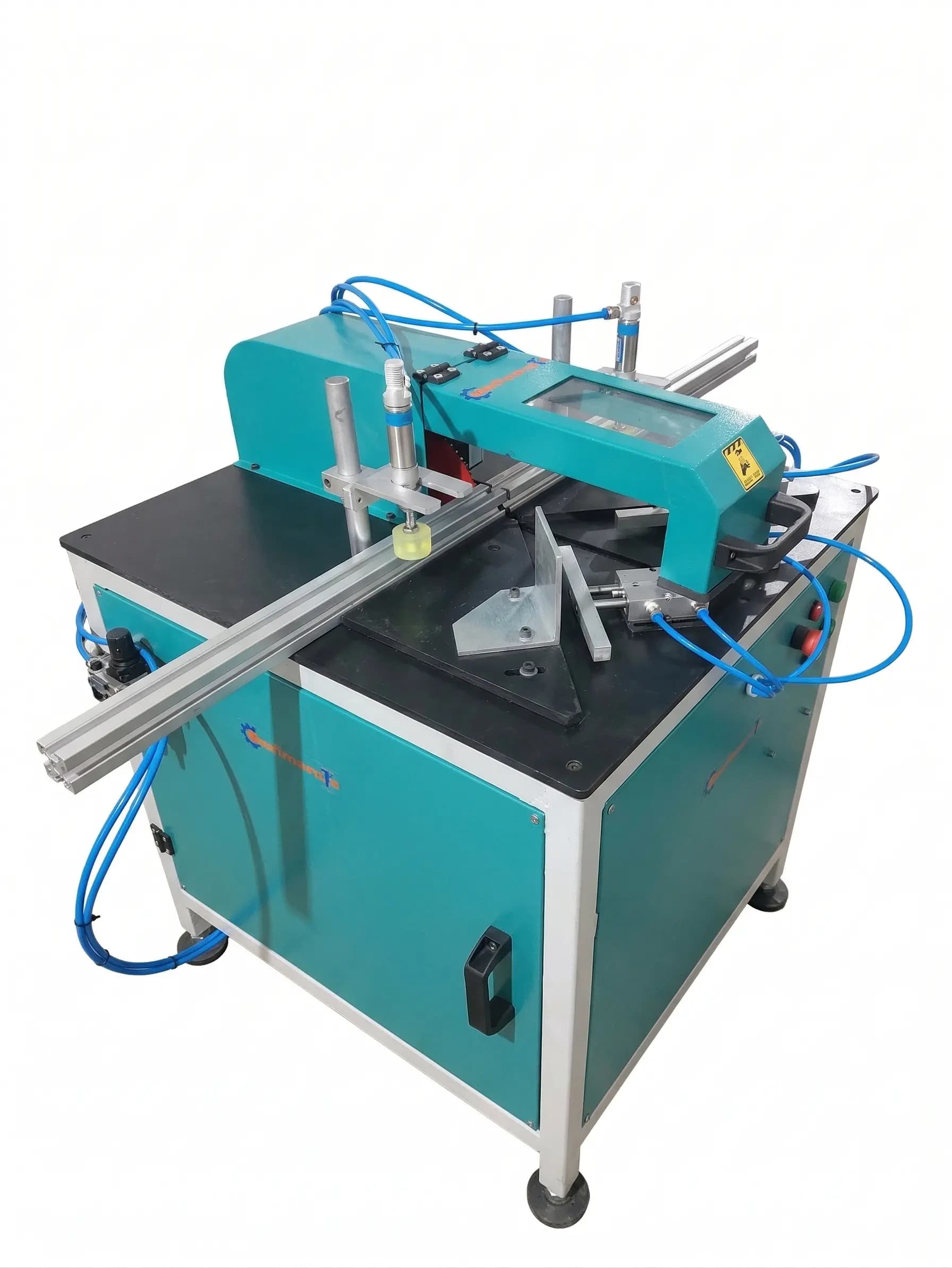
- Cutting: A 45/90 Degree Cutting Machine (from ₹55,000) handles all mitre cuts for casement and slider profiles in both 45-degree and 90-degree configurations. For a comparison of single-head and double-head cutting options, see the Single head vs double head cutter comparison.
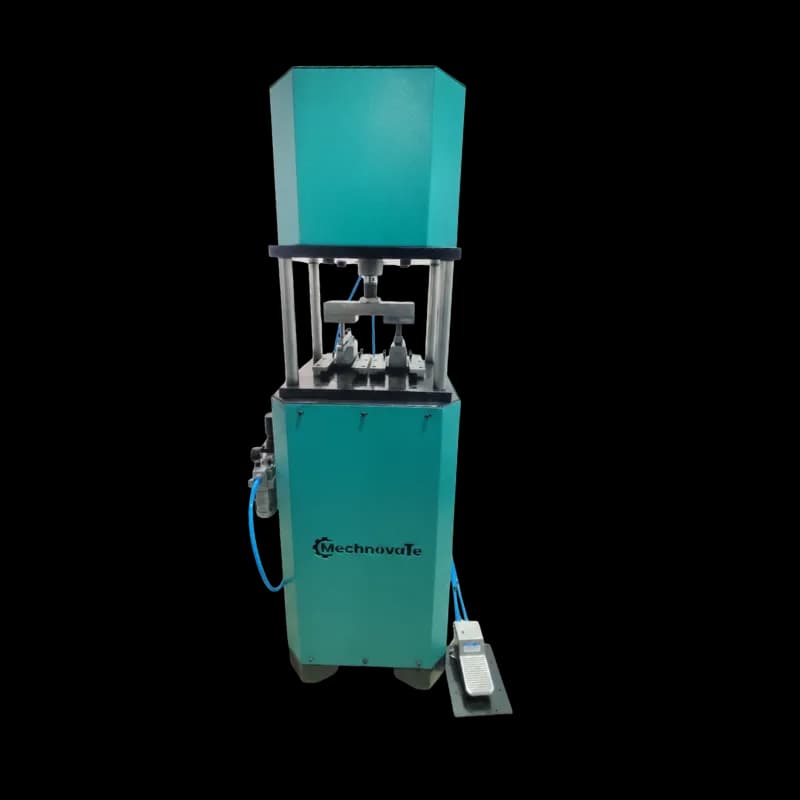
- Punching: The 2-Station Pneumatic Punching Machine (from ₹65,000) processes both side members of a window frame simultaneously, cutting punching cycle time by roughly 40% versus a single-station setup. At 60 frames per day, this difference adds up to 2–3 recovered operator-hours per shift.
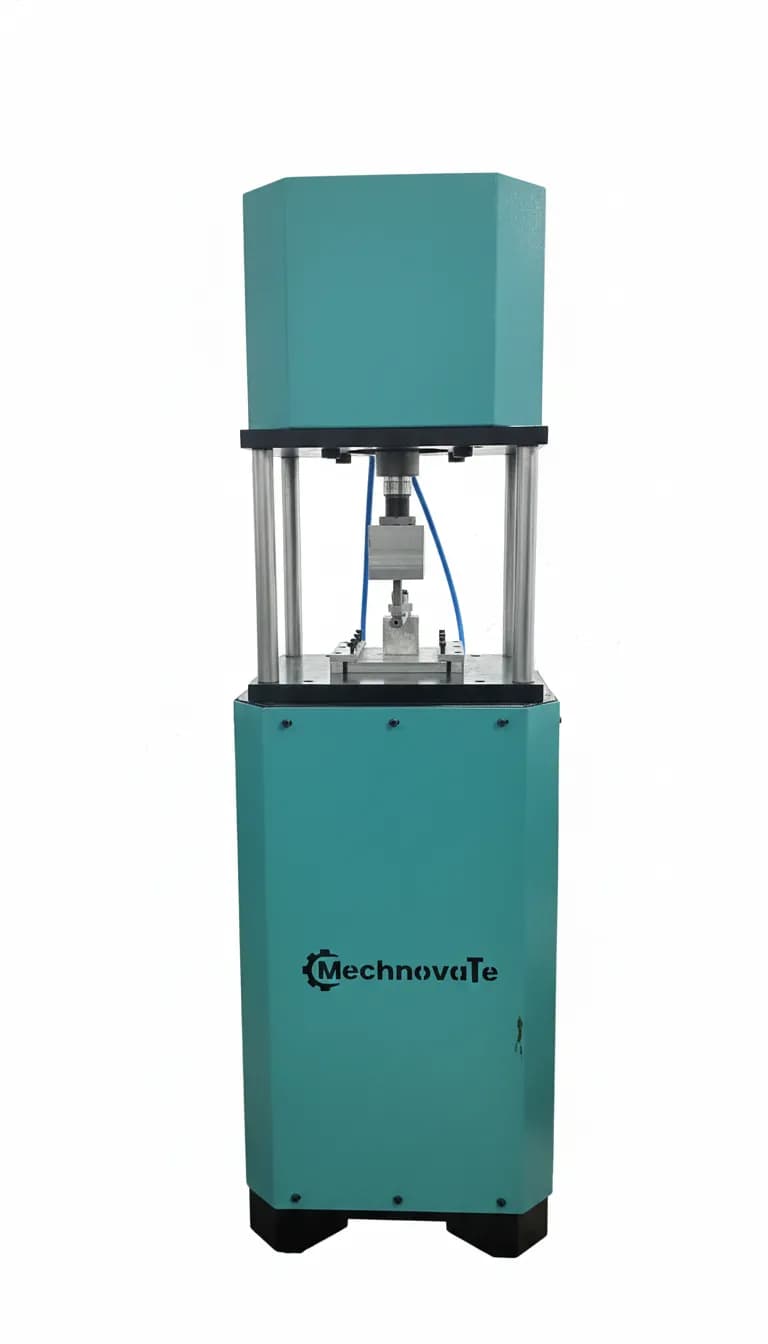
- Routing: The Pneumatic Copy Router Machine (from ₹55,000) uses a template-guided pneumatic spindle to cut drainage and ventilation slots with consistent geometry across every profile length — critical for passing builder quality inspections on residential projects in Koregaon Park, Kalyani Nagar, and Wakad.
At 60–80 frames per day, routing typically becomes the production bottleneck if the copy router is manual. Introducing the pneumatic copy router at this volume level reduces per-frame routing time from roughly 6–8 minutes to under 3 minutes and substantially reduces operator fatigue across an eight-hour shift. For detailed selection criteria, see the Punching machine buying guide and the Copy router buying guide.
Pneumatic vs Manual: The Right Choice at Pune Volumes
The practical break-even point for switching from manual to pneumatic punching is approximately 35–40 windows per day. A Manual Punching Machine at ₹20,000 makes economic sense below that output level — capital cost stays low and the machine handles the volume. Above 40 frames per day, the 2-Station Pneumatic Punching Machine at ₹65,000 typically recovers its cost within 8–12 months through reduced labour hours, fewer punching errors requiring rework, and the ability to process both frame members per punching cycle.
The same threshold logic applies to routing. A Manual Copy Router Machine at ₹35,000 suits fabricators working on high-variety, low-volume custom orders where batch sizes are small and template changeover time is not a significant cost. For a Bhosari-area fabricator supplying 50 or more windows per week to a single housing project contractor, the pneumatic copy router eliminates per-batch manual effort and produces slots clean enough to avoid any re-routing.
See the Manual vs pneumatic punching machine comparison and Manual vs pneumatic copy router comparison for a side-by-side breakdown of both decisions.
Workshop Layout for Bhosari and Pimpri MIDC Workshops
Industrial plots in Bhosari MIDC and Pimpri MIDC typically run 500 to 2,000 square feet for mid-size fabricators. A three-machine aluminium window production line operates efficiently in 600–800 square feet when machines are arranged to minimise profile handling distance between stations. A practical layout sequence:
- Position the cutting machine at the raw material entry point so aluminium bar stock moves directly onto the cutting table without crossing the shop floor
- Place the two-station pneumatic punching machine immediately adjacent to the cutting station, with a staging rack between them for batching cut sections by frame size
- Set the pneumatic copy router machine parallel to the punching station, fed from the same staging rack to avoid double-handling
- Reserve 150–200 square feet near the exit for glazing bead insertion, hardware fitting, and pre-dispatch window assembly
- Run compressor lines along one wall to keep the production floor clear and reduce trip hazards
Mechnovate machines are built with compact footprints designed for MIDC-scale workshop spaces. The Workshop setup guide covers compressed air sizing, electrical load requirements, and machine anchoring details for standard Indian fabrication setups.
Delivery to Pune: Mechnovate ships from Ahmedabad. Pune falls within the Maharashtra delivery zone — machines typically arrive within 2–3 business days from order confirmation.
FAQ
Which aluminium profile systems are compatible with Mechnovate machines?
Mechnovate cutting, punching, and routing machines are compatible with Domal, Jindalinium, Dumal, Hindalco, and Alumil profile systems. Both Domal and Jindalinium — the two most common systems among Pune fabricators — are fully supported across the entire machine range. If you are working with a profile series not on this list, email sales@mechnovate.co.in with the profile number and series designation before placing an order and the team will confirm compatibility.
How many operators does a three-machine pneumatic production line need?
A cutting machine, two-station pneumatic punching machine, and pneumatic copy router can be run by two skilled operators with one helper handling material staging and feeding. At 60 frames per day in a single shift, this crew size is sufficient. Scaling to 80 or more frames per day is usually better achieved by adding a second shift or a second staging helper rather than additional machines, since the three-machine line has capacity headroom when run continuously.
What warranty covers Mechnovate punching and routing machines?
All Mechnovate punching machines — both the Manual Punching Machine and pneumatic variants — and all copy router machines carry a 1-year warranty covering manufacturing defects and mechanical failures under normal operating conditions. The 45/90 Degree Cutting Machine carries a 6-month warranty. Mechnovate is ISO 9001:2015 and CE certified, and every machine is inspected at the Ahmedabad facility before dispatch.
How long does delivery to Pune take, and what does the shipping process involve?
Pune is within Mechnovate's Maharashtra delivery zone. Standard lead time is 2–3 business days from order confirmation. Machines are packed securely at the Ahmedabad facility and dispatched via freight carrier. For multi-machine orders or deliveries to workshop locations inside Bhosari MIDC or Pimpri MIDC where freight vehicle access may need coordination, call +91-9265699061 before placing the order to arrange consolidated freight and confirm unloading logistics for your specific premises.
Ready to Upgrade?
Mechnovate has supplied aluminium window machinery to 500+ fabricators across 20+ Indian cities, backed by 15+ years of combined engineering experience and ISO 9001:2015 certification. If you are a Pune fabricator expanding output, upgrading from manual to pneumatic, or setting up a new workshop in Bhosari or Pimpri, our team can help you select the right machines for your daily frame target, available floor space, and profile system. Call +91-9265699061, email sales@mechnovate.co.in, or contact us to get a quote and confirm delivery timelines to your Pune location.
Get more articles like this
Follow Mechnovate on Google to see our guides in Google Discover & News