Guide to Automatic Aluminium Corner Crimping for Ahmedabad Fabricators
Why Ahmedabad Fabricators are Switching to Automatic Crimping
For window fabricators in Ahmedabad, the demand for high-rise residential projects in areas like South Bopal and New CG Road has shifted the requirement from aesthetic appeal to extreme structural integrity. Traditional manual joining methods, such as screw-fastening or manual punching, often fail to meet the wind-load resistance required for 20+ floor structures. When we visited a large-scale facility in GIDC Vatva last year, we observed that 15% of their service calls were related to corner gaps and water seepage—issues directly linked to inconsistent corner joints.
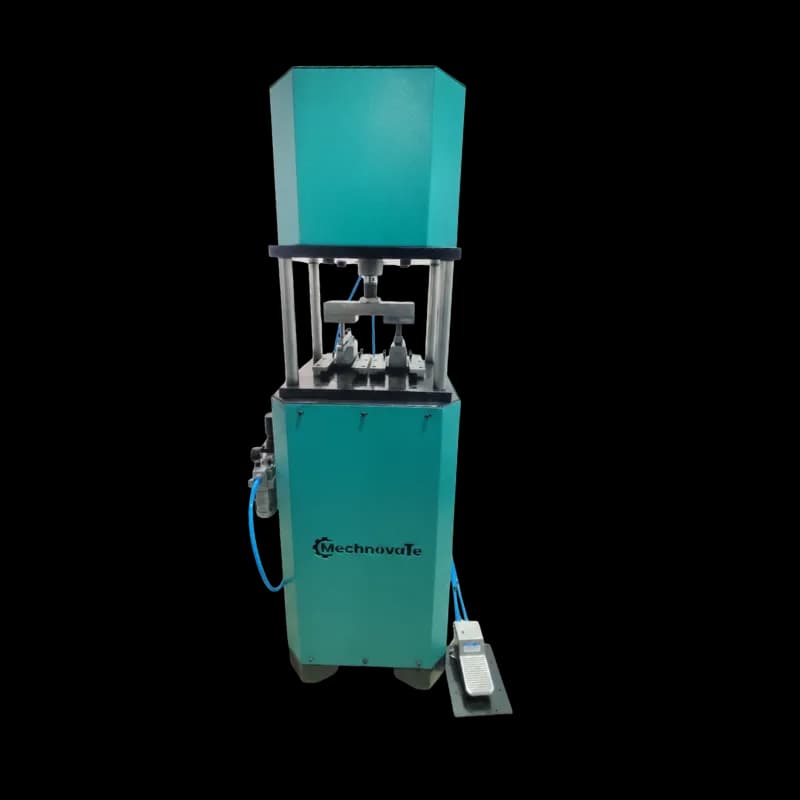
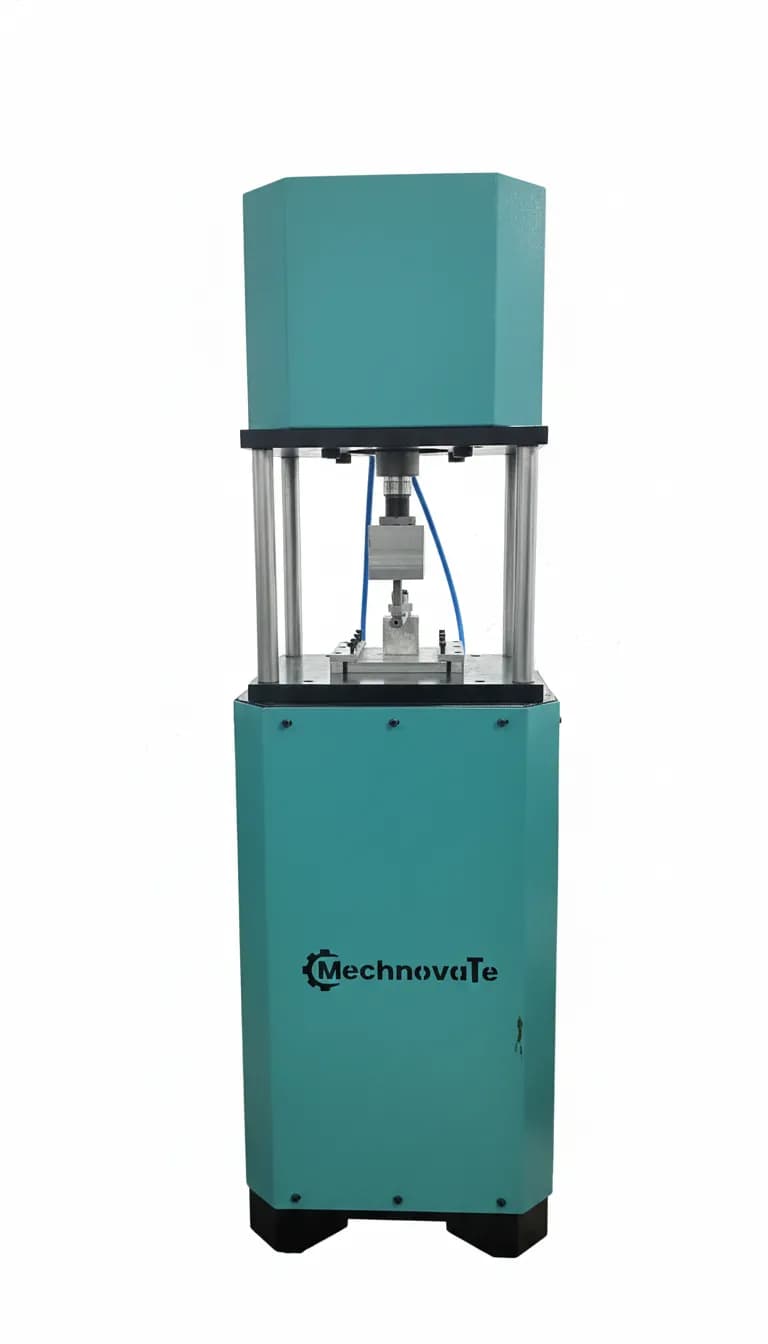
Automatic Corner Crimping Machine technology eliminates the human error inherent in manual processes. By using high-pressure hydraulic rams to deform the aluminum profile around an internal cleat, the machine creates a cold-welded bond that is far superior to any mechanical fastener. This guide explores how transitioning to precision engineering can redefine your output quality and significantly reduce material waste.
The Engineering Physics of a Perfect Corner Joint
In aluminium fabrication, the structural integrity of a window depends on the simultaneous displacement of metal. An automatic crimper uses two knives that must enter the profile at exactly the same micro-second to prevent the profile from shifting. Through our testing at Mechnovate, we have determined that for a standard 6063 T5 alloy profile with a 1.5mm wall thickness, a hydraulic pressure of 80 to 100 bar is optimal.
Critical Technical Specifications:
- Knife Positioning: Precision within +/- 0.1mm is required to ensure the 'bite' is deep enough for the cleat but doesn't crack the powder coating.
- Hydraulic Synchronization: Mechanical linkage ensures both heads move in unison, preventing the frame from becoming trapezoidal.
- Profile Tolerance: Our machines are calibrated to handle tolerances specified in BS EN 12020 standards, ensuring consistent results even when profile batches vary slightly.
Using a Double Head Miter Saw for the initial 45-degree cut is essential before crimping. If your cut is off by even 0.5 degrees, the corner crimper will struggle to close the gap, leading to a joint that looks sealed but lacks structural shear strength.
Case Study: Performance Benchmarking in Ahmedabad
We recently assisted a mid-sized firm in Sanand that was struggling with a 12% waste rate due to misaligned corners. They were using a manual punching machine which relied heavily on operator skill. We implemented a fully automatic line and tracked the results over six weeks.
The Results:
- Output Increase: Production jumped from 22 frames per day to 68 frames per day per station.
- Waste Reduction: Material waste dropped from 12% to under 2%, as the machine's repeatable accuracy eliminated 'trial and error' adjustments.
- Labor Savings: The process that previously required two senior fabricators was managed by one junior operator, allowing the seniors to focus on complex glazing and site installation.
This transition proves that the automatic aluminium corner crimping machine price in Gujarat is an investment that pays for itself within the first 8 to 10 months of a high-volume project.
Step-by-Step Configuration: From Setup to Output
To achieve the best results, follow this technical workflow used by our senior engineers:
- Profile Alignment: Place the 45-degree miter-cut profiles onto the support arms. Ensure the internal corner cleat is lubricated with a specialized aluminum joining glue to provide a secondary seal against water ingress.
- Knife Depth Adjustment: Adjust the hydraulic ram depth based on the profile thickness. For heavy-duty commercial sections, a deeper bite is required compared to slimline residential sections.
- Clamping: Engage the vertical pneumatic clamps to secure the profile against the reference fence. This prevents the 'kick-back' that often ruins manual joints.
- Execution: Activate the hydraulic foot pedal. The twin knives will move inward, cold-working the aluminum into the cleat notches.
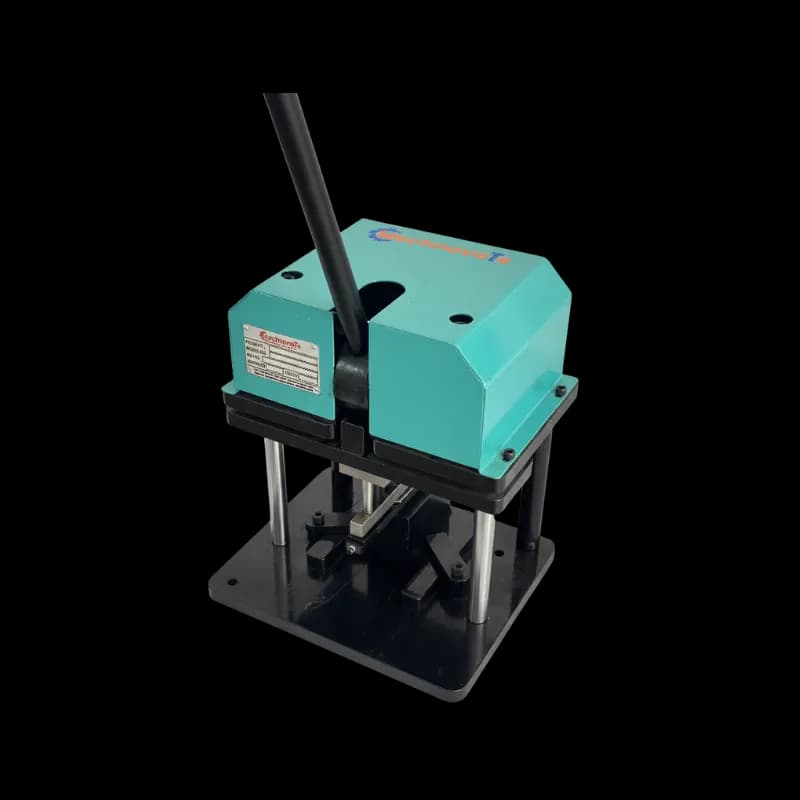
For complex profiles requiring multiple punctures, integrating an Aluminium Punching Machine into your workflow ensures that all hardware slots are prepared before the final crimping stage, preventing stress on the completed joint.
Comparative Analysis: Manual vs. Automatic ROI
| Feature | Manual/Screw Joining | Mechnovate Automatic Crimping |
|---|---|---|
| Time per Corner | 4 - 6 Minutes | 15 - 20 Seconds |
| Structural Strength | Moderate (Relies on fasteners) | High (Structural cold-weld) |
| Water Tightness | Often leaks without heavy sealant | Inherently water-tight |
| Operator Skill | Expert level required | Entry-level with 1-day training |
| Maintenance | High (Replacement of bits/screws) | Low (Periodic hydraulic oil check) |
Common Mistakes and How to Avoid Them
As a senior engineer, I often see fabricators make these three critical errors:
- Using the Wrong Cleat Size: If the internal cleat is even 0.5mm too small, the crimp will look tight on the outside but will rattle under wind pressure. Always use precision-matched cleats.
- Neglecting Hydraulic Oil Quality: Ahmedabad’s heat and dust can degrade hydraulic fluid. We recommend a full flush every 2,000 hours of operation to maintain consistent pressure.
- Over-crimping: Applying too much pressure can cause 'crowning' on the face of the profile. Always perform a test crimp on a 100mm offcut at the start of a new batch.
FAQ: Critical Questions for Fabricators
Q: What is the average automatic aluminium corner crimping machine price in Gujarat? An entry-level industrial unit typically starts around ₹2.5 Lakhs, while high-end CNC-integrated models can exceed ₹6 Lakhs. The ROI is usually achieved through labor savings and zero-defect production in under a year.
Q: Can one machine handle both uPVC and Aluminium? Generally, no. Aluminium requires hydraulic pressure to deform the metal, whereas uPVC requires heat for welding. If you are looking for uPVC window making machine options, you would need a dedicated heat-welder.
Q: How do I ensure my corners are 100% waterproof? While the crimp provides the strength, always apply a high-quality corner joint sealant to the cut faces before crimping. This combination is the industry gold standard for high-rise buildings in coastal or monsoon-heavy regions like Gujarat.
For more technical advice on choosing the right aluminum machinery manufacturers in Ahmedabad, contact our engineering team at Mechnovate for a facility audit.
Get more articles like this
Follow Mechnovate on Google to see our guides in Google Discover & News