Eliminating Slot Misalignment in Slimline Aluminium Profiles
Slot misalignment in slimline aluminium profiles is rarely a result of 'bad luck' and almost always a consequence of mechanical vibration, spindle runout, or improper clamping pressure. For Bangalore fabricators dealing with the high-precision demands of minimalist architectural designs, even a 0.5mm deviation in a lock-hole or drainage slot can render an expensive 1.5mm wall-thickness profile useless. At Mechnovate, we have spent 15 years troubleshooting these specific bottlenecks on the shop floors of Peenya and Bommasandra.
The Engineering Reality of Slimline Aluminium Fabrication
When working with slimline profiles, the margin for error is significantly narrower than with standard architectural sections. In a recent case study at a Bangalore-based window unit, we analyzed a production line experiencing a 15% rejection rate due to slot shifting. After performing a diagnostic on their copy router machine, we identified that the primary culprit was harmonic resonance at 10,000 RPM. By adjusting the frequency inverter to 14,000 RPM and switching to a single-flute carbide bit, we reduced the rejection rate to under 1.5% within 48 hours. This transition is critical for modern aluminium fabrication where precision engineering dictates the final assembly quality.
High-speed routing requires a deep understanding of material science and mechanical tolerances. Standard aluminium alloys used in India, such as HE9 (6063), must be machined according to IS 1285 and ISO 9001 standards to ensure structural integrity is not compromised by heat-affected zones. If your current aluminium cutter or upvc windows making machine is vibrating excessively, the bit will 'walk' across the profile surface before biting, causing the exact misalignment you are trying to avoid. Using a high speed copy router for aluminium windows is the only way to ensure the feed rate matches the material removal rate for a clean finish.
5 Steps to Perfect Slot Alignment Every Time
- Template Calibration and Lockdown: Ensure your template is secured with high-tensile bolts. Any lateral movement in the template translates to an asymmetrical slot. We recommend checking template wear every 500 cycles.
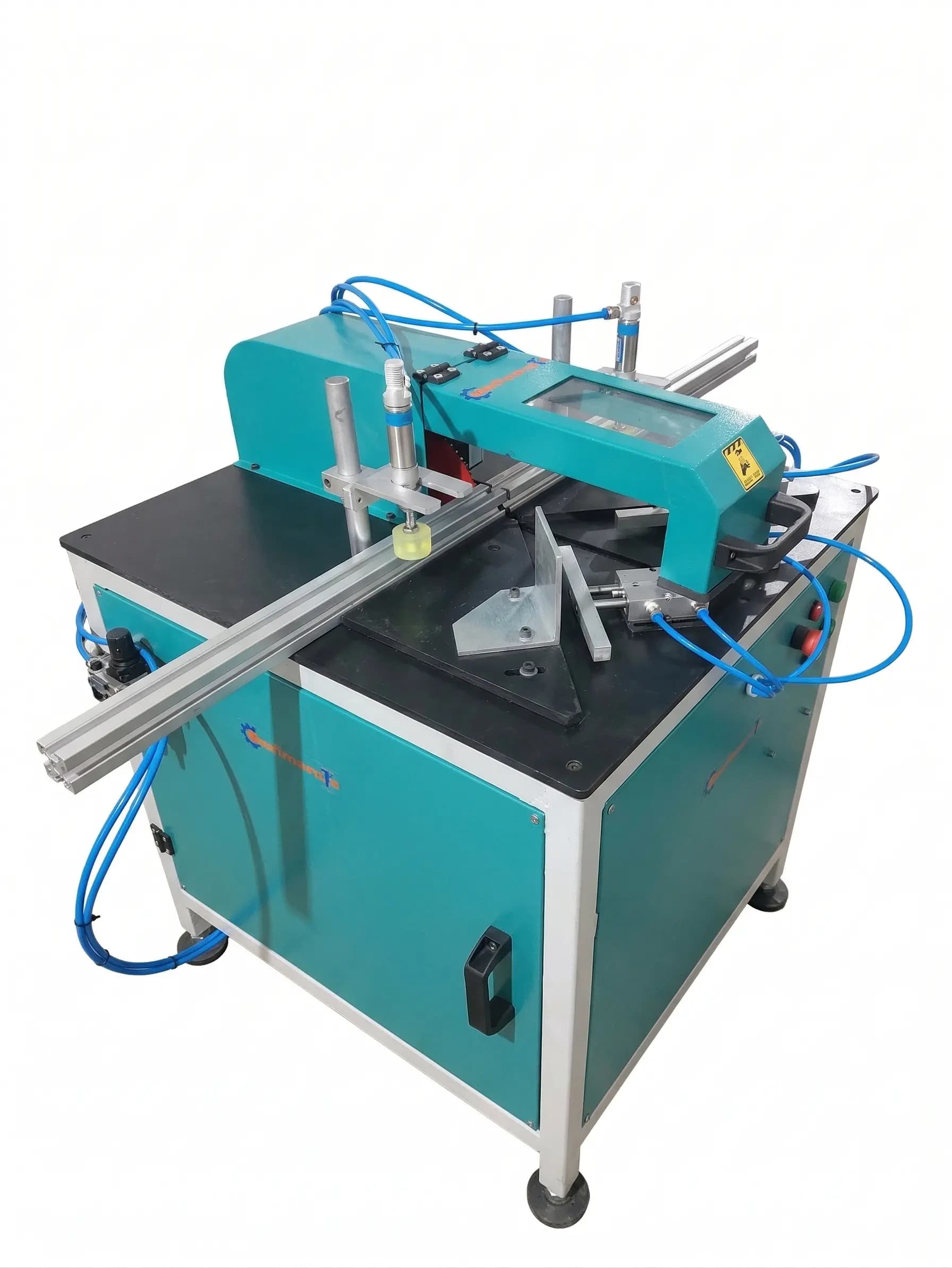
- Pneumatic Pressure Stabilization: For slimline sections, clamping pressure must be set between 6 and 8 bar. If the pressure is too low, the profile shifts; if too high, you risk deforming the thin-walled chamber. An automatic aluminium profile cutting machine often pairs well with routers that feature vertical and horizontal pneumatic clamps.
- Spindle Runout Verification: Use a dial indicator to check spindle runout. Anything exceeding 0.02mm will cause slot widening and misalignment. This is a common issue in older aluminum cutting machine models found in smaller workshops.
- Coolant Atomization: Never dry-cut aluminium. Use a pulse-mist spray system with a high-quality lubricant to prevent aluminium galling. Galling leads to chip build-up on the bit, which pushes the tool away from the intended path.
- Bit Geometry Selection: For high-speed applications, use a 5mm or 8mm single-flute spiral upcut bit. This geometry ensures that chips are evacuated upward and away from the slot, preventing recutting and heat accumulation.
Why Manual Punching Machines Often Fail Slimline Tests
While a manual punching machine is an essential tool for high-volume drainage slots in standard sections, it often fails the 'slimline test.' Slimline profiles have thinner walls and more complex internal webbing. The sheer force of a manual punch can cause 'oil-canning' or wall deformation, leading to slots that look aligned but are physically distorted. This is why Bangalore’s leading fabricators are moving toward a dedicated aluminum window fabrication machinery setup that includes high-speed routing over traditional punching.
If you are evaluating an aluminium cutter machine price, consider the long-term ROI of a router versus a punch. A router offers the flexibility to handle multiple profile brands without needing a new die set for every change in profile geometry. This is particularly relevant when using industrial aluminum door manufacturing equipment to produce premium bi-fold or lift-and-slide systems.
Comparison: Manual vs. Automatic Routing Precision
| Feature | Manual Copy Router | High-Speed Pneumatic Router | CNC Profile Center |
|---|---|---|---|
| RPM Range | 6,000 - 10,000 | 12,000 - 18,000 | 18,000 - 24,000 |
| Clamping | Manual Screw | Dual Pneumatic | Triple Pneumatic |
| Tolerance | +/- 0.5mm | +/- 0.1mm | +/- 0.05mm |
| Ideal For | Small Repair Shops | Commercial Fabricators | Industrial Units |
Troubleshooting Common Routing Mistakes
One of the most common mistakes we see in Bangalore workshops is the use of 12-inch aluminium cutting machine blades for tasks that require a dedicated end miller or router. You cannot 'fudge' a lock slot with a saw blade. Another frequent error is ignoring the 'play' in the copy router's tracer pin. If the tracer pin is even 0.2mm smaller than the router bit diameter, your slots will be undersized and misaligned relative to the hardware.
When setting up a upvc window manufacturing machine or an aluminium window fabrication machine, always verify the ground level of your workshop. In many older industrial areas, uneven flooring leads to machine frame torsion. This torsion subtly tilts the router head, meaning the slot on the top of the profile won't line up with the slot on the bottom—a nightmare for 'through-hole' machining.
Essential Hardware for the Bangalore Market
Whether you are looking for a upvc machinery manufacturer or a supplier of heavy duty aluminium profile end milling machine, the focus must be on rigidity. Bangalore’s temperature fluctuations can actually affect the expansion of aluminium profiles during long production runs. We recommend keeping your upvc windows manufacturing machine and aluminium tools in a temperature-controlled or well-ventilated environment to maintain material stability.
For those asking about the automatic upvc window plant cost India or the aluminium cutting machine price, remember that the machine is only as good as its service support. Mechnovate provides extensive training on aluminium profile punching machine operation and maintenance to ensure your team isn't just running machines, but mastering them. From an automatic double head cutting machine price India to simple manual tools, precision is the only currency that matters in the high-end Bangalore market.
FAQ: Expert Solutions for Fabricators
Q: Can I use the same router for uPVC and Aluminium? No. While a upvc window machine operates at lower RPMs and handles softer material, aluminium requires higher torque, specialized cooling, and much higher spindle speeds. Using a uPVC machine for aluminium will burn out the motor and produce jagged, misaligned slots.
Q: What is the ideal bit for routing slimline profiles? We recommend a 5mm HSS-E or Solid Carbide single-flute spiral bit. The 'spiral upcut' action is essential for evacuating chips from the deep, narrow chambers found in slimline designs.
Q: How do I stop my copy router from vibrating? First, check the machine leveling. Second, inspect the motor bearings—if you hear a high-pitched whine, they need replacement. Finally, ensure your profile is supported by outfeed tables so that the weight of the profile isn't pulling against the clamps.
Q: Is it worth investing in a CNC router for a small Bangalore workshop? If you are processing more than 30 frames a day, a CNC uPVC window fabrication machine or aluminium center will pay for itself in labor savings and zero-error production within 18 months. For smaller volumes, a high-quality manual copy router with pneumatic clamping is the 'sweet spot' for ROI.
Get more articles like this
Follow Mechnovate on Google to see our guides in Google Discover & News