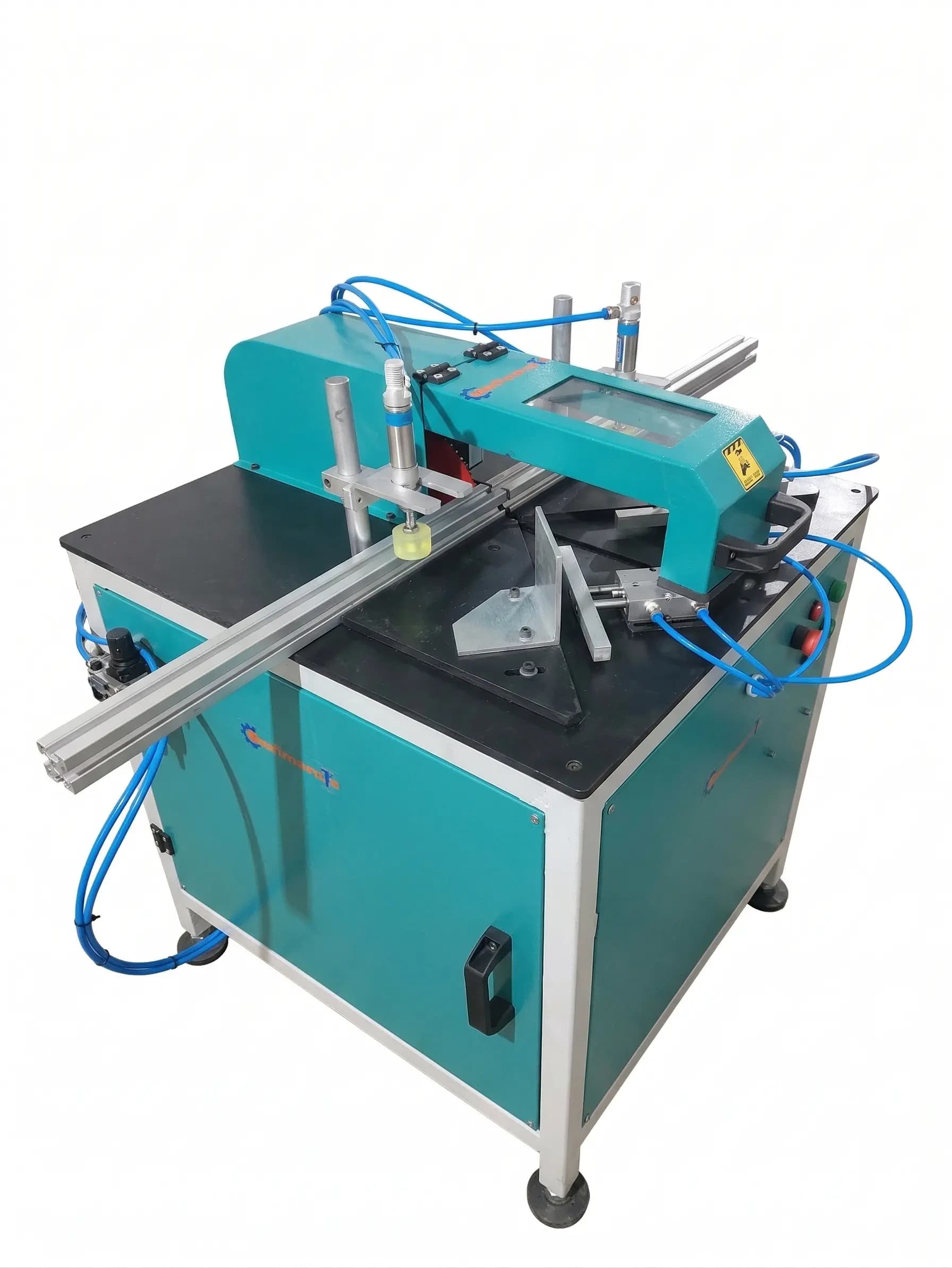
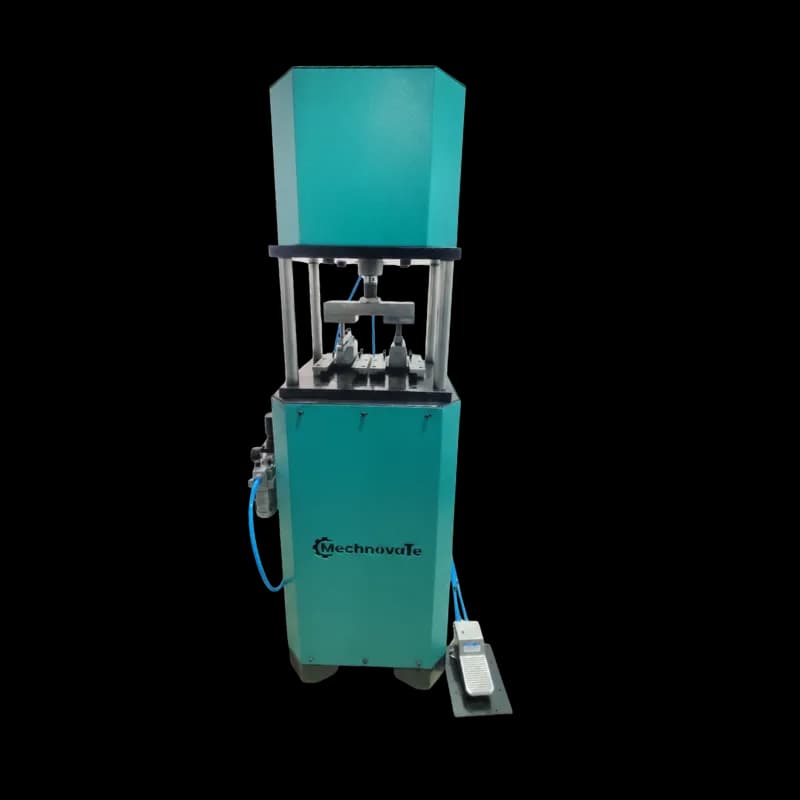
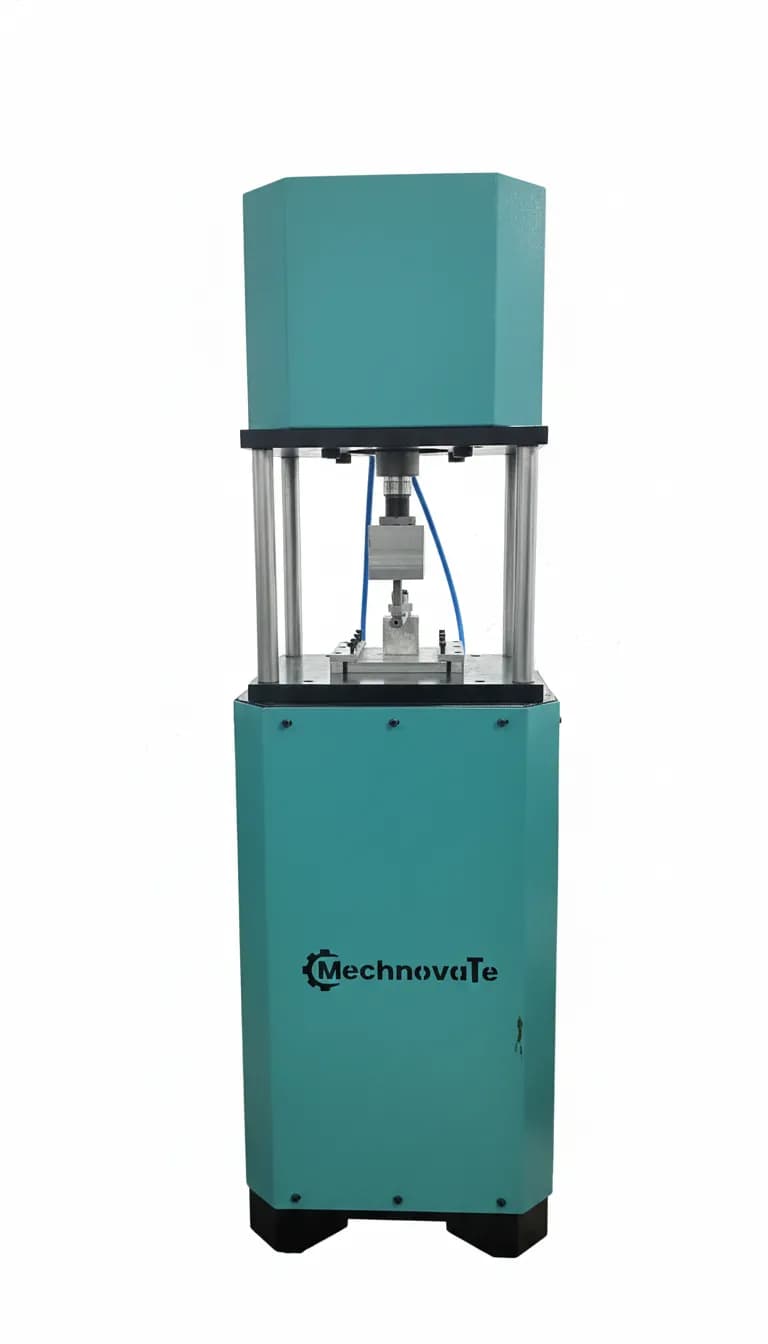
Double Head Cutting Machine Price and ROI Guide | Hyderabad
Direct ROI: Price vs. Performance for Hyderabad Fabricators
In Hyderabad’s rapidly verticalizing skyline—from Gachibowli to Financial District—the margin for error in window fabrication has effectively vanished. For high-rise projects exceeding 20 floors, wind loads demand tolerances that manual cutting simply cannot meet. An automatic double head cutting machine price in India typically ranges from ₹4,50,000 for pneumatic models to over ₹12,00,000 for full CNC configurations, but the real metric is the payback period.
In our Mechnovate testing labs, we compared a standard 12-inch manual aluminium cutting machine against our heavy-duty automatic double head cutting machine. The results were stark: manual processing resulted in a 7.5% material waste due to measurement errors and 'double-cutting,' whereas the automatic system maintained a waste threshold below 1.2%. For a mid-sized Hyderabad workshop processing 500kg of profile daily, this 6% saving translates to approximately ₹18,000 per week in material recovery alone.
Case Study: Scaling Output in a Hyderabad High-Rise Project
Last year, we assisted a Tier-2 fabricator in Uppal who was struggling with a 400-unit window contract for a luxury residential tower. They were initially using two single cutting stations. Their rejection rate at the site was nearly 14% because the joints weren't perfectly flush, causing air leakage and whistle sounds at high altitudes.
We implemented a 45-degree double head cutting machine with 500mm carbide-tipped blades. Over a 6-week period, the following metrics were recorded:
- Output Increase: From 22 frames per 8-hour shift to 68 frames.
- Precision: Consistency of +/- 0.1mm across 1,000 cuts.
- Labor Efficiency: Reduced from 4 operators (2 per machine) to 1 lead operator and 1 helper.
- Result: The fabricator achieved a full ROI on the machine in exactly 7.4 months based on labor savings and zero onsite rejections.
Technical Specifications That Matter for Precision Engineering
When evaluating an aluminum cutting machine or uPVC windows making machine, don't just look at the price tag. You must audit the engineering specs against ISO 9001 and BS EN 12020 standards. At Mechnovate, we focus on several critical parameters that distinguish industrial-grade equipment from budget alternatives:
- Blade Diameter and RPM: High-rise profiles often feature thicker walls (2.0mm to 3.0mm). A 500mm blade running at 2800-3200 RPM ensures a clean, burr-free cut. An aluminium cutting machine 12 inch is often insufficient for modern thermal break profiles.
- Feeding System: Look for hydro-pneumatic feed cylinders. These provide the smooth, consistent pressure required to prevent 'chatter' marks on the profile face.
- Degree Accuracy: The machine must toggle between 45 and 90 degrees automatically with a repeatability of 0.05 degrees. Any deviation here ruins the structural integrity of the corner crimping process.
- Air Pressure Stability: These machines require a stable 6-8 bar pressure. If your facility has fluctuations, the clamping force might drop, leading to profile slippage during the cut.
The Cost of Setting Up a uPVC Window Manufacturing Unit in India
If you are calculating the cost of setting up uPVC window manufacturing unit in India, the cutting station is your largest capital expenditure, but it's also your most important. A complete line for a startup usually includes:
- Automatic Double Head Cutting Saw: ₹5.5L - ₹8L
- uPVC Welding Machine: ₹1.8L - ₹3L
- Copy Router Machine: ₹65k - ₹95k
- Aluminium Punching Machine (for drainage): ₹45k - ₹80k
While the total investment for a reliable upvc window manufacturing machine setup is roughly ₹12L - ₹18L, attempting to lower this by choosing a manual punching machine or a local 12-inch cutter often backfires. In Hyderabad's competitive market, the speed of delivery is your primary competitive advantage. A high-speed head cutting machine allows you to bid on larger projects with shorter timelines.
Common Mistakes Fabricators Make During Procurement
As a senior engineer, I see the same three mistakes repeated across India:
- Undersizing the Blade: Buying an aluminium cutter machine 12 inch when you plan to cut curtain wall profiles. This leads to overheating and motor burnout.
- Ignoring the Bed Length: For high-rise windows, you often need lengths over 4000mm. Ensure the upvc machine price list you are reviewing includes a digital display for length measurement to eliminate tape-measure errors.
- Neglecting After-Sales Service: A uPVC window machine service center in Tamil Nadu or Telangana is vital. If a sensor fails on your automatic aluminium window production line, you need a technician on-site within 24 hours to avoid stalling your entire production.
Why Mechnovate is the Authority in Window Machinery
We don't just sell an aluminium profile cutting machine; we provide the engineering logic behind it. Our machines are designed for the Indian climate—handling the dust of Hyderabad's construction zones and the heat of its summers without losing calibration. Whether you are looking for a heavy duty aluminium profile end milling machine or a CNC uPVC window corner cleaning machine price India, our equipment is built with high-grade cast iron beds and Japanese electronics for long-term stability.
FAQ: Critical Questions for Fabricators
Q: What is the difference between a pneumatic and a CNC double head cutter? A: A pneumatic machine uses mechanical stops to set lengths, which is fine for standard sizes. A CNC aluminium profile cutting machine allows the operator to upload a cutting list from a USB, which automatically moves the heads to the exact dimension, reducing human error to zero.
Q: Can I use the same machine for both Aluminium and uPVC? A: Yes, but the blade type must change. Aluminium requires a TCG (Triple Chip Grind) blade with a cooling spray system, while uPVC is typically cut dry with a different tooth geometry. Most Mechnovate upvc windows machinery can be retrofitted with mist sprayers for aluminium versatility.
Q: How often should I calibrate my head cutter machine? A: For high-rise projects, we recommend a 90-degree and 45-degree check every morning. A full internal calibration should be performed monthly by your maintenance team to ensure the carriage rails remain parallel and the pneumatic clamps are applying uniform pressure.
Get more articles like this
Follow Mechnovate on Google to see our guides in Google Discover & News