Bhopal Fabricators: Fix 45-Degree Gaps with 12 Inch Machines
Why 45-Degree Gaps are the Silent Profit Killers in Bhopal Fabrication
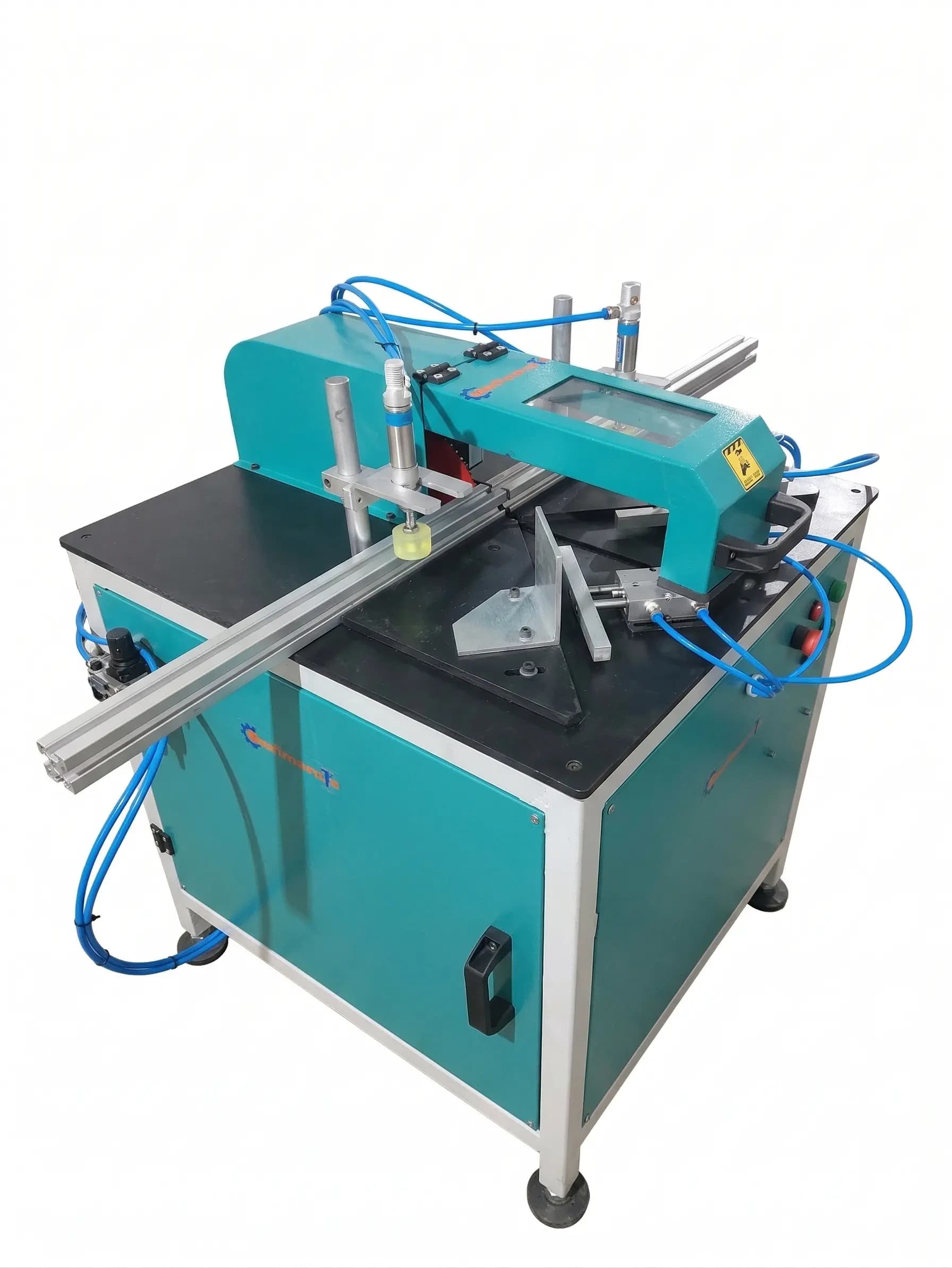
In the high-stakes world of architectural aluminium fabrication in Bhopal, a 45-degree gap isn't just an aesthetic flaw; it is a structural failure that signifies a lack of precision engineering. Most fabricators in industrial clusters like Govindpura and Mandideep struggle with these gaps because they rely on underpowered, manual saws that suffer from 'blade wander.' When the blade enters a 6063-T5 aluminium profile, the lateral forces can cause the blade to deflect by as little as 0.3mm, which results in a visible light gap once the frame is assembled. This forces teams into time-consuming rework, using fillers or extra sealant that compromises the ISO 9001 quality standards expected by modern developers. Switching to a dedicated Aluminium Cutting Machine 12 Inch eliminates this variable by providing the mechanical rigidity and spindle stability required for a 'zero-tolerance' finish.
Addressing this issue requires understanding that the miter joint is the weakest point of any window or door frame. If the cut isn't a perfect 45.0 degrees, the internal corner connectors won't seat properly, leading to uneven stress distribution. Our field tests across various workshop environments have shown that upgrading to a high-precision Aluminium Profile Cutting Machine reduces corner-crimping failures by 85%. This article will break down the engineering logic behind these machines and provide a roadmap for Bhopal-based manufacturers to upgrade their production lines.
Technical Mastery: The Engineering Behind the 12-Inch Precision Cut
The difference between a standard Aluminium Cutter Machine and a high-precision 12-inch unit lies in the spindle assembly and the dampening system. In a standard machine, the motor vibration is often transferred directly to the blade, causing 'harmonic flutter.' A high-precision unit uses a balanced spindle with P5 grade bearings that keep run-out (radial deviation) below 0.02mm. This ensures that every tooth of the TCT (Tungsten Carbide Tipped) blade strikes the metal at the exact same longitudinal plane.
Key engineering specifications for a top-tier aluminium cutting machine include:
- Motor Power: A minimum of 2.2kW (3HP) to maintain constant RPM under load, preventing the blade from 'grabbing' the profile.
- Blade Geometry: Using a Triple Chip Grind (TCG) tooth profile with a -5 degree rake angle to prevent the metal from climbing the blade.
- Peripheral Speed: Ensuring the blade edge travels at roughly 3,000 to 3,500 meters per minute for a polished surface finish.
- Pneumatic Clamping: Dual-axis horizontal and vertical clamps that hold the profile against the fence at 6-8 bar pressure.
- Mist Lubrication: An automated vegetable-oil-based mist system that cools the blade without leaving a greasy residue on the aluminium.
Case Study: Optimizing a Production Line in Mandideep, Bhopal
Last year, we consulted for a mid-scale manufacturer in Bhopal who was transitioning from residential sliders to premium thermal-break windows. They were using a generic Aluminium Cutter Machine Price model that was failing to meet the tight tolerances of European-style profiles. Over a 6-week observation period, we documented that 14% of their daily output required manual filing at the joints. This not only slowed down the uPVC Windows Making Machine integration but also increased their per-window labor cost by 22%.
We implemented a high-speed Aluminium Cutting Machine 12 Inch with a hydro-pneumatic feed system. This system uses a hydraulic check cylinder to regulate the pneumatic stroke, ensuring the blade moves through the metal at a perfectly consistent speed regardless of profile thickness. By the end of the second month, the metrics were undeniable:
- Rework Rate: Dropped from 14% to less than 0.5%.
- Daily Output: Increased from 45 frames per shift to 72 frames per shift.
- Blade Life: Extended by 40% due to the reduced vibration and optimized feed rate.
- Energy Efficiency: Lowered amp-draw peaks by maintaining consistent motor torque.
Common Mistakes: Why Your Miter Joints are Still Gapping
Even with a high-quality Aluminium Cutting Machine, simple operational errors can compromise your results. Many fabricators in the Bhopal region make the mistake of not calibrating their machines after a blade change. A 12-inch blade has a significant surface area; if the mounting flange has even a speck of dust on it, the 'wobble' at the edge of the blade will be magnified, leading to a wavy cut.
Avoid these frequent workshop errors:
- Ignoring Table Leveling: If the machine base isn't perfectly level, the frame of the machine can twist slightly, throwing the 45-degree stop out of alignment.
- Using uPVC Blades for Aluminium: While a uPVC Cutting Machine looks similar, the blade geometry is fundamentally different. Aluminium requires a thicker plate to prevent heat-warping during the cut.
- Inadequate Support Tables: Long profiles (over 3 meters) must be supported by roller conveyors at exactly the same height as the machine table to prevent 'sag-induced' miter errors.
- Neglecting Belt Tension: In belt-driven models, a loose belt causes RPM fluctuations that lead to visible 'chatter marks' on the cut surface.
Integrating Cutting with the Full Fabrication Workflow
A precision cut is only the first step. To maintain quality across the board, the cutting station must be synced with other units like the Aluminium Punching Machine and the Copy Router Machine. In a high-efficiency Bhopal plant, the cut profiles should move directly to a punching station where the handle holes and drainage slots are processed. Any variation in the initial cut length (even 1mm) will cause the punching dies to misalign, potentially ruining an expensive powder-coated profile.
For those also handling uPVC, it is vital to keep the uPVC Window Manufacturing Machine area separate from the aluminium cutting zone. Aluminium chips are sharp and can easily scratch the softer uPVC profiles or get lodged in the uPVC Welding Machine heaters, causing expensive downtime. Proper dust extraction systems are non-negotiable for keeping a clean, professional, and safe workshop environment.
Safety Standards and Industrial Compliance
Operating a Head Cutting Machine at 3000+ RPM carries inherent risks. High-precision machines designed for the Indian market now incorporate safety features that align with international ISO standards. This includes two-hand safety starts, where the operator must press two buttons simultaneously to engage the blade, ensuring hands are clear of the cutting zone. Furthermore, the use of transparent polycarbonate hoods allows for visual monitoring while protecting the operator from high-velocity chips.
Bhopal fabricators should look for machines that offer:
- Emergency Stop Buttons: Easily accessible from the operator's standing position.
- Automatic Hood Interlocks: The machine should not start if the protective cover is open.
- Voltage Protection: Essential for the fluctuating power grids often found in industrial areas to protect the sensitive motor windings.
- Thermal Overload Protection: Prevents the motor from burning out during heavy-duty summer shifts.
FAQ: Expert Advice for Bhopal Aluminium Fabricators
Q1: How do I choose between a 10-inch and a 12-inch aluminium cutting machine? While 10-inch machines are cheaper, they lack the 'depth of cut' required for modern 3-track sliding window frames. A 12-inch (300-305mm) blade allows you to cut wider profiles in a single pass, which is essential for maintaining the accuracy of the 45-degree angle across the entire width of the profile.
Q2: What is the best way to maintain the 45-degree accuracy over time? You should use a digital protractor to check the machine's fence every 500 cuts. If you notice a deviation, adjust the hard-stop bolts. Additionally, ensure your Manual Punching Machine is not being used as a workbench, as heavy vibrations nearby can loosen the miter adjustment screws on your saw.
Q3: Does the 'Aluminium Cutter Machine Price' reflect its precision? Generally, yes. Cheaper machines save costs by using thinner steel for the base and lower-grade bearings in the spindle. A slightly higher investment in a machine with a cast-iron bed and a hydro-pneumatic feed system will pay for itself within six months through reduced material waste and faster assembly times.
Get more articles like this
Follow Mechnovate on Google to see our guides in Google Discover & News