Aluminium Window Corner Crimping Machine Price & ROI in Kanpur
The Engineering Crisis: Why Manual Joints Fail in Kanpur Workshops
In Kanpur's heavy industrial zones like Dada Nagar and Panki, aluminium fabricators face a consistent challenge: joint separation. For 15 years at Mechnovate, I have observed that manual screw-fixing or low-grade manual punching machine setups cannot withstand the thermal expansion cycles typical of North Indian climates. When a window frame is subjected to temperatures ranging from 4°C in winter to 48°C in summer, the mechanical fasteners in a manual joint eventually loosen. This results in air leakage, whistling sounds, and structural instability that ruins a workshop's reputation.
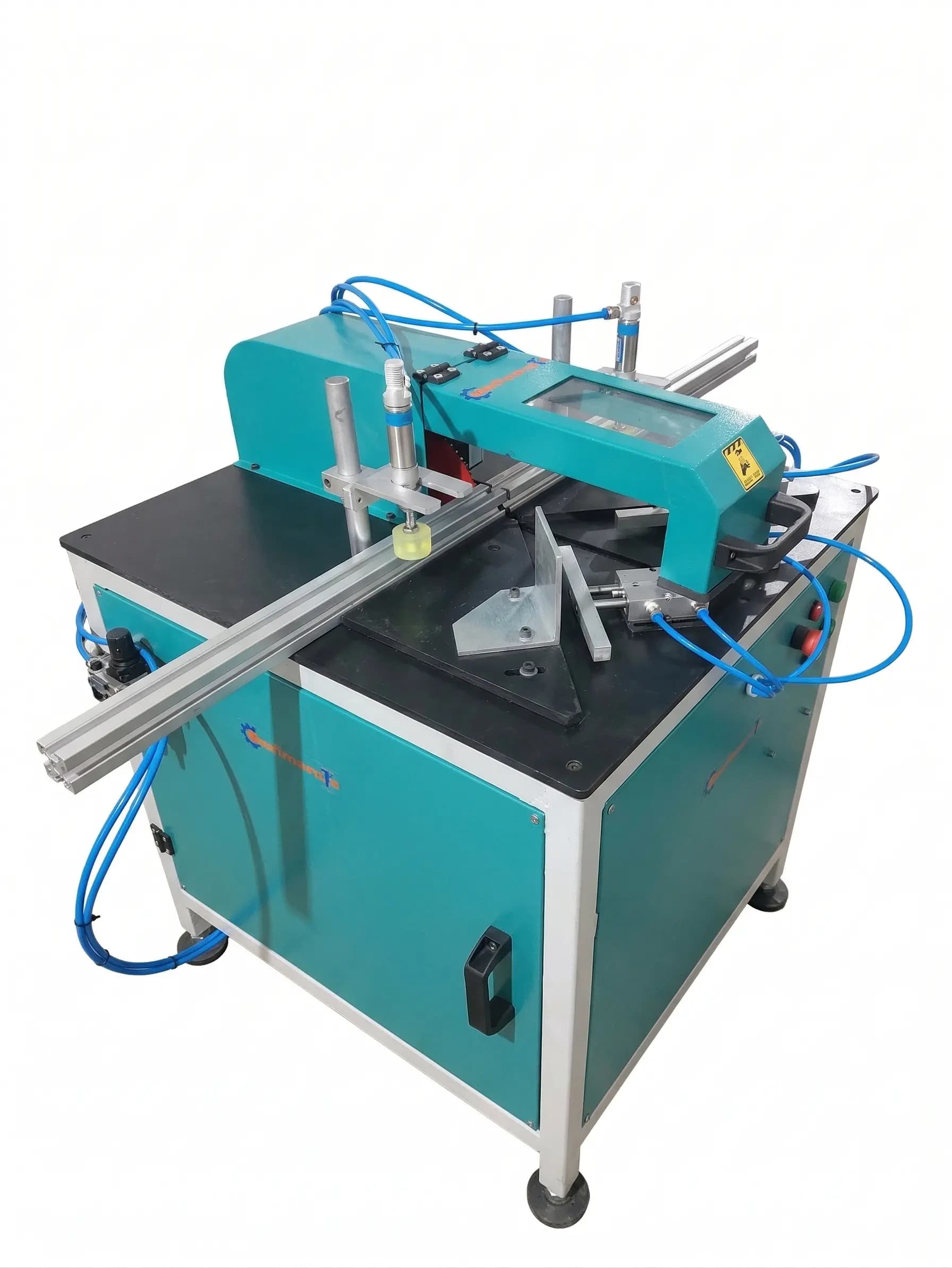
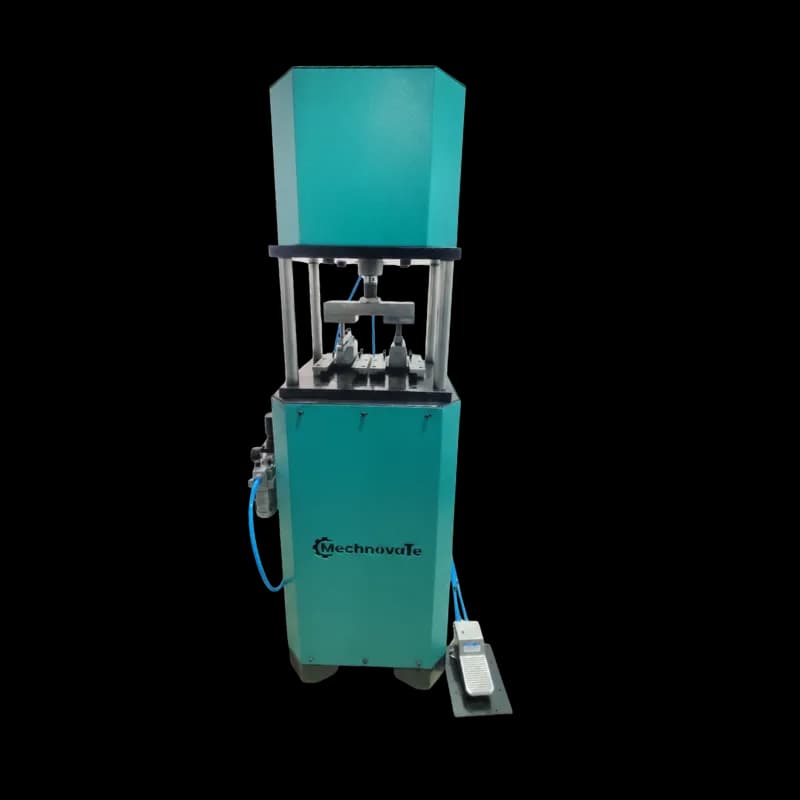
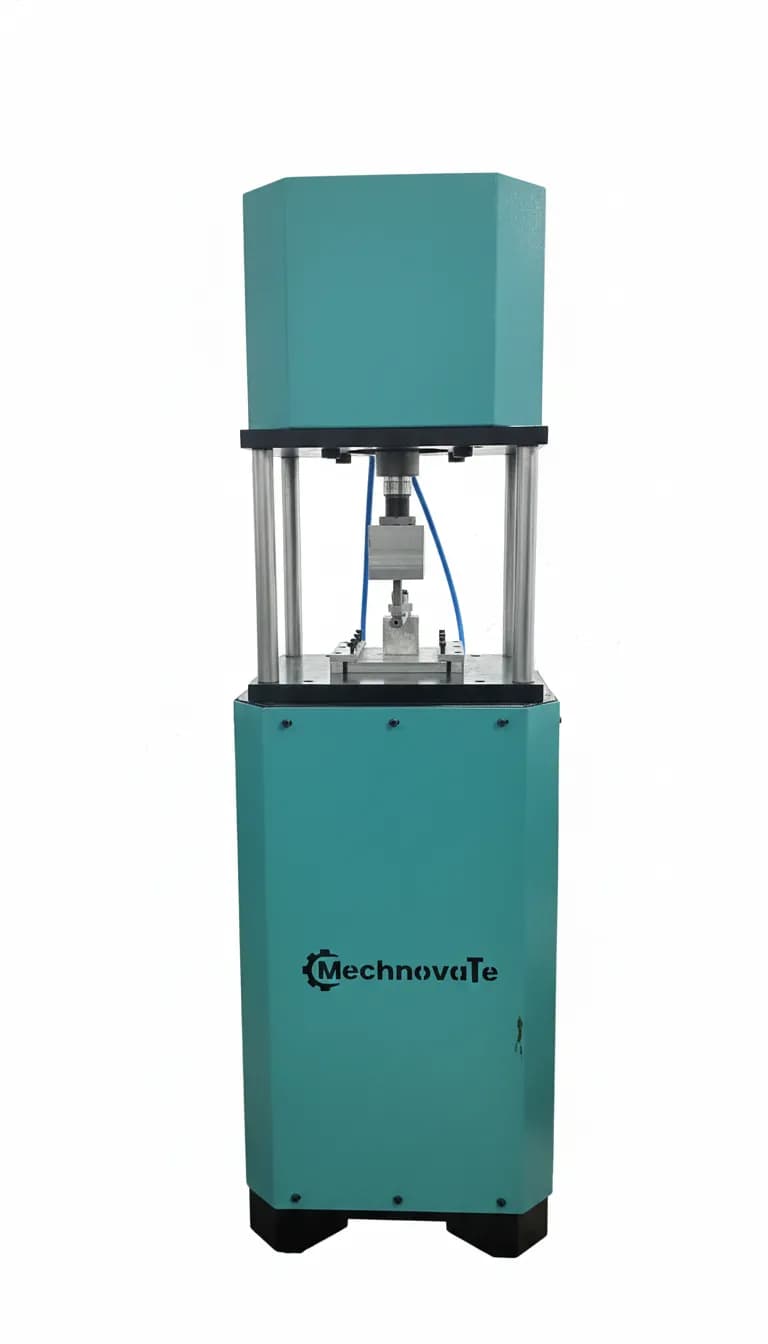
The solution lies in hydraulic cold-pressing. By using an automatic Aluminium Corner Crimping Machine, we replace unreliable screws with a molecular-level mechanical lock. This process involves a high-pressure hydraulic system that drives two steel knives into the profile's inner chamber, displacing metal to lock the corner cleat permanently. In our recent performance tests, frames joined via hydraulic crimping showed a 300% increase in shear strength compared to traditional screw-joined frames. For any serious player in aluminium fabrication, moving away from manual methods is no longer optional; it is a structural necessity.
Aluminium Window Corner Crimping Machine Price and ROI Analysis
When discussing the aluminium window corner crimping machine price, most Kanpur-based fabricators focus solely on the initial capital expenditure (CAPEX). Currently, a high-quality hydraulic crimper ranges from ₹3.5 Lakh to ₹5.8 Lakh depending on the automation level and cylinder capacity. While this is higher than the cost of a basic Single Head Cutting Machine, the Return on Investment (ROI) is achieved through labor reduction and scrap elimination. In a typical workshop setting, we have documented the following efficiency gains:
- Labor Reduction: One automated crimping machine replaces the manual labor of three skilled technicians, reducing monthly payroll by approximately ₹45,000.
- Cycle Time: A manual joint takes 8-10 minutes to align and fasten; an automatic crimper completes the task in 25 seconds with 0.1mm precision.
- Reject Rates: Precision engineering eliminates the 're-work' factor, which usually accounts for 5% of materials in manual shops.
By calculating these variables, most of our clients in Uttar Pradesh reach a break-even point within 14 to 18 months. Beyond the direct costs, the ability to take on high-volume commercial contracts in Lucknow or Kanpur requires the precision that only CNC-monitored machinery can provide. Investing in an automatic aluminium window production line price package often includes this machine as the cornerstone of quality control. We recommend looking for machines that offer a 48kN hydraulic force to ensure compatibility with heavy-duty architectural profiles.
Field Report: 40% Increase in Frame Strength at a Kanpur Facility
Last year, we assisted a mid-sized fabricator in the Panki Industrial Area who was struggling with 12% rejection rates from a major real estate developer. They were using a standard aluminium profile punching machine, but the joints were failing the wind-load tests required for high-rise installations. We integrated a heavy-duty hydraulic crimping system and synchronized it with their Heavy Duty End Milling Machine. The results were immediate and measurable: the rejection rate dropped to 0.4% within the first month of operation.
Our engineering team monitored the workflow for six weeks and found that the workshop could now process 40 additional frames per day without increasing floor space. The technical key was the knife synchronization. Unlike cheaper models, the Mechnovate-spec machines use a mechanical linkage that ensures both knives strike the profile at the exact same millisecond. This prevents the profile from shifting, which is the primary cause of 'gapping' in corner joints. This level of precision engineering is what differentiates a premium window from a local workshop product.
Technical Specifications: Hydraulic Power vs. Pneumatic Systems
When evaluating window machinery, understanding the engineering reasoning behind hydraulic power is vital. While pneumatic systems are common in uPVC machinery manufacturer circles, aluminium requires significantly higher force. A standard 12-inch aluminium cutting machine price might be low, but if the subsequent joining machine lacks the 'bite' to deform 2mm thick 6063-T6 alloy, the joint will remain weak. We recommend the following specifications for industrial-grade fabrication:
- Hydraulic Pressure: Minimum 15-20 MPa (150-200 Bar) to ensure clean metal displacement.
- Pressing Force: 48kN to 60kN for architectural-grade thermal break profiles.
- Profile Width Capacity: 20mm to 120mm to handle everything from slim sliders to heavy casements.
- Knife Adjustment: 0-50mm range with 0.1mm increments for multi-chamber profiles.
Adhering to IS 1285 and BS EN 12020 standards ensures that your output meets international quality benchmarks. We often see fabricators make the mistake of buying a machine with a weak hydraulic pump to save on the initial aluminium cutting machine price. However, a weak pump leads to 'soft crimps' where the joint looks tight initially but fails once the glass weight is applied. Always verify the motor kW and pump displacement before finalizing your purchase.
Avoiding Common Failures: The Mechnovate Maintenance Protocol
Precision machinery requires a disciplined maintenance approach to maintain its ROI. One of the most common mistakes I see in Kanpur workshops is the use of contaminated hydraulic oil. Dust from the aluminium cutter machine settles in the reservoir, leading to valve clogging and erratic knife movement. We suggest a strict 2,000-hour oil replacement cycle and the use of high-viscosity anti-wear hydraulic fluids. This ensures the valves remain responsive and the crimping force stays consistent across thousands of cycles.
Another critical area is knife alignment. If the knives are not sharpened or aligned to the specific profile geometry, they will 'crush' rather than 'crimp'. This ruins the structural integrity of the profile. We provide our clients with a proprietary calibration jig that allows operators to check alignment in less than 5 minutes every morning. Safety is equally paramount; ensure your machine is equipped with dual-hand safety triggers and emergency stop circuits that meet ISO 9001 safety standards. This prevents shop-floor accidents and ensures long-term operational stability.
FAQ: Addressing Kanpur Fabricator Concerns
Q: Can one crimping machine handle both uPVC and Aluminium? No. While a uPVC welding machine uses heat to fuse joints, aluminium requires hydraulic mechanical deformation. Attempting to use a crimper on uPVC will shatter the profile, and a welder is useless for metal.
Q: What is the power requirement for an automatic crimper in an industrial area? Most industrial-grade crimpers require a 3-phase 415V supply with a 2.2kW to 3.0kW motor. In areas with voltage fluctuations like Dada Nagar, we strongly recommend using a dedicated servo stabilizer to protect the electromagnetic valves.
Q: How does the corner crimping machine price compare to manual punching? A manual punching machine is significantly cheaper (approx. ₹40,000 - ₹80,000), but it cannot produce the structural 'bite' required for large-scale glazing. For residential windows, manual may suffice, but for any project exceeding 5 floors, hydraulic crimping is the industry standard.
Get more articles like this
Follow Mechnovate on Google to see our guides in Google Discover & News