Zero-Gap Joints: Automatic Corner Crimping in Surat
Why Surat's High-End Market Demands Zero-Gap Joint Precision
In the premium residential sectors of Surat, such as Vesu and Adajan, architects no longer accept visible gaps or structural instability in aluminium window frames. To achieve a zero-gap joint, you must move beyond manual punching and embrace a high-pressure, synchronized mechanical bond. At Mechnovate, we have seen that manual joining often results in a 0.5mm to 1.5mm variance, which leads to whistling sounds during high winds and water seepage during Gujarat’s intense monsoons. Upgrading to an Automatic Corner Crimping Machine is the only way to ensure the structural integrity and aesthetic finish required by ISO 9001 and BS EN 12020 standards.
The Engineering Behind the Perfect Corner: Hydraulic vs. Manual
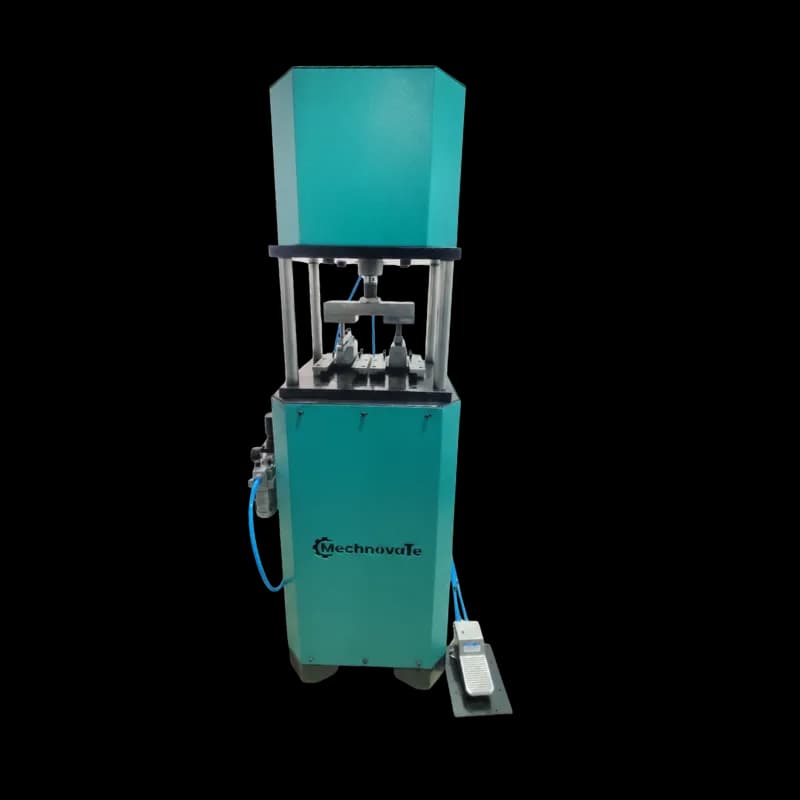
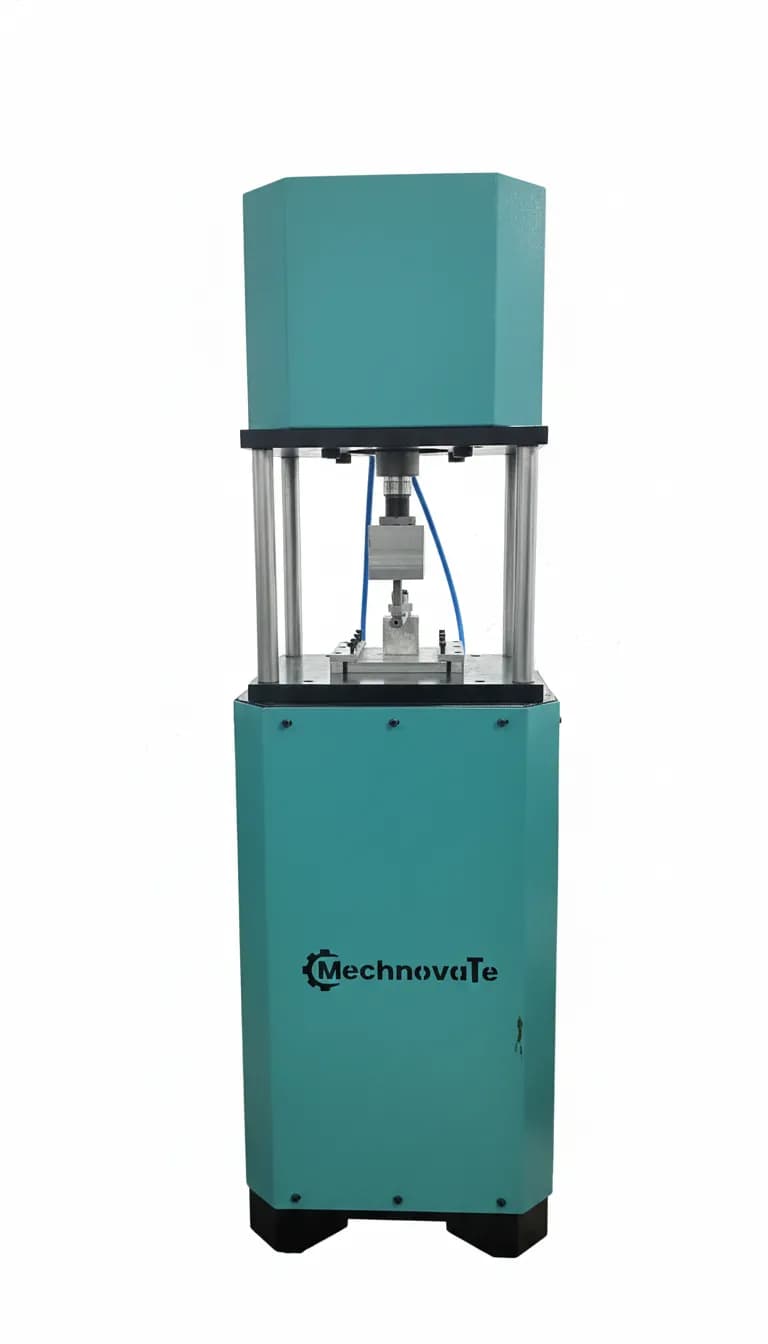
As a senior engineer with 15 years in the workshop, I can tell you that the secret to a zero-gap joint isn't just the machine; it's the hydraulic synchronization. Manual punching machines apply uneven force, often distorting the aluminium profile (6063-T6 alloy). An automatic corner crimper uses a heavy-duty hydraulic system providing up to 20kN of force. This force is distributed evenly across the corner key (cleat), creating a 'cold-weld' effect that locks the profiles together.
Key technical specifications to look for include:
- Crimping Force: Minimum 15-20 kN for heavy-duty profiles.
- Knife Adjustment: 3-axis independent adjustment for complex multi-chamber profiles.
- Pressure Rating: Stable 7-10 bar input for consistent hydraulic conversion.
- Profile Capacity: Ability to handle thicknesses up to 120mm for premium sliding systems.
Case Study: Increasing Output and Reducing Waste in a Surat Workshop
Last year, we worked with a leading aluminium fabrication unit in Surat that was struggling with a 12% rejection rate on their luxury window line. They were using a Manual Punching Machine for corner joining. Over a six-week implementation period, we swapped their process to an automatic corner crimping line.
The results were immediate and measurable:
- Waste Reduction: Cutting and joining waste dropped from 12% to less than 3%.
- Production Speed: Output increased from 15 frames per day to over 55 frames per day with the same labor force.
- Quality Consistency: 100% of joints passed the ASTM E331 water penetration test, compared to only 78% previously.
- Labor Savings: The need for secondary manual 'finishing' or filing of the joints was completely eliminated.
Step-by-Step: The Professional Crimping Process
To achieve the results mentioned above, our team follows a strict documentation process that we recommend to all our clients in Gujarat:
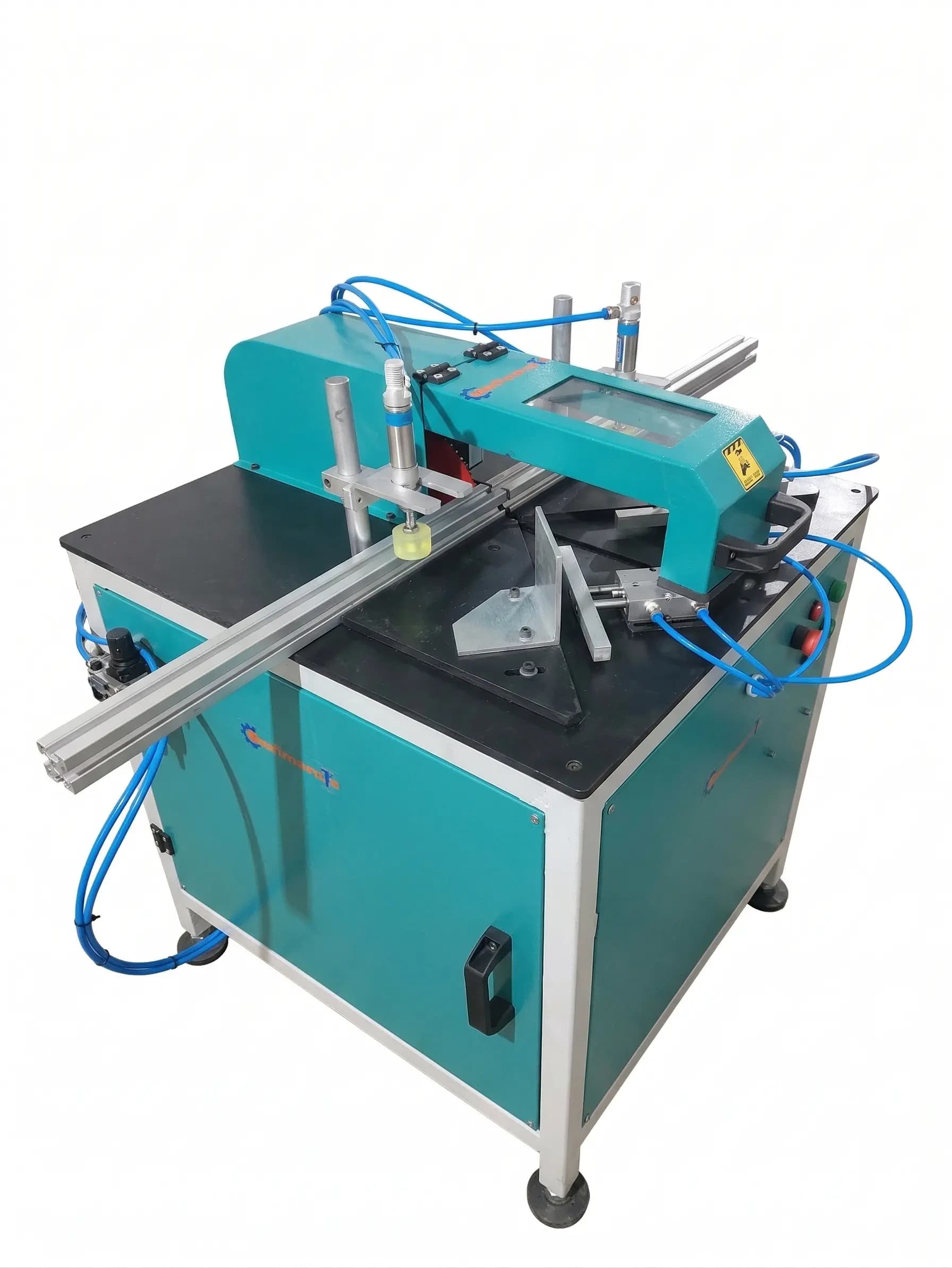
- Profile Preparation: Ensure the Single Head Cutting Machine is calibrated to exactly 45 degrees. Even a 0.1-degree error will be magnified during crimping.
- Cleat Insertion: Use high-quality aluminium cleats with a 0.2mm tolerance. Apply a professional-grade corner joint sealant (small-joint sealer) inside the chamber.
- Knife Positioning: Set the crimping knives to hit the cleat at the thickest part of the profile wall.
- Hydraulic Cycle: Activate the dual-pedal system. The internal blocks must clamp the profile first, followed by the simultaneous movement of the left and right crimping knives.
- Verification: Check the seam with a feeler gauge. A perfect joint should not allow a 0.05mm gauge to pass through.
Common Mistakes Fabricators Make with Corner Crimping
Even with an Automatic Corner Crimping Machine, errors occur if the fundamentals are ignored. One common mistake I see in Surat workshops is neglecting the hydraulic oil temperature. If the oil overheats (above 60°C), the viscosity drops, and your crimping force becomes inconsistent.
Other pitfalls include:
- Using the wrong knife thickness: Using a 5mm knife on a 3mm wall profile can cause the outer skin to crack.
- Ignoring Knife Alignment: If knives are not synchronized, one side of the joint will 'climb' over the other, creating a stepped edge.
- Inadequate Clamping: If the internal profile support isn't perfectly flush, the profile will rotate slightly during the high-pressure stroke, ruining the 90-degree alignment.
ROI Analysis: The Cost of Setting Up in Gujarat
When considering the automatic aluminium corner crimping machine price Gujarat fabricators often worry about the initial capital expenditure. However, when you factor in the reduction in skilled labor costs and the ability to bid for high-margin, 'Tier-1' developer projects, the machine typically pays for itself within 8 to 14 months. For a startup, I recommend a bundle that includes a heavy-duty Aluminium Cutting Machine 12 inch and an automatic crimper to ensure the entire production line matches the precision of the joints.
FAQ: Essential Questions for Surat Fabricators
Q1: Can I use one machine for both uPVC and Aluminium? No. uPVC windows require a uPVC Welding Machine which uses heat to fuse the corners. Aluminium requires mechanical crimping because the material does not melt at low temperatures like vinyl.
Q2: How often do the crimping knives need sharpening? In a standard 8-hour shift environment, we recommend checking knife sharpness every 6 months. Using dull knives increases the stress on the hydraulic pump and results in 'burrs' on the window frame.
Q3: What power supply is required for these machines? Most industrial corner crimpers in India run on 3-phase 415V power. Ensure your workshop in Surat has a stabilized power line to prevent damage to the PLC and electromagnetic valves.
Q4: Is it possible to crimp thermal-break profiles? Yes, but you must ensure your machine has adjustable internal supports to avoid crushing the polyamide strip. Our latest models are specifically designed for the high-end thermal-break systems popular in coastal Gujarat areas."}
Get more articles like this
Follow Mechnovate on Google to see our guides in Google Discover & News