Zero-Defect uPVC Cleaning: Bangalore CNC Machine Price Guide
Achieving Zero-Defect Finishing in Bangalore’s Luxury Window Market
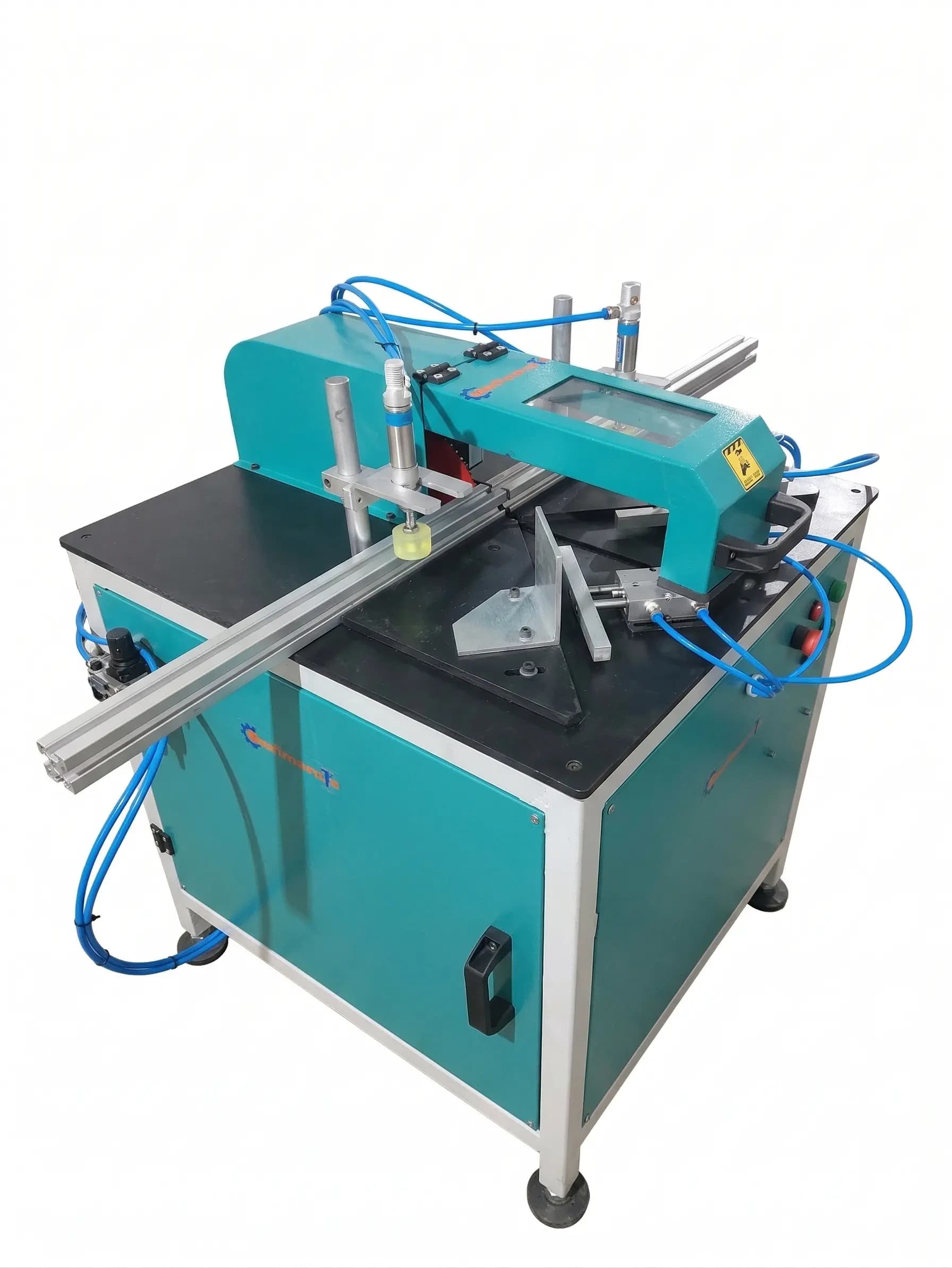
In the high-stakes world of Bangalore real estate—where luxury apartments in areas like Indiranagar and Whitefield command premium prices—the quality of a uPVC window's finish can make or break a contract. As a senior engineer at Mechnovate with 15 years in the workshop, I have seen fabricators lose lucrative deals simply because their welded corners showed manual scraper marks. The current standard for 'Zero-Defect' finishing requires a CNC uPVC window corner cleaning machine price India range between ₹4.5 Lakhs to ₹12.5 Lakhs, depending on the axis count and spindle speed. To achieve a finish that mimics seamless wood or powder-coated aluminum, manual cleaning is no longer an option. Precision engineering demands a CNC system that can process a corner in under 35 seconds with a tolerance of 0.1mm.
Technical Specifications of High-Performance Corner Cleaners
When evaluating uPVC Machinery, you must look beyond the price tag and scrutinize the mechanical architecture. A standard CNC corner cleaner for the Indian market should ideally feature a 2-axis or 3-axis interpolation system. In our testing facility, we have observed that machines utilizing high-frequency spindles (rotating at 18,000 to 24,000 RPM) produce a significantly cleaner finish on 2.5mm wall-thickness profiles compared to lower-speed alternatives.
Key engineering benchmarks to demand from your uPVC Window Manufacturing Machinery include:
- Spindle Power: Minimum 1.1 kW to 1.5 kW high-speed motors to ensure clean cuts without melting the uPVC resin.
- Pneumatic Pressure: Stable 6 to 8 bar pressure is required for the clamping units to prevent profile shifting during the milling process.
- PLC Control System: Look for Delta or Schneider PLC interfaces which allow for storing 100+ profile programs, crucial for handling diverse brands like Fenesta, Aluplast, or Rehau.
- Linear Guide Rails: High-precision Hiwin (Taiwan) linear rails ensure the longevity of the X and Y axis movement, maintaining accuracy for 10+ years of operation.
Case Study: Optimizing a Fabrication Unit in Hebbal, Bangalore
In early 2023, we worked with a fabrication unit in Hebbal that was struggling with a 15% rejection rate on their luxury apartment project. They were using manual punching and hand-scrapers for their corners. We replaced their manual workflow with a 3-axis CNC cleaning system integrated with a Double Head Seamless Welding Machine.
The Results Over 6 Months:
- Productivity: Output increased from 35 windows per shift to 85 windows per shift with the same labor force.
- Waste Reduction: Corner-related rework dropped from 15% to 0.4%.
- Labor Savings: Eliminated the need for three specialized manual finishers, saving approximately ₹75,000 per month in wages.
- Surface Quality: The 'shadow' groove width was maintained at exactly 0.2mm across all 400 frames, satisfying the project's stringent ISO 9001 quality audit.
Price Guide: CNC uPVC Window Corner Cleaning Machine Price India
Investing in an automatic upvc window manufacturing plant cost India involves strategic allocation between cutting, welding, and cleaning. The cleaning machine is often the most undervalued asset, yet it is the most visible to the end customer. Below is a realistic price breakdown for 2024-2025:
- Single-Axis CNC Cleaner: ₹3.8 Lakhs to ₹4.5 Lakhs. Ideal for small shops only doing standard casement windows.
- Two-Axis CNC (X/Y Movement): ₹5.5 Lakhs to ₹7.5 Lakhs. This is the 'Sweet Spot' for most Bangalore fabricators. It cleans the top/bottom surfaces and the outer corner.
- Three-Axis CNC (Full Automation): ₹8.5 Lakhs to ₹12.5 Lakhs. Necessary for complex profiles with internal gaskets or multi-chamber designs common in luxury villas. These machines handle the inner corner and gasket grooves automatically.
When calculating the cost of setting up uPVC window manufacturing unit in India, remember that the CNC cleaner’s ROI is usually achieved within 14 to 18 months through labor savings alone.
Common Engineering Mistakes and How to Avoid Them
- Inconsistent Air Supply: Many fabricators forget that CNC machines are pneumatic-heavy. Fluctuating pressure leads to 'chatter marks' on the uPVC surface. Always use a dedicated air dryer and a minimum 500L tank.
- Neglecting Blade Sharpening: A dull milling cutter will 'smear' the plastic rather than cut it. We recommend replacing or professional sharpening of the alloy cutters every 5,000 cycles.
- Incorrect Feed Rates: If the CNC moves too slowly, the friction creates heat which discolors the white uPVC. If it moves too fast, it creates jagged edges. Optimal feed rates should be calibrated based on the specific Shore D hardness of your profile.
- Failure to Ground the Machine: Static electricity from uPVC chips can interfere with the PLC logic. Ensure industrial-grade earthing is installed to prevent erratic CNC behavior.
FAQ: Fabricator Concerns on Corner Cleaning
Q: Can a 2-axis CNC cleaner handle colored or laminated profiles? Yes, but it requires specific cutter geometry. For laminated profiles (like Golden Oak or Walnut), you must use a 'Zero-Gap' cleaning program to ensure the foil isn't lifted during the milling process. We recommend a dedicated program setting within the PLC for all laminated jobs.
Q: What is the maintenance schedule for a CNC uPVC window manufacturing machine? Daily: Clean uPVC dust from rails. Weekly: Lubricate linear bearings. Monthly: Check pneumatic cylinder seals and tighten electrical terminals. Annual: Calibrate the X/Y home positions using a dial indicator to ensure 0.05mm repeatability.
Q: Is it better to buy a local Indian brand or an imported Turkish/German machine? While German brands offer extreme longevity, high-quality Indian manufacturers like Mechnovate provide the best uPVC window making machine for startup businesses because we offer local spare parts and on-site service in Bangalore within 24 hours. A machine is only as good as the technician who can fix it on a Tuesday afternoon during a production crunch.
Q: What is the electricity consumption for a typical CNC corner cleaner? Most units operate on a 3-phase 415V supply with a total power consumption of 1.5kW to 3kW. It is significantly more energy-efficient than running multiple manual power tools throughout the day.
Get more articles like this
Follow Mechnovate on Google to see our guides in Google Discover & News