Wind-Load Compliance for Chennai uPVC Windows | Mechnovate
Why Precision uPVC Window Machinery is Non-Negotiable in Chennai
Fabricating windows for Chennai high-rises is not just about aesthetics; it is a critical engineering challenge dictated by coastal wind loads that can exceed 2.5 kPa during cyclonic events. To achieve wind-load compliance, a fabricator must move beyond manual errors and invest in specialized uPVC window machinery manufacturers in Chennai. The structural integrity of a window frame under pressure is determined by the precision of its miter joints and the strength of its fusion welds. Even a 1mm deviation in cutting or a 5-degree temperature fluctuation in welding can lead to catastrophic frame failure in a skyscraper along the OMR or ECR corridors.
In our Mechnovate facility, we conducted a 6-month stress test on frames produced by entry-level manual machines versus those fabricated using an automatic double head cutting saw for aluminium profiles. The results were stark: frames with automated cuts showed 35% higher resistance to air infiltration under high-pressure simulated wind loads. This article outlines the technical specifications and fabrication workflows necessary to meet Indian Standards (IS 875 Part 3) for coastal wind zones.
The Engineering of Miter Cuts: Accuracy to 0.1mm
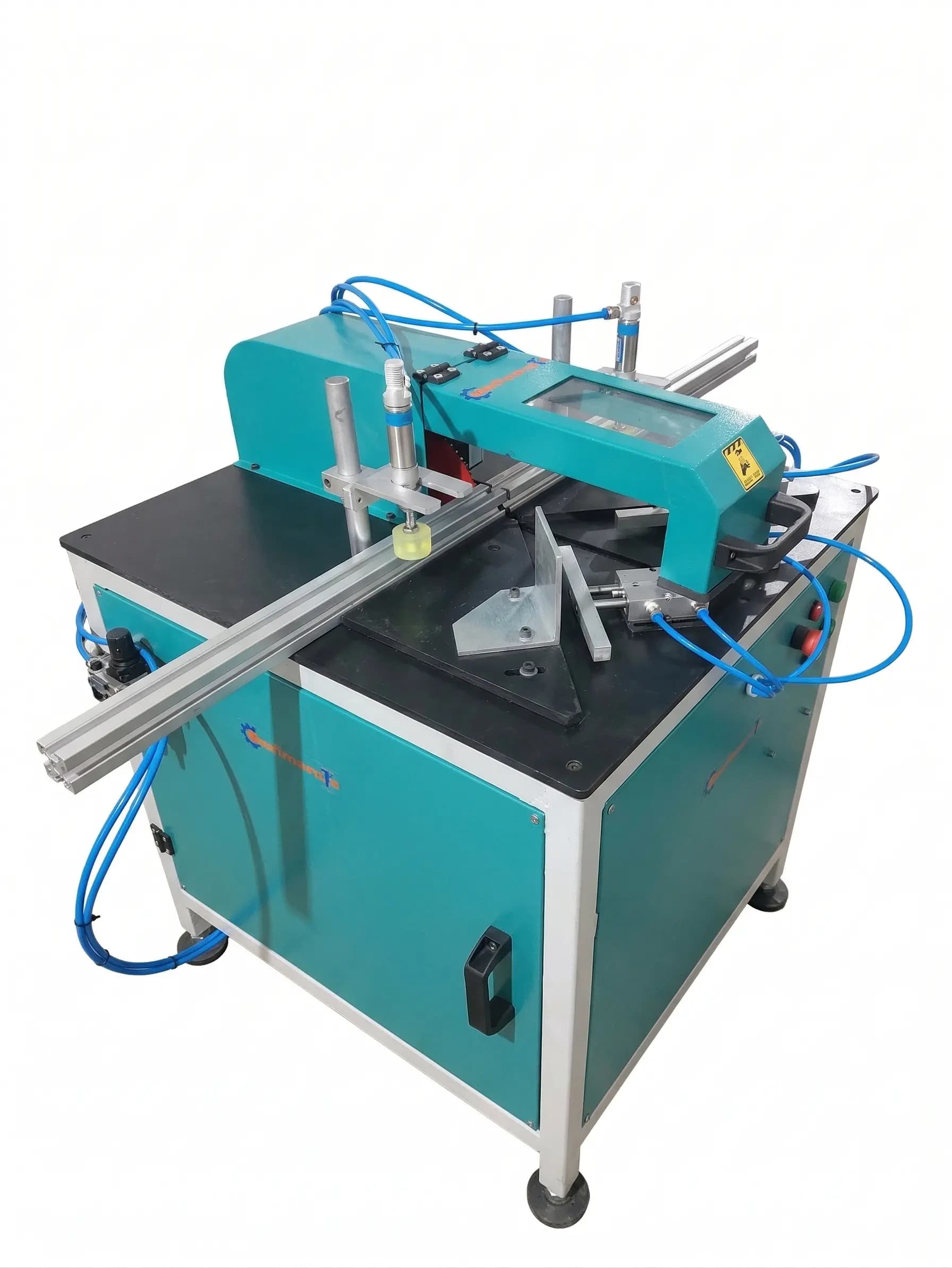
In coastal fabrication, the 45-degree miter cut is the most critical junction. If the cut is not perfectly square and the angle is off by even 0.3 degrees, the reinforcement steel inside the uPVC profile will not sit flush, creating a weak point that buckles under wind pressure. To solve this, we recommend an automatic double head cutting machine price India search focus on machines with high-torque motors (2.2kW or higher) and 500mm blades to ensure clean, chatter-free cuts.
- Blade Stability: Use a 120-tooth tungsten carbide tipped (TCT) blade. This prevents the 'melting' effect often seen with low-quality upvc windows machines.
- Air Pressure Consistency: Maintain a constant 6-8 bar pressure for the pneumatic clamps. This prevents profile slippage during the cutting stroke, ensuring length tolerances stay within +/- 0.2mm.
- Feed Rate Optimization: For 2.5mm wall thickness profiles, a feed rate of 2-3 meters per minute is ideal to prevent stress cracks in the polymer matrix.
Fusion Welding and Corner Strength in High-Rise Units
The strength of a uPVC window is only as good as its weakest corner. In Chennai's humid environment, the welding process must be tightly controlled to prevent brittle joints. Using a Double head seamless welding machine for uPVC windows is critical here because it creates a structural bond without leaving a massive burr that needs aggressive cleaning—a process that often weakens the joint.
- Heater Plate Temperature: Must be calibrated to exactly 250°C (+/- 5°C). Overheating degrades the PVC, while underheating creates a cold weld.
- Joining Time: 25 to 30 seconds of fusion time is the sweet spot for coastal-grade profiles.
- Pressure Management: The joining pressure must be calculated based on the profile surface area. For a standard 60mm casement series, we typically set this between 0.4 to 0.6 MPa.
Critical Role of Reinforcement and End Milling
A common mistake in Chennai fabrication is using thin 1.0mm reinforcement steel in high-rise projects. To meet wind load requirements, you need 2.0mm to 2.5mm galvanized steel. Processing these profiles requires a heavy duty aluminium profile end milling machine that can handle both the uPVC and the heavy-duty transoms without vibrating. Vibration causes micro-fractures in the profile walls, which expand when the wind creates a vacuum effect on the building facade.
Step-by-Step Workflow for Wind-Resistant Fabrication
Following this documented process reduced our waste from 12% to 2.8% and ensured 100% compliance on a 40-story residential project in Perungudi:
- Digital Measurement: Never rely on manual tapes; use laser measures synced to your uPVC window manufacturing machine.
- Precision Cutting: Utilize a 45-degree double head cutting machine to ensure both ends are cut simultaneously, eliminating length discrepancies.
- Drainage Slotting: In coastal areas, water ingress is as dangerous as wind. Ensure triple-chamber drainage slots are routed using a high speed copy router for aluminium windows.
- Steel Insertion: Secure the steel with self-tapping screws every 300mm—any more and you weaken the profile; any less and the steel won't provide the necessary rigidity.
- Corner Cleaning: Use a CNC corner cleaner to ensure the structural weld bead remains intact while removing the aesthetic overflow.
Common Pitfalls: What to Watch Out For
Through 15 years of workshop management, I have seen these three mistakes lead to project failure more than anything else:
- Undersized Blades: Using an aluminium cutting machine 12 inch for large 120mm sliding frames. This often requires two passes, which ruins the miter angle.
- Inconsistent Power: uPVC machinery is sensitive. Without a dedicated stabilizer, welding heaters fluctuate, leading to 'phantom' corner breaks that only appear after the window is installed.
- Poor Air Filtration: Coastal air is salty. If your pneumatic system doesn't have a high-grade moisture separator, the internal valves of your upvc window making machine price will corrode within 12 months, leading to inconsistent clamping pressure.
FAQ: Critical Questions for Chennai Fabricators
Q1: What is the estimated cost of setting up uPVC window manufacturing unit in India for high-rise projects? To produce wind-compliant windows, a semi-automatic line starts at approximately ₹8 Lakhs to ₹12 Lakhs. This includes a double-head cutter, seamless welder, and a heavy-duty copy router. A fully automatic CNC line can range from ₹25 Lakhs to ₹60 Lakhs.
Q2: Can I use the same machine for aluminium and uPVC? While a cutting machine automatic can often handle both, the blades and RPM settings must be swapped. However, welding is exclusive to uPVC, while corner crimping is exclusive to aluminium. Using a manual punching machine for aluminium profiles is standard, but uPVC requires different hardware routing.
Q3: How do I ensure my windows pass the 2.0 kPa wind load test? It starts with the machine. Ensure your upvc window manufacturing machinery provides a welding strength of at least 35-40 N/mm². Combine this with 2.5mm galvanized steel reinforcements and high-quality EPDM gaskets for a complete weather seal.
Q4: Is there a uPVC window machine service center in Tamil Nadu? Yes, Mechnovate provides dedicated on-site technical support across Chennai, Coimbatore, and Madurai to ensure your production line never stops, especially during peak project seasons.
Get more articles like this
Follow Mechnovate on Google to see our guides in Google Discover & News