Why Hyderabad Fabricators Use Automatic Double Head Cutting Saws
Why Hyderabad Fabricators Prefer Automatic Double Head Cutting Saws for High-Rise Precision
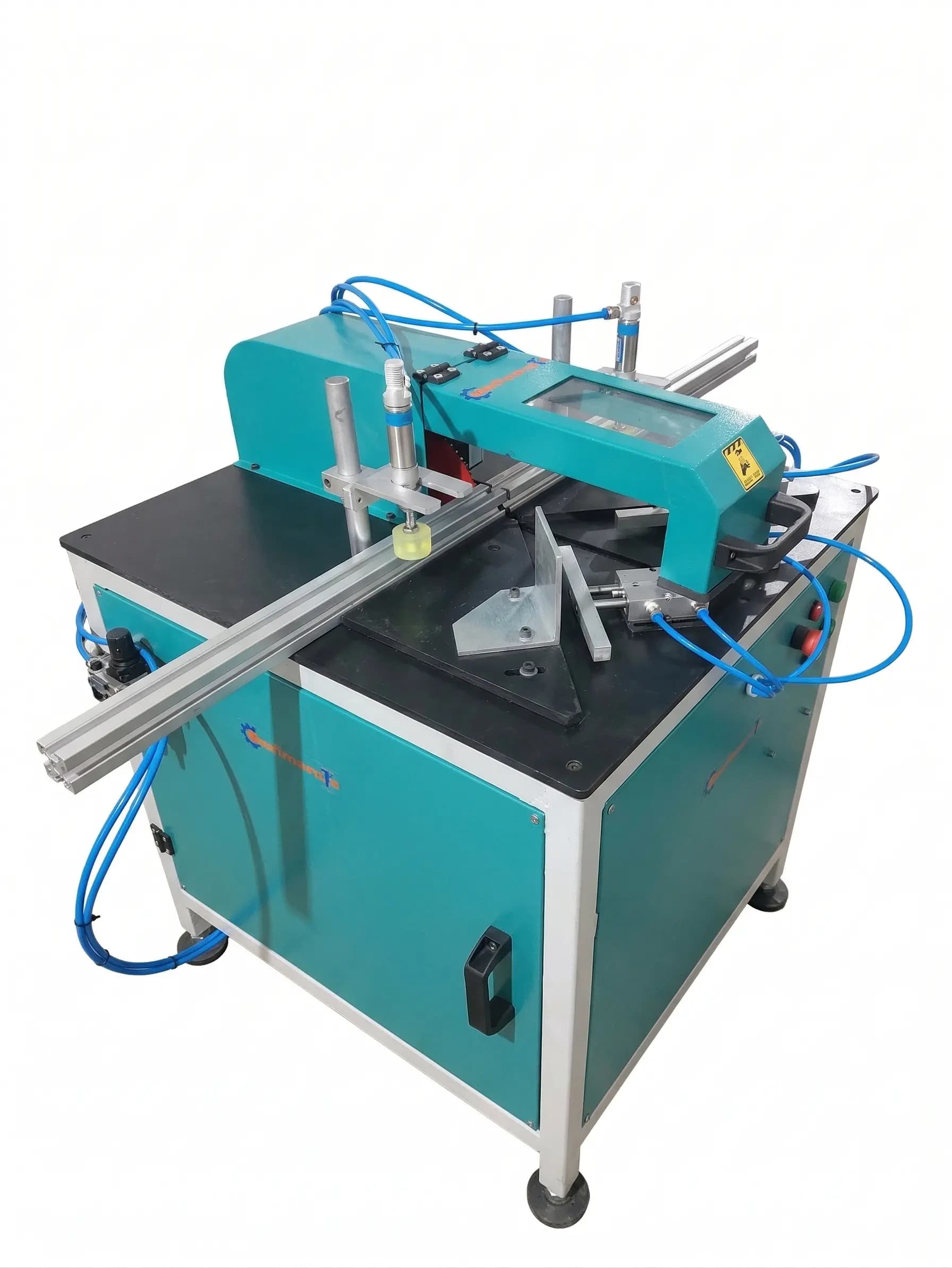
High-rise residential and commercial projects in areas like HITEC City and Gachibowli demand wind-load resistance that manual fabrication simply cannot meet. In our 15 years of engineering experience, we have seen that the primary 'precision gap' in Hyderabad's aluminium fabrication industry stems from inconsistent 45-degree miter cuts. When a window frame sits at the 25th floor, even a 0.5mm deviation leads to air infiltration and whistling sounds under high wind pressure. The Automatic Double Head Cutting Machine solves this by ensuring both ends of the profile are cut simultaneously with absolute parallelism. This eliminated the cumulative error that occurs when using a single cutting approach where the profile must be flipped and re-measured manually.
For high-performance aluminium fabrication, the shift from a standard aluminium cutter machine to a specialized head cutting machine is no longer optional. Fabricators are now dealing with thicker architectural profiles (1.8mm to 2.5mm) that require high-torque motors and stable beds to prevent vibration during the cut. An automatic double head cutting saw for aluminium profiles provides the rigid clamping and hydro-pneumatic feed necessary to maintain clean edges without burrs. This clean cut is essential for the subsequent corner crimping process, where a tight joint determines the structural integrity of the entire unit.
Technical Engineering: Achieving the 0.1mm Tolerance Standard
Precision engineering in window machinery requires understanding the relationship between blade RPM, feed rate, and profile alloy composition. In our testing facility, we have analyzed that an Automatic Aluminium Corner Crimping Machine performs significantly better when the profiles are cut using a TCT carbide-tipped blade at a peripheral speed of approximately 60-80 m/s. For Hyderabad's climate, where thermal expansion can affect aluminium profiles during the peak of summer, cutting at a consistent speed with a head cutter machine minimizes heat build-up. This prevents the 'softening' of the cut edge which can lead to misaligned joints during assembly.
Key technical specifications that professional fabricators should look for include:
- Motor Power: Minimum 2.2 kW per head to handle heavy-duty industrial profile cutting.
- Blade Diameter: 450mm to 500mm to accommodate large-section curtain wall profiles.
- Feed System: Hydro-pneumatic cylinders that offer a smooth, infinitely variable feed rate.
- Angle Range: Precision indexing for 45 and 90 degrees with a tolerance of +/- 0.1mm.
- Safety: Full enclosure shields that meet industrial profile cutting safety standards ISO standards.
Case Study: Reducing Rejection Rates in a Hyderabad Financial District Project
In 2023, a leading fabricator in Hyderabad faced a 12% rejection rate on a luxury high-rise project due to water leakage at the frame corners. They were using a traditional 12 inch aluminium cutter machine which required manual angle setting for every cut. After transitioning to an automatic double head cutting machine price India investment, they saw a dramatic shift in their production metrics. We assisted them in integrating a Heavy Duty End Milling Machine alongside the new saw to complete their production line.
Below are the measurable results recorded over a 3-month period after the upgrade:
- Cutting Accuracy: Improved from +/- 0.8mm to +/- 0.15mm per 2400mm span.
- Daily Output: Increased from 45 frames per shift to 115 frames per shift.
- Material Waste: Reduced from 9% to less than 2.5% due to optimized cutting lists.
- Labor Cost: Production required 2 fewer technicians for manual measurement and marking.
The initial automatic double head cutting machine price India was recovered within 7 months through material savings and the elimination of onsite rework. This proves that precision engineering is a profit center, not a cost center, for growing uPVC windows manufacturing machine shops.
Common Mistakes in Aluminium and uPVC Machine Maintenance
One of the most common mistakes we see in workshops across India is the neglect of the pneumatic filtration system. Compressed air often carries moisture which can corrode the internal valves of a cutting machine automatic system. In Hyderabad's monsoon season, this becomes a critical failure point for upvc windows machinery. Always ensure your air dryer is functional and the lubricator is feeding the correct grade of oil to the cylinders. Without proper lubrication, the head movement on the linear guideways will develop 'play', ruining your precision.
Another frequent error is ignoring the blade run-out. Even the best aluminium cutting machine price won't save your project if the blade is warped. We recommend checking the flange for debris every morning. A single speck of aluminium dust trapped between the blade and the flange can cause a 0.2mm wobble at the tooth tip. This 'wobble' results in a rough finish that requires manual filing, effectively defeating the purpose of an expensive upvc windows making machine or aluminium profile cutting machine.
Comparing Production Lines: uPVC vs. Aluminium Requirements
While the automatic double head cutting saw is a staple for aluminium, the requirements for a upvc window manufacturing machine are slightly different due to the welding process. For uPVC, the cut must account for the 'melt allowance'—typically 2.5mm to 3.0mm per end. A high-quality upvc cutting machine or upvc window machine must have a PLC that automatically calculates these offsets. Whether you are looking for a upvc welding machine or a degree cutting machine, the stability of the base frame is the most important factor in long-term reliability.
Fabricators setting up a new unit often ask about the cost of setting up uPVC window manufacturing unit in India. While a basic setup might include a single cutting saw and a manual punching machine, a professional-grade unit requires:
- A double head miter saw for aluminium profiles price-conscious yet quality-focused selection.
- A CNC upvc window corner cleaning machine price India comparison for high-volume output.
- A high speed copy router for aluminium windows to handle hardware slotting without deforming the profile.
- A heavy duty aluminium profile end milling machine for precise mullion joints.
Frequently Asked Questions (FAQ)
Q1: Can I use an aluminium cutting machine 12 inch for high-rise commercial profiles? No. A 12-inch blade typically lacks the cutting depth required for the wide sections used in high-rise structural glazing. You should opt for at least a 450mm or 500mm blade on an automatic double head cutting saw for aluminium profiles to ensure a single-pass, clean cut through both walls of the profile.
Q2: What is the difference between a manual and automatic upvc window manufacturing machine? Manual machines require the operator to set the length and angles by hand, which is prone to human error. An automatic system uses a digital display or CNC control to move the cutting head to the exact millimeter. For a startup, the best upvc window making machine for small business is often a semi-automatic double head saw that balances cost with precision.
Q3: How do I maintain the accuracy of my head cutting machine over time? You must clean the linear rails daily and check the 45-degree stop bolts weekly with a precision square. We also recommend a professional calibration every 6 months to ensure the digital length measurement system hasn't drifted. This is especially important for aluminium window machinery manufacturers in Surat Gujarat or other industrial hubs where high-volume vibration is constant.
Q4: Is it worth investing in a double head seamless welding machine for uPVC windows? Yes, if you are targeting the premium market. Seamless welding eliminates the need for corner cleaning and provides a much cleaner aesthetic. This is often a deciding factor for luxury high-rise developers in Hyderabad who demand the highest finish quality from their upvc windows manufacturers machine.
Q5: What is the average automatic double head cutting machine price India? Prices vary significantly based on features like CNC control and blade size. However, a reliable, industrial-grade automatic double head cutting machine price India typically starts from ₹4.5 Lakhs and can go up to ₹12 Lakhs for fully automated CNC lines. Always prioritize the motor quality and frame weight over the lowest price point to ensure a 10+ year service life.
Get more articles like this
Follow Mechnovate on Google to see our guides in Google Discover & News