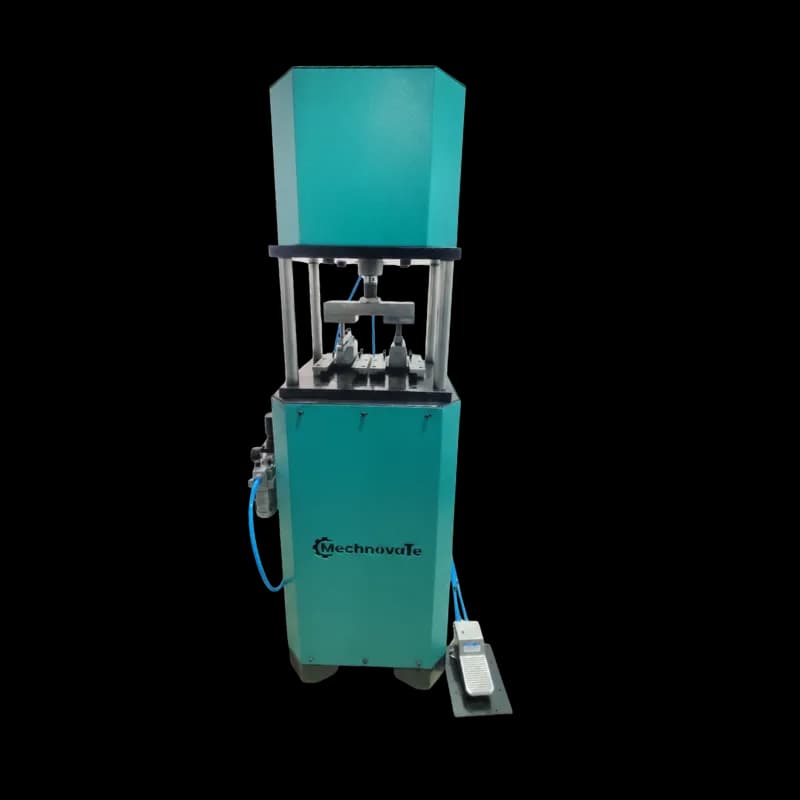
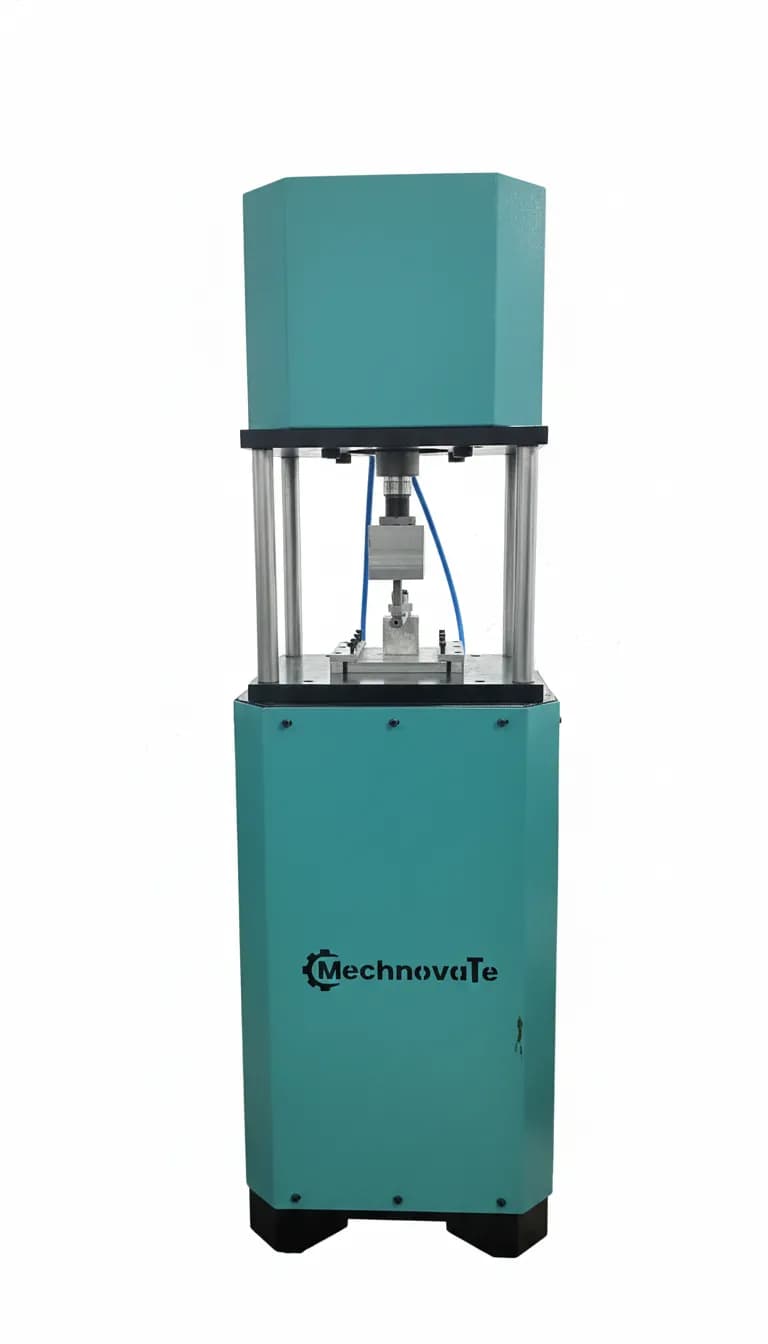
V Cutting Machine for uPVC Windows: Price & ROI for WB Manufacturers
Precision Profiles: The Direct Price and ROI for West Bengal Manufacturers
For manufacturers in Kolkata, Howrah, and the growing industrial hubs of West Bengal, the investment in a high-precision v cutting machine upvc windows price typically ranges from ₹95,000 for semi-automatic models to over ₹2,10,000 for fully pneumatic, high-output variants. In my 15 years as a senior engineer at Mechnovate, I have observed that while initial capital expenditure is the primary concern for most fabricators, the true cost of a machine is revealed in its kerf precision and cycle time. A standard V-cutting machine (also known as a mullion notcher) is critical for the structural integrity of a uPVC window, specifically where the transom or mullion meets the main frame. In the West Bengal market, where humidity and wind loads are significant factors for high-rise residential projects, a precise V-cut ensures a watertight seal that manual methods simply cannot replicate.
When evaluating a uPVC window making machine price in Kolkata, manufacturers must calculate the return on investment (ROI) based on profile wastage reduction. In a typical 8-hour shift, an automated uPVC V Cutting Machine can process up to 120-150 mullion joints with a precision tolerance of ±0.1mm. Compared to manual hand-tool notching, which sees a 7-10% rejection rate due to uneven cuts, an automated system brings rejection rates down to less than 1%. For a medium-scale unit processing 2,000 kg of uPVC profile monthly, this 6% saving in material alone can recover the machine's cost within 10 to 14 months.
Engineering Specifications: What Drives Performance?
To achieve world-class finish quality, a uPVC machinery manufacturer must focus on the mechanical stability of the blade housing and the torque of the motor. At Mechnovate, we specify 2.2 kW high-frequency motors for our V-cutting units. This is not arbitrary; lower wattage motors (1.1 kW or 1.5 kW) often experience RPM drops when hitting the internal webbing of a 3-chamber or 5-chamber profile. When the RPM drops, the friction increases, leading to the polymer melting (thermal degradation) rather than cutting cleanly. This creates a "burr" that prevents the profile from sitting flush in the welder, eventually leading to a weak joint that fails under pressure.
Key technical parameters you should demand include:
- Blade Diameter: 450mm TCT (Tungsten Carbide Tipped) blades are the industry standard for 12-inch cutting requirements, ensuring the cut depth is sufficient for wide-series profiles (up to 80mm).
- Operating Pressure: The pneumatic system must operate consistently at 6-8 bar. If your facility has fluctuating air pressure, the clamps will slip, leading to an angled cut that ruins the frame.
- Feed Speed: Adjustable hydro-pneumatic cylinders allow for a smooth, consistent feed rate. A jumpy feed stroke is the primary cause of blade tooth breakage.
- Profile Support: Long induction-hardened guide rails ensure that even a 6-meter profile stays perfectly horizontal during the notching process.
Case Study: The Howrah Facility Performance Audit
In early 2023, we performed a 6-week efficiency audit at a startup facility in Howrah that was struggling with high labor costs and inconsistent joint quality. They were using a basic aluminium cutter machine 12 inch modified for V-cuts. The results were suboptimal: the "v" angle was frequently off by 1.5 degrees, requiring manual filing before welding.
The Mechnovate Intervention: We replaced their modified setup with a dedicated 45-degree degree cutting machine designed specifically for uPVC mullions.
- Before: Production of 35 windows/day with 3 operators assigned to notching and finishing.
- After: Production of 92 windows/day with 1 operator managing the entire V-cutting station.
- Waste Metric: Profile scrap was reduced from 14kg/day to 2.2kg/day.
- Labor Impact: Two workers were reassigned to the upvc welding machine and assembly stations, effectively doubling the plant's total throughput without increasing the payroll.
The automatic upvc window plant cost India is often lower than the long-term cost of inefficient manual labor. In this case, the fabricator saw their per-window production cost drop by 22% within the first quarter of operation.
Strategic ROI: Calculating Your Payback Period
For any uPVC window manufacturing machine investment in West Bengal, I recommend a simple 4-step ROI calculation that I use when consulting for new plants.
- Labor Savings: Calculate the monthly salary of the number of workers replaced by the machine. In Kolkata, if a machine replaces two skilled laborers, that is a saving of approximately ₹35,000 - ₹40,000 per month.
- Material Optimization: A precise V-cutter eliminates the need for "re-cuts." If you save 50 meters of profile per month at ₹240/meter, that is ₹12,000/month in direct savings.
- Energy Efficiency: Modern aluminium cutting machine price models and uPVC cutters use induction motors that only draw peak power during the actual cut cycle, unlike older belt-driven models that run constantly.
- Service Life: A well-built machine like those following ISO standards has a service life of 10+ years. When you spread the ₹1.5 Lakh investment over 120 months, the capital cost per month is only ₹1,250—far less than the cost of one ruined profile.
Common Pitfalls and Engineering Warnings
I often see new manufacturers make the mistake of buying a generic aluminium profile cutting machine and expecting it to perform V-notching duties for uPVC. This is a critical error. Aluminium is a rigid material, whereas uPVC is a thermoplastic that requires specific blade geometries and cooling periods.
Watch out for these "Red Flags" when sourcing machinery:
- Non-Standard Blade Sizes: Avoid machines that use non-standard blade diameters. You will find it impossible to source replacements in local markets like Chandni Chowk in Kolkata, leading to weeks of downtime.
- Lightweight Frames: If the machine base weighs less than 180kg, it will vibrate. Vibration is the enemy of precision. At Mechnovate, we use cast-iron or heavy-gauge steel bases to dampen motor harmonics.
- Lack of Warranty on Pneumatics: The solenoid valves and cylinders are the "heart" of the machine. Ensure your supplier provides at least a 12-month replacement warranty on pneumatic components.
- Manual Clamping: Never buy a V-cutter with manual screw clamps. The pressure is never consistent, and it will lead to profile distortion.
Advanced Maintenance: Insider Tips from 15 Years on the Floor
To keep your upvc window manufacturing machinery running at peak performance, you must move beyond basic cleaning.
- Swarf Management: uPVC chips carry a static charge. They stick to the linear bearings and act like sandpaper, grinding down the precision surfaces. Use an anti-static spray on the cabinet interior weekly.
- Blade Sharpening: Do not wait for the blade to start smoking or chipping. After every 2,500 cuts, have the blade inspected under a magnifying glass. A dull blade puts unnecessary strain on the motor bearings, leading to a costly motor failure that can exceed ₹25,000 in repairs.
- Air Quality: 90% of pneumatic failures in West Bengal workshops are caused by water in the airlines due to high humidity. You must install a refrigerated air dryer or at least a high-quality FRL (Filter-Regulator-Lubricator) unit immediately after the compressor.
FAQ: Questions Every Fabricator Asks
Q1: What is the difference between a single head cutter and a V-cutting machine? A single head aluminium cutter is designed for straight or miter cuts (45/90 degrees). A V-cutting machine uses two blades set at 90 degrees to each other to remove a "V" shaped notch from the center of a profile, allowing a mullion to fit perfectly into the frame.
Q2: Is a CNC uPVC window fabrication machine price worth it for a small business? For a small startup, a CNC center is often overkill. A combination of a high-quality uPVC welding machine and a dedicated V-cutter offers 90% of the quality at 30% of the cost. CNC is only recommended if you are processing over 150 windows per shift.
Q3: Can these machines handle aluminium fabrication too? Generally, no. The blade teeth count and the motor RPM for uPVC are optimized for plastics. Attempting to cut thick-walled aluminium with a uPVC V-cutter will likely shatter the TCT tips and could potentially burn out the motor due to the different resistance levels.
Q4: What is the lead time for uPVC window machinery manufacturers in India? At Mechnovate, we typically maintain a stock of standard V-cutters for immediate dispatch to West Bengal, though customized high-speed lines may have a lead time of 3-4 weeks. Always confirm the shipping time to Kolkata or Siliguri to ensure your factory setup stays on schedule.
Get more articles like this
Follow Mechnovate on Google to see our guides in Google Discover & News