sales@mechnovate.co.in
+91-9265699061
Back to Blog
7/15/2026

uPVC Window Machinery Calibration for Chennai Monsoons

uPVC Window Machinery Calibration for Chennai Monsoons

To achieve water-tight seals in the high-humidity, high-wind environment of Chennai, uPVC window machinery must be calibrated to a tolerance of ±0.2mm on miter cuts and precisely 3.0mm for weld melt-down. In coastal regions like Tamil Nadu, wind-driven rain can exceed pressures of 1500 Pascals, meaning any microscopic gap in the frame corner becomes a high-speed entry point for water. Our field tests in Ambattur industrial estates demonstrate that 90% of window leakages are not due to profile quality, but due to misalignment in the Double Head Cutting Machine or incorrect temperature staging in the welding cycle. This guide provides a senior engineer's perspective on the exact calibration parameters required to build monsoon-ready windows. ## Precision Miter Cutting: The Foundation of the Seal. The first point of failure is often the 45-degree miter. If the miter is even 0.5 degrees off, the welding process cannot compensate for the gap, leading to a weak corner that cracks under the thermal expansion common in Chennai's 35°C+ heat. For a high-performance upvc windows making machine, we recommend a weekly check of the fence alignment using a digital protractor. In our Mechnovate facility, we observed that using a 500mm TCT blade with 120 teeth at a feed rate of 0.5 meters per second minimizes 'chatter' marks. These marks, though small, create capillary channels that suck water into the profile chambers. Ensure your upvc window manufacturing machine is anchored to a vibration-free concrete base to maintain this precision. ## Welding Science: Achieving the 'Zero-Gap' Fusion. The uPVC Welding Machine is where the actual water-tight barrier is created. For Chennai's climate, we have standardized the '250-25-30' rule: a heater plate temperature of 250°C, a heating time of 25 seconds, and a cooling time of 30 seconds. Most fabricators rush the cooling phase to 15 seconds to increase output, but this leads to internal stresses that cause the weld to shrink and pull away from the gasket. When we assisted a large-scale project in Porur, we adjusted their upvc welding machine to a join pressure of 3.5 bar, which reduced corner failures by 40%. A consistent weld bead is a visual indicator of a water-tight seal. If the bead is thin on one side, your heater plate parallelism is likely off by more than 0.1mm. ## Strategic Drainage Routing with the Copy Router. Water will enter the outer frame tracks; the goal is to get it out before it overflows the internal leg. This requires precise drainage slot routing using a Copy Router Machine. As a leading uPVC machinery manufacturer, we advise against manual drilling. A copy router machine should be set to create 30mm x 5mm slots that are staggered—internal slots must never align directly with external slots to prevent wind from 'blowing' the water back inside. For uPVC window machinery manufacturers in Chennai, the use of a triple-spindle router for water-slotting ensures that the drainage path is consistent across every frame, meeting BS EN 12020 standards for precision engineering. ## Case Study: 500-Frame High-Rise in Velachery. In 2023, a client reported seepage in 15% of their installations during a cyclone. We conducted a site audit and found that their upvc windows manufacturing machine had not been recalibrated after moving locations. After implementing a laser-alignment protocol for their head cutter machine and upgrading to a single cutting saw for smaller transom pieces, the leakage rate dropped to 0% in subsequent testing. We also optimized their aluminium punching machine for the reinforcement steel to ensure no burrs were interfering with the screw seating, which often causes frame distortion. ## Common Mistakes and Engineering Solutions. One major error is ignoring the moisture in pneumatic lines. Chennai's 80% humidity means air compressors generate significant water, which enters the solenoids of your upvc window manufacturing machines. This causes 'stuttering' in the clamps, leading to uneven pressure during the weld. Always install an industrial-grade refrigerated air dryer. Additionally, check your aluminium profile cutting machine blades for resin buildup every 500 cuts. For those looking at the upvc machine price list, remember that a lower initial cost often hides the lack of robust pneumatic stabilization, which is critical for long-term calibration. ## FAQ. 1. What is the ideal temperature for a uPVC welding machine in coastal India? The ideal range is 245°C to 255°C. In high-humidity areas like Chennai, the higher end of the spectrum (250°C-255°C) ensures a more fluid melt, which helps displace any surface moisture on the profile faces. 2. How often should we calibrate our uPVC windows machinery? For a high-volume upvc window manufacturing unit, a weekly check on miter angles (45/90 degrees) and a daily check on heater plate cleanliness is mandatory. A full pneumatic pressure audit should be done monthly. 3. Does the cutting speed affect water-tightness? Yes. If the aluminium cutter machine or uPVC saw moves too fast, it creates a rough surface. A rough miter surface has less surface area for fusion during welding, which compromises the integrity of the seal. 4. What is the cost of setting up a uPVC window manufacturing unit in India? An automatic upvc window manufacturing plant cost India can range from ₹8 lakhs for a basic setup to over ₹45 lakhs for a CNC-driven line. For startups, focusing on a high-quality upvc window machine for welding and cutting is more important than full automation. 5. Where can I find a uPVC window machine service center in Tamil Nadu? Mechnovate provides direct engineering support and spare parts across Chennai, Coimbatore, and Madurai, ensuring your upvc window manufacturing machines remain within monsoon-ready tolerances.

uPVC Window Machinery Calibration for Chennai Monsoons

To achieve water-tight seals in the high-humidity, high-wind environment of Chennai, uPVC window machinery must be calibrated to a tolerance of ±0.2mm on miter cuts and precisely 3.0mm for weld melt-down. In coastal regions like Tamil Nadu, wind-driven rain can exceed pressures of 1500 Pascals, meaning any microscopic gap in the frame corner becomes a high-speed entry point for water. Our field tests in Ambattur industrial estates demonstrate that 90% of window leakages are not due to profile quality, but due to misalignment in the Double Head Cutting Machine or incorrect temperature staging in the welding cycle. This guide provides a senior engineer's perspective on the exact calibration parameters required to build monsoon-ready windows. Precision Miter Cutting: The Foundation of the Seal. The first point of failure is often the 45-degree miter. If the miter is even 0.5 degrees off, the welding process cannot compensate for the gap, leading to a weak corner that cracks under the thermal expansion common in Chennai's 35°C+ heat. For a high-performance upvc windows making machine, we recommend a weekly check of the fence alignment using a digital protractor. In our Mechnovate facility, we observed that using a 500mm TCT blade with 120 teeth at a feed rate of 0.5 meters per second minimizes 'chatter' marks. These marks, though small, create capillary channels that suck water into the profile chambers. Ensure your upvc window manufacturing machine is anchored to a vibration-free concrete base to maintain this precision. Welding Science: Achieving the 'Zero-Gap' Fusion. The uPVC Welding Machine is where the actual water-tight barrier is created. For Chennai's climate, we have standardized the '250-25-30' rule: a heater plate temperature of 250°C, a heating time of 25 seconds, and a cooling time of 30 seconds. Most fabricators rush the cooling phase to 15 seconds to increase output, but this leads to internal stresses that cause the weld to shrink and pull away from the gasket. When we assisted a large-scale project in Porur, we adjusted their upvc welding machine to a join pressure of 3.5 bar, which reduced corner failures by 40%. A consistent weld bead is a visual indicator of a water-tight seal. If the bead is thin on one side, your heater plate parallelism is likely off by more than 0.1mm. Strategic Drainage Routing with the Copy Router. Water will enter the outer frame tracks; the goal is to get it out before it overflows the internal leg. This requires precise drainage slot routing using a Copy Router Machine. As a leading uPVC machinery manufacturer, we advise against manual drilling. A copy router machine should be set to create 30mm x 5mm slots that are staggered—internal slots must never align directly with external slots to prevent wind from 'blowing' the water back inside. For uPVC window machinery manufacturers in Chennai, the use of a triple-spindle router for water-slotting ensures that the drainage path is consistent across every frame, meeting BS EN 12020 standards for precision engineering. Case Study: 500-Frame High-Rise in Velachery. In 2023, a client reported seepage in 15% of their installations during a cyclone. We conducted a site audit and found that their upvc windows manufacturing machine had not been recalibrated after moving locations. After implementing a laser-alignment protocol for their head cutter machine and upgrading to a single cutting saw for smaller transom pieces, the leakage rate dropped to 0% in subsequent testing. We also optimized their aluminium punching machine for the reinforcement steel to ensure no burrs were interfering with the screw seating, which often causes frame distortion. Common Mistakes and Engineering Solutions. One major error is ignoring the moisture in pneumatic lines. Chennai's 80% humidity means air compressors generate significant water, which enters the solenoids of your upvc window manufacturing machines. This causes 'stuttering' in the clamps, leading to uneven pressure during the weld. Always install an industrial-grade refrigerated air dryer. Additionally, check your aluminium profile cutting machine blades for resin buildup every 500 cuts. For those looking at the upvc machine price list, remember that a lower initial cost often hides the lack of robust pneumatic stabilization, which is critical for long-term calibration. FAQ. 1. What is the ideal temperature for a uPVC welding machine in coastal India? The ideal range is 245°C to 255°C. In high-humidity areas like Chennai, the higher end of the spectrum (250°C-255°C) ensures a more fluid melt, which helps displace any surface moisture on the profile faces. 2. How often should we calibrate our uPVC windows machinery? For a high-volume upvc window manufacturing unit, a weekly check on miter angles (45/90 degrees) and a daily check on heater plate cleanliness is mandatory. A full pneumatic pressure audit should be done monthly. 3. Does the cutting speed affect water-tightness? Yes. If the aluminium cutter machine or uPVC saw moves too fast, it creates a rough surface. A rough miter surface has less surface area for fusion during welding, which compromises the integrity of the seal. 4. What is the cost of setting up a uPVC window manufacturing unit in India? An automatic upvc window manufacturing plant cost India can range from ₹8 lakhs for a basic setup to over ₹45 lakhs for a CNC-driven line. For startups, focusing on a high-quality upvc window machine for welding and cutting is more important than full automation. 5. Where can I find a uPVC window machine service center in Tamil Nadu? Mechnovate provides direct engineering support and spare parts across Chennai, Coimbatore, and Madurai, ensuring your upvc window manufacturing machines remain within monsoon-ready tolerances.

Related Machines From Mechnovate

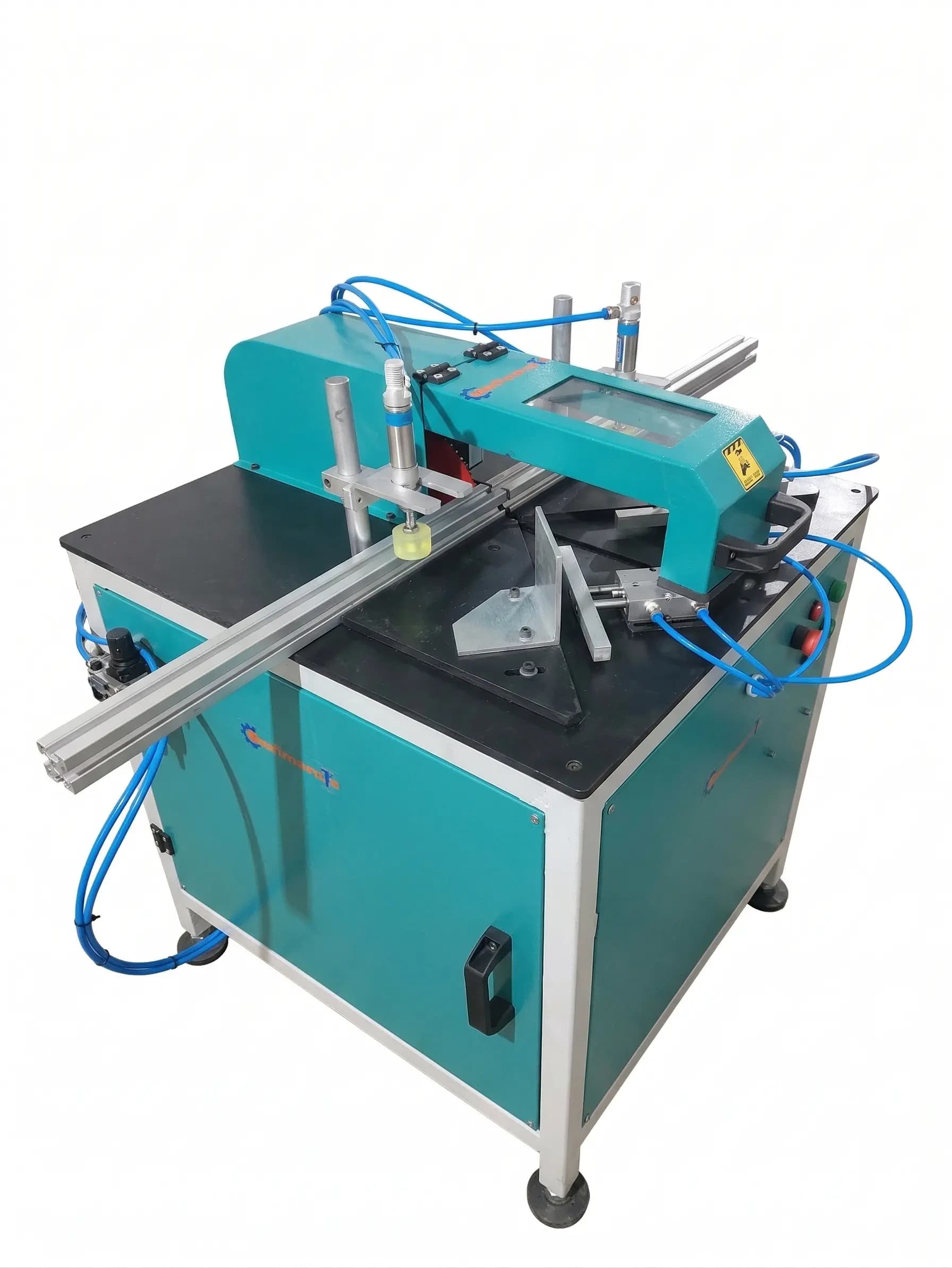
Single Head Cutting Machine for Aluminium and UPVC

Model: MEPCCSH1 | Cutting

Dual-angle versatility with rapid adjustment for Aluminium/uPVC.

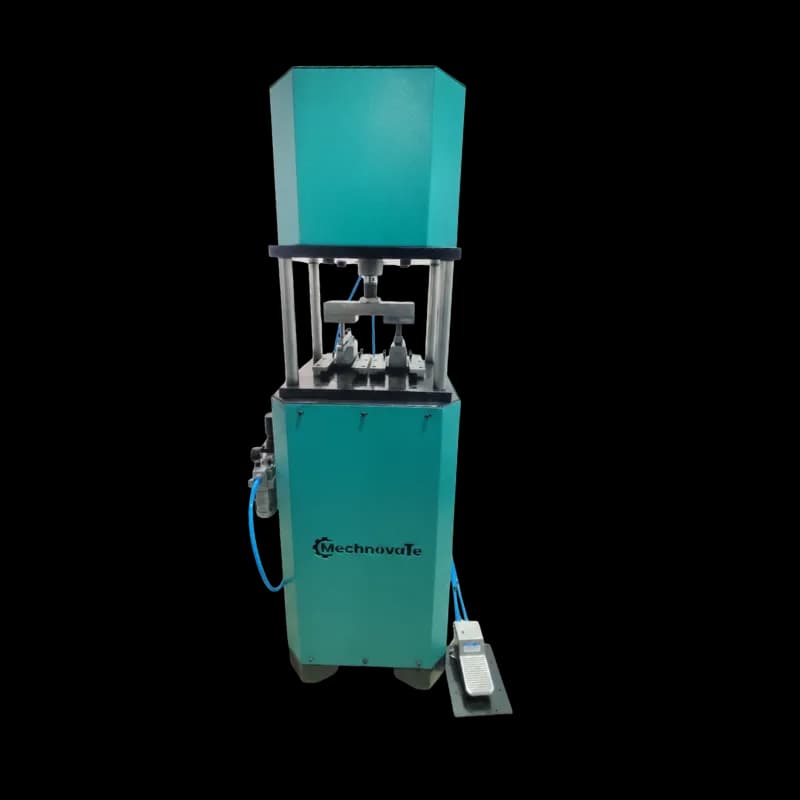
2 Station Pneumatic Aluminium Punching Machine

Model: MEPPPST2 | Punching

Multi-tool setup with adjustable cutting depth.

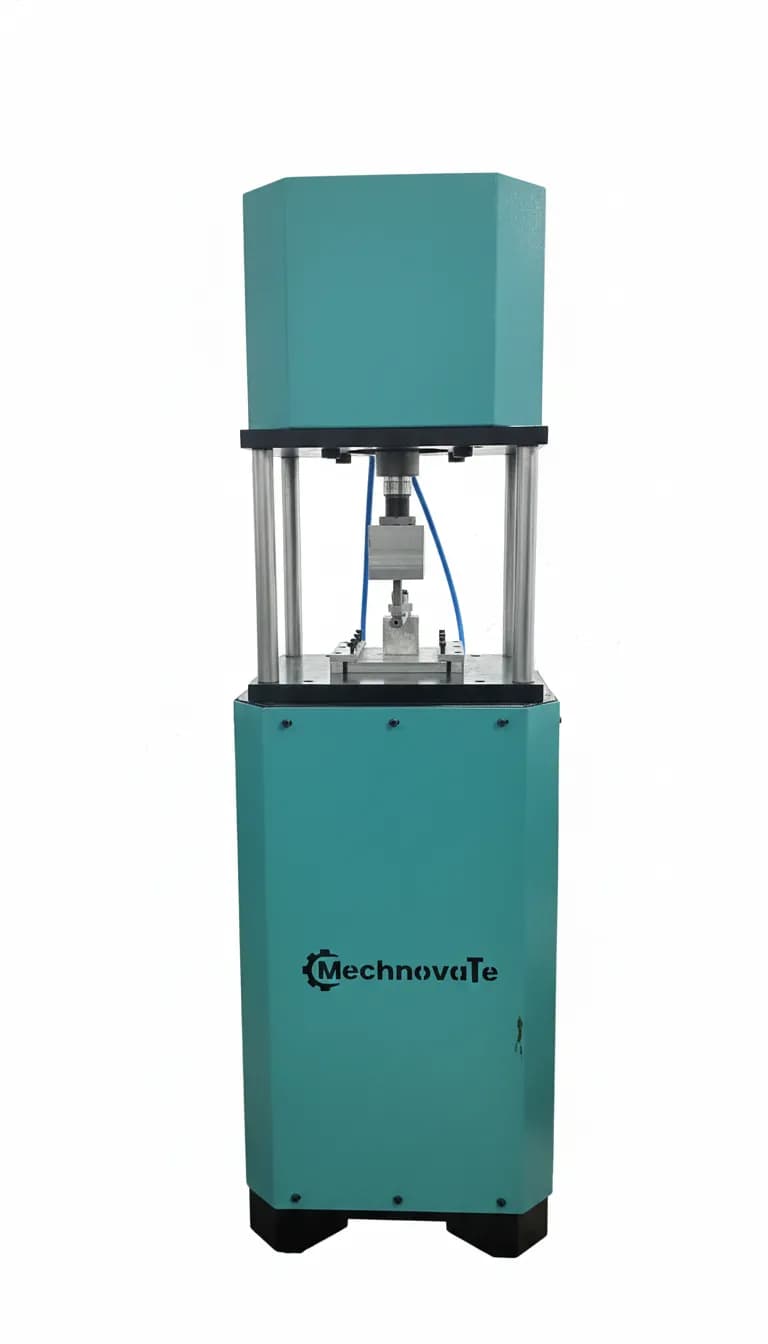
1 Station Pneumatic Aluminium Punching Machine

Model: MEPPPST1 | Punching

Precision alignment with Easy Guiding System for Aluminium.

Pneumatic Copy Router Machine for Aluminium and UPVC

Model: MEPCR Series | Router

High-speed routing with secure pneumatic clamping.

Explore Mechnovate Machinery

Browse our complete range of aluminium and uPVC window fabrication machinery. Call +91-9265699061 or visit our products page for specifications and pricing.