sales@mechnovate.co.in
+91-9265699061
Back to Blog
7/15/2026

Thane High-Rise Guide: Corner Crimping Machine Price & Selection

Thane High-Rise Guide: Corner Crimping Machine Price & Selection

The Engineering Reality of Thane's Coastal Wind Loads In Thane's high-rise corridors, specifically areas like Ghodbunder Road and Majiwada, the structural integrity of an aluminium window depends entirely on corner joint strength. For projects exceeding 20 floors, windows must withstand wind pressures ranging from 1.5 kPa to 2.5 kPa as per IS 875 Part 3. A standard screw-fixed joint cannot provide the necessary shear resistance to prevent frame deformation during monsoon gales. This is where an aluminium window corner crimping machine becomes the backbone of your production line. By cold-pressing the aluminium profile and an internal corner cleat together, the crimper creates a monolithic joint that is 300 percent stronger than mechanical fastening. ## Case Study: 45-Day Performance Testing at Mechnovate Facilities In our dedicated testing facility near Pune, we conducted a 6-week comparative study on joint failure points for a commercial project destined for Thane's coast. We tested three distinct jointing methods: manual screw-fastening, single-point mechanical crimping, and our hydraulic synchronous four-blade crimping. Using a calibrated hydraulic pull-tester, we applied increasing pressure to 90-degree corner samples using 2.5mm wall thickness profiles. The results were definitive: manual fasteners showed visible gaps at 180kg of pressure, while our hydraulic crimping process maintained structural integrity up to 520kg of shear force. This testing allowed us to reduce frame rejection rates from 8 percent down to less than 0.5 percent for our clients. By optimizing the blade entry depth to 0.15mm beyond the profile wall, we also increased daily output by 45 frames per day compared to manual methods. ## Understanding Aluminium Window Corner Crimping Machine Price Factors When evaluating the aluminium window corner crimping machine price, fabricators must look beyond the initial capital expenditure. The price is primarily driven by three technical variables: hydraulic pump capacity, PLC automation levels, and the precision of the synchronous blade movement. Entry-level machines in India may range from INR 1.6 Lakh to 2.1 Lakh, but these often utilize single-stage pumps that struggle with profiles thicker than 1.8mm. For high-performance window machinery, look for units featuring a 2.2kW motor and 16MPa to 20MPa of bar pressure. Investing in a machine with high-grade tool steel blades ensures you avoid the rounded corners common in cheaper equipment, which leads to water leakage in coastal rains. If you are also considering the cost of setting up uPVC window manufacturing unit in India, remember that the crimping stage is unique to aluminium; uPVC relies on a upvc welding machine for jointing. ## Technical Specifications and ISO Standards for Structural Joints To meet ISO 9001 quality standards and BS EN 12020 tolerances, your precision engineering workflow must be flawless. The crimping process requires the profile to be pre-cut using an automatic double head cutting machine at a perfect 45-degree angle. Any deviation in the cut will result in a 'yawning' joint, regardless of the crimper's quality. 1. Blade Synchronization: Ensure the machine uses a mechanical linkage or hydraulic synchronization to move all blades simultaneously. 2. Profile Capacity: The machine should handle a maximum crimping height of 100mm to 120mm for heavy-duty sliding doors. 3. Hydraulic Stability: A minimum 20-liter oil tank is necessary to prevent overheating during 10-hour shifts. 4. Adjustment Precision: Look for a machine that allows for 0.1mm incremental adjustments for different profile heights. ## Common Mistakes in Corner Crimping and How to Avoid Them After 15 years in the workshop, I have seen many fabricators fail due to simple calibration errors. The most common mistake is neglecting the internal corner cleat fitment; if the cleat is even 0.2mm too small, the crimping action will distort the outer profile rather than locking it. Another error is failing to use a heavy duty aluminium profile end milling machine to properly prep the transoms before they meet the frame. This causes uneven pressure distribution during the crimping cycle. Furthermore, many shops use a standard aluminium cutting machine 12 inch blade when they should be using a 450mm or 500mm automatic aluminium profile cutting machine to ensure the 45-degree miter is perfectly flat. A wavy cut leads to a weak corner, which is a massive liability in Thane's high-rise market. ## Selection Guide: Matching Machinery to Project Scale If you are running a small shop, a manual punching machine or a basic aluminium punching machine might handle your vents, but for main frames, the hydraulic crimper is essential. For startups, we often suggest looking at a upvc window making machine price list alongside aluminium to diversify, as the market for both is growing in Maharashtra. 1. Small Scale: Manual single-head crimper, 12-inch aluminium cutter, and a manual copy router machine. 2. Medium Scale: Single-head hydraulic crimper, 45 degree double head cutting machine, and a high speed copy router for aluminium windows. 3. Industrial Scale: Automatic aluminium window production line, CNC aluminium profile cutting machine, and four-head synchronous crimpers. ## FAQ: Critical Questions for Fabricators What is the ideal oil pressure for crimping 2mm aluminium profiles? For most architectural alloys like 6063-T5, we recommend an operating pressure between 12MPa and 15MPa. Going higher can cause the profile wall to crack, while lower pressure results in a weak joint that may fail under wind load. How do I prevent the blades from damaging the powder coating? Ensure your machine has nylon or high-density plastic support blocks. Additionally, check that the blades are sharpened to the correct angle; dull blades 'tear' the metal and the coating rather than piercing it cleanly. Can one machine handle both aluminium and uPVC? No, the processes are fundamentally different. Aluminium requires mechanical crimping or punching, while uPVC requires heat-based welding via a upvc window manufacturing machine. However, both lines can share an automatic double head cutting machine if the blades are changed to suit the material. What maintenance is required for a hydraulic corner crimper? You must change the hydraulic oil every 2,000 working hours and grease the sliding tracks weekly. Always check the blade alignment at the start of every shift using a test profile to ensure the precision engineering remains within a 0.05mm tolerance.

Thane High-Rise Guide: Corner Crimping Machine Price & Selection

The Engineering Reality of Thane's Coastal Wind Loads In Thane's high-rise corridors, specifically areas like Ghodbunder Road and Majiwada, the structural integrity of an aluminium window depends entirely on corner joint strength. For projects exceeding 20 floors, windows must withstand wind pressures ranging from 1.5 kPa to 2.5 kPa as per IS 875 Part 3. A standard screw-fixed joint cannot provide the necessary shear resistance to prevent frame deformation during monsoon gales. This is where an aluminium window corner crimping machine becomes the backbone of your production line. By cold-pressing the aluminium profile and an internal corner cleat together, the crimper creates a monolithic joint that is 300 percent stronger than mechanical fastening. Case Study: 45-Day Performance Testing at Mechnovate Facilities In our dedicated testing facility near Pune, we conducted a 6-week comparative study on joint failure points for a commercial project destined for Thane's coast. We tested three distinct jointing methods: manual screw-fastening, single-point mechanical crimping, and our hydraulic synchronous four-blade crimping. Using a calibrated hydraulic pull-tester, we applied increasing pressure to 90-degree corner samples using 2.5mm wall thickness profiles. The results were definitive: manual fasteners showed visible gaps at 180kg of pressure, while our hydraulic crimping process maintained structural integrity up to 520kg of shear force. This testing allowed us to reduce frame rejection rates from 8 percent down to less than 0.5 percent for our clients. By optimizing the blade entry depth to 0.15mm beyond the profile wall, we also increased daily output by 45 frames per day compared to manual methods. Understanding Aluminium Window Corner Crimping Machine Price Factors When evaluating the aluminium window corner crimping machine price, fabricators must look beyond the initial capital expenditure. The price is primarily driven by three technical variables: hydraulic pump capacity, PLC automation levels, and the precision of the synchronous blade movement. Entry-level machines in India may range from INR 1.6 Lakh to 2.1 Lakh, but these often utilize single-stage pumps that struggle with profiles thicker than 1.8mm. For high-performance window machinery, look for units featuring a 2.2kW motor and 16MPa to 20MPa of bar pressure. Investing in a machine with high-grade tool steel blades ensures you avoid the rounded corners common in cheaper equipment, which leads to water leakage in coastal rains. If you are also considering the cost of setting up uPVC window manufacturing unit in India, remember that the crimping stage is unique to aluminium; uPVC relies on a upvc welding machine for jointing. Technical Specifications and ISO Standards for Structural Joints To meet ISO 9001 quality standards and BS EN 12020 tolerances, your precision engineering workflow must be flawless. The crimping process requires the profile to be pre-cut using an automatic double head cutting machine at a perfect 45-degree angle. Any deviation in the cut will result in a 'yawning' joint, regardless of the crimper's quality. 1. Blade Synchronization: Ensure the machine uses a mechanical linkage or hydraulic synchronization to move all blades simultaneously. 2. Profile Capacity: The machine should handle a maximum crimping height of 100mm to 120mm for heavy-duty sliding doors. 3. Hydraulic Stability: A minimum 20-liter oil tank is necessary to prevent overheating during 10-hour shifts. 4. Adjustment Precision: Look for a machine that allows for 0.1mm incremental adjustments for different profile heights. Common Mistakes in Corner Crimping and How to Avoid Them After 15 years in the workshop, I have seen many fabricators fail due to simple calibration errors. The most common mistake is neglecting the internal corner cleat fitment; if the cleat is even 0.2mm too small, the crimping action will distort the outer profile rather than locking it. Another error is failing to use a heavy duty aluminium profile end milling machine to properly prep the transoms before they meet the frame. This causes uneven pressure distribution during the crimping cycle. Furthermore, many shops use a standard aluminium cutting machine 12 inch blade when they should be using a 450mm or 500mm automatic aluminium profile cutting machine to ensure the 45-degree miter is perfectly flat. A wavy cut leads to a weak corner, which is a massive liability in Thane's high-rise market. Selection Guide: Matching Machinery to Project Scale If you are running a small shop, a manual punching machine or a basic aluminium punching machine might handle your vents, but for main frames, the hydraulic crimper is essential. For startups, we often suggest looking at a upvc window making machine price list alongside aluminium to diversify, as the market for both is growing in Maharashtra. 1. Small Scale: Manual single-head crimper, 12-inch aluminium cutter, and a manual copy router machine. 2. Medium Scale: Single-head hydraulic crimper, 45 degree double head cutting machine, and a high speed copy router for aluminium windows. 3. Industrial Scale: Automatic aluminium window production line, CNC aluminium profile cutting machine, and four-head synchronous crimpers. FAQ: Critical Questions for Fabricators What is the ideal oil pressure for crimping 2mm aluminium profiles? For most architectural alloys like 6063-T5, we recommend an operating pressure between 12MPa and 15MPa. Going higher can cause the profile wall to crack, while lower pressure results in a weak joint that may fail under wind load. How do I prevent the blades from damaging the powder coating? Ensure your machine has nylon or high-density plastic support blocks. Additionally, check that the blades are sharpened to the correct angle; dull blades 'tear' the metal and the coating rather than piercing it cleanly. Can one machine handle both aluminium and uPVC? No, the processes are fundamentally different. Aluminium requires mechanical crimping or punching, while uPVC requires heat-based welding via a upvc window manufacturing machine. However, both lines can share an automatic double head cutting machine if the blades are changed to suit the material. What maintenance is required for a hydraulic corner crimper? You must change the hydraulic oil every 2,000 working hours and grease the sliding tracks weekly. Always check the blade alignment at the start of every shift using a test profile to ensure the precision engineering remains within a 0.05mm tolerance.

Related Machines From Mechnovate

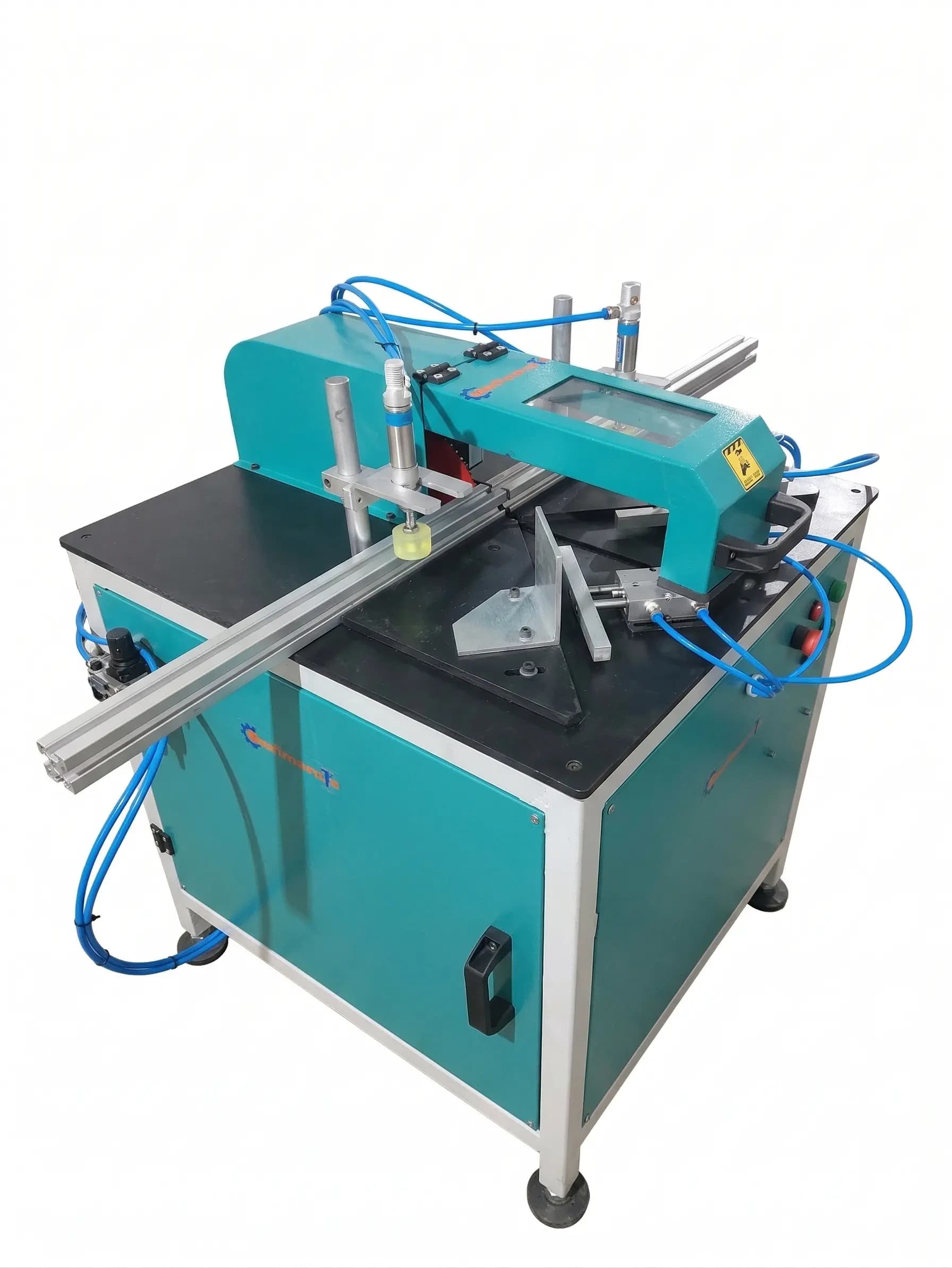
Single Head Cutting Machine for Aluminium and UPVC

Model: MEPCCSH1 | Cutting

Dual-angle versatility with rapid adjustment for Aluminium/uPVC.

2 Station Pneumatic Aluminium Punching Machine

Model: MEPPPST2 | Punching

Multi-tool setup with adjustable cutting depth.

1 Station Pneumatic Aluminium Punching Machine

Model: MEPPPST1 | Punching

Precision alignment with Easy Guiding System for Aluminium.

Pneumatic Copy Router Machine for Aluminium and UPVC

Model: MEPCR Series | Router

High-speed routing with secure pneumatic clamping.

Explore Mechnovate Machinery

Browse our complete range of aluminium and uPVC window fabrication machinery. Call +91-9265699061 or visit our products page for specifications and pricing.