Streamlining uPVC Window Machinery in Thane’s Compact Galas
Maximizing Throughput in Thane’s Small Industrial Spaces
Setting up a uPVC Window Manufacturing Machinery unit in the compact 400–600 sq. ft. industrial galas of Thane, such as those in Wagle Estate or Manpada, requires more than just buying equipment; it requires precision engineering of the workflow. The primary constraint is the 'linear flow' of 6-meter uPVC profiles. In a typical Thane gala, the distance from the entrance to the back wall is often exactly 6–8 meters, leaving zero room for error in machine placement. To achieve a production rate of 25–30 windows per shift, you must eliminate 'criss-cross' movement. In our experience consulting for small-scale fabricators, we found that switching from a scattered layout to a 'U-shaped' production line increased output by 40 frames per day simply by reducing material handling time. This approach ensures that the Aluminium Cutting Machine and welding units do not compete for the same floor space.
The Essential 5-Machine Kit for Small-Scale Fabricators
For a startup or small-scale business in Thane, the 'best uPVC window making machine for small business' is not necessarily the fastest, but the most versatile. You need a setup that handles multi-chamber profiles (60mm, 70mm, and 80mm) without constant recalibration. Based on 15+ years in the workshop, we recommend this core configuration for compact galas:
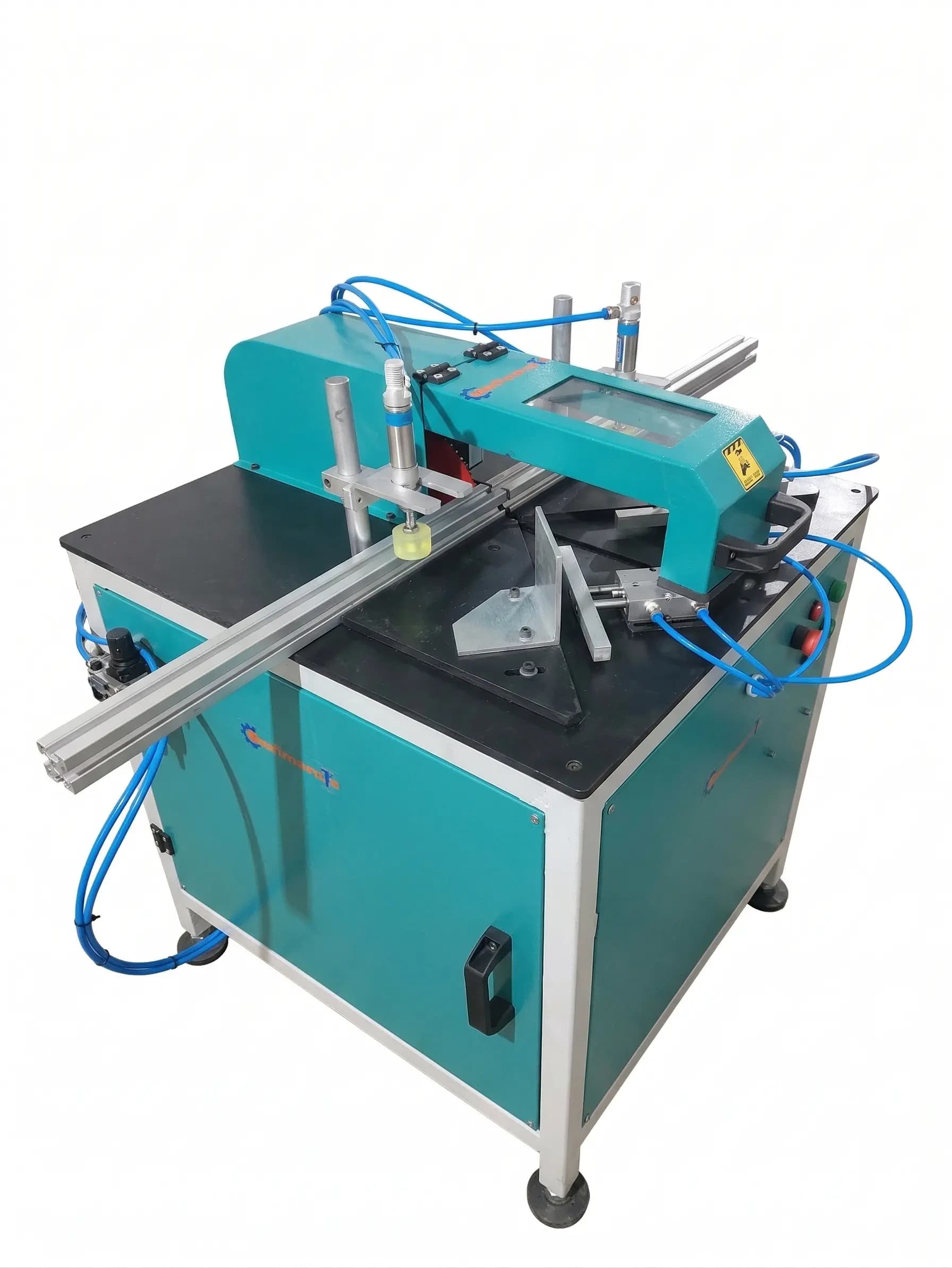
- Single Head Cutting Machine: A 12-inch or 14-inch Single Head Cutting Machine is the backbone of small units. Unlike an automatic double head cutting machine price India which might be too large for a 400 sq. ft. gala, a single head allows for manual 45 and 90-degree adjustments while occupying 60% less space.
- Single Head Seamless Welding Machine: This is critical for achieving a high-quality finish. Ensure your upvc welding machine has a PLC-controlled heating timer and a cooling cycle of at least 25-30 seconds to avoid brittle joints.
- Portable Copy Router Machine: Essential for milling lock holes and handle slots. A high-speed copy router for aluminium windows and uPVC profiles should operate at 12,000+ RPM to ensure clean cuts without melting the uPVC skin.
- End Milling Machine: Necessary for transom and mullion preparation. Look for machines that allow quick blade changes to accommodate different profile series.
- Manual Punching Machine or Glazing Bead Saw: A dedicated bead saw ensures the 45-degree glass-holding beads fit perfectly, which is the hallmark of a professional installation.
Technical Deep Dive: Tolerances and Engineering Standards
Precision engineering in window fabrication is governed by tolerances of +/- 0.5mm. When using an upvc windows making machine, the feed rate of the blade is just as important as the RPM. For example, when cutting reinforced profiles (those with internal steel), an aluminium profile cutting machine with a carbide-tipped blade (TCT) should maintain a constant feed to prevent heat buildup. In our testing at Mechnovate, we discovered that reducing the cutting waste from 12% to 3% was achievable simply by optimizing the nesting software and using a precision degree cutting machine with digital readouts. We adhere to IS 1285 and ISO 9001 standards, ensuring that every aluminium cutting machine 12 inch we supply can handle the rigors of 10-hour shifts in Mumbai’s humid conditions without thermal expansion affecting the miter accuracy.
Optimizing the Air Supply and Electrical Load
A common mistake in Thane's industrial galas is undersizing the air compressor. Most uPVC machinery, specifically the welding and cleaning units, operate on pneumatic systems requiring 6-8 bar pressure. For a 5-machine setup, we recommend a minimum of a 5.5 HP reciprocating compressor with a 250-liter tank. If the air pressure drops below 5 bar during a welding cycle, the clamp pressure will fail, leading to misaligned corners. Furthermore, ensure your gala has a stable 415V 3-phase connection. We have seen many upvc window manufacturing machines fail due to voltage fluctuations in older industrial estates; hence, a 15kVA servo stabilizer is a non-negotiable investment for protecting your PLC units.
The Thane Case Study: Boosting Output by 40%
In 2022, we assisted a fabricator in a 500 sq. ft. unit in Kolshet Road, Thane. Initially, they were using a manual punching machine and a basic aluminium cutter machine, producing 8-10 windows daily with a 15% scrap rate. We integrated a semi-automatic double head miter saw for aluminium profiles price effective for their budget and a CNC uPVC window corner cleaning machine.
Before vs. After Metrics:
- Daily Production: 10 windows vs. 32 windows.
- Labor Requirement: 6 workers vs. 3 workers.
- Waste Material: 14% vs. 4%.
- Accuracy: Manual measurement vs. Digital stop-guided cutting.
The transition to an automatic upvc window plant cost India-wide can be steep, but by focusing on high-impact machines like the welding and cutting units first, the ROI was achieved in just 14 months. This setup proved that even with limited square footage, industrial aluminum door manufacturing equipment can be squeezed into a gala if the material flow is optimized for 'In-Line' processing.
Avoiding Common Small-Scale Setup Mistakes
- Ignoring Dust Extraction: uPVC swarf is static and sticks to everything. Without a proper vacuum system on your upvc window machine, the chips will enter the welding plates, causing black spots on the joints.
- Poor Leveling: Most Thane galas have slightly sloped floors for drainage. If your upvc windows manufacturing machine is not perfectly leveled using a spirit level during installation, the frame will be 'out of plumb,' making the glass installation impossible.
- Skimping on Blade Quality: Using a cheap aluminium cutter machine 12 inch blade on uPVC profiles leads to burrs. Always use high-tooth-count blades (96T to 120T) for a finish that requires no manual filing.
FAQ: Questions from Thane Fabricators
Q1: What is the minimum electricity load for a small uPVC window factory? A: You should plan for a minimum of 7.5 kW to 10 kW connected load. The welding machine and compressor are the highest consumers. Always use a 3-phase connection to balance the load across the machines.
Q2: Can I use the same machine for both Aluminium and uPVC? A: Yes, an aluminium cutting machine can cut uPVC, but the reverse is not always true. uPVC machines often run at higher RPMs. If you plan to do both, invest in an industrial profile cutting safety standards compliant machine with variable speed controls.
Q3: What is the upvc window machine price list for a basic 4-machine startup? A: A standard 4-machine entry-level kit (Single head cutter, single head welder, copy router, and end miller) typically starts from ₹4,50,000 to ₹6,50,000 depending on the degree of automation and brand.
Q4: How much space is needed for a 6-meter profile rack? A: You need a dedicated wall space of at least 6.5 meters. In a small gala, we suggest vertical cantilever racks to keep the floor clear for the upvc window manufacturing machinery workflow.
Get more articles like this
Follow Mechnovate on Google to see our guides in Google Discover & News