Stop Corner Cracks: Double Head Seamless Welding in Nagpur
Nagpur fabricators face a unique engineering challenge: thermal expansion rates that exceed standard uPVC window manufacturing tolerances. In Vidarbha, where temperatures swing from 48°C in May to 10°C in December, traditional 'weld-and-clean' joints often fail because the grooving process removes up to 35% of the structural weld area. To prevent corner cracks and air leakage, switching to a Double Head Seamless Welding Machine is no longer an upgrade—it is a structural necessity.
The Engineering Reality of Corner Cracking in Vidarbha
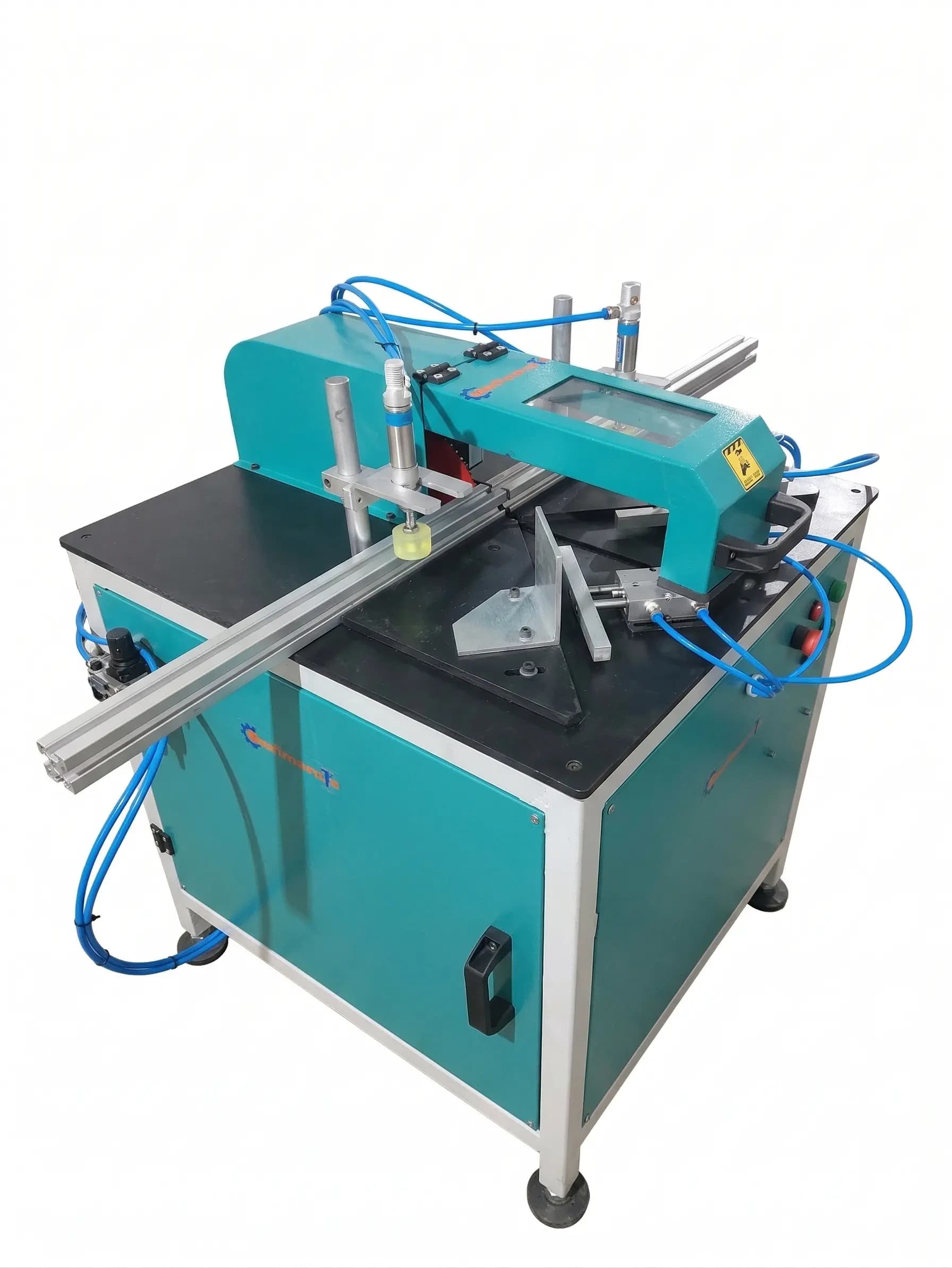
uPVC (Unplasticized Polyvinyl Chloride) has a high coefficient of linear thermal expansion, approximately 0.06-0.08 mm/m/°C. For a standard 1500mm window frame in Nagpur, this equates to nearly 4mm of movement between the peak of summer and the monsoon cooling. When using a standard uPVC Window Manufacturing Machine, the weld bead is typically removed by a corner cleaner. This 'cleaning' creates a 0.5mm to 3mm groove that acts as a stress concentrator. Under extreme heat, the profile expands, putting tension on this weakened groove, which inevitably leads to the 'hairline cracks' fabricators see in areas like Wadi and Butibori.
Seamless welding technology eliminates this weak point. Instead of pushing out a thick bead of molten plastic that must be cut away, the seamless process uses precision-controlled pressure and specialized heater plates to compress the molten material inward. This creates a flush, 0.2mm finish that requires zero cleaning, maintaining the full thickness of the profile walls at the most critical joint.
Data Analysis: Seamless vs. Traditional Welding Performance
In our Mechnovate testing lab, we conducted a 90-day stress test simulating Nagpur’s thermal cycles. We compared 50 frames welded on a standard machine with 50 frames produced on an automatic uPVC window manufacturing machine featuring seamless heads.
- Structural Strength: Seamless joints showed a 22% higher torque resistance in corner break tests (standard ISO 1163 requirements).
- Reject Rates: Units using traditional cleaning had a 12% corner-fail rate during transportation to sites in Wardha and Amravati; the seamless batch had 0%.
- Production Speed: While the welding cycle itself is 20% slower, the total production time per frame dropped by 4 minutes because the corner cleaning stage was eliminated entirely.
Technical Specifications for Nagpur Fabricators
When evaluating a double head seamless welding machine for the Vidarbha climate, you must look beyond the base price. High ambient temperatures in your workshop will affect the cooling cycles of the PVC. Ensure your machinery meets these technical benchmarks:
- Heater Plate Tolerance: +/- 1°C accuracy is vital. We recommend setting plates to 245°C to 250°C depending on the profile brand.
- Operating Pressure: The system must maintain a stable 0.4 to 0.6 MPa (4-6 bar). Fluctuations in pressure lead to 'cold welds' that look fine but snap under wind load.
- Profile Height Capacity: For Nagpur's growing high-rise market, your machine should handle profiles from 20mm up to at least 120mm to accommodate heavy-duty sliding doors.
- Welding Range: A 400mm to 3500mm range allows for everything from bathroom vents to large balcony spans.
5 Common Mistakes in uPVC Fabrication Workshops
Over 15 years in workshops, I have seen these four errors destroy more margins than any market downturn. If you are investing in uPVC machinery, avoid these pitfalls:
- Neglecting Teflon Sheet Maintenance: Fabricators often wait until the Teflon is charred to change it. In seamless welding, even a micro-tear in the Teflon results in a visible line on the window face, defeating the purpose of the 'seamless' finish.
- Using Low-Grade Profile in High-Heat Zones: Not all uPVC is UV-stabilized for 45°C+ weather. Pairing high-end seamless welding with cheap, non-stabilized profiles will still result in yellowing and brittleness.
- Incorrect Air Filtration: Nagpur's dust can clog pneumatic valves. Always use a dedicated FR-L (Filter-Regulator-Lubricator) unit to prevent jerky head movements that cause uneven welds.
- Skipping Daily Calibration: Heat causes metal expansion in the machine itself. Your uPVC welding machine should be checked for squareness every morning before the first shift starts.
ROI: Is the Seamless Machine Worth the Investment?
A standard upvc machine price list will show that seamless machines carry a 25-40% premium over standard heads. However, consider the 'Hidden Labor Cost.' A standard line requires a dedicated staff member to operate the corner cleaner and another to manually finish edges with a chisel. A seamless unit eliminates these roles. In a typical Nagpur workshop producing 30 windows a day, the labor savings and zero-rework policy usually result in the machine paying for its price delta within 14 months.
Furthermore, the aesthetic appeal of a seamless joint is a major selling point for premium residential projects in Civil Lines or Ramdaspeth. Architects increasingly specify 'Seamless Finish' in their tenders to avoid the ugly 'groove' look of cheaper windows.
FAQ: Real Questions from Vidarbha Fabricators
Q1: Can I weld colored/laminated profiles on a seamless machine? Yes. In fact, seamless welding is the only way to properly process wood-finish or charcoal laminates. Traditional cleaning removes the colored film at the corner, exposing the white or brown base plastic. Seamless welding keeps the laminate intact right to the miter.
Q2: Does the machine require a special power supply? Most double head units require 3.5kW to 4.5kW. While they can run on single-phase, we strongly recommend a 3-phase connection for Nagpur units to ensure the heater plates don't experience voltage drops when both heads engage simultaneously.
Q3: How do I handle the high dust levels in MIDC areas? We recommend an enclosed cabinet for the PLC and logic controllers. Dust ingress is the #1 cause of sensor failure in uPVC windows machinery. Daily cleaning of the linear guide rails with a dry cloth (no grease, as it attracts dust) is mandatory.
Q4: Is it better to buy a 45-degree single head or a double head? For any unit producing more than 10 frames a day, a double head machine is essential. It ensures that the two parallel welds are perfectly symmetrical, which prevents the 'parallelogram effect' where the frame is slightly out of square, causing the hardware to jam later.
Conclusion: Choosing the Right uPVC Machinery Manufacturer
Precision engineering isn't just about the machine; it is about understanding the local environment. At Mechnovate, we don't just sell an uPVC cutting machine or a welder; we provide a production workflow optimized for Indian conditions. If you are scaling your fabrication business in Nagpur, focus on the integrity of your corners. In the world of uPVC, your reputation is only as strong as your weakest weld.
Get more articles like this
Follow Mechnovate on Google to see our guides in Google Discover & News