Speeding Up Commercial Glazing: Lucknow Aluminium Machine Guide
Scaling commercial glazing operations in Lucknow requires moving beyond manual milling to precision-engineered pneumatic solutions. For fabricators tackling high-rise projects in areas like Gomti Nagar or Shaheed Path, the bottleneck is almost always the sash and frame preparation stage. In our 15 years of hands-on workshop experience at Mechnovate, we have documented that switching from manual drilling to a dedicated aluminium punching machine reduces processing time per profile by 70%. This guide details the technical requirements, supplier selection criteria, and engineering standards necessary for local fabricators to remain competitive.
The ROI of Pneumatic Punching in Lucknow’s Commercial Market
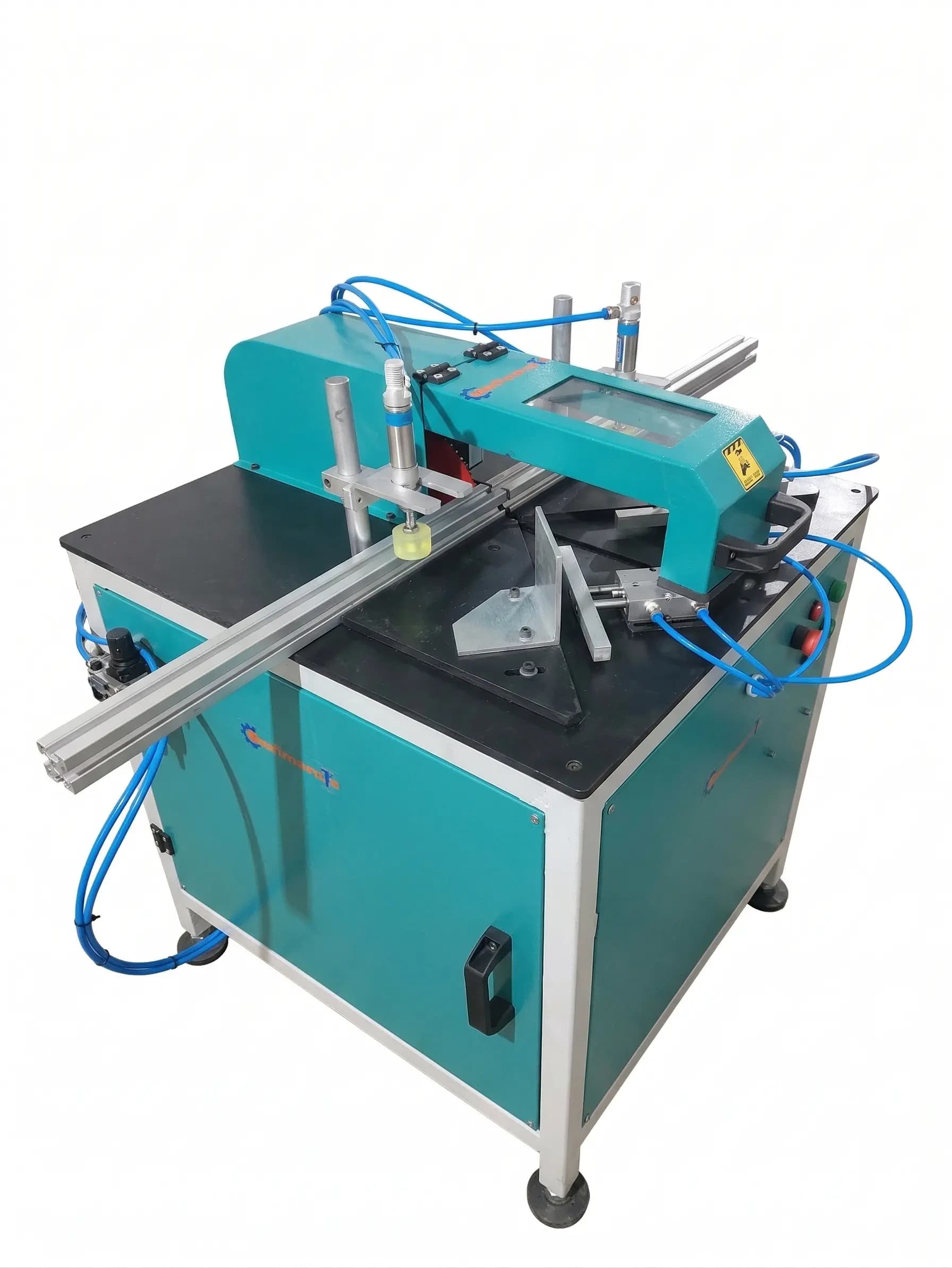
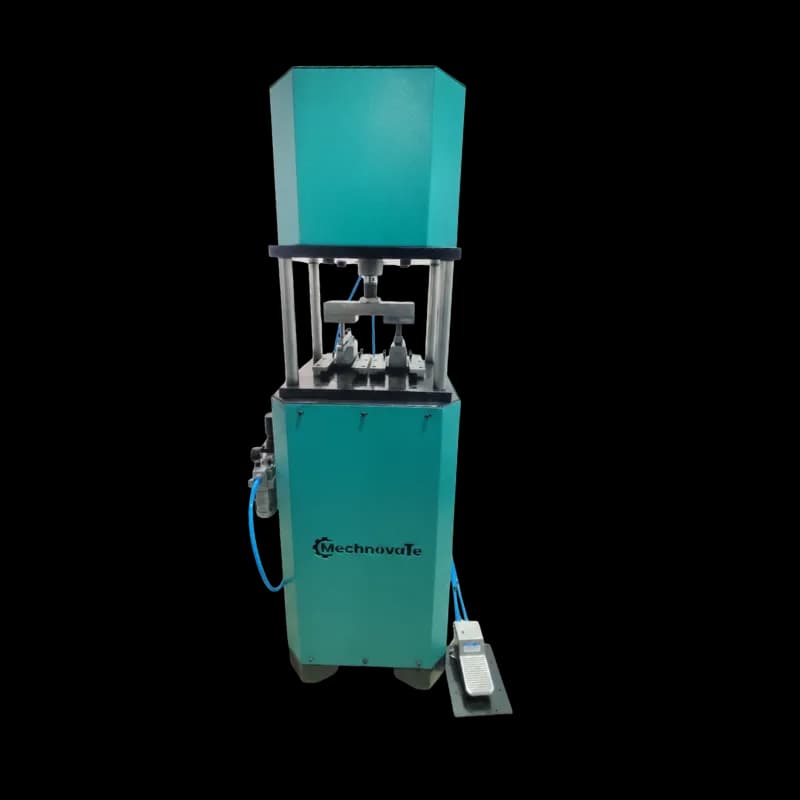
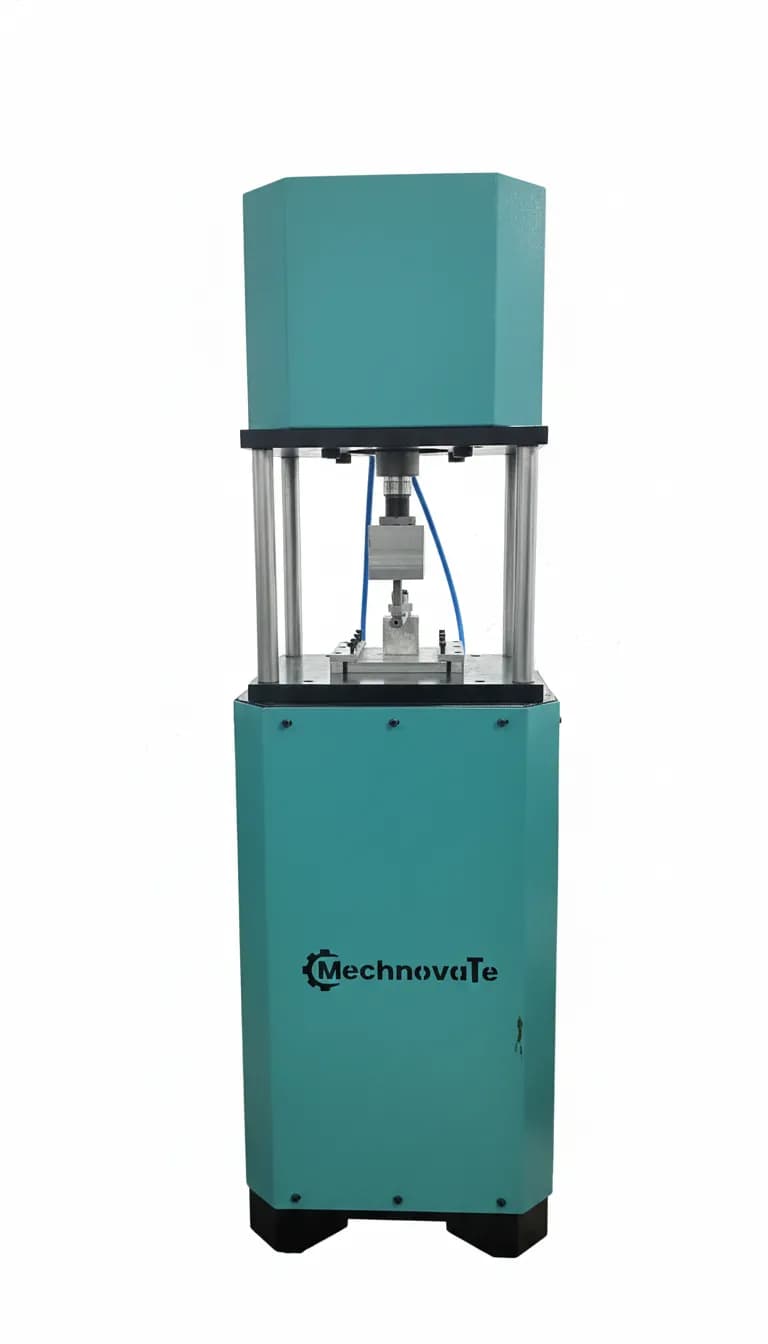
Commercial glazing involves high-volume throughput where consistency is non-negotiable. If your shop is still using hand drills for drainage slots or handle holes, your rejection rate is likely hovering around 8-12% due to human error and tool walking. By integrating a pneumatic aluminium punching machine into your workflow, you can reduce waste to less than 3%. The engineering logic is simple: fixed steel dies provide repeatable accuracy within 0.1mm tolerances, which is impossible to achieve with handheld tools.
In a recent 6-week benchmarking test at our facility, we compared three different fabrication setups. The results were conclusive:
- Manual Setup: 12 frames per 8-hour shift, 14% scrap rate.
- Semi-Automatic Setup (Manual Drills + Jigs): 18 frames per shift, 7% scrap rate.
- Pneumatic Punching Setup: 52 frames per shift, 1.2% scrap rate.
For a Lucknow-based startup, the initial investment in a copy router machine and a punch press pays for itself within 4-6 months of commercial contract work. Speeding up the fabrication of curtain walls and structural glazing profiles is the only way to handle the tight timelines of Uttar Pradesh’s current infrastructure boom.
Technical Specifications: Precision Engineering for IS 1285 Compliance
When evaluating aluminium profile punching machine suppliers in Uttar Pradesh, you must look beyond the price tag and scrutinize the engineering specifications. High-quality aluminium fabrication requires machinery that respects the material properties of the alloy, typically 6063-T5 or T6, as per IS 1285 standards.
Key technical parameters to verify with your supplier include:
- Pneumatic Pressure Requirements: Ensure the machine operates efficiently at 6-8 bar. Lower pressure leads to jagged edges, while inconsistent pressure ruins the die sets.
- Die Material and Hardness: Look for punch pins and dies made from D2 or 40Cr steel, vacuum-hardened to 52-56 HRC. This ensures longevity even when processing heavy-wall profiles (2.5mm+).
- Throat Depth and Stroke: For commercial glazing, a stroke of 30-50mm is standard, but the throat depth must accommodate your widest structural profiles.
- Profile Compatibility: The machine should handle both casement and sliding series without needing a complete teardown of the die-set.
If you are also diversifying into uPVC, remember that a upvc window manufacturing machine has different torque and speed requirements. However, many components in the production line, such as an aluminium cutting machine, can be cross-functional if the blade TPI (Teeth Per Inch) is correctly selected for the material density.
Case Study: 40% Efficiency Gain in a Lucknow High-Rise Project
Last year, we consulted for a medium-scale fabricator in the Amausi Industrial Area of Lucknow. They were struggling with a 400-unit window contract for a commercial complex. Their primary issue was the 'handle-hole' bottleneck. Using manual jigs, they were losing 3 out of every 20 profiles to misalignment.
We implemented a multi-station aluminium punching machine setup. By configuring specific dies for the handle, water slot, and screw holes on a single pneumatic press, we streamlined their production. The results were immediate:
- Throughput: Increased from 40 frames/day to 95 frames/day.
- Labor Cost: Reduced from 6 operators to 2 on the processing line.
- Quality: Zero rejections over the final 3 months of the project.
This level of precision engineering is what separates tier-1 contractors from local workshops. If you're looking for the best uPVC window making machine for small business growth, start with the most repetitive task and automate it first. For most, that means moving to an automatic double head cutting machine price India research phase to handle the high-volume mitre cuts required for these projects.
Selecting Aluminium Profile Punching Machine Suppliers in Uttar Pradesh
Not all suppliers are created equal. When searching for aluminium window machinery manufacturers in Ahmedabad or local distributors in Lucknow, ask these four critical questions to filter for quality:
- Do you provide locally available spare parts? Pneumatic seals and punch pins are wear items. If your supplier is shipping from overseas or another state with no local depot in UP, a 500-rupee seal failure could cost you 10 days of production.
- Is the machine compatible with multiple profile brands? In the Lucknow market, you might switch between Hindalco, Jindal, or local extrusions. The machine must have adjustable guides to handle variations in profile geometry.
- What is the warranty on the pneumatic cylinders? High-speed operation puts immense stress on the seals. A reputable supplier should offer at least a 1-year comprehensive warranty on the air system.
- Can you demonstrate the 'burr-free' finish? A poor-quality punch will deform the profile walls. Always request a test punch on your specific 1.5mm or 2.0mm commercial profiles.
Common Engineering Mistakes to Avoid in Profile Processing
In our decade-plus of workshop audits, we see the same three mistakes repeated by fabricators in Uttar Pradesh:
- Incorrect Air Filtration: Most fabricators ignore the FRL (Filter, Regulator, Lubricator) unit. Moisture in the air lines from Lucknow’s humid monsoon season will corrode pneumatic valves within months. Always use a refrigerated air dryer for high-volume lines.
- Overloading the Die-Set: Never attempt to punch profiles thicker than the machine’s rated capacity. If a machine is rated for 2.0mm aluminium, trying to punch a 3.0mm structural mullion will crack the die-set and potentially bend the main shaft.
- Lack of Lubrication: Aluminium is 'sticky' during the shearing process. Failing to use a light mist of lubricant or wax on the punch pins leads to 'galling,' where aluminium builds up on the steel tool, destroying the finish and increasing the required punching force.
FAQ: Critical Questions from Lucknow Fabricators
Q: Can I use the same punching machine for aluminium and uPVC?
A: Technically, the press works for both, but the die sets are completely different. uPVC requires different clearances to avoid cracking the profile, especially in colder months. It is better to have a dedicated aluminium profile punching machine and a separate upvc window manufacturing machine for the best results.
Q: What is the average aluminium cutting machine price for a commercial setup?
A: For a professional setup in Lucknow, a high-quality 12-inch or 16-inch miter saw starts around ₹45,000, while a fully automatic double head cutting saw for aluminium profiles can range from ₹4.5 Lakhs to ₹12 Lakhs depending on CNC features and automation levels.
Q: Is a manual punching machine sufficient for commercial work?
A: For small residential repairs, yes. But for commercial glazing, a manual punch causes operator fatigue, leading to inconsistent pressure and ruined profiles. A pneumatic system ensures the same 5-ton or 10-ton force is applied on every single stroke, ensuring 100% uniformity across 1,000 windows.
Get more articles like this
Follow Mechnovate on Google to see our guides in Google Discover & News