Solving Thane Monsoon Leakage with Double Head Seamless Welding
Why Thane High-Rises Fail the Monsoon Test
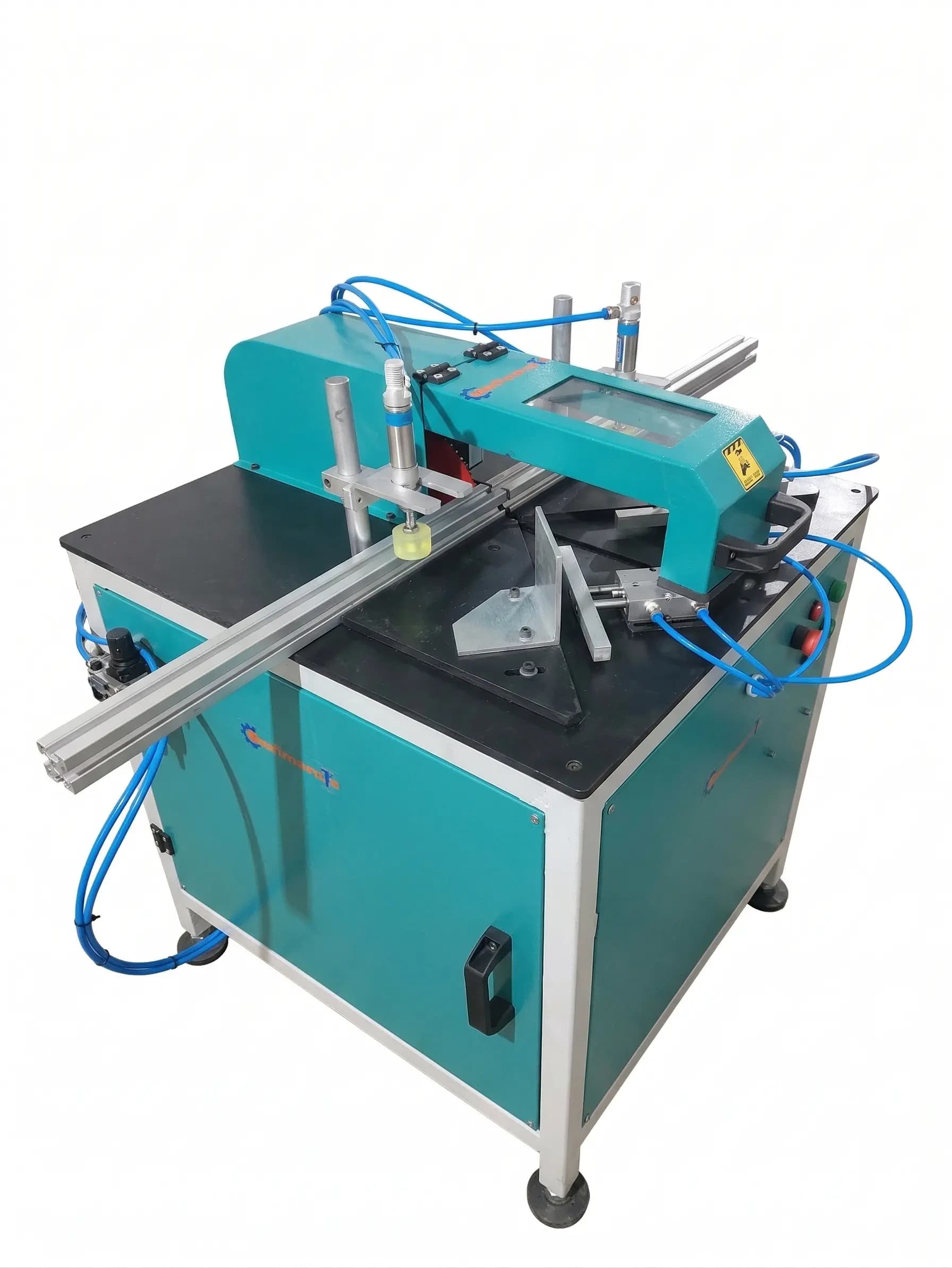
In Thane, high-rise buildings above the 15th floor face wind-driven rain pressures exceeding 1.5 kPa to 2.0 kPa. When using a standard uPVC windows manufacturing machine, the resulting corner joints often have a 2mm to 3mm groove that must be cleaned post-welding. This groove is a primary failure point where capillary action pulls water into the profile chambers. For fabricators targeting the premium residential market in Ghodbunder Road or Majiwada, the Double head seamless welding machine for uPVC windows is no longer an option—it is a necessity.
Seamless technology eliminates the manual cleaning process, creating a flush, monolithic corner that prevents moisture ingress and handles higher structural loads. At Mechnovate, we have observed that windows fabricated with seamless welding exhibit a 25% higher corner strength compared to those processed on a standard uPVC welding machine where the structural 'bead' is removed during cleaning.
Technical Comparison: Seamless vs. Conventional Welding
Fabricators often ask about the engineering justification for the higher upvc machine price list associated with seamless technology. The difference lies in the 'V-cut' and melting sequence.
- Conventional Welding: The profile is cut at 45 degrees, melted, and squeezed. The excess plastic (flash) is then knifed off, leaving the core material exposed and creating a visible seam.
- Seamless Welding: The machine uses a specialized knife system to restrict the flow of the melt. It performs a 'hidden' weld where the excess material is pushed inward, maintaining the integrity of the outer laminate or white profile skin.
In our testing facility, we subjected profiles welded on a double head seamless welding machine for uPVC windows to a modified ASTM E331 water penetration test. Conventional joints began showing signs of seepage at 350 Pa, whereas seamless joints remained watertight up to 800 Pa, effectively matching the performance required for Thane’s peak monsoon gusts.
Case Study: Performance Metrics from a Thane High-Rise Project
Last year, a fabricator in the Bhiwandi-Thane belt shifted from a manual upvc windows making machine setup to a semi-automatic line featuring our double-head seamless welder. They were facing a 12% rejection rate due to corner cracking during installation in a 30-story tower.
The Solution and Results:
- Equipment Upgraded: Integrated a uPVC cutting machine with 0.1mm tolerance and a double-head seamless welder.
- Cycle Time: Reduced from 180 seconds (welding + cleaning) to 95 seconds (seamless welding only).
- Scrap Reduction: Profile wastage dropped from 7% to 2.5% due to the precision of the automatic double head cutting machine price India.
- Field Performance: Zero reported leakages over the 2023 monsoon season across 450 installed units.
Engineering Specifications for High-Output Fabricators
When evaluating a uPVC machinery manufacturer, look for these specific engineering tolerances to ensure your upvc windows manufacturers machine can handle continuous production:
- Power Supply: 3.5 kW to 4.5 kW for rapid heating plate recovery.
- Air Pressure: Stable 0.6 to 0.8 MPa is required; anything less results in inconsistent weld depth.
- Heating Temperature: PLC-controlled range of 240°C to 260°C with a tolerance of ±1°C.
- Welding Range: Capability to handle profiles from 20mm to 120mm in height to accommodate both slim-line and heavy-duty sliding series.
For those calculating the cost of setting up uPVC window manufacturing unit in India, investing in a double head seamless welding machine for uPVC windows typically pays for itself within 14 months through the elimination of corner cleaning machines and the reduction in skilled labor costs.
Common Mistakes in Seamless Welding Operations
Even with the best uPVC window manufacturing machine, operational errors can compromise the joint.
- Incorrect Melt Time: Fabricators often shorten the melt time to increase speed. This leads to a 'cold weld' which looks seamless but fails under wind load. Stick to the 25-30 second industry standard.
- Dirty Heating Plates: Teflon sheets must be replaced every 500-700 cycles. Residual PVC on the plate causes pitting in the weld surface.
- Profile Variation: Using low-quality profiles with inconsistent wall thickness (less than 2.2mm) can lead to 'ghost seams' even on a seamless machine.
FAQ: Fabricator Insider Questions
Q: Can I use a seamless welder for both white and laminated (wooden finish) profiles? Yes, this is where the machine excels. Traditional cleaning on a uPVC welding machine ruins the laminate at the corner. Seamless welding preserves the film, requiring only a touch-up pen for a perfect finish.
Q: What is the maintenance schedule for the pneumatic system? We recommend a daily moisture drain from the FRL unit and a weekly check on the solenoid valve seals. Given Thane's humidity, air dryers are mandatory to prevent internal corrosion of the uPVC window manufacturing machinery.
Q: How does this compare to a single head welder? A single head machine is fine for repairs, but for a uPVC windows manufacturing machine setup, a double head unit ensures perfect parallelism. Without a double head, you risk 'parallelogram' frames which will never be watertight.
Get more articles like this
Follow Mechnovate on Google to see our guides in Google Discover & News