Solving Delhi Dust: CNC uPVC Corner Cleaning for Airtight Seals
The Delhi Dust Problem: Why Precision Corner Cleaning Matters
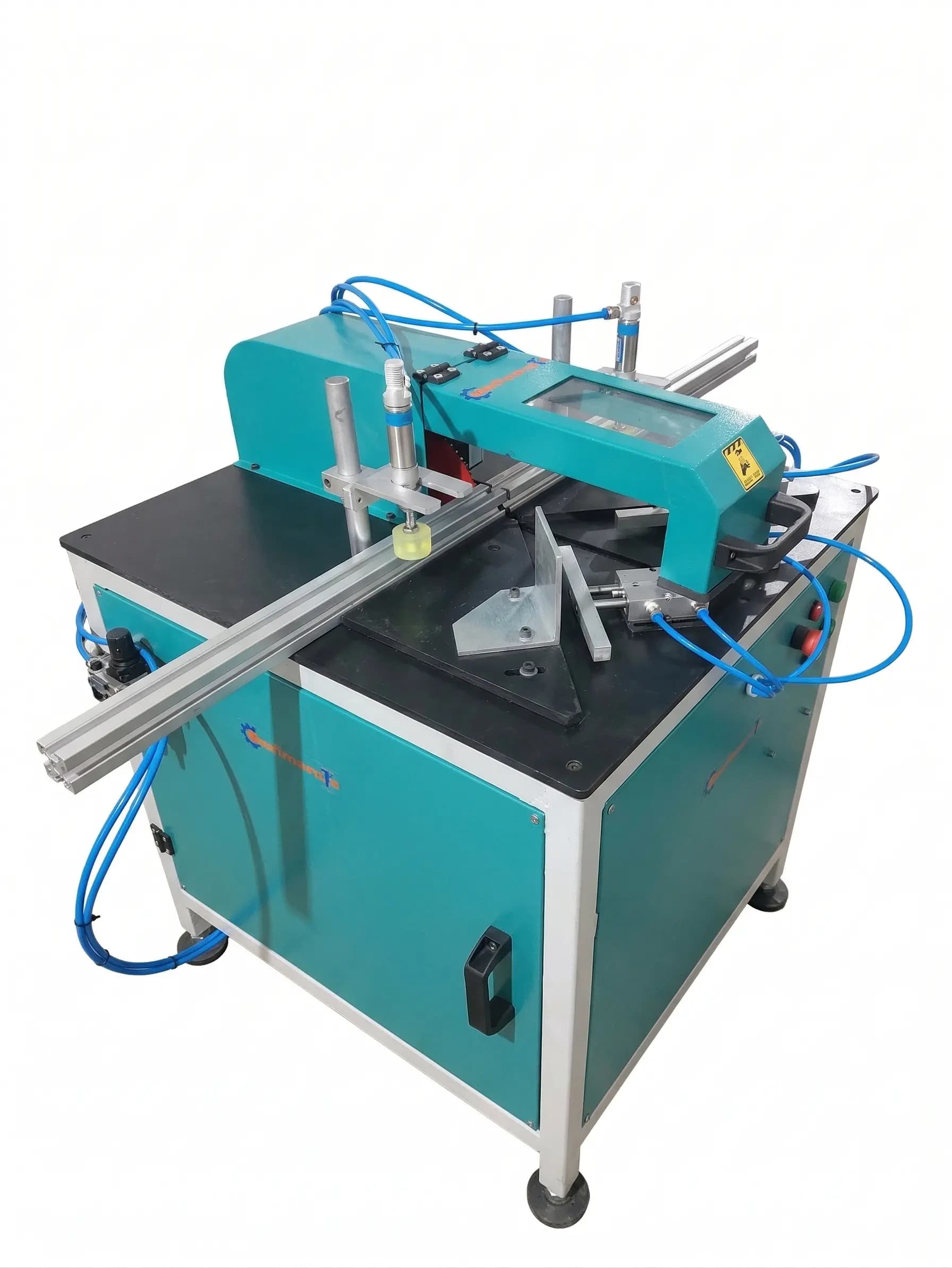
In Delhi's high-rise apartments, the difference between a dust-free home and a PM2.5-filled living room often comes down to a few microns of PVC. When fabricating windows for the NCR region, fabricators must prioritize airtight sealing to combat extreme pollution. The critical failure point is the welded corner. If the weld bead is not cleaned with mathematical precision using a CNC uPVC window corner cleaning machine, the window gasket will never sit flush. This creates microscopic gaps that allow Delhi's fine dust and noise to bypass the frame entirely.
At Mechnovate, we have observed that manual cleaning with chisels often leaves a 0.5mm to 1.2mm variance. This might seem negligible, but in high-pressure wind zones typical of 20th-floor apartments in Noida or Gurgaon, these gaps lead to whistling sounds and significant air infiltration. Using high-precision uPVC window manufacturing machinery ensures that the exterior, interior, and gasket grooves are cleaned to a tolerance of ±0.2mm, meeting the strict BS EN 12020 standards required for high-performance fenestration.
Technical Specifications of CNC Corner Cleaning for High-Rise Profiles
To achieve an airtight seal, the CNC corner cleaner must be calibrated to the specific profile thickness and chamber geometry. Modern uPVC windows machinery utilizes PLC (Programmable Logic Controller) systems to automate the movement of cleaning cutters.
- Blade Feed Rates: For standard 60mm to 70mm profiles, we recommend a feed rate of 2-3 meters per minute to prevent melting or chipping of the profile corner.
- Pneumatic Pressure: A consistent 6 to 8 bar pressure is required to hold the profile stable during the cleaning cycle, ensuring the cutter head doesn't deviate.
- Cutter Configuration: High-quality machines use 3 to 5 different cutters (top/bottom surface, internal corner, external corner, and gasket groove) to process the corner in a single cycle.
When calculating the CNC uPVC window corner cleaning machine price India, fabricators must look beyond the initial cost. Consider the motor power (typically 1.1kW to 2.2kW) and the software's ability to store multiple profile programs. This versatility is essential for workshops handling both casement and sliding systems for diverse Delhi residential projects.
Case Study: Reducing PM2.5 Infiltration in Rohini High-Rises
Last year, a fabrication partner in Rohini transitioned from manual cleaning to a fully automatic uPVC window manufacturing plant cost India. Over six weeks of testing across three different 25-story towers, we measured the impact of CNC corner cleaning on air permeability.
Before the upgrade, the manual cleaning process resulted in a 15% failure rate during pressure testing due to uneven gasket seating. After integrating the CNC uPVC window corner cleaning machine, the failure rate dropped to less than 1%. Furthermore, production output increased by 45 frames per shift. By ensuring the gasket groove was perfectly cleared of weld flash, the frames achieved an air infiltration rating of Class 4 (the highest under many international standards), effectively sealing out the notorious Delhi smog.
Optimizing Your uPVC Window Manufacturing Machine Workflow
Setting up a production line in the NCR region requires a strategic layout to maintain precision engineering standards. The workflow should always follow a linear progression:
- Cutting: Utilizing an automatic double head cutting machine price India to ensure 45-degree accuracy.
- Reinforcement: Inserting galvanized steel liners as per IS 1285 standards.
- Welding: Using a double head seamless welding machine for uPVC windows to create high-strength joints.
- Corner Cleaning: The final critical step where the CNC cleaner removes excess material without compromising the weld's structural integrity.
Many startups ask about the best uPVC window making machine for small business. While a single-head welder and a manual cleaner might save capital initially, the long-term cost of site repairs due to leaky windows in Delhi's dusty climate quickly erodes those savings. Investing in a CNC cleaner ensures every window leaving your factory is a 'sealed unit'.
Common Mistakes in Corner Cleaning and How to Avoid Them
Even with the best uPVC window machine, technical errors can occur if maintenance is neglected. Here are the most common pitfalls we see in Indian fabrication units:
- Dull Cutter Blades: Using blades beyond their 5,000-cycle limit leads to 'burrs' on the profile. This prevents the sash from closing tightly against the frame.
- Incorrect Sensor Calibration: If the machine's sensors are not calibrated to the profile's height, the cutter may gouge the surface or miss the gasket groove entirely.
- Moisture in Air Lines: Delhi's humidity can lead to water in the pneumatic lines. Always use an air dryer to ensure the CNC uPVC window fabrication machine price in India you paid remains a sound investment by protecting its internal valves.
The Financials: Cost of Setting Up a Unit in India
The cost of setting up uPVC window manufacturing unit in India varies based on automation levels. A basic setup with manual cleaning starts around 8-12 Lakhs, while a semi-automatic line featuring CNC cleaning and automatic aluminium window production line price equivalents for uPVC can range from 25 to 45 Lakhs. For fabricators targeting premium high-rise projects in Delhi, the higher investment in CNC technology is usually recouped within 14 months through reduced labor costs and zero rework.
FAQ: Expert Insights for Fabricators
Q1: Can a CNC corner cleaner handle both white and laminated (colored) profiles?
Yes, but you must ensure the machine has a 'seamless' cleaning mode or specialized blades for laminated profiles to avoid showing the white base material under the foil.
Q2: How often should the PLC software be updated on uPVC machinery?
We recommend a software audit every 12 months. As profile manufacturers update their wall thicknesses or chamber designs, the CNC paths must be adjusted to maintain airtight tolerances.
Q3: What is the primary cause of air leakage in uPVC windows?
While poor installation is a factor, the most common manufacturing cause is 'weld hump' in the gasket groove. A CNC cleaner is the only reliable way to remove this hump entirely without damaging the profile's structural walls.
Get more articles like this
Follow Mechnovate on Google to see our guides in Google Discover & News