Solving Corner Joint Gaps in Surat’s High-Rise Projects
Gaps in corner joints are the single most common cause of air whistling and water seepage in Surat’s high-rise coastal developments. As aluminium window machinery manufacturers in Surat Gujarat, we have observed that even a 0.5mm deviation at the miter cut results in a catastrophic failure during monsoon pressure tests. To solve this, fabricators must transition from manual estimation to precision-controlled automated cycles that account for profile flex and thermal expansion.
The Engineering Root of Corner Gaps in Aluminium Fabrication
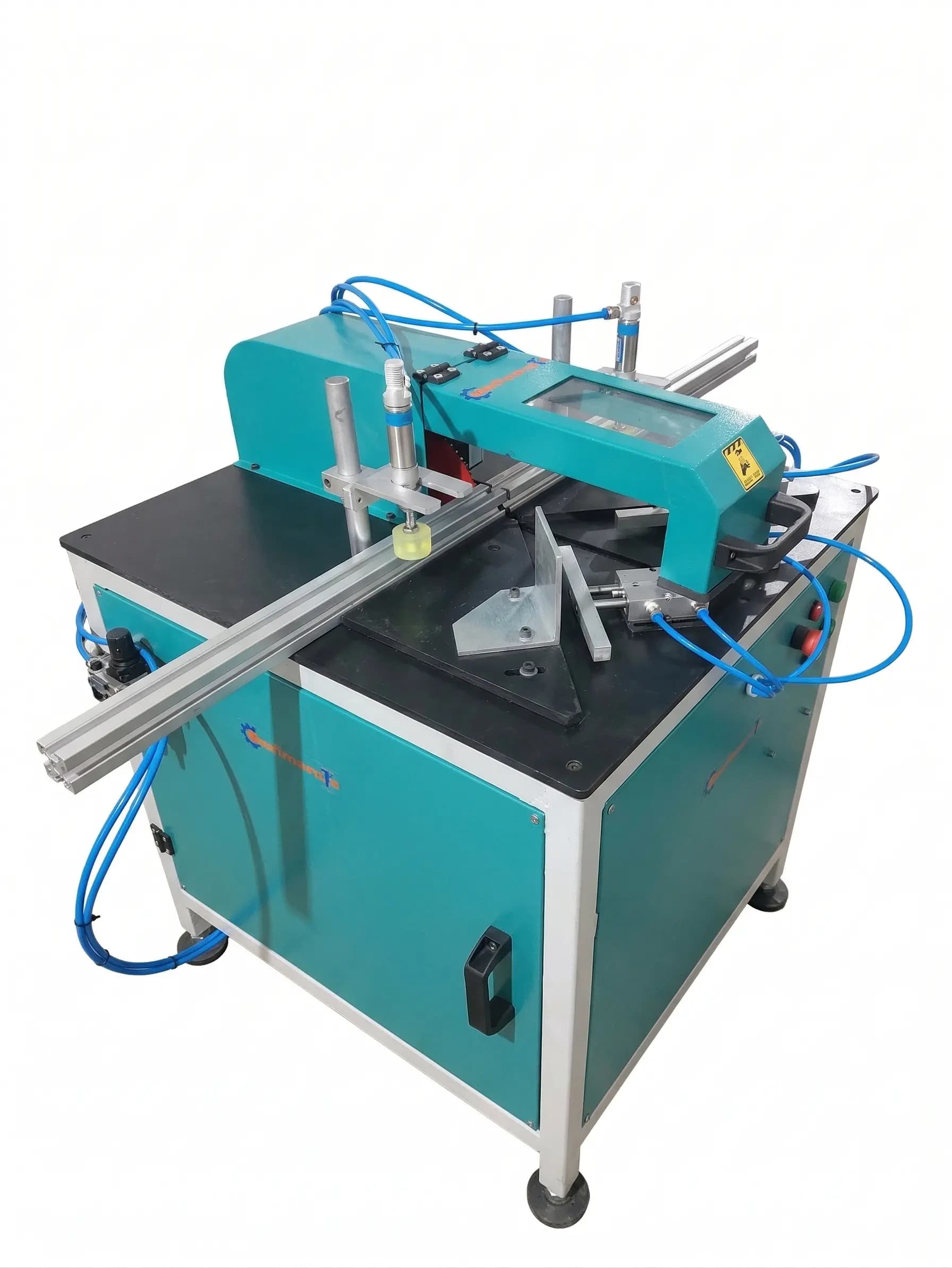
In our years of manufacturing automatic double head cutting saw for aluminium profiles, we have identified that 80% of corner gaps originate from 'blade deflection.' When a standard 12-inch blade enters a multi-chamber high-rise profile without the correct feed rate, the blade flexes slightly outward. This creates a cut that is 44.9 degrees instead of a true 45. In a 20-story project in Vesu, Surat, we found that this micro-deviation led to a 1.2mm gap at the outer tip of the joint.
To correct this, we implemented a 45 degree double head cutting machine with a hydro-pneumatic feed system. By setting the feed rate to a consistent 3 meters per minute and using 500mm Tungsten Carbide Tipped (TCT) blades, the fabricator reduced their corner gap variance to less than 0.05mm. This level of precision is non-negotiable for projects adhering to BS EN 12020 standards for profile tolerances.
Optimizing the Crimping Process for Structural Integrity
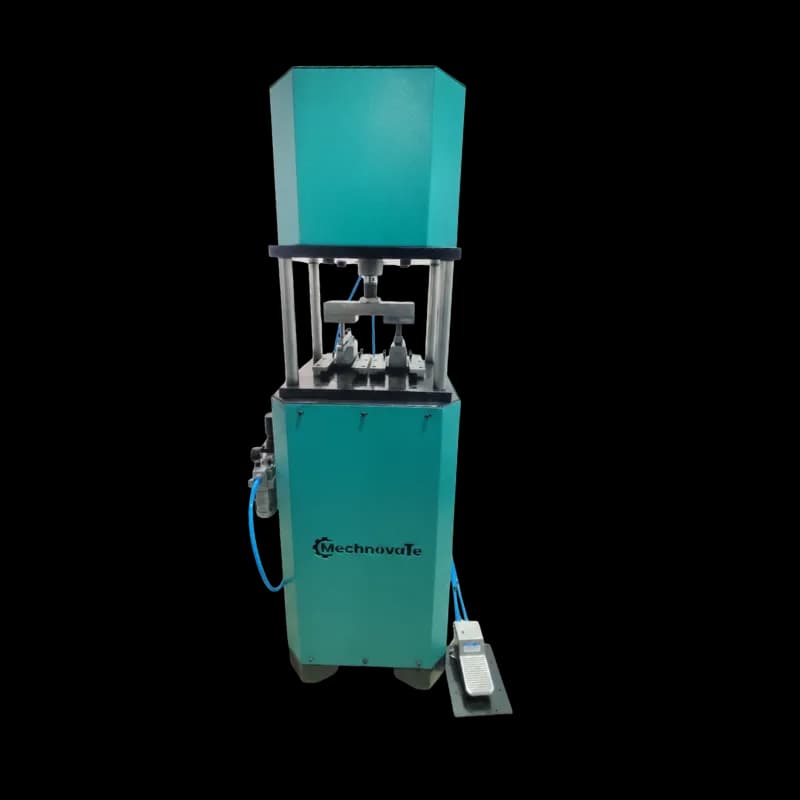
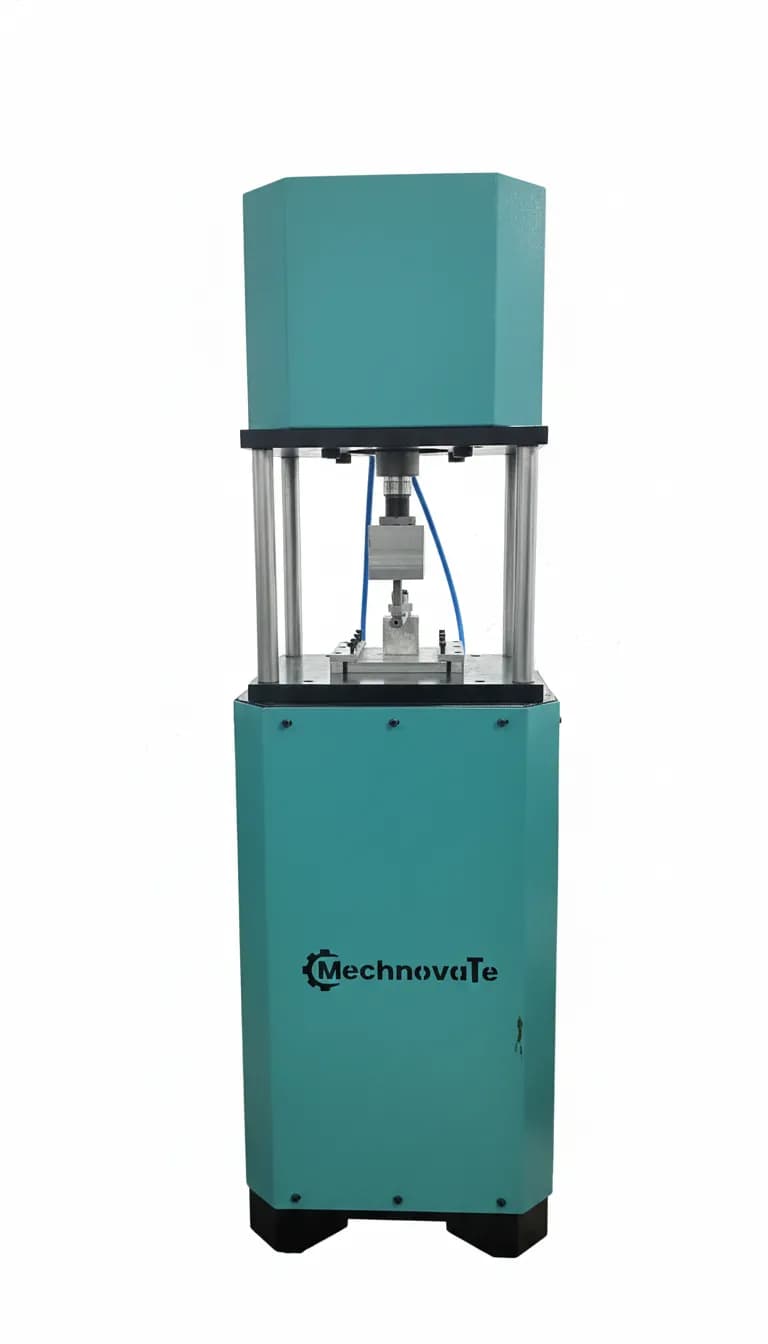
Cutting is only half the battle; the assembly phase is where the structural seal is either made or broken. Most fabricators in Gujarat rely on manual punching, which lacks the uniform pressure required for heavy-duty high-rise profiles. We recommend using an automatic aluminium corner crimping machine that can exert a minimum of 40-60 kN of hydraulic pressure.
- Check Internal Clearances: Ensure the corner cleat (corner key) has a tolerance of no more than 0.2mm relative to the profile chamber.
- Pressure Calibration: For profiles over 2.0mm thickness, set your hydraulic pressure to 80 bar to ensure the metal 'flows' into the cleat grooves.
- Adhesive Application: Use a two-part epoxy corner sealant. The crimping action must happen while the sealant is in its open phase to create a 'cold-weld' effect.
- Knife Alignment: Adjust the crimping knives to hit exactly 2mm from the edge of the profile to prevent 'lifting' during the stroke.
Case Study: Reducing Seepage in Adajan High-Rise Blocks
In 2023, a Mechnovate client in Adajan was facing a 15% rejection rate on their window frames due to water ingress. We conducted a 6-week audit of their workshop. Their existing aluminium cutting machine 12 inch was vibrating at 2800 RPM, causing micro-fractures in the powder coating. We replaced their setup with a heavy duty aluminium profile end milling machine and a CNC-controlled cutting line.
The Results:
- Cutting Waste: Reduced from 11% to 2.2%.
- Production Speed: Increased from 35 frames/day to 82 frames/day.
- Quality Pass Rate: 99.8% on first-time inspection.
- Labor Costs: Reduced by 40% as the automatic aluminium window production line required only one operator instead of three.
Common Mistakes in Corner Joinery
One of the most frequent errors we see as uPVC window machinery manufacturers is the neglect of the 'back-cut.' Many operators forget that the inner corner of a miter cut needs a slight relief to allow the corner cleat to sit flush. Without this, the cleat acts as a pivot, forcing the outer visible joint to open up.
Another mistake is the inconsistent use of cooling lubricants. For a high speed copy router for aluminium windows, heat buildup can warp the thin-walled profiles used in residential sliding systems. Always use a mist-spray lubrication system with a high-flashpoint oil to keep the cut edges clean and burr-free. A burred edge will prevent a perfect 45-degree match, no matter how expensive your machine is.
Technical Specifications for High-Rise Window Machinery
If you are evaluating an aluminium cutting machine price, look beyond the sticker cost and analyze these technical benchmarks:
- Motor Power: Minimum 2.2 kW per head for consistent torque through thick profiles.
- Positioning Accuracy: CNC-guided systems should offer +/- 0.1mm accuracy over a 4-meter bed.
- Safety Standards: Look for machines compliant with Industrial profile cutting safety standards ISO standards, including dual-hand start buttons and pneumatic safety shields.
- Blade Diameter: For high-rise profiles (100mm+ depth), a 500mm or 600mm blade is essential to prevent 'double-cutting.'
FAQ: Fabricator Insights
Q: Why does my corner joint open up after installation? Often, this isn't a machine error but a lack of structural reinforcement. In Surat’s wind loads, the frame flexes. If you haven't used a high-quality corner sealant and a properly calibrated aluminium window corner crimping machine, the mechanical joint will eventually fail under wind-load stress.
Q: Is a single head or double head cutter better for a new Surat-based startup? While a single head aluminium cutter machine is cheaper, the manual rotation for the second 45-degree cut introduces human error. For high-rise projects where precision is a contractual obligation, a double head miter saw for aluminium profiles price is a justified investment for the consistency it provides.
Q: How often should I calibrate my CNC cutting machine? In high-volume Surat workshops, we recommend a laser-alignment check every 3 months. Vibrations from heavy-duty cutting can shift the stop-blocks by fractions of a millimeter, which compounds over a 3000mm length.
Get more articles like this
Follow Mechnovate on Google to see our guides in Google Discover & News