Scaling Your Workshop: Best Aluminium Window Machinery in Chennai
To scale a workshop for Chennai’s high-rise projects, you must prioritize high-speed precision and structural integrity. High-rise buildings in coastal zones like OMR or ECR face extreme wind pressures (up to 2.5 kPa), meaning your window frames must achieve near-zero tolerance in joinery. Transitioning from manual tools to an automatic double head cutting saw for aluminium profiles and high-pressure corner crimpers is the only way to meet the BS EN 12020 standards required by Tier-1 developers. In this guide, we analyze the engineering requirements and machinery selection criteria for high-output fabrication units in Tamil Nadu.
Technical Benchmarks for High-Rise Aluminium Fabrication
When fabricating for 20+ story structures, manual measurements lead to air infiltration and water seepage. You need an aluminium profile cutting machine capable of maintaining a length tolerance of ±0.1mm. For high-rise projects, the profile thickness often ranges from 1.8mm to 2.5mm to withstand wind loads. Standard 12-inch cutters often struggle with these heavy-duty sections, leading to blade deflection and uneven miters.
- Cutting Precision: Use a 45 degree double head cutting machine with 500mm or 600mm TCT blades. These ensure the large-chamber profiles used in system windows are cut cleanly without burrs.
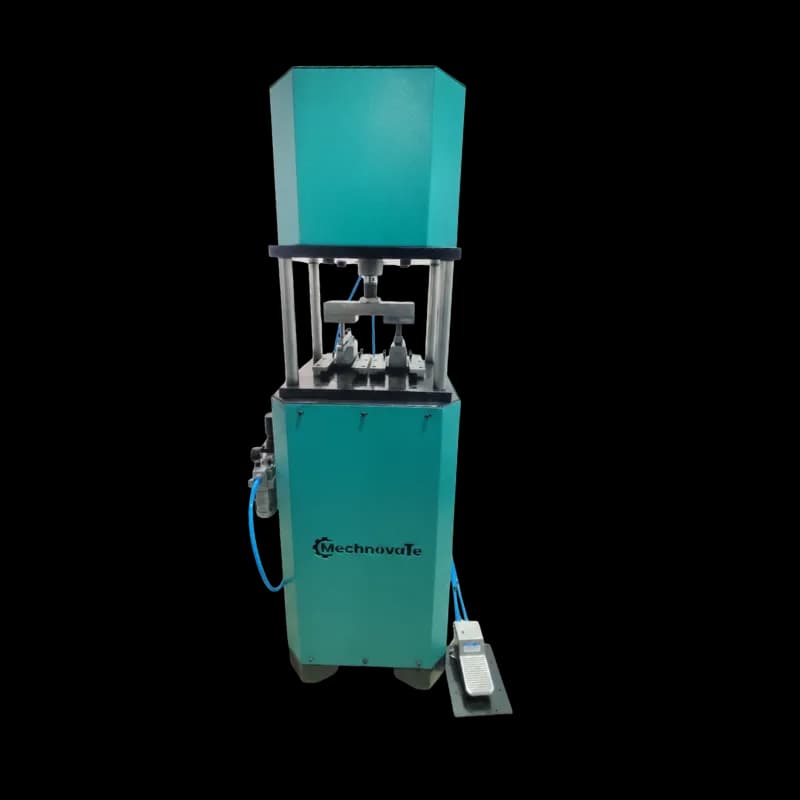
- Corner Strength: High-rise windows fail at the joints. An automatic aluminium corner crimping machine price investment is justified by the 30kN to 50kN of hydraulic pressure it applies, ensuring the frame becomes a single structural unit.
- Milling and Routing: A heavy duty aluminium profile end milling machine is essential for clean mullion joints. For hardware slots, a high speed copy router for aluminium windows prevents thermal deformation of the alloy during the drilling process.
Case Study: Scaling a Guindy-Based Workshop for 400-Unit Projects
Last year, a Chennai-based partner faced a bottleneck: they were losing 15% of their material to cutting errors while using a manual aluminium cutter machine 12 inch. We implemented a semi-automated line centered around a CNC uPVC window fabrication machine and a double-head aluminium saw. Over six weeks of testing and calibration, the results were definitive.
- Waste Reduction: Cutting waste dropped from 12% to 2.8% due to optimized nesting software and precision digital readouts.
- Output Increase: Frame production jumped from 18 frames/day to 52 frames/day with the same headcount.
- Accuracy: We achieved a 99.8% pass rate on third-party site inspections for the 'Chennai One' project expansion, where air-tightness was a critical KPI.
Essential Machinery for uPVC and Aluminium Production Lines
If you are diversifying, selecting the right uPVC window machinery manufacturers in Chennai involves looking at the welding and cleaning cycles. For high-rise uPVC, a double head seamless welding machine for uPVC windows is preferred as it eliminates the need for manual groove cleaning, which often weakens the profile's outer skin.
Core Equipment Checklist:
- uPVC Welding Machine: Look for PLC-controlled heating plates that maintain a consistent 245°C to 260°C.
- Aluminium Punching Machine: A multi-station manual punching machine or pneumatic press for drainage holes and handle slots reduces secondary processing time.
- Copy Router: Ensure the spindle speed reaches at least 12,000 RPM for clean cuts in 6063-T6 grade aluminium.
| Machine Type | Key Specification | Best Use Case |
|---|---|---|
| Double Head Miter Saw | 500mm Blade, 3kW Motor | High-volume perimeter frame cutting |
| Corner Crimping Machine | 200mm Max Crimping Height | Heavy-duty system window assembly |
| CNC Corner Cleaner | 3-5 Axis Control | High-speed uPVC window manufacturing |
| End Milling Machine | Variable Angle (up to 45°) | Mullion and transom joinery |
Selecting Best Aluminium Window Machinery Suppliers in Chennai
Choosing a supplier in the Chennai industrial belt (Ambattur, Oragadam, or Sriperumbudur) requires more than just looking at the aluminium cutting machine price. You must evaluate the service infrastructure. High-rise project timelines are aggressive; a 48-hour machine downtime can result in massive liquidated damages from the main contractor.
Always verify if the supplier has a dedicated uPVC window machine service center in Tamil Nadu. Ask for the specific motor brands used in their head cutter machine—we recommend Italian or German-spec motors for duty cycles exceeding 8 hours. Furthermore, ensure the uPVC window manufacturing machinery complies with ISO 9001 for build quality and Industrial profile cutting safety standards to protect your operators.
Common Mistakes in Workshop Expansion
One common error is underestimating the power requirements for an automatic aluminium window production line price. Most high-speed CNC machines require a stable 415V 3-phase supply with a dedicated stabilizer. Another mistake is ignoring the air compressor capacity. A single upvc windows making machine might only need 100L, but a full line with a corner crimper and multiple pneumatic cutters requires at least a 500L tank with an integrated refrigerant dryer to prevent moisture from damaging the solenoid valves.
Finally, avoid buying a portable uPVC window making machine price list for permanent workshop setups. While great for on-site repairs, these machines lack the bed rigidity needed for the consistent 45-degree joins required in high-performance high-rise glazing. Invest in heavy-duty cast-iron bases to dampen vibrations and ensure long-term precision.
FAQ: Fabricator Insights
Q1: What is the typical cost of setting up uPVC window manufacturing unit in India for high-rise capacity? An entry-level professional line (cutting, welding, cleaning, and routing) typically starts at ₹8,00,000, while a fully automatic uPVC window manufacturing unit cost can exceed ₹25,00,000 depending on CNC integration.
Q2: Can I use the same machine for both uPVC and Aluminium cutting? While a 12-inch aluminium cutter can technically cut uPVC, the blade teeth (TPG vs. ATB) and RPM requirements differ. For high-rise quality, use dedicated blades to prevent chipping in uPVC and melting in aluminium.
Q3: Why is a corner crimping machine essential for aluminium high-rise windows? Unlike screws or cleats, crimping uses hydraulic force to interlock the profiles and internal joinery. This creates a waterproof, structurally sound corner that won't sag or leak under the high wind pressures found at 60+ meters above ground level.
Get more articles like this
Follow Mechnovate on Google to see our guides in Google Discover & News