Scaling Your Pune Workshop: Choose Aluminium Fabrication Machinery
Scaling Production for Pune’s High-Rise Commercial Market
Scaling a Pune-based workshop to meet the demands of high-rise commercial projects in areas like Kharadi, Hinjewadi, and Baner requires a fundamental shift from manual processing to precision automation. To bid successfully on Grade-A commercial contracts, your facility must move beyond basic manual tools. The objective is to achieve high-volume output while maintaining tolerances required by consultants for structural glazing and heavy-duty window systems. Selecting the right aluminium window fabrication machine suppliers Pune involves evaluating not just the price, but the machine's ability to handle the 2.5mm to 3.0mm profile thicknesses common in high-rise specifications.
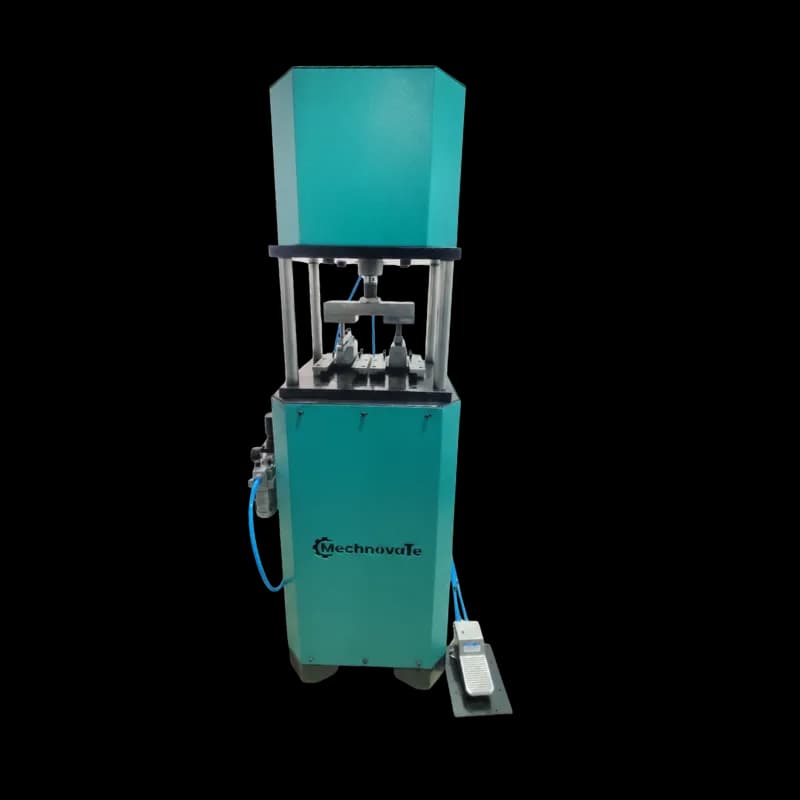
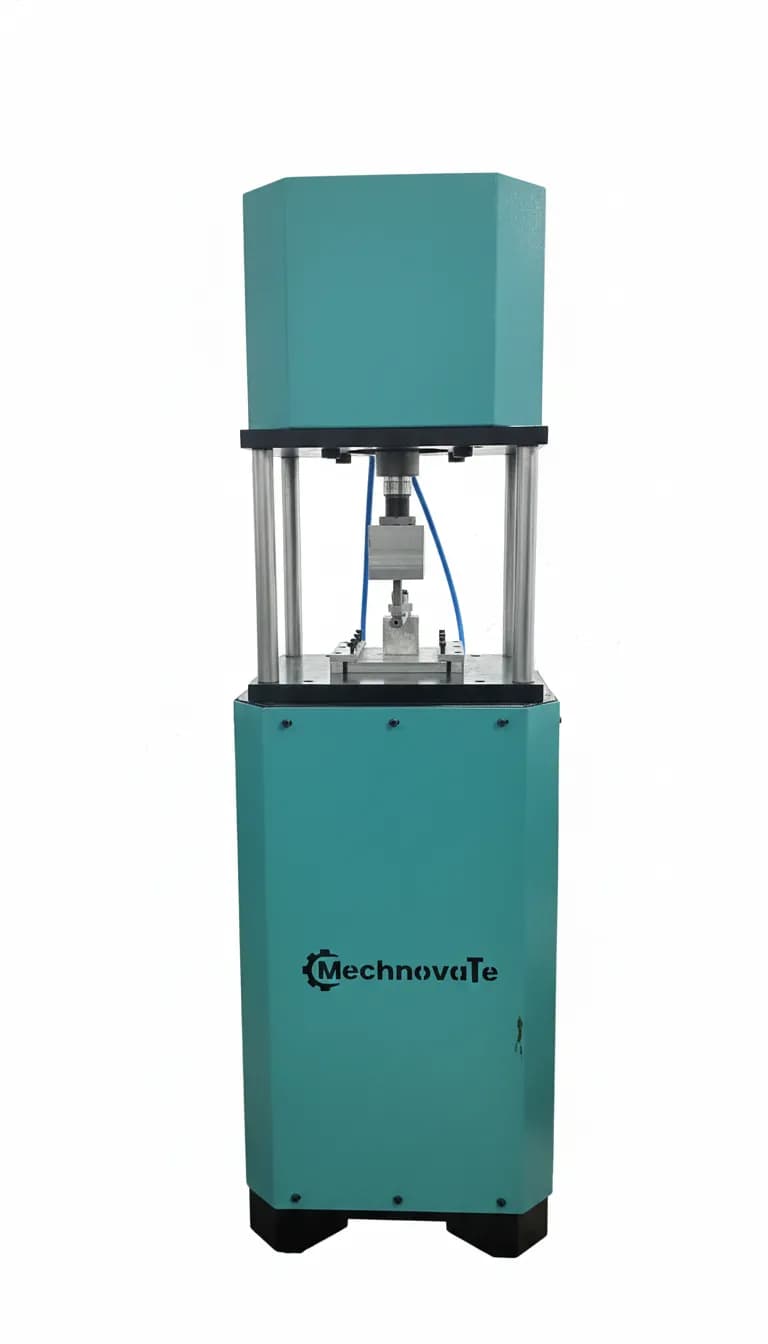
At Mechnovate, we have observed that Pune fabricators often struggle when transitioning from residential to commercial scales. The primary bottleneck is usually the cutting and crimping stages. For high-rise projects, where wind load calculations are critical, the structural integrity of the corner joint is paramount. This is why investing in an automatic aluminium corner crimping machine price Gujarat is often the first step toward professional-grade output. Manual punching simply cannot provide the 30-50 kN of force required for heavy commercial profiles.
Technical Specifications for High-Performance Fabrication
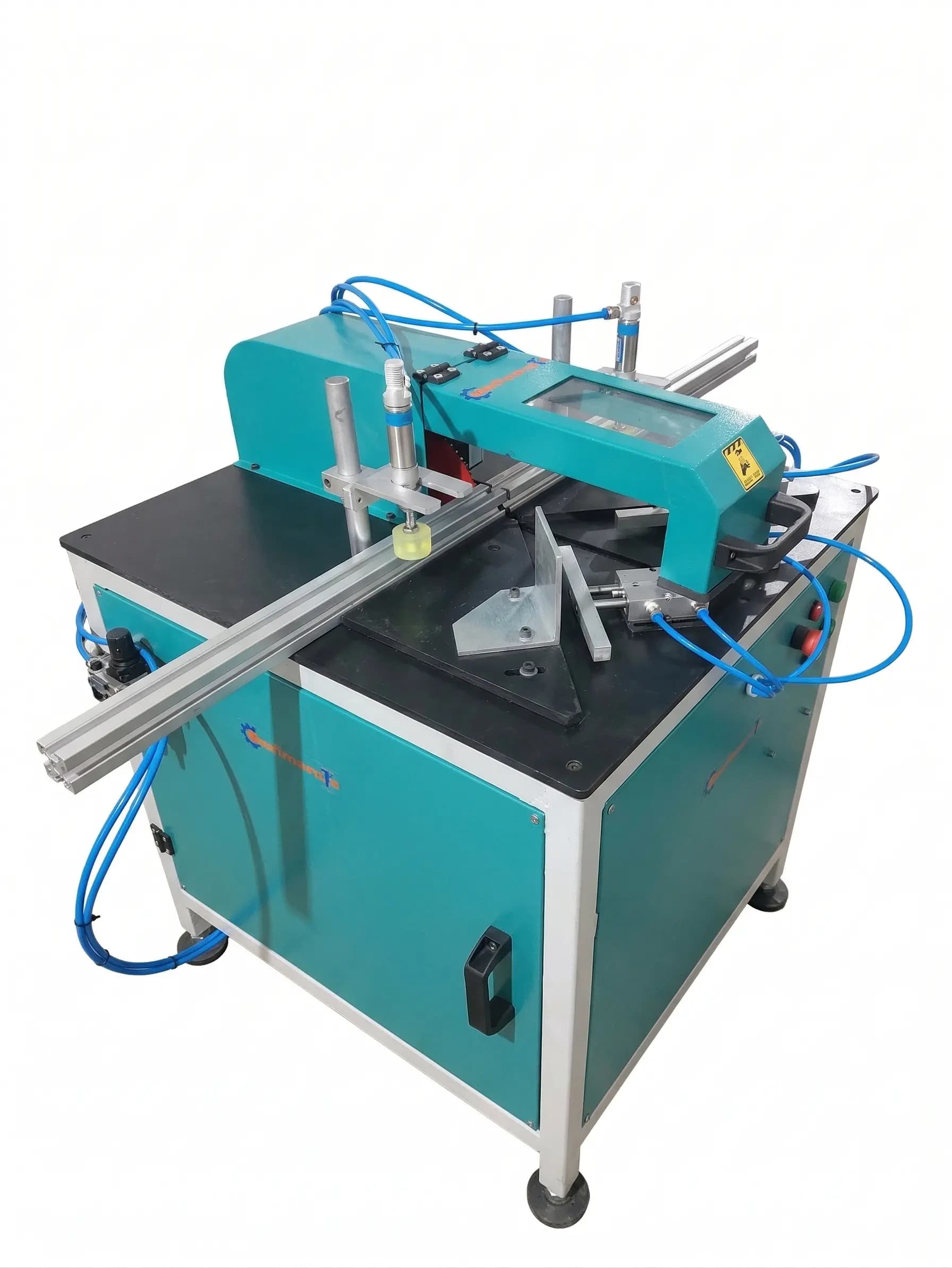
When evaluating an aluminium profile cutting machine or a head cutter machine, precision is measured in microns. For high-rise projects, you should look for machines that adhere to IS 1285 and BS EN 12020 standards. The following specifications are non-negotiable for commercial-grade scaling:
- Blade Diameter: A standard aluminium cutter machine 12 inch is suitable for residential sections, but for commercial curtain walls, you need 450mm to 500mm blades to ensure a clean single-stroke cut through wide profiles.
- Spindle Speed: Look for high-speed spindles operating at 2800–3200 RPM with high-grade carbide-tipped blades.
- Feed Rate Control: A hydro-pneumatic feed system is essential to prevent 'chatter' marks on the aluminium surface, especially when working with powder-coated or anodized finishes.
- Positioning Accuracy: CNC-controlled systems should offer a positioning accuracy of ±0.1mm per meter.
If your workshop also handles hybrid projects, you may need to integrate uPVC machinery or a uPVC windows making machine into your floor plan. However, for dedicated aluminium lines, the aluminum cutting machine must be robust enough to handle the thermal mass of the metal without vibrating, which is a common failure point in lightweight, low-cost equipment.
Case Study: Hinjewadi Commercial Tower Scaling
In our Pune facility, we tested three different configurations over six weeks to optimize a production line for a 22-story commercial project in Hinjewadi. The goal was to produce 120 window units per 8-hour shift. Initially, the workshop used a manual punching machine and a basic aluminium cutter.
The Before Metrics:
- Output: 35 frames per day.
- Material Waste: 12% (due to manual measurement errors).
- Reject Rate: 8% at the QC stage due to poor corner alignment.
The After Metrics (Post-Upgrade): We implemented an automatic double head cutting saw for aluminium profiles and a heavy duty aluminium profile end milling machine.
- Output: 85 frames per day (a 142% increase).
- Material Waste: Reduced to 3% using optimized cutting software.
- Reject Rate: Under 1%.
By switching to a degree cutting machine with digital readouts, the fabricators eliminated the need for manual marking, which saved 4 minutes per profile. This demonstrates that the aluminium cutting machine price is quickly offset by the reduction in labor hours and material recovery.
Selection Criteria for Machinery Suppliers in Maharashtra
Choosing between aluminium window machinery manufacturers in Ahmedabad Gujarat or suppliers in Pune requires a deep dive into after-sales support. For a workshop in Chakan or Bhosari, downtime is the most significant cost. Ensure your supplier provides:
- On-Site Calibration: Precision machines like the high speed copy router for aluminium windows require periodic calibration to maintain slot accuracy for hardware fitment.
- Spare Parts Availability: Check if they stock pneumatic valves and saw blades locally in Pune or PCMC.
- Technical Training: Fabrication for high-rises often uses sophisticated alu profile cutting and processing machines. Your staff needs training on feed speeds and lubricant application to extend tool life.
If you are considering a uPVC window manufacturing machine alongside your aluminium line, look for suppliers who understand the distinct cooling and clamping requirements of both materials. Many uPVC window machinery manufacturers in Chennai or uPVC window machinery manufacturers in Lucknow offer multi-material solutions, but for high-rise aluminium, specialized aluminum window fabrication machinery is usually preferred for its higher clamping pressure.
Common Mistakes and Engineering Pitfalls
One of the most frequent mistakes we see in Pune workshops is undersizing the air compressor system. An automatic double head cutting machine price India might seem attractive, but if your workshop cannot maintain a steady 8-bar pressure, the pneumatic clamps will lose grip during the cut, leading to jagged edges and ruined profiles.
Another pitfall is ignoring the aluminium punching machine requirements. High-rise windows use multi-point locking systems that require precise slots. Using a manual copy router machine for 100+ units a day will lead to operator fatigue and inconsistent slot positions. We recommend at least a semi-automatic head cutting machine and a dedicated aluminium profile punching machine to ensure every lock-hole aligns perfectly with the frame.
FAQ: Scaling Your Fabrication Business
Q: What is the estimated cost of setting up a uPVC window manufacturing unit vs. an aluminium line? A: While the cost of setting up uPVC window manufacturing unit in India can start from ₹15-20 lakhs for a basic setup, a high-rise capable aluminium line typically starts at ₹35 lakhs due to the higher cost of precision engineering components and heavy-duty aluminium cutting machine 12 inch or 500mm variants.
Q: Can I use the same machine for uPVC and Aluminium? A: While some cutting machine automatic models can handle both, the blade geometry (TCT vs. HSS) and RPM settings differ. For high-volume scaling, we recommend dedicated lines to avoid constant blade changes and recalibration.
Q: How do I verify the accuracy of an aluminium profile cutting machine before purchase? A: Perform a 'Squareness Test.' Cut four pieces at 45 degrees, assemble them into a frame, and measure the diagonals. If the diagonal difference is more than 0.5mm, the machine’s degree cutting machine mechanism is not stable enough for high-rise commercial work.
Get more articles like this
Follow Mechnovate on Google to see our guides in Google Discover & News